Resources Best in category 1 results Geospatial AI Tool

Popular AI tools in the Geospatial field of Resources include Cybertiks, etc., helping you quickly improve efficiency.

Cybertiks

Cybertiks

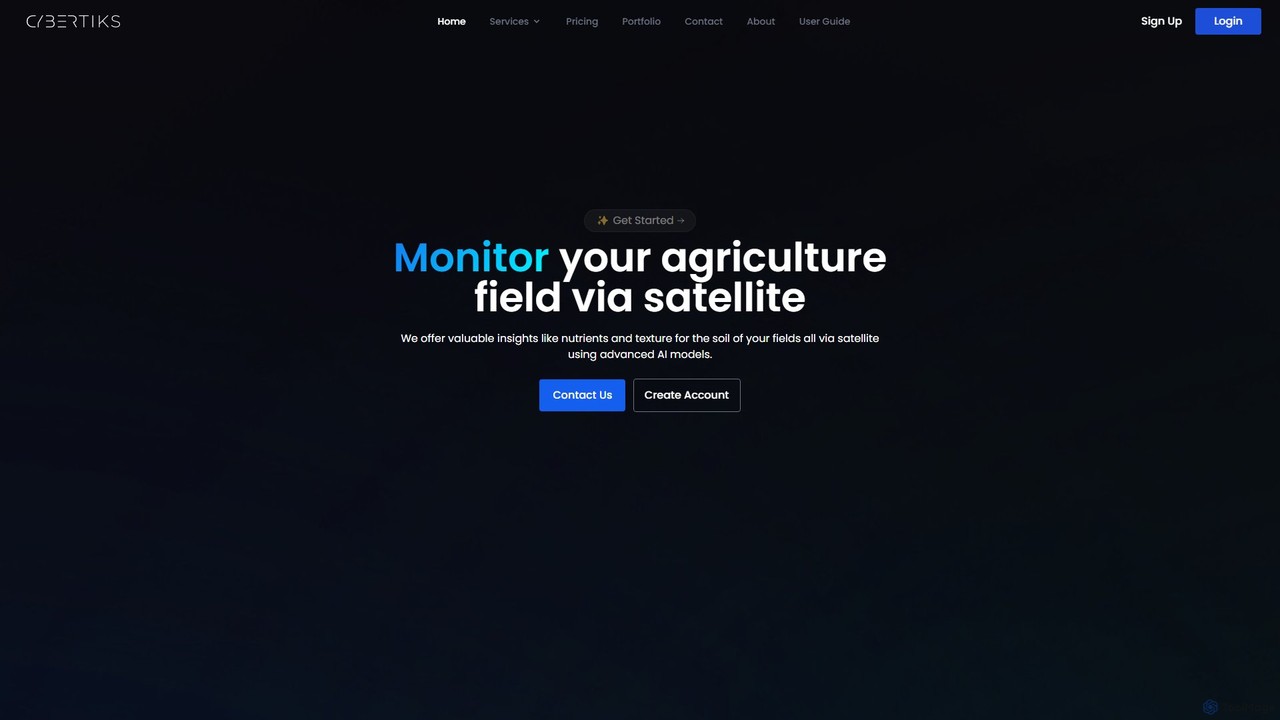
Cybertiks is an advanced AI platform that leverages satellite imagery and remote sensing for in-depth analysis in agriculture, …

2.3K

About Geospatial

AI Geospatial tools are a class of software that applies machine learning to analyze and interpret geographic data. They leverage algorithms to process vast datasets from satellites, drones, and sensors to identify patterns, make predictions, and automate feature extraction. This enables industries like urban planning, agriculture, and environmental science to gain deeper insights and make data-driven decisions. Unlike traditional GIS, these tools excel at predictive modeling and large-scale image recognition.

Core Features

  • Satellite Image Analysis: Automatically detect objects, classify land use, and monitor changes from aerial or satellite imagery.
  • Predictive Spatial Modeling: Forecast future trends, such as urban expansion or climate impact, based on historical and real-time data.
  • Automated Feature Extraction: Identify and digitize features like roads, buildings, and water bodies from raw geographic data.
  • Spatio-temporal Analysis: Uncover complex patterns and relationships in data that changes over both space and time.

Use Cases

These tools are crucial for urban planners modeling city growth, agronomists practicing precision farming, and environmental scientists tracking deforestation. They are also widely used in logistics for route optimization, in the insurance industry for assessing property risks, and in retail for strategic site selection.

How to Choose

When selecting a tool, consider the types of data it supports (e.g., raster, vector), the specific AI models offered (e.g., object detection, segmentation), its integration capabilities with existing GIS platforms, and the level of technical expertise required to operate it. Evaluate its scalability for your project size and the quality of its data visualization features.

GeospatialUse Cases

1

Precision Agriculture Crop Monitoring

Agronomists and large-scale farm managers use AI geospatial tools to analyze satellite and drone imagery of their fields. The AI models can identify areas of stress due to pests, disease, or lack of water before they are visible to the human eye. By processing multispectral imagery, the tool generates detailed health maps, enabling targeted application of fertilizers, pesticides, and irrigation. This data-driven approach, known as precision agriculture, significantly increases crop yield, reduces resource waste, and lowers operational costs.

2

Urban Growth and Traffic Simulation

Urban planners and municipal governments leverage AI geospatial platforms to model future city development. By inputting historical growth data, zoning regulations, and demographic trends, the AI can predict where new residential and commercial areas are likely to emerge. Furthermore, these tools can simulate traffic flow under different scenarios, such as the addition of a new highway or public transit line. This helps decision-makers optimize infrastructure investments, manage congestion, and plan for sustainable urban expansion.

3

Environmental Change Detection

Environmental scientists and conservation organizations rely on AI geospatial tools to monitor the planet's health at scale. The software automatically compares satellite images taken over time to detect changes like deforestation, glacial melt, or coastal erosion. AI algorithms can quantify the rate of change and identify illegal logging or mining activities in remote areas. This provides critical, near-real-time data for policy-making, conservation efforts, and reporting on climate change impacts.

4

Retail Site Selection Analysis

Retail chains and real estate developers use AI geospatial analysis to identify the most profitable locations for new stores. These tools integrate and analyze diverse datasets, including customer demographics, foot traffic patterns, competitor locations, and local economic indicators. The AI model builds a predictive success score for potential sites, helping businesses avoid costly mistakes and strategically expand their footprint. This data-driven approach replaces guesswork with a robust analysis of market potential.

5

Insurance Risk Assessment for Natural Disasters

Insurance underwriters use AI geospatial tools to accurately assess property risk related to natural disasters. The platforms analyze satellite imagery, elevation models, and historical climate data to create high-resolution risk maps for floods, wildfires, and hurricanes. AI can identify specific property features, such as proximity to floodplains or dense vegetation, that increase vulnerability. This allows insurers to set more accurate premiums and advise property owners on mitigation measures, improving the resilience of entire communities.

6

Logistics and Supply Chain Route Optimization

Logistics companies utilize AI geospatial tools to optimize delivery routes for their fleets. The system analyzes real-time traffic data, weather conditions, road closures, and delivery time windows to calculate the most efficient path for each vehicle. It goes beyond simple GPS navigation by considering dozens of variables simultaneously to minimize fuel consumption, reduce delivery times, and increase the number of stops a driver can make per day. This leads to significant operational savings and improved customer satisfaction.

GeospatialFrequently Asked Questions