ToolMage
Sign in

Best 6 Tool Directory AI tools for Resources

Popular Tool Directory AI tools in Resources include AI Tool Guru, siteefy, itirupati, Outlier Database, techwebplanet.com, and critiqs.ai, helping you work more efficiently.

siteefy
Freemium

siteefy

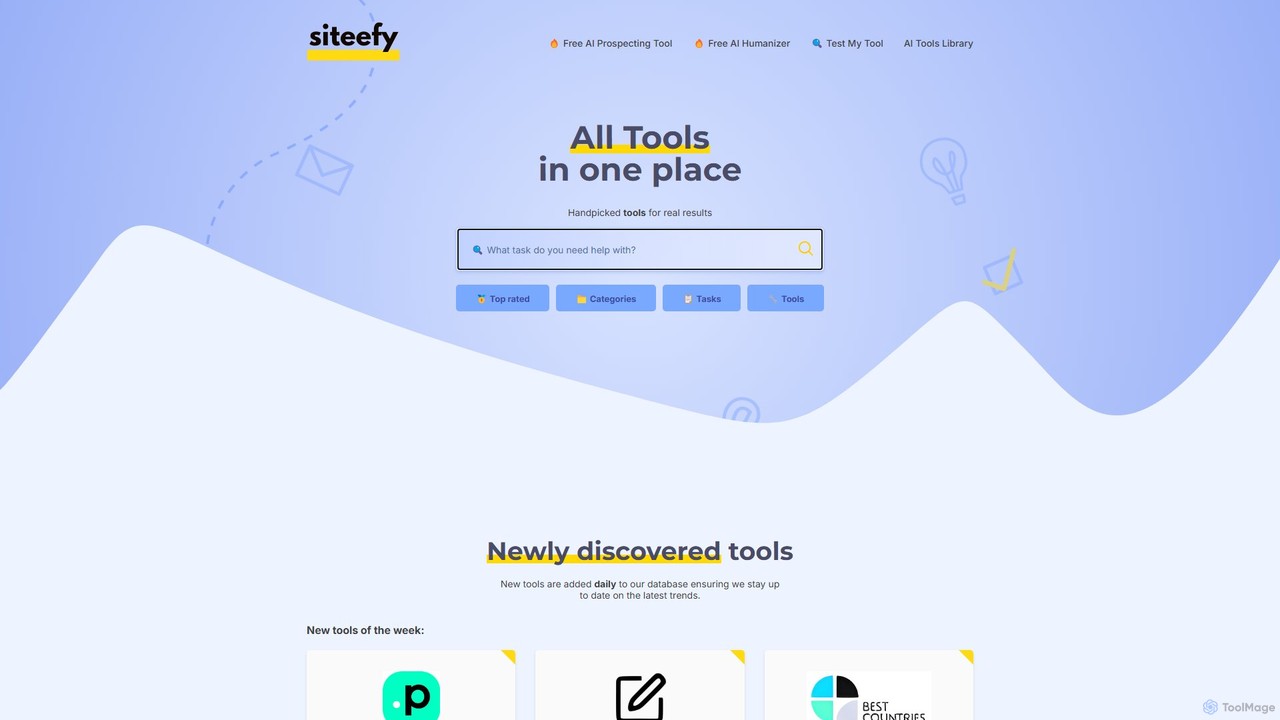
siteefy is a comprehensive platform featuring a curated library of AI and business tools, alongside its own suite of free utilities like an AI Text Humanizer. It's designed to help users discover the right tools for any task, from content creation and marketing to website development, ensuring efficiency and high-quality results.

Content Creation
Visits 52.6KFavorites 111Likes 100
itirupati
Freemium

itirupati

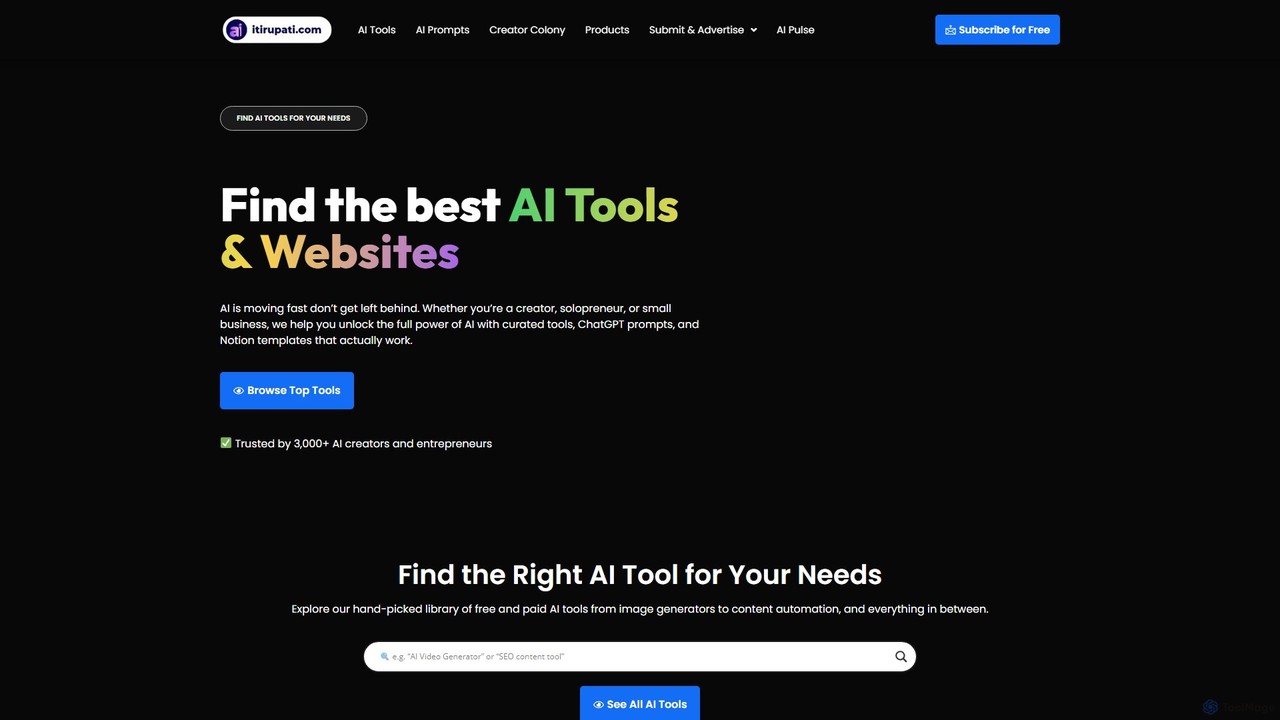
Itirupati.com is a comprehensive AI resource hub and directory for creators, entrepreneurs, and businesses. It offers a curated library of top AI tools, ready-to-use ChatGPT prompts, and productivity-boosting Notion templates. The platform helps users discover the best AI solutions for various needs, from content creation and image generation to marketing and data analysis. It also provides AI news and educational content to keep users updated on the latest trends, empowering them to leverage AI for growth and innovation.

Industry News
Visits 27.3KFavorites 172Likes 155
Outlier Database
Free

Outlier Database

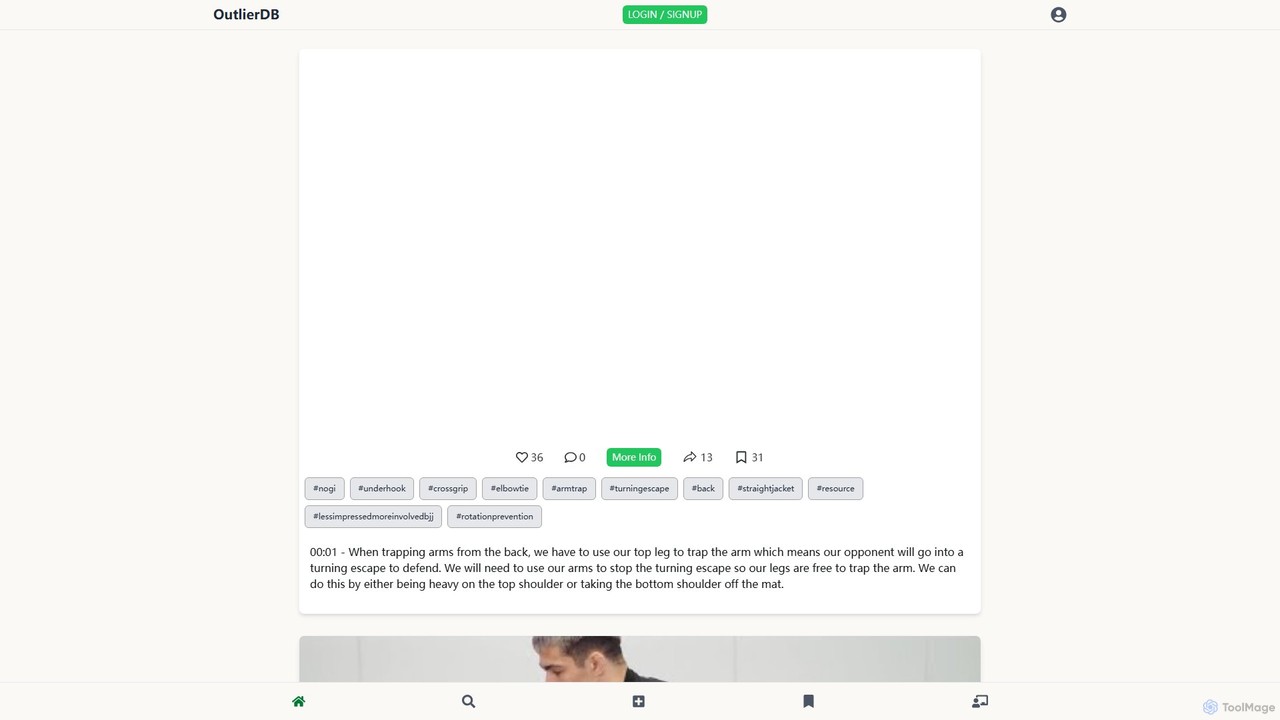
A curated discovery platform featuring a hand-picked selection of exceptional AI tools. Outlier Database helps users find, compare, and select the most innovative and effective 'outlier' software for productivity, creativity, and business, cutting through the noise of the crowded AI market.

Software
Visits 12.1KFavorites 114Likes 120
techwebplanet.com
Free

techwebplanet.com

TechWebPlanet is a comprehensive online platform and directory dedicated to helping users discover, compare, and learn about the latest AI and technology tools. It serves as a central hub for tech news, in-depth software reviews, and curated lists of tools across various categories, empowering professionals and enthusiasts to find the perfect solutions for their needs.

Technology News
Visits 4.1KFavorites 102Likes 94
AI Tool Guru
Freemium

AI Tool Guru

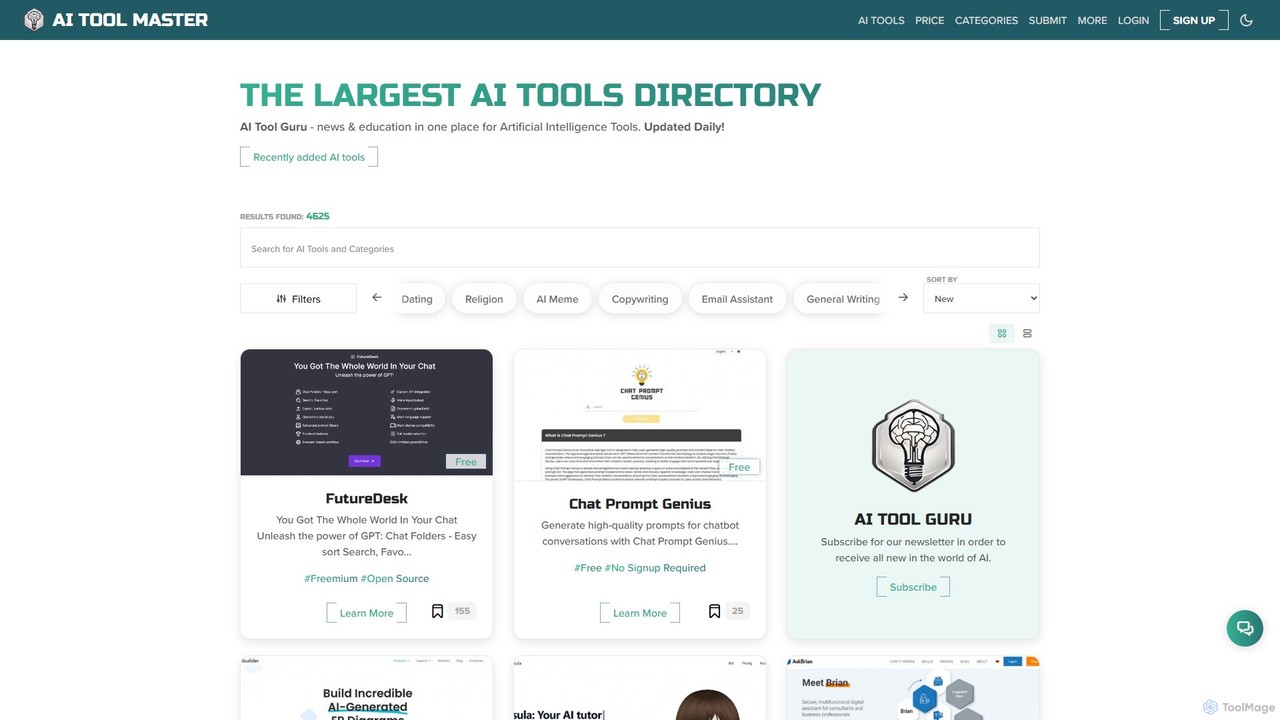
AI Tool Guru is a comprehensive directory and resource hub for discovering, comparing, and learning about the latest AI tools. It features a curated collection of over 4,600 tools across various categories, from productivity and marketing to design and development. The platform aims to democratize AI by making it accessible to entrepreneurs, businesses, and individuals, offering reviews, news, and educational content to help users stay ahead of the curve.

Networking
Visits 59.3KFavorites 154Likes 153
critiqs.ai
Free

critiqs.ai

critiqs.ai is a comprehensive platform for AI enthusiasts, offering the latest AI news, a curated directory of useful AI tools, and in-depth video tutorials. It's a one-stop resource to stay updated, discover new applications, and learn practical AI skills.

Tutorials
Visits 4KFavorites 88Likes 96

About Tool Directory

An AI Tool Directory is a curated, searchable database designed to help users discover, compare, and select artificial intelligence tools. Unlike general search engines, these directories provide structured information, organizing tools by category, function, and pricing. This allows users to efficiently find relevant solutions for specific tasks, from content creation to data analysis. By offering detailed descriptions, user reviews, and direct comparisons, tool directories serve as a crucial resource for navigating the rapidly growing AI landscape.

Core Features

  • Structured Categorization: Tools are organized into logical categories and subcategories for easy browsing.
  • Advanced Filtering & Search: Users can filter tools by pricing, features, integrations, and other specific criteria.
  • Detailed Tool Profiles: Each listing provides comprehensive information, including feature lists, pricing plans, and user ratings.
  • Comparison Functionality: Enables side-by-side comparison of multiple tools to aid in decision-making.
  • User Reviews and Ratings: Aggregates community feedback to provide real-world insights into a tool's performance.

Use Cases

Tool directories are valuable for a wide range of users, including marketers seeking automation software, developers looking for specific APIs, entrepreneurs conducting market research, and students exploring free AI resources for projects. They streamline the process of building a technology stack or finding a single-purpose tool without extensive manual searching.

How to Choose

When using a tool directory, leverage its features effectively. Start with broad category browsing to understand the landscape, then use specific keywords in the search bar. Apply filters for non-negotiable criteria like budget (e.g., free tier) or platform compatibility. Pay close attention to recent user reviews and the 'last updated' date to ensure the information is current.

Featured tool rankings

Tool Directory use cases

1

Discovering a Tool for a Specific Task

A content marketer needs to create animated videos for a social media campaign but lacks advanced video editing skills. They use a tool directory, navigate to the 'AI Video Generation' category, and apply a filter for 'text-to-video' functionality. The directory presents a list of suitable tools with user ratings and pricing. By reading short descriptions and comparing the top three options, they can quickly identify a user-friendly tool that fits their budget and technical requirements, saving hours of random searching on Google.

2

Comparing Alternatives to an Existing Tool

A small business is currently using a popular but expensive AI chatbot for customer service. To reduce costs, the business manager searches for their current tool in the directory. On the tool's profile page, they find a list of alternatives. They use the directory's comparison feature to see a side-by-side breakdown of features and pricing for three promising alternatives. This structured comparison helps them identify a more cost-effective solution that still meets their core needs for automated responses and live chat integration.

3

Market Research for a New Product Idea

An entrepreneur is planning to develop a new AI-powered project management tool. Before investing in development, they use a tool directory for market research. They analyze the entire 'AI Project Management' category to understand the competitive landscape. They examine the feature sets of existing tools, common pricing models (per user, per project), and read user reviews to identify common pain points and unmet needs. This data, gathered efficiently from a single source, helps them refine their product strategy and identify a unique value proposition.

4

Finding Free Tools for a Personal Project

A student is working on a data science project and needs a tool for data visualization, but has no budget. They access a tool directory and navigate to the 'Data Analysis & Visualization' category. They immediately apply the 'Free' or 'Freemium' pricing filter. This narrows down hundreds of options to a manageable list of tools that offer a free tier. They can then read reviews focusing on the limitations of the free plans to find the one that provides the most generous features for their specific project needs, without wasting time on tools outside their budget.

5

Staying Updated on the Latest AI Trends

An AI enthusiast and blogger wants to stay current with the rapidly evolving AI industry. They regularly visit a tool directory and check sections like 'Newly Added' or 'Trending Tools'. This provides a quick, curated overview of what's new and popular in the market. By exploring these new listings, they can identify emerging trends, such as new applications of generative AI or advancements in no-code platforms. This practice helps them discover fresh content ideas for their blog and maintain their reputation as a knowledgeable source in the AI community.

6

Building a Tech Stack for a New Department

A project manager is tasked with setting up a new marketing department and needs to select a suite of AI tools for content creation, social media management, and analytics. Instead of researching each category individually, they use a tool directory as a central hub. They explore the 'Marketing' parent category and its subcategories. For each need, they identify two or three top-rated tools and add them to a shortlist. The directory's consistent layout for each tool profile makes it easy to compare key information like integrations and pricing tiers, greatly simplifying the complex task of building a cohesive and effective tech stack from scratch.

Tool Directory FAQ

What is an AI Tool Directory?

An AI Tool Directory is a specialized online platform that catalogs and organizes AI-powered software and services. Its primary purpose is to provide a structured, searchable, and curated environment for users to discover tools for specific needs. Unlike a standard search engine, a directory offers features like categorization, advanced filtering (by price, feature, etc.), user reviews, and side-by-side comparisons, making the tool selection process more efficient and informed.

How is a tool directory different from a search engine like Google?

A tool directory offers a more focused and structured experience than a general search engine. Key differences include:

  • Curation: Directories often vet tools before listing them, ensuring a baseline of quality, whereas search engines index everything.
  • Structured Data: Information like pricing, features, and integrations is presented in a consistent format, making comparison easy.
  • Advanced Filtering: You can narrow results by specific criteria not available in a general search, such as 'has a free plan' or 'integrates with Salesforce'.
  • Discovery Focus: Directories are designed for browsing and discovery within categories, helping you find solutions you didn't know existed.
How can I effectively use a tool directory to find the right tool?

To find the right tool effectively, follow these steps:

  1. Start Broad: Begin by browsing the main categories relevant to your field (e.g., 'Marketing', 'Development').
  2. Use Specific Search Terms: If you have a clear need, use the search bar with keywords like 'AI voice generator' or 'SQL query assistant'.
  3. Apply Filters: Narrow down the results using filters. Prioritize non-negotiable features like budget (e.g., 'Free Trial'), platform compatibility, or key integrations.
  4. Compare Shortlisted Tools: Select 2-3 promising tools and use the directory's comparison feature to analyze their features and pricing side-by-side.
  5. Read Recent Reviews: Pay attention to recent user reviews to get an up-to-date understanding of the tool's performance and customer support.
Are the tools listed in a directory trustworthy?

Reputable tool directories strive to list legitimate and functional tools. However, trustworthiness can vary. Look for directories that have a clear submission and review process. The most reliable indicator of a tool's quality comes from aggregated user reviews and ratings within the directory. Always cross-reference with recent reviews and, if possible, test the tool yourself using a free trial before committing to a paid subscription. A good directory provides the information to help you make that judgment, but the final decision rests with the user.

What kind of information can I find on a tool's profile page?

A typical tool profile page in a directory provides a comprehensive overview. You can usually expect to find:

  • A concise description: A summary of what the tool does and its primary use case.
  • Key features: A bulleted list of the tool's main functionalities.
  • Pricing information: Details on different subscription tiers, including whether a free plan or trial is available.
  • User reviews and ratings: Aggregated scores and individual comments from the community.
  • Links to alternatives: Suggestions for similar tools to facilitate comparison.
  • Media: Screenshots or videos demonstrating the tool in action.