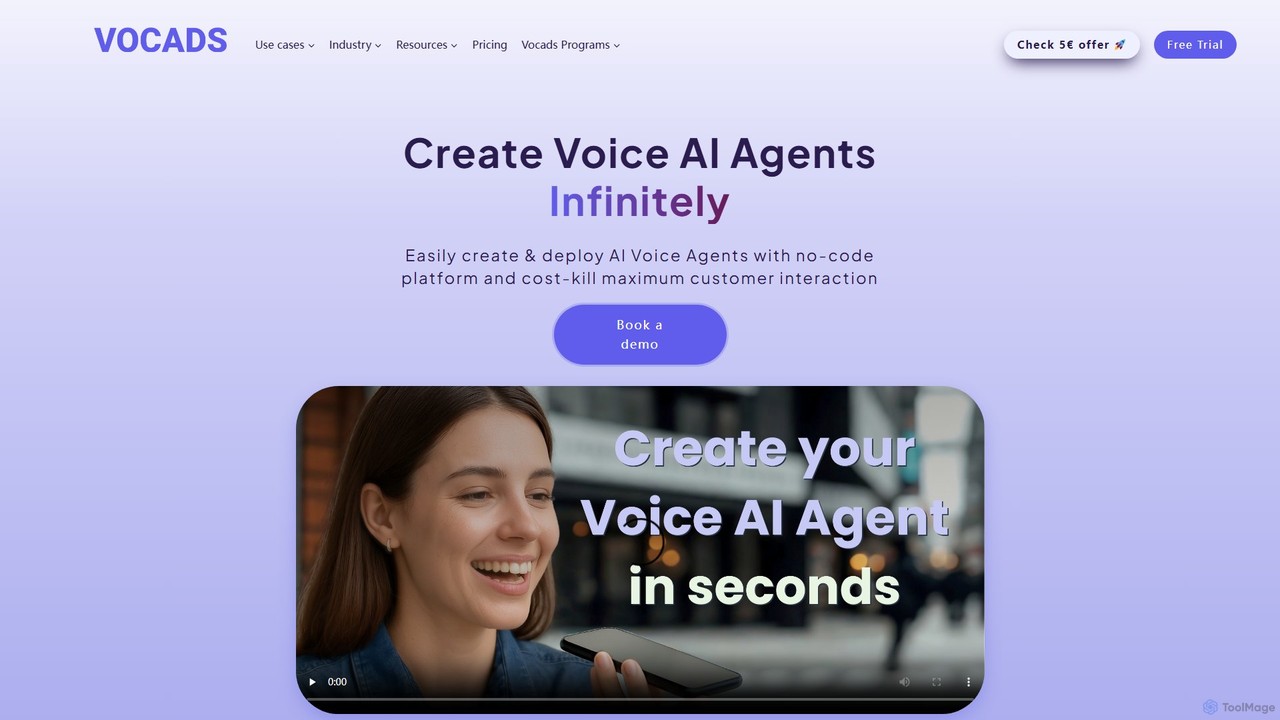
Vocads
Vocads is a no-code platform for creating and deploying multilingual AI Voice Agents. It helps businesses automate customer …
Vocads is a no-code platform for creating and deploying multilingual AI Voice Agents. It helps businesses automate customer interactions, reduce call center costs, and enhance customer experience with 24/7 availability. Easily build voice-powered surveys, appointment schedulers, and FAQ bots for web and phone.
About Conversational Ai
Conversational AI for Sales are tools designed to automate and personalize customer interactions throughout the sales funnel. They leverage Natural Language Processing (NLP) to understand user intent, answer questions, and guide prospects toward a purchase. These tools are crucial for qualifying leads 24/7, scheduling appointments, and providing instant support, allowing human sales teams to focus on high-value closing activities. They act as intelligent assistants that engage potential customers in real-time, improving conversion rates and sales efficiency.
Core Features
- Automated Lead Qualification: Asks targeted questions to score and segment leads based on their needs and purchase readiness.
- 24/7 Instant Response: Engages website visitors and prospects immediately, at any time of day, preventing lead drop-off.
- Intelligent Appointment Scheduling: Integrates with sales reps' calendars to book meetings and demos with qualified leads automatically.
- CRM Integration: Syncs conversation data and lead information directly with CRM platforms like Salesforce or HubSpot.
- Personalized Conversation Flows: Customizes interactions based on user behavior, past purchases, or demographic data.
Applicable Scenarios
Primarily used by B2B and B2C sales teams, e-commerce businesses, and service providers. For instance, a SaaS company can use it to qualify inbound demo requests on their website, while an online retailer can deploy it to assist shoppers with product recommendations and checkout support, directly boosting sales.
Selection Criteria
When choosing a tool, evaluate its NLP capabilities for understanding complex queries, the depth of its integration with your existing CRM and marketing stack, the ease of building and customizing conversation flows without technical expertise, and the quality of its analytics for tracking performance and user behavior.
Conversational AiUse Cases
Automate Lead Qualification on a Website
A B2B software company's sales team uses a conversational AI tool on their pricing page. When a visitor lands on the page, the AI chatbot proactively engages them, asking questions like 'What is your company size?' and 'What is your primary goal with our software?'. Based on the answers, the AI qualifies the lead in real-time. If the lead meets the pre-defined criteria (e.g., company size over 50 employees), the AI automatically offers to schedule a demo and connects them with the appropriate sales representative's calendar. This process filters out unqualified inquiries and ensures the sales team only spends time on high-potential prospects.
Proactive E-commerce Sales Assistance
An online fashion retailer deploys a conversational AI assistant on its product pages. The AI analyzes a visitor's browsing behavior, such as time spent on an item or items added to the cart. It then initiates a conversation, offering assistance like 'I see you're looking at our new collection of jackets. Would you like help with sizing or color options?'. This proactive engagement mimics the experience of a helpful in-store sales associate. The AI can answer common questions, suggest complementary products, and even offer a time-sensitive discount to encourage immediate purchase, directly contributing to increased conversion rates and average order value.
Automated Appointment Booking for Sales Demos
A real estate agency uses a conversational AI on its property listing pages. When a potential buyer shows interest, the AI can answer initial questions about the property, such as square footage and amenities. If the buyer expresses further interest, the AI asks for their availability and integrates directly with the real estate agents' calendars. It finds a mutually convenient time and books a property viewing appointment automatically, sending confirmation emails to both the buyer and the agent. This eliminates the back-and-forth scheduling emails and ensures that interested buyers can book a viewing instantly, increasing the number of qualified appointments for the sales team.
Post-Sale Follow-up and Upselling
After a customer purchases a high-end camera, an electronics store's conversational AI initiates a follow-up conversation via email or SMS a week later. It starts by asking if the customer is satisfied with their purchase. It then offers helpful tips and links to tutorials. Based on the camera model purchased, the AI intelligently suggests relevant accessories, such as a specific lens, a tripod, or a camera bag, explaining the benefits of each. This personalized, non-intrusive follow-up not only enhances the customer experience but also creates new sales opportunities by upselling and cross-selling relevant products to an engaged customer.
Handle High-Volume Inbound Sales Inquiries
A telecommunications company faces thousands of daily inquiries about new mobile plans. They implement a conversational AI on their website and messaging apps to manage this volume. The AI is trained to answer frequently asked questions about plan details, pricing, and eligibility. It can check a user's eligibility for a new plan by asking for their current number or location. For users ready to sign up, the AI guides them through the initial steps of the application process, collecting necessary information before handing them over to a human agent for final verification. This frees up agents from repetitive queries and allows them to handle more complex sales cases.
Nurture Cold Leads via Email and SMS
A sales team has a large database of cold leads that have not responded to initial outreach. They use a conversational AI tool to launch an automated nurturing campaign. The AI sends personalized, human-like follow-up emails or SMS messages at scheduled intervals. Instead of a generic marketing blast, the messages are conversational, asking questions like 'Just checking in to see if you had a chance to review the proposal?' or 'Is now a better time to connect?'. When a lead responds positively, the AI can answer basic questions or immediately alert a human sales rep to take over the conversation, effectively re-engaging dormant leads and turning them into warm opportunities.