Lighteningly
Lighteningly is an AI-powered B2B lead enrichment and sales automation platform designed to identify high-intent leads, track their …
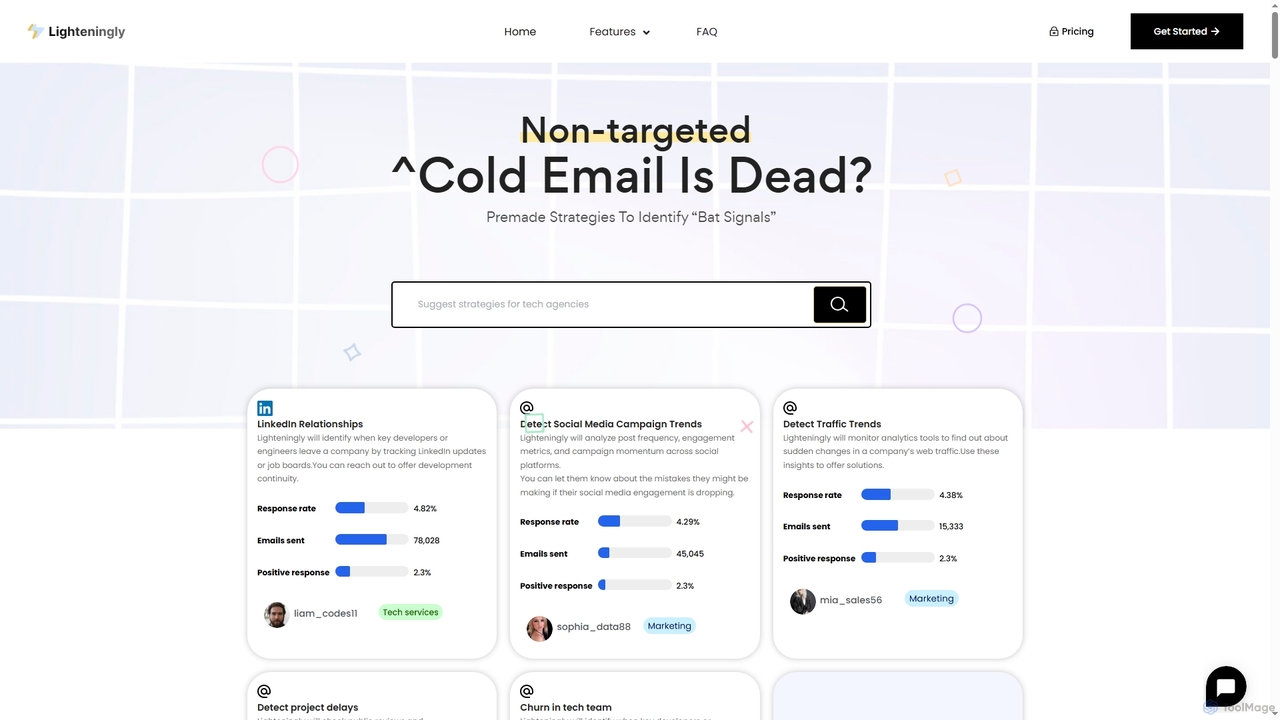
Lighteningly is an AI-powered B2B lead enrichment and sales automation platform designed to identify high-intent leads, track their behavior, and automate multi-channel outreach. It leverages over 100 data sources to provide actionable insights, helping businesses convert cold leads into warm opportunities with intelligent, event-triggered campaigns.
Lutra AI
Lutra AI is a productivity agent that automates workflows by connecting all your work apps. It transforms natural …
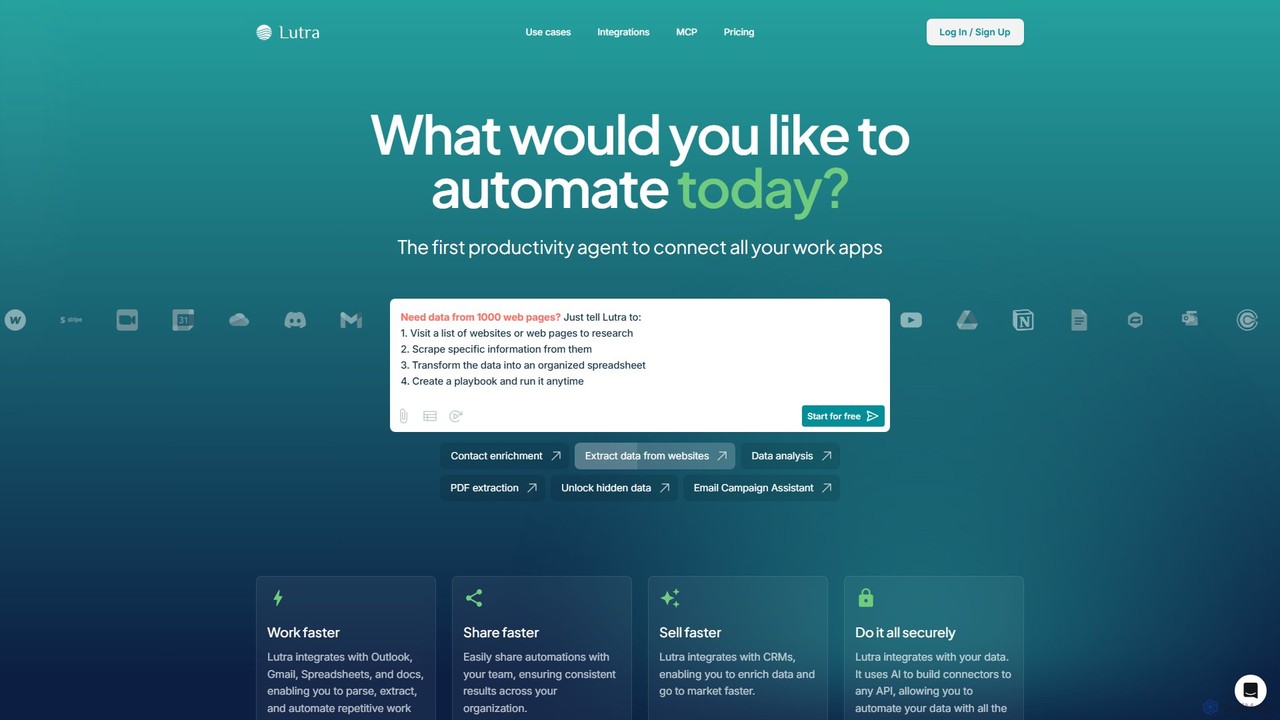
Lutra AI is a productivity agent that automates workflows by connecting all your work apps. It transforms natural language instructions into code to perform tasks like data extraction from PDFs, contact enrichment, data analysis, and email campaign management. By integrating with tools like Google Workspace, HubSpot, and Slack, Lutra streamlines repetitive processes, allowing users to build and share custom automations, called Playbooks, to enhance efficiency across sales, marketing, and operations.
About Lead Enrichment
Lead Enrichment tools are AI-powered platforms that automatically augment existing lead data with additional, relevant information. These tools scan public web data, social media profiles, and proprietary databases to find and append details like job titles, company firmographics, and verified contact information. This process transforms basic contact lists into comprehensive prospect profiles, enabling sales and marketing teams to qualify leads more accurately, personalize outreach, and improve conversion rates. By providing a deeper understanding of each prospect, these tools are a crucial component of modern data-driven sales strategies.
Core Features
- Data Augmentation: Automatically adds missing data points such as company size, industry, revenue, and location to lead records.
- Contact Verification: Validates email addresses and phone numbers to reduce bounce rates and improve connect rates.
- Social Profile Mapping: Identifies and links leads to their professional social profiles, primarily LinkedIn.
- Technographic Data Analysis: Uncovers the technology stack (e.g., CRM, marketing automation tools) used by a prospect's company.
- Data Cleansing: Corrects outdated information and removes duplicate entries within a CRM or contact list.
Use Cases
Lead Enrichment tools are primarily used by B2B sales teams, marketing operations professionals, and account-based marketing (ABM) strategists. Sales Development Representatives (SDRs) use them to quickly qualify inbound leads and prioritize outreach. Account Executives leverage the detailed data to prepare for sales calls and tailor their pitches. Marketing teams use enriched data for more precise audience segmentation and lead scoring.
How to Choose
When selecting a Lead Enrichment tool, consider the accuracy and freshness of the data provided, as this directly impacts its value. Evaluate its integration capabilities with your existing CRM (e.g., Salesforce, HubSpot) and marketing automation platforms. Assess the breadth of data coverage, especially for your target industries and geographic regions. Finally, review the pricing model (per-lead vs. subscription) and ensure the provider complies with data privacy regulations like GDPR and CCPA.
Lead EnrichmentUse Cases
Prioritizing Inbound Leads for SDRs
A Sales Development Representative (SDR) receives a list of 200 new leads from a recent webinar. Manually researching each one would take hours. By using a lead enrichment tool integrated with their CRM, the SDR automatically appends data like company size, industry, and employee count to each record in minutes. This allows them to instantly filter and identify leads that match their Ideal Customer Profile (ICP), enabling them to focus their time on the most promising prospects and significantly increase their lead qualification rate.
Personalizing Sales Outreach for Account Executives
An Account Executive (AE) is preparing for a crucial discovery call with a high-value prospect. Instead of starting with generic questions, the AE uses a lead enrichment tool to pull up the prospect's LinkedIn profile, recent company news, and the technology stack their company uses. Armed with this context, the AE can tailor the conversation, referencing a recent company achievement or asking specific questions about their existing software. This personalized approach builds rapport faster and demonstrates a genuine understanding of the prospect's business challenges.
Improving CRM Data Hygiene and Accuracy
A sales operations manager notices that their CRM data is becoming outdated, with incorrect job titles and missing company information, leading to failed marketing campaigns and wasted sales efforts. They implement a lead enrichment tool to run a bulk update across their entire database. The tool automatically corrects titles, flags contacts who have changed companies, and fills in missing firmographic data. This data cleansing project results in a more reliable CRM, leading to improved email deliverability, better segmentation, and more accurate sales forecasting.
Powering Account-Based Marketing (ABM) Campaigns
A marketing team is launching an Account-Based Marketing (ABM) campaign targeting 50 key enterprise accounts. Their initial list only contains the company names. They use a lead enrichment tool to identify and source contact information for key decision-makers (like VPs of Engineering and CTOs) within each target account. The enriched data also provides insights into the company's structure and technology stack, allowing the marketing team to create highly personalized messaging and content for each account, dramatically increasing engagement and meeting requests.
Enhancing Lead Scoring Models
A marketing automation specialist wants to improve the accuracy of their lead scoring model, which currently relies only on behavioral data (like page views and email clicks). By integrating a lead enrichment tool, they can add firmographic data points—such as industry, company size, and annual revenue—as scoring criteria. A lead from a target industry with over 500 employees now automatically receives a higher score than a lead from a smaller company. This enhancement makes the lead scoring model far more effective at identifying and passing truly sales-ready leads to the sales team.
Streamlining B2B Market Research
A product marketing manager needs to understand the profile of their most successful customers to inform future product development. Instead of conducting lengthy surveys, they export a list of their top 100 customers and run it through a lead enrichment tool. The tool provides a comprehensive overview of common firmographics (industry, location, size) and technographics (what other software they use). This data-driven approach provides quick, actionable insights into their core market segments, helping them identify expansion opportunities and competitive threats without significant manual effort.