Spicy.AI
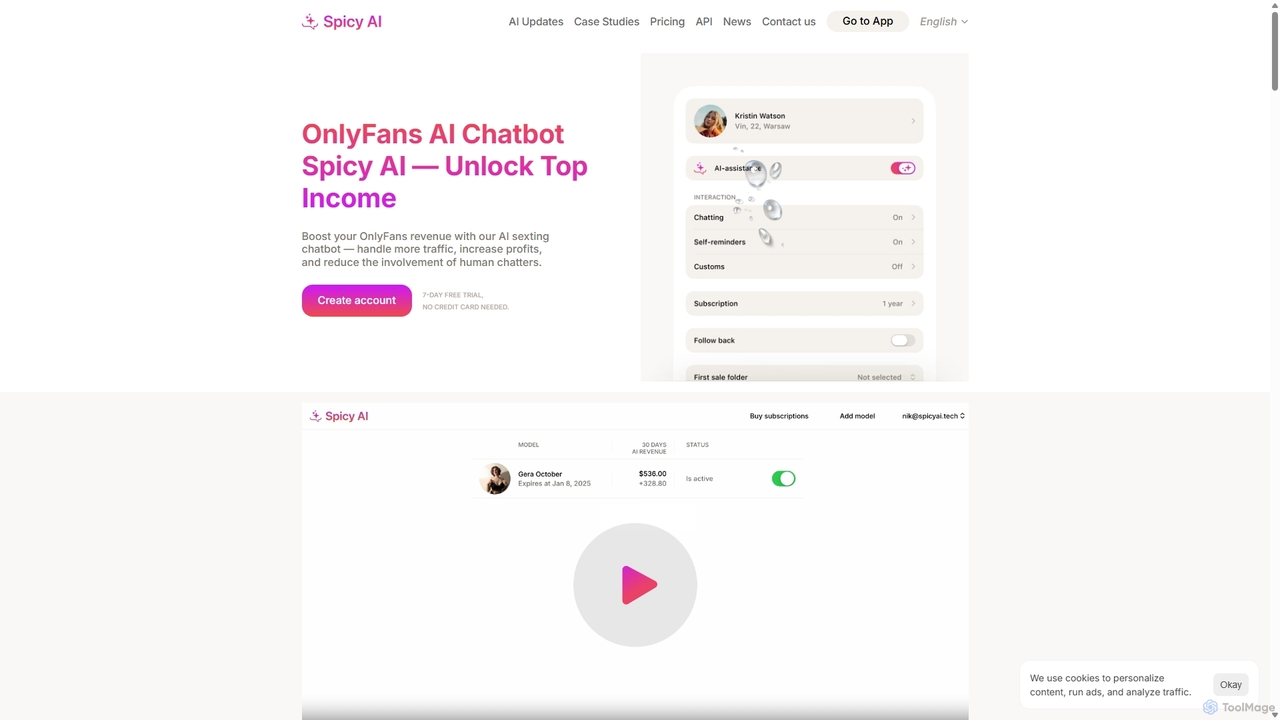
Spicy.AI is an AI-powered chatting and sexting assistant designed for OnlyFans creators and agencies. It automates fan interactions, …
Spicy.AI is an AI-powered chatting and sexting assistant designed for OnlyFans creators and agencies. It automates fan interactions, handles routine conversations, and sells media 24/7 to boost revenue. The tool helps manage more traffic, increase profits, and reduce the workload of human chatters, allowing creators to focus on content creation and high-value interactions. It features intelligent flirting, automated content sales, performance analytics, and customizable settings to enhance fan engagement and maximize earnings.

Mailbutler
Mailbutler is an AI-powered email extension for Apple Mail, Gmail, and Outlook that enhances your inbox. It offers …
Mailbutler is an AI-powered email extension for Apple Mail, Gmail, and Outlook that enhances your inbox. It offers features like email tracking, AI-driven smart compose and summarization, collaborative tools for teams, and professional signature marketing to boost productivity and streamline communication.
ReplyAI
ReplyAI is an AI-powered email writer that integrates with Gmail and Outlook to help you write emails 10x …
ReplyAI is an AI-powered email writer that integrates with Gmail and Outlook to help you write emails 10x faster. Powered by GPT-4, it generates high-quality drafts, suggests contextual replies, and adapts to your personal writing style. Compose professional emails in multiple languages and tones, saving time and improving communication efficiency for sales, customer support, and daily correspondence.
Tango
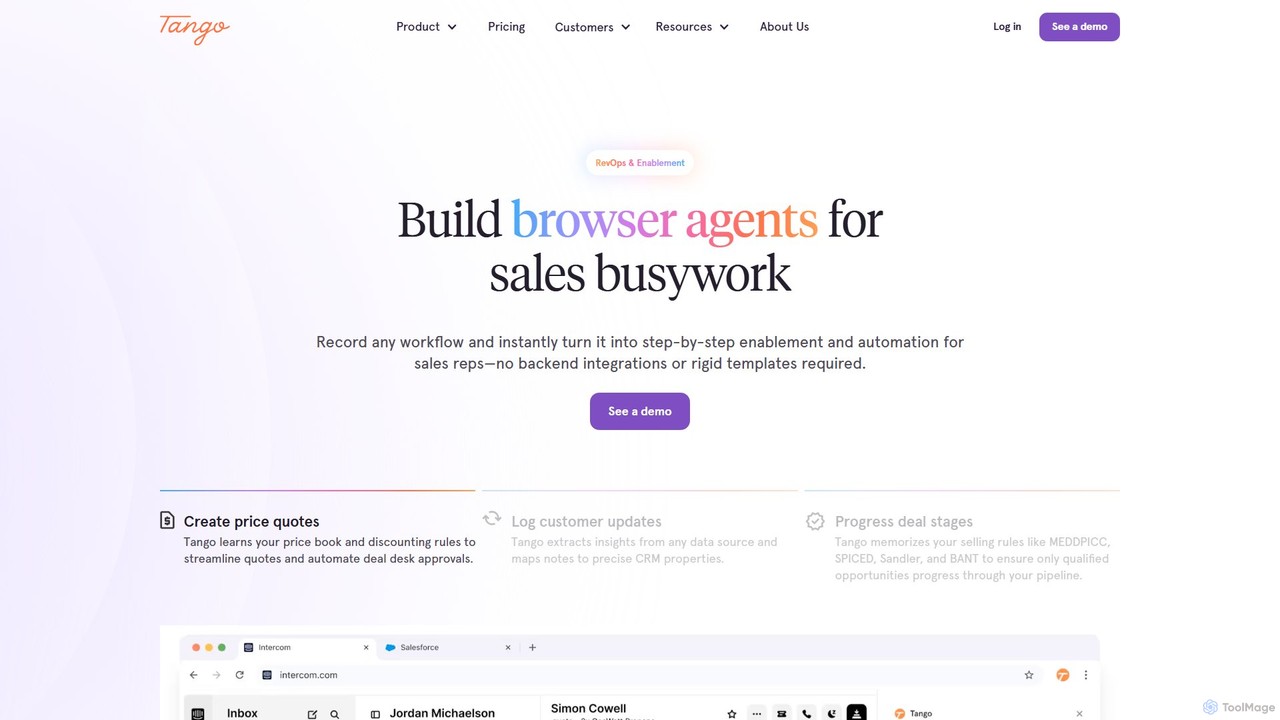
Tango is an AI-powered browser agent designed for sales teams to automate repetitive tasks and streamline workflows. It …
Tango is an AI-powered browser agent designed for sales teams to automate repetitive tasks and streamline workflows. It records user actions to create step-by-step guides and automations that run directly in the browser. Tango helps increase sales efficiency, improve CRM data accuracy, and accelerate process adoption without requiring new systems or complex integrations.
About Sales Automation
Sales Automation tools are AI-powered platforms designed to automate repetitive, manual tasks within the sales cycle. These tools leverage artificial intelligence to manage email sequences, score leads, and schedule meetings, freeing up sales professionals to focus on strategic activities. By automating routine workflows, they enhance efficiency, ensure consistent follow-up, and provide data-driven insights to optimize the entire sales process. This leads to improved lead conversion rates and accelerated revenue growth.
Core Features
- Automated Outreach Sequencing: Design and deploy multi-step email and message campaigns that trigger based on prospect behavior.
- AI-Powered Lead Scoring: Automatically rank leads based on their engagement, demographic data, and likelihood to convert.
- Intelligent Appointment Scheduling: Eliminate back-and-forth emails by providing automated calendar syncing and booking links.
- CRM Data Automation: Automatically log calls, emails, and meeting notes directly into your CRM system, ensuring data accuracy.
- Sales Analytics & Forecasting: Generate real-time reports on team performance and use predictive analytics to forecast sales outcomes.
Use Cases
Sales Automation tools are widely used by B2B technology companies, financial services firms, and real estate agencies. Sales Development Representatives (SDRs) use them for high-volume prospecting, while Account Executives leverage them for nurturing long-term deals. Sales managers rely on these tools for performance tracking and process optimization.
How to Choose
When selecting a Sales Automation tool, first evaluate its integration capabilities with your existing CRM (e.g., Salesforce, HubSpot). Consider the tool's scalability to support your team's growth. Assess the user-friendliness of its sequence builder and analytics dashboard. Finally, compare pricing models, whether per-user, per-contact, or feature-based, to align with your budget.
Sales AutomationUse Cases
Automating B2B Cold Email Outreach
A Sales Development Representative (SDR) at a SaaS company needs to contact 500 new prospects per week. Instead of manually sending individual emails, they use a sales automation tool to build a 5-step email sequence. The sequence includes personalized follow-ups that are automatically sent if a prospect doesn't reply within three days. The tool also tracks open rates and clicks, allowing the SDR to identify engaged leads. This process saves the SDR over 15 hours per week and increases meeting booking rates by 30% due to consistent, timely follow-up.
Intelligent Nurturing of Inbound Leads
A real estate agency receives dozens of inquiries daily through its website. A sales manager sets up an automation workflow that instantly sends a welcome email and a property guide to every new lead. Based on which links the lead clicks in the guide, the system automatically enrolls them into a specific nurturing sequence (e.g., 'first-time homebuyers' or 'luxury properties'). This ensures each lead receives highly relevant information, keeping them engaged until an agent can make personal contact. This automated process improves lead qualification and increases the lead-to-appointment conversion rate by 25%.
Automating Sales Meeting Scheduling
A busy account executive spends significant time coordinating schedules for product demos. By using a sales automation tool with a scheduling feature, they embed a personal booking link in their email signature. Prospects can click the link, view the executive's real-time availability, and book a slot that works for them. The tool automatically creates a calendar event for both parties and sends reminders before the meeting. This eliminates all back-and-forth scheduling emails, reduces no-shows by 40% through automated reminders, and accelerates the sales cycle by getting prospects into demos faster.
Automated CRM Data Entry and Activity Logging
A sales team struggles with inconsistent data in their CRM because reps often forget to log calls and emails. They implement a sales automation platform that syncs with their email and phone systems. Now, every email sent, every call made, and every meeting booked is automatically logged under the correct contact record in the CRM. This ensures the CRM is always up-to-date with a complete history of interactions, saving each rep about 30 minutes per day on manual data entry. It also provides sales managers with accurate data for reporting and forecasting.
Prioritizing High-Value Leads with AI Scoring
A financial services company generates a high volume of leads but the sales team struggles to identify the best ones to pursue. They adopt a sales automation tool with AI-powered lead scoring. The system analyzes various signals, such as job title, company size, website pages visited, and email engagement. It then assigns a numerical score to each lead. Sales reps can filter their leads by score, allowing them to focus their time and effort on prospects with the highest probability of closing. This data-driven approach leads to a 20% increase in sales productivity and a higher overall win rate.
Generating Personalized Sales Follow-up Content
After a product demo, an account manager needs to send a tailored follow-up email summarizing key discussion points and next steps. Using a sales automation tool with a generative AI component, they can input brief notes from the call. The AI then drafts a comprehensive, personalized email that highlights the value propositions most relevant to the prospect's stated needs. The manager quickly reviews and sends the email, ensuring a professional and timely follow-up. This reduces the time spent writing emails by 75% and improves post-demo engagement by providing highly relevant summaries.