ToolMage
Sign in

Best 2 People Search AI tools for Search

Popular People Search AI tools in Search include Face Index and Traxintel, helping you work more efficiently.

Traxintel
Paid

Traxintel

Traxintel is a private OSINT search engine for finding people online. It conducts deep scans of the internet to uncover public activities, posts, photos, and usernames. The service emphasizes privacy with encrypted, anonymous searches and ensures accuracy through a 24-hour search process verified by human analysts.

Analytics
Visits 6KFavorites 78Likes 89
Face Index
Freemium

Face Index

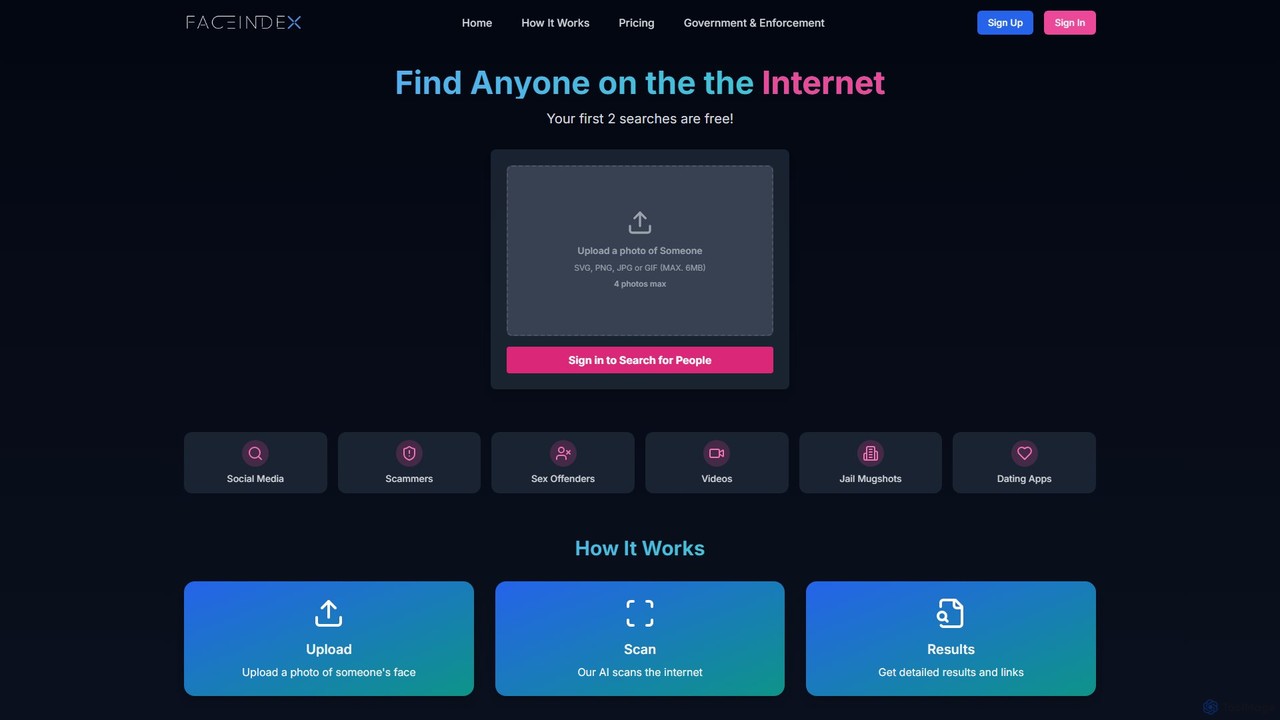
Face Index is an advanced AI-powered facial recognition search engine. Upload a photo to find anyone across the internet, including social media, dating apps, and public records. It's designed for identity verification, background checks, and online safety.

Investigation
Visits 6.2KFavorites 147Likes 141

About People Search

People Search tools are specialized AI platforms designed to find, verify, and aggregate public information about individuals. Unlike general search engines, these tools systematically scan professional networks, social media, public records, and websites to compile structured profiles. They are primarily used to discover professional contact details, verify identities, and enrich existing data for recruitment, sales, and due diligence. This focused approach provides more accurate and actionable information than a standard web search.

Core Features

  • Data Aggregation: Consolidates information from diverse online sources like LinkedIn, company websites, and public databases into a single, unified profile.
  • Contact Discovery: Identifies and verifies professional email addresses, phone numbers, and social media handles.
  • Identity Verification: Cross-references multiple data points to confirm an individual's identity and professional background.
  • Data Enrichment: Appends existing contact lists with additional details such as job titles, company information, and skills.
  • Advanced Filtering: Allows users to search for individuals based on specific criteria like industry, location, job title, or skills.

Use Cases

People Search tools are widely used by recruiters for sourcing passive candidates, sales and marketing teams for lead generation and prospecting, and journalists for verifying sources. They are also valuable for business development professionals conducting due diligence on potential partners and for individuals looking to reconnect with professional contacts.

How to Choose

When selecting a People Search tool, consider the accuracy and freshness of the data provided. Evaluate the breadth of its data sources (global vs. regional) and its compliance with privacy regulations like GDPR and CCPA. Also, assess its integration capabilities with your existing CRM or ATS platforms and whether the pricing model (per-search vs. subscription) aligns with your usage needs.

People Search use cases

1

Sourcing Passive Candidates for Recruitment

A tech recruiter needs to fill a senior software engineer role with specific skills in machine learning. Instead of relying solely on job boards, they use a People Search tool. By searching for keywords like 'Python,' 'TensorFlow,' and 'Lead Engineer,' the tool identifies potential candidates who are not actively applying for jobs. It provides their verified work emails, LinkedIn profiles, and links to their GitHub repositories, allowing the recruiter to craft a highly personalized and effective outreach message, significantly increasing the response rate.

2

Enriching Sales Leads for B2B Outreach

A B2B sales development representative (SDR) has a list of target companies but lacks direct contacts. Using a People Search tool, the SDR inputs a company name and a job title like 'VP of Marketing'. The tool returns a list of matching individuals, complete with their verified email addresses, phone numbers, and links to their professional profiles. This allows the SDR to bypass generic contact forms and gatekeepers, sending personalized emails directly to decision-makers, which improves engagement and shortens the sales cycle.

3

Verifying Sources for Journalistic Reporting

An investigative journalist is working on a story and needs to verify the credentials of an expert source they plan to quote. They use a People Search tool to cross-reference the source's claimed employment history, educational background, and publications. The tool aggregates data from professional networks, university websites, and public records, providing a comprehensive overview. This allows the journalist to confidently confirm the source's expertise and credibility, ensuring the accuracy and integrity of their reporting.

4

Conducting Due Diligence on Potential Partners

An investment firm is considering funding a startup. As part of their due diligence process, an analyst uses a People Search tool to research the founders' professional backgrounds. The tool helps uncover previous companies they've worked for, past business ventures, and their overall public digital footprint. This provides valuable context beyond the pitch deck, helping the firm assess the founders' experience and identify any potential red flags before making an investment decision.

5

Reconnecting with Professional Contacts

A marketing manager wants to reconnect with a former colleague from a previous job to explore a potential collaboration. They only remember the person's name and the company where they worked together years ago. By using a People Search tool, they can quickly find the colleague's current company, job title, and professional contact information. This enables them to re-establish the connection with relevant context, making the outreach more professional and likely to succeed than a cold message on a social platform.

6

Identifying Experts for Academic Research

A university researcher is studying a niche topic in renewable energy and needs to identify leading experts in the field for interviews or literature review. They use a People Search tool with filters for 'academic research,' 'solar energy,' and specific university affiliations. The tool generates a list of professors and researchers, along with links to their published papers, university profiles, and professional contact information. This streamlines the process of finding and vetting subject matter experts, saving a significant amount of manual search time.

People Search FAQ

What are AI People Search tools?

AI People Search tools are specialized search platforms that use artificial intelligence to find and consolidate publicly available information about individuals. Unlike a general web search, they are designed to aggregate data from multiple sources—such as professional networks, social media, and public records—into a structured, easy-to-read profile. They are primarily used in professional contexts like recruitment, sales, and journalism to find contact information and verify professional backgrounds.

How do People Search tools differ from standard search engines?

The key difference lies in focus and structure. Standard search engines like Google index the entire web and return a list of links, leaving the user to piece together information. People Search tools focus specifically on data related to individuals and present it in a consolidated, structured profile. They actively aggregate data from sources that may not rank high in general searches and often provide verified contact information, which is a primary feature not offered by standard search engines.

Is it legal and ethical to use People Search tools?

Reputable People Search tools operate legally by only accessing and aggregating publicly available information. They do not access private accounts or confidential data. Ethically, their use depends on the intent. Using them for legitimate professional purposes, such as recruiting, B2B sales prospecting, or journalistic fact-checking, is generally considered acceptable. However, using them for purposes that infringe on privacy, such as stalking or harassment, is unethical and illegal. Always choose tools that are transparent about their data sources and comply with privacy laws like GDPR and CCPA.

What kind of information can I find with a People Search tool?

The information available varies by tool, but typically you can find a range of professional and public data points. Common results include:

  • Contact Information: Verified email addresses (work and sometimes personal), phone numbers.
  • Professional Data: Current and past job titles, company names, and employment history.
  • Social & Web Presence: Links to professional profiles (like LinkedIn) and other public social media accounts.
  • Skills & Education: Listed skills, university degrees, and certifications.

Some advanced tools may also include information on publications, patents, or public records, depending on their data sources.

How to choose the right People Search tool?

Choosing the right tool depends on your specific needs. Consider the following factors:

  • Data Accuracy and Freshness: How often is the data updated? Look for tools that prioritize real-time verification.
  • Source Coverage: Does the tool cover the geographic regions and industries relevant to you?
  • Compliance: Ensure the tool complies with privacy regulations like GDPR and CCPA, especially if you operate in or contact people in those regions.
  • Integrations: Does it integrate with your existing workflow tools, such as a CRM (like Salesforce) or an Applicant Tracking System (ATS)?
  • Usability and Pricing: Is the interface intuitive? Does the pricing model (e.g., subscription vs. pay-per-credit) fit your budget and usage volume?