Search Best in category 1 results Research Assistant AI Tool

Popular AI tools in the Research Assistant field of Search include GPTSidePanel, etc., helping you quickly improve efficiency.

Free
GPTSidePanel

GPTSidePanel

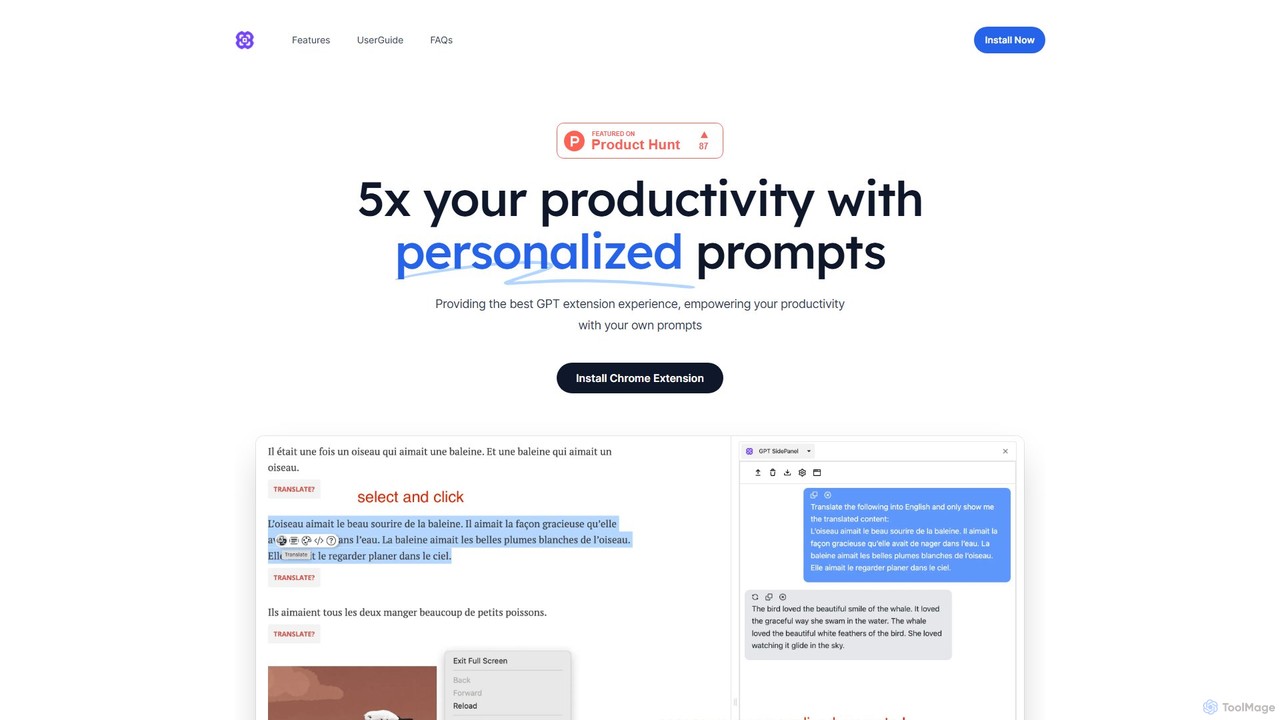
GPTSidePanel is a powerful AI browser extension that integrates a GPT-powered sidebar into your browsing experience. Boost your …

2.9K

About Research Assistant

Research Assistant tools are AI-powered platforms designed to streamline and enhance the process of information gathering, analysis, and synthesis, acting as a specialized sub-category within the broader 'Search' domain. These tools leverage advanced natural language processing (NLP) and machine learning algorithms to automate tedious research tasks. They empower users to quickly extract key insights, summarize complex documents, and verify facts, significantly boosting productivity for academic, business, and creative endeavors.

Core Features

  • Automated Data Extraction: Automatically identifies and extracts relevant information, facts, and figures from various sources like articles, reports, and web pages.
  • Intelligent Summarization: Generates concise summaries of lengthy texts, research papers, or reports, highlighting key arguments and findings.
  • Citation and Reference Management: Helps in organizing sources, generating citations in various styles, and building bibliographies.
  • Trend and Pattern Identification: Analyzes large datasets to uncover emerging trends, correlations, and insights that might be missed manually.
  • Fact-Checking and Verification: Cross-references information across multiple reputable sources to help validate claims and ensure accuracy.

Applicable Scenarios

Research Assistant tools are invaluable for professionals across various fields. Academics and students use them for literature reviews, thesis writing, and staying updated on new research. Market analysts leverage them for competitive intelligence and industry trend analysis. Content creators and journalists utilize these tools for fact-checking, background research, and generating well-informed articles or scripts.

How to Choose

When selecting an AI Research Assistant, consider its data source coverage (e.g., academic databases, web, proprietary data), the quality and customizability of its summarization capabilities, and its ability to handle different content types (text, PDFs, web pages). Evaluate its integration with existing workflows, citation management features, and the accuracy of its fact-checking. User interface, language support, and pricing models are also crucial factors for making an informed decision.

Research AssistantUse Cases

1

Automating Academic Literature Reviews

An academic researcher needs to conduct a comprehensive literature review for their thesis. Instead of manually sifting through hundreds of papers, they use an AI Research Assistant to automatically identify relevant articles, extract key findings, summarize methodologies, and generate a categorized list of sources. This process significantly reduces the time spent on initial research, allowing the researcher to focus more on critical analysis and synthesis, potentially saving weeks of work.

2

Market Trend Analysis for Business Strategy

A business strategist needs to understand emerging market trends in a specific industry to inform their company's next product launch. They feed various industry reports, news articles, and competitor analyses into an AI Research Assistant. The tool then identifies key trends, analyzes sentiment, and highlights potential opportunities or threats, presenting the findings in a structured report. This enables the strategist to make data-driven decisions faster and with greater confidence, gaining a competitive edge.

3

Content Creation and Fact Verification

A content creator is writing an article on a complex scientific topic and needs to ensure all facts are accurate and supported by credible sources. They use an AI Research Assistant to quickly gather background information, cross-reference statistics, and verify claims against academic papers and reputable news outlets. The tool helps them identify potential misinformation and provides direct links to supporting evidence, allowing them to produce high-quality, trustworthy content efficiently and avoid factual errors.

4

Competitive Intelligence Gathering

A product manager needs to monitor competitors' activities, product launches, and customer feedback to stay ahead in the market. An AI Research Assistant can continuously scan public web pages, news feeds, social media, and review sites for mentions of competitors. It then synthesizes this vast amount of data into actionable insights, such as competitor strengths, weaknesses, and emerging strategies. This proactive intelligence gathering helps the product manager refine their own product roadmap and marketing efforts.

5

Grant Proposal Research and Data Synthesis

A non-profit organization is preparing a grant proposal for a new community project and requires extensive data to support their claims and demonstrate impact. They use an AI Research Assistant to quickly find relevant demographic data, social impact studies, and funding statistics from government reports and academic databases. The tool helps synthesize this disparate information into coherent sections for the proposal, saving countless hours and increasing the likelihood of securing funding by presenting a well-researched and data-backed case.

6

Legal Document Analysis and Summarization

A legal professional needs to review a large volume of legal documents, case precedents, and regulations for a complex case. Manually reading through thousands of pages is time-consuming and prone to error. An AI Research Assistant can rapidly scan these documents, identify key clauses, extract relevant case law, and summarize the most pertinent sections. This significantly accelerates the legal research process, ensuring no critical information is missed and allowing the professional to build stronger arguments more efficiently.

Research AssistantFrequently Asked Questions