
ToolMage
Sign in

Best 1 Specialized Search Engine AI tools for Search

Popular Specialized Search Engine AI tools in Search include ZorexEye, helping you work more efficiently.

ZorexEye
Free

ZorexEye

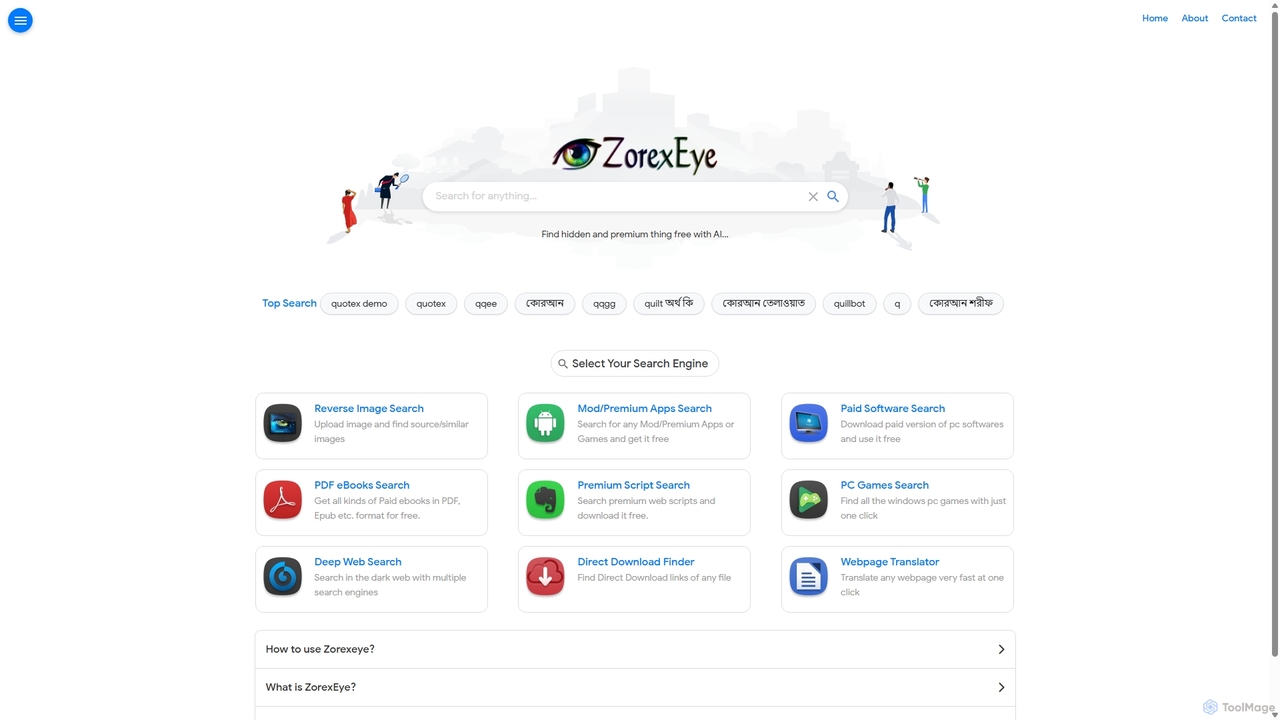
ZorexEye is an AI-powered search engine designed to find direct download links for premium apps, software, ebooks, and other digital files for free. It filters Google search results to provide clean, ad-free, and direct access, simplifying the process of finding hidden or hard-to-locate content.

Resource Finder
Visits 14.2KFavorites 118Likes 139

About Specialized Search Engine

Specialized Search Engines are AI-powered tools designed to efficiently discover and retrieve highly relevant information from specific, often niche, datasets. Unlike general search engines, they leverage advanced AI algorithms to understand complex queries within a defined domain, providing precise, context-aware results. This focus allows users to bypass irrelevant noise and quickly access expert knowledge, research, or industry-specific data, significantly enhancing information discovery in targeted fields.

Core Features

  • Domain-Specific Indexing: Focuses on indexing and organizing content from a curated set of sources relevant to a particular industry or topic.
  • Semantic Understanding: Utilizes natural language processing (NLP) to interpret the meaning and intent behind complex queries, not just keywords.
  • Advanced Filtering & Faceting: Offers granular filtering options based on metadata, content type, author, date, and other domain-specific attributes.
  • Knowledge Graph Integration: Connects related entities and concepts within the specialized domain to provide richer, more interconnected search results.

Applicable Scenarios

These engines are invaluable for professionals requiring deep dives into specific knowledge areas. They are widely used in fields like academic research for finding peer-reviewed papers, legal for case law discovery, and market intelligence for competitive analysis, where precision and relevance are paramount.

How to Choose

When selecting a specialized search engine, consider the breadth and depth of its data sources within your target domain, the sophistication of its AI for semantic understanding, and its customization options for filtering and alerts. Evaluate its integration capabilities with existing workflows and its pricing model based on usage or features.

Specialized Search Engine use cases

1

Conducting In-depth Academic Research

Academic researchers and students can utilize specialized search engines to quickly locate peer-reviewed articles, theses, and scientific papers within a particular field. By inputting complex research questions, the AI-driven engine filters out irrelevant general web results, providing direct access to highly credible and domain-specific scholarly content, significantly reducing literature review time and improving research quality.

2

Monitoring Industry Trends and Competitors

Market intelligence analysts and business strategists leverage specialized search engines to track emerging trends, competitor activities, and regulatory changes within their industry. These tools can continuously scan industry-specific news feeds, reports, and public filings, providing real-time alerts and comprehensive summaries that inform strategic decision-making and maintain a competitive edge.

3

Legal Document Discovery and Case Research

Legal professionals, including lawyers and paralegals, use specialized legal search engines to efficiently find relevant case law, statutes, regulations, and legal commentary. These AI-powered tools can process natural language queries to identify precedents, analyze legal arguments, and uncover obscure but critical documents, drastically reducing the time spent on manual legal research and improving the accuracy of legal advice.

4

Patent Search and Intellectual Property Analysis

Inventors, patent attorneys, and R&D teams leverage specialized patent search engines to conduct thorough prior art searches and analyze intellectual property landscapes. These AI tools can quickly sift through vast databases of patents, scientific publications, and technical disclosures, identifying similar inventions, assessing patentability, and informing strategic decisions regarding innovation and protection.

5

Healthcare and Medical Literature Review

Medical professionals, researchers, and pharmaceutical companies employ specialized medical search engines to access the latest clinical trials, drug information, disease research, and patient care guidelines. These AI-driven platforms can navigate complex medical terminology and vast datasets to provide evidence-based insights, supporting diagnostics, treatment planning, and drug development with high accuracy and speed.

6

Financial Data Analysis and Investment Research

Financial analysts, investors, and hedge fund managers utilize specialized financial search engines to sift through market data, company reports, news articles, and regulatory filings. These AI tools can identify trends, assess company performance, and uncover hidden risks or opportunities by processing vast amounts of structured and unstructured financial information, enabling more informed and timely investment decisions.

Specialized Search Engine FAQ

What are Specialized Search Engines?

Specialized Search Engines are AI-powered tools that focus on retrieving information from specific, curated datasets rather than the entire web. They leverage advanced AI to understand complex queries within a defined domain, providing highly relevant and context-aware results. Their core purpose is to offer deep, precise insights into niche areas like academic research, legal documents, or market intelligence.

How do Specialized Search Engines differ from general search engines?

The primary difference lies in their scope and depth. General search engines (like Google) index the entire web, offering broad results. Specialized search engines, however, focus on a narrow, deep dataset (e.g., medical journals, legal precedents). This allows them to provide more precise, relevant, and authoritative results within their specific domain, often with advanced filtering and semantic understanding tailored to that field, which general search engines cannot match.

What types of data can Specialized Search Engines access?

Specialized search engines can access a wide array of domain-specific data, including academic papers, scientific journals, legal documents (case law, statutes), patent databases, financial reports, market research data, medical literature, and industry-specific news feeds. Their indexing is tailored to these specific content types, often including proprietary or subscription-based sources not available to general web crawlers.

Who benefits most from using Specialized Search Engines?

Professionals and organizations requiring deep, accurate, and context-specific information benefit most. This includes academic researchers, legal practitioners, market intelligence analysts, R&D teams, medical professionals, and financial analysts. Anyone whose work depends on quickly finding authoritative information within a niche domain will find these tools invaluable for improving efficiency, decision-making, and the quality of their output.

What factors should I consider when choosing a Specialized Search Engine?

When choosing, consider the relevance and comprehensiveness of its data sources for your specific domain, ensuring it covers the information you need. Evaluate the sophistication of its AI for semantic search and advanced filtering capabilities. Look for customization options, integration with existing tools, and the user interface's ease of use. Finally, assess the pricing model, customer support, and the vendor's reputation for data accuracy and security.