Seo & Marketing Best in category 1 results Ppc AI Tool

Popular AI tools in the Ppc field of Seo & Marketing include 30chars, etc., helping you quickly improve efficiency.

30chars

30chars

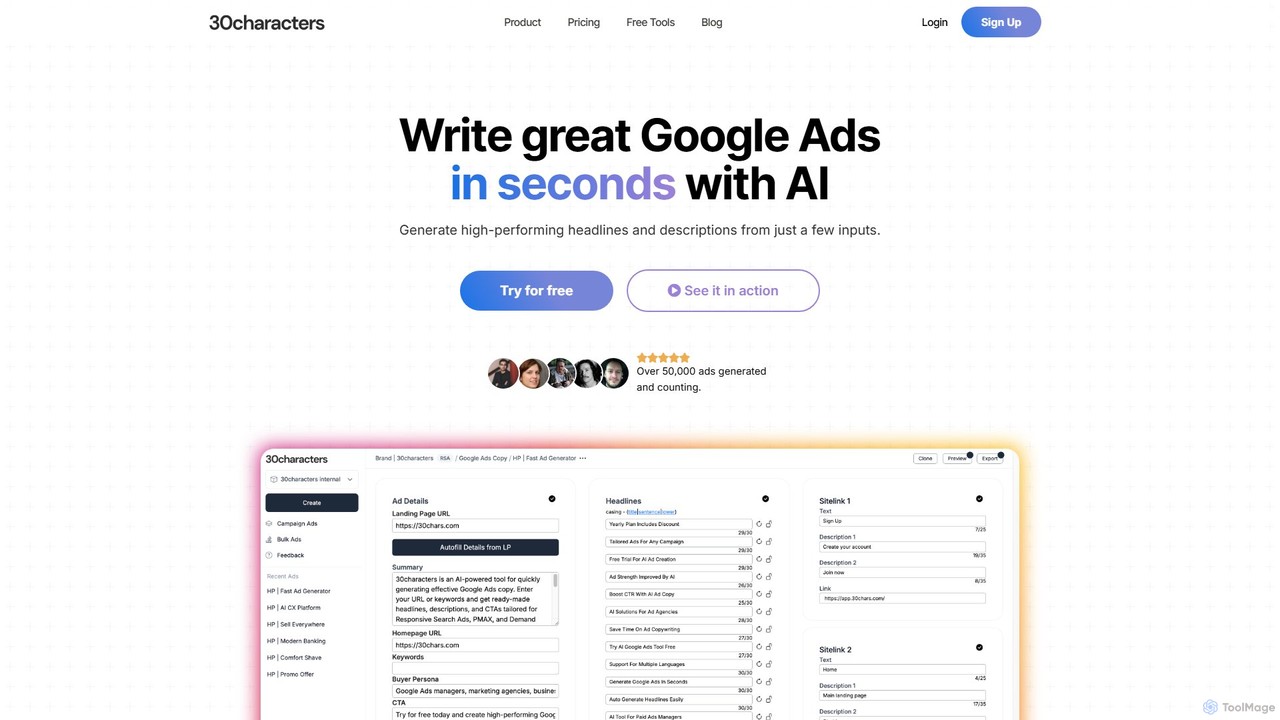
30chars is an AI-powered copilot designed for PPC and Google Ads professionals. It generates high-performing, conversion-focused ad copy, …

27.5K

About Ppc

AI PPC tools are a specialized category of software that leverages artificial intelligence to automate and optimize Pay-Per-Click advertising campaigns. These tools utilize machine learning algorithms to analyze vast datasets, predict outcomes, and make real-time adjustments to bids, targeting, and ad creatives. The primary value lies in enhancing campaign efficiency, maximizing return on ad spend (ROAS), and uncovering growth opportunities that are difficult to identify through manual analysis. They move beyond simple rule-based automation to provide predictive insights and strategic recommendations.

Core Features

  • AI-Powered Bid Management: Automatically adjusts bids in real-time based on conversion probability, device, location, and other signals to maximize ROI.
  • Predictive Performance Analysis: Forecasts campaign outcomes like clicks, conversions, and cost-per-acquisition (CPA) under different budget scenarios.
  • Automated Ad Copy & Creative Generation: Generates and tests numerous variations of ad headlines, descriptions, and even images to find the best-performing combinations.
  • Intelligent Audience Targeting: Identifies and refines target audience segments by analyzing user behavior and demographic data for more precise ad delivery.
  • Anomaly Detection: Continuously monitors campaign metrics and automatically alerts managers to significant performance deviations or budget pacing issues.

Use Cases

AI PPC tools are widely used by digital marketing agencies managing multiple client accounts, e-commerce businesses aiming to scale their advertising efforts, and in-house marketing teams at B2B and B2C companies. They are particularly effective for managing large, complex campaigns across platforms like Google Ads and Meta Ads, where manual optimization is time-consuming and less effective.

How to Choose

When selecting an AI PPC tool, consider its integration capabilities with your required ad platforms (e.g., Google, Meta, Amazon). Evaluate the level of automation and control it offers—some tools are fully automated while others provide recommendations for manual approval. Also, assess the sophistication of its reporting and analytics features, and ensure the pricing model (often a percentage of ad spend or a flat fee) aligns with your budget and campaign scale.

PpcUse Cases

1

Automated Bid Strategy Optimization

A performance marketer at an e-commerce company manages dozens of campaigns across Google Shopping and Search. Using an AI PPC tool, they can move beyond manual bid adjustments. The AI analyzes conversion data in real-time, factoring in seasonality, user location, and device type to automatically set the optimal bid for each auction. This process not only saves hours of manual work daily but also improves the Return on Ad Spend (ROAS) by allocating budget more effectively to high-converting products and keywords.

2

Dynamic Ad Copy Generation and Testing

A digital marketing agency needs to create fresh, relevant ad copy for a client in the competitive travel industry. Instead of manually writing and A/B testing a few ad variations, they use an AI PPC tool. The tool analyzes top-performing ads, landing page content, and competitor messaging to generate hundreds of headline and description combinations. It then automatically launches micro-tests to identify the most engaging copy for different audience segments, significantly increasing click-through rates (CTR) and quality scores across all campaigns.

3

Predictive Budget Allocation for Maximum Impact

A marketing director for a SaaS company is planning the quarterly budget. They need to decide how to allocate funds between Google Ads, LinkedIn Ads, and Meta Ads to maximize lead generation. An AI PPC tool with predictive capabilities can simulate performance based on different budget scenarios. It forecasts the expected number of leads and the cost-per-lead for each platform at various spending levels, allowing the director to make a data-driven decision and build a media plan that optimizes the entire marketing budget for the best possible outcome.

4

Intelligent Keyword Discovery and Expansion

A PPC specialist is launching a campaign for a new B2B software product. Manual keyword research can be limiting. By using an AI PPC tool, the specialist can uncover high-intent, long-tail keywords that competitors might be overlooking. The AI analyzes search query data, industry forums, and competitor strategies to suggest relevant keyword clusters. It also helps identify negative keywords to prevent wasted ad spend on irrelevant traffic, ensuring the campaign targets the most qualified audience from the start.

5

Automated Anomaly Detection and Alerts

An in-house marketing team at a large retail company manages a multi-million dollar ad spend. It's impossible to monitor every campaign and ad group manually 24/7. An AI PPC tool provides automated anomaly detection. It constantly scans performance data and sends real-time alerts if it detects a sudden drop in click-through rate, a spike in cost-per-click, or an ad that has been disapproved. This allows the team to react quickly to fix problems, pause underperforming assets, and prevent significant budget waste before it escalates.

6

Cross-Platform Performance Optimization

A B2C brand runs campaigns on Google Ads, Meta Ads, and TikTok. Each platform has its own optimization engine, but they don't communicate with each other. A sophisticated AI PPC tool can ingest data from all these platforms into a single dashboard. It analyzes the entire customer journey, identifying how interactions on one platform influence conversions on another. Based on this holistic view, it provides recommendations for shifting budget between platforms to maximize overall ROI, something that is nearly impossible to do accurately with siloed platform data.

PpcFrequently Asked Questions