Seo & Marketing Best in category 1 results Content Creation AI Tool

Popular AI tools in the Content Creation field of Seo & Marketing include Quetext, etc., helping you quickly improve efficiency.

Quetext

Quetext

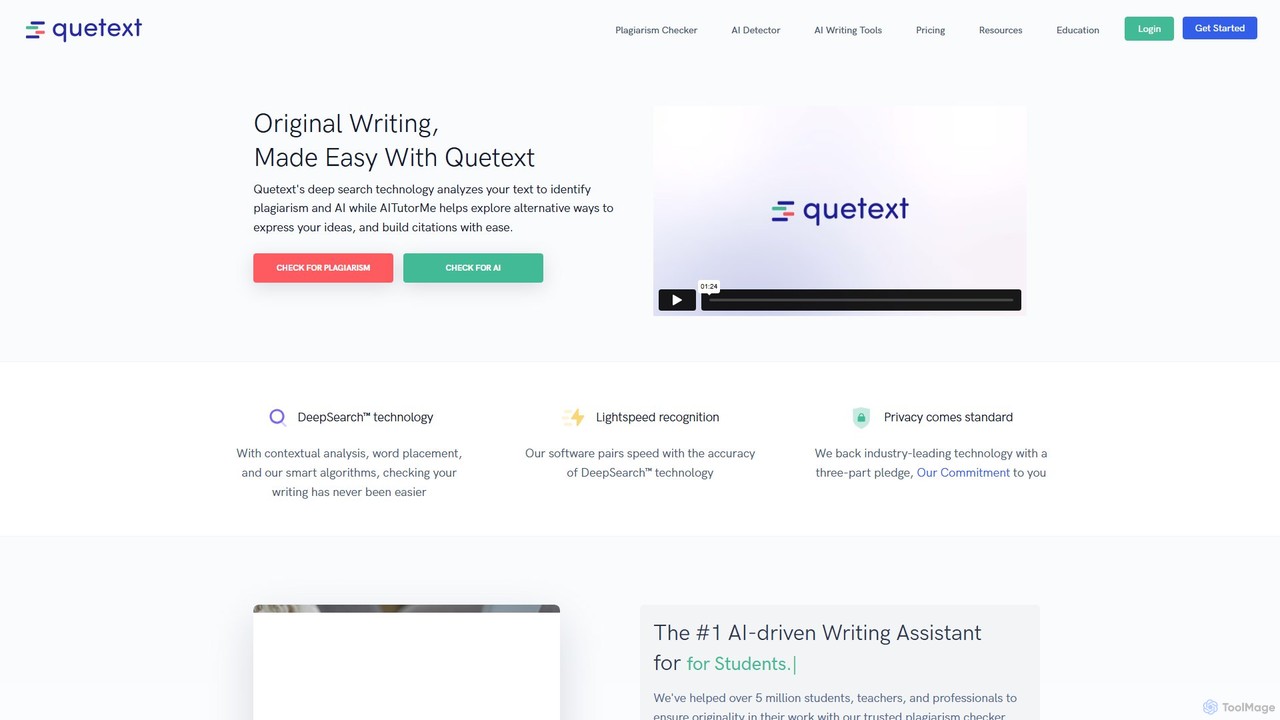
Quetext is a comprehensive AI-powered writing assistant designed for students, teachers, and professionals. It offers a trusted plagiarism …

456.6K

About Content Creation

AI Content Creation tools are a class of software that leverages generative AI to produce original written material for marketing and SEO purposes. These tools utilize large language models (LLMs) to understand prompts and generate human-like text, from blog posts to social media updates. Their primary value lies in accelerating the content production pipeline, enabling teams to scale their output, overcome writer's block, and maintain a consistent publishing schedule. They act as a powerful assistant for creating first drafts and exploring creative angles efficiently.

Core Features

  • Article & Blog Generation: Creates long-form articles, blog posts, and essays based on a given topic, keywords, and outline.
  • Marketing Copywriting: Produces persuasive text for ads, emails, landing pages, and product descriptions using established marketing frameworks.
  • Social Media Content: Generates short-form posts, captions, and ideas tailored to specific platforms like Twitter, LinkedIn, or Instagram.
  • Tone & Style Adaptation: Adjusts the writing style of the output to match a specific brand voice, such as professional, witty, or empathetic.
  • Content Repurposing: Transforms existing content, like a blog post, into different formats such as a social media thread or an email newsletter.

Use Cases

These tools are widely used by digital marketing agencies, in-house content teams, SEO specialists, and e-commerce businesses. Common applications include drafting weekly blog posts to drive organic traffic, generating multiple ad copy variations for A/B testing, and creating a consistent stream of content for social media calendars. They are particularly effective for tasks that require high volume and speed.

How to Choose

When selecting an AI Content Creation tool, consider the quality and originality of the generated text. Evaluate the range of available templates and formats to ensure they match your needs. Assess customization options for controlling tone, style, and keyword inclusion. Finally, check for integration capabilities with your existing workflow tools, such as content management systems (CMS) or social media schedulers, to ensure a seamless process.

Content CreationUse Cases

1

Automating Blog Post Drafting

A content marketer for a SaaS company needs to publish four SEO-optimized blog posts per week to increase organic traffic. By using an AI content creation tool, they input a target keyword, a brief outline, and key talking points. The AI generates a comprehensive first draft of over 1,500 words in minutes. This process reduces the initial writing time from several hours to under 30 minutes per article, freeing up the marketer to focus on in-depth editing, adding unique industry insights, and fact-checking, ultimately improving both content quality and publishing velocity.

2

Scaling Social Media Content Production

A social media manager for a retail brand is responsible for maintaining an active presence on five different platforms. To save time, they use an AI tool to repurpose a single piece of long-form content, like a new blog post. The tool generates a variety of short-form content from it: a professional summary for LinkedIn, an engaging question for Facebook, a concise thread for Twitter, and several eye-catching captions for Instagram posts. This allows the manager to create a week's worth of diverse, platform-specific content in under an hour, ensuring consistent messaging and engagement.

3

Generating High-Converting Ad Copy

A performance marketer needs to run A/B tests for a new Google Ads campaign to find the most effective messaging. Instead of manually writing dozens of headlines and descriptions, they provide the AI tool with product features, benefits, and target audience persona. The tool generates 50+ unique ad copy variations based on proven copywriting formulas like PAS (Problem-Agitate-Solution). The marketer can then quickly launch multiple ad groups to test these variations, accelerating the optimization process and identifying winning copy faster, leading to a higher click-through rate (CTR) and lower cost-per-acquisition (CPA).

4

Crafting Engaging Email Marketing Campaigns

An email marketer is tasked with creating a 5-part welcome email series for new subscribers. To overcome writer's block and ensure consistency, they use an AI content creator. They define the goal for each email (e.g., introduce the brand, showcase top products, offer a discount). The AI then generates compelling subject lines and body copy for the entire sequence. This not only saves significant time but also provides fresh ideas for angles and calls-to-action, resulting in a more engaging and effective onboarding experience for new customers.

5

Generating SEO-Friendly Product Descriptions

An e-commerce manager needs to write unique descriptions for a new collection of 200 products. Writing each one manually is time-consuming and risks repetitive content. They upload a CSV file with product names, features, and target keywords to an AI content tool. The tool then generates unique, persuasive, and SEO-friendly descriptions for each item in bulk. This automates a tedious task, ensures all product pages have original content to avoid duplicate content penalties, and improves the chances of ranking for specific product-related search queries.

6

Developing Video Scripts and Outlines

A YouTuber or corporate video producer needs to create a script for a 10-minute educational video. They start by providing the AI tool with the video's topic and key learning objectives. The AI generates a detailed outline, including an introduction hook, main talking points with supporting details, and a concluding call-to-action. It can even draft sections of the script in a conversational tone. This approach streamlines the pre-production process, helps structure the narrative logically, and ensures all essential information is covered, leading to a more polished and effective final video.

Content CreationFrequently Asked Questions