
Genlook
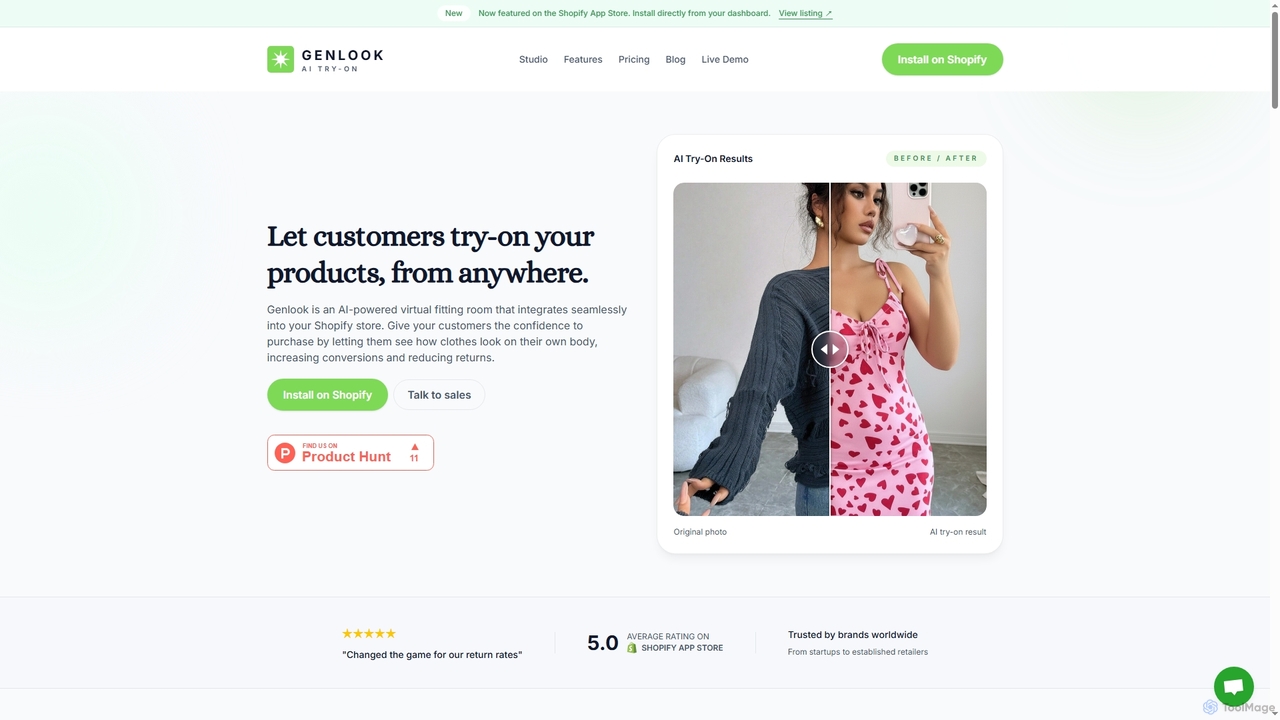
Genlook is an AI-powered virtual try-on solution for Shopify stores. It allows customers to see how clothes look …
Genlook is an AI-powered virtual try-on solution for Shopify stores. It allows customers to see how clothes look on their own bodies by uploading a photo, which is proven to increase conversions by over 35% and significantly reduce returns.
About Conversion Optimization
Conversion Optimization tools for Shopify are AI-powered applications designed to enhance the percentage of visitors who complete desired actions on an e-commerce store. These tools leverage data analysis, A/B testing, and personalization to identify and remove friction points in the customer journey. Their primary goal is to maximize sales, lead generation, and overall revenue for Shopify merchants by turning more browsers into buyers. They offer strategic insights and automated functionalities to refine the shopping experience.
Core Features
- A/B Testing & Experimentation: Systematically test different versions of website elements (e.g., product pages, checkout flows) to determine which performs better.
- Personalization & Segmentation: Deliver tailored content, product recommendations, and offers based on visitor behavior, demographics, or purchase history.
- Heatmaps & Session Recordings: Visualize user interactions on pages to understand where visitors click, scroll, and encounter issues, revealing usability problems.
- Pop-ups & Exit-Intent Offers: Capture attention and prevent abandonment with targeted pop-ups, email capture forms, or special offers triggered by user behavior.
- Urgency & Scarcity Tactics: Create a sense of immediate need with countdown timers, stock level indicators, or limited-time deals to encourage quicker purchases.
Applicable Scenarios
E-commerce managers and marketing teams on Shopify stores utilize these tools to fine-tune every aspect of the customer journey. For instance, a store owner might use A/B testing to compare two different product page layouts to see which one leads to more "Add to Cart" clicks. Another scenario involves using personalization engines to recommend relevant products to returning customers, significantly increasing average order value.
How to Choose
When selecting Conversion Optimization tools for Shopify, consider the specific features offered (e.g., A/B testing, personalization, analytics), ease of integration with your existing Shopify setup, and the level of data insights provided. Evaluate pricing models based on your store's traffic and revenue, and ensure the tool offers robust customer support and clear reporting to track your optimization efforts effectively.
Conversion OptimizationUse Cases
Optimizing Product Page Layouts for Higher Conversions
An e-commerce manager uses A/B testing features to compare two distinct layouts for a new product page on their Shopify store. They track metrics like "Add to Cart" rate and conversion rate to determine which design drives more sales, continuously refining the user experience. This iterative process ensures that the most effective layout is always in use, potentially increasing conversions by 10-15%.
Reducing Abandoned Carts with Targeted Exit-Intent Pop-ups
A Shopify store owner implements exit-intent pop-ups that offer a small discount or free shipping to visitors attempting to leave their cart. This proactive approach helps recover potential lost sales by addressing common reasons for abandonment before the customer leaves. By capturing attention at a critical moment, these pop-ups can reduce cart abandonment rates by up to 20%.
Personalizing Product Recommendations to Boost AOV
A marketing specialist leverages AI-driven personalization tools to display tailored product suggestions to customers based on their browsing history, past purchases, and real-time behavior. This increases the likelihood of cross-sells and upsells, boosting average order value (AOV). By presenting highly relevant items, stores can see a 15-25% increase in AOV and customer satisfaction.
Identifying User Friction Points with Heatmaps and Session Recordings
A UX designer analyzes heatmaps and session recordings on key checkout pages to pinpoint areas where customers hesitate, click erroneously, or drop off. This visual data helps them make informed design changes to streamline the checkout process and improve completion rates. By understanding user behavior, they can reduce checkout abandonment by 5-10% through targeted UI/UX improvements.
Creating Urgency for Limited-Time Offers to Drive Quick Sales
A promotions manager uses scarcity and urgency tools to add countdown timers and "low stock" alerts to specific product pages during flash sales. This encourages immediate purchases by creating a fear of missing out, driving quick conversions for high-demand items. Such tactics can significantly boost sales during promotional periods, often leading to a 20-30% increase in conversion rates for featured products.
Segmenting Customers for Highly Targeted Email Campaigns
A CRM specialist uses customer segmentation features to group visitors based on their behavior (e.g., first-time visitors, repeat buyers, high-value customers). They then send highly relevant email campaigns with personalized offers, leading to higher open rates and conversion rates for specific segments. This precision targeting can improve email campaign ROI by 25-40% compared to generic blasts.