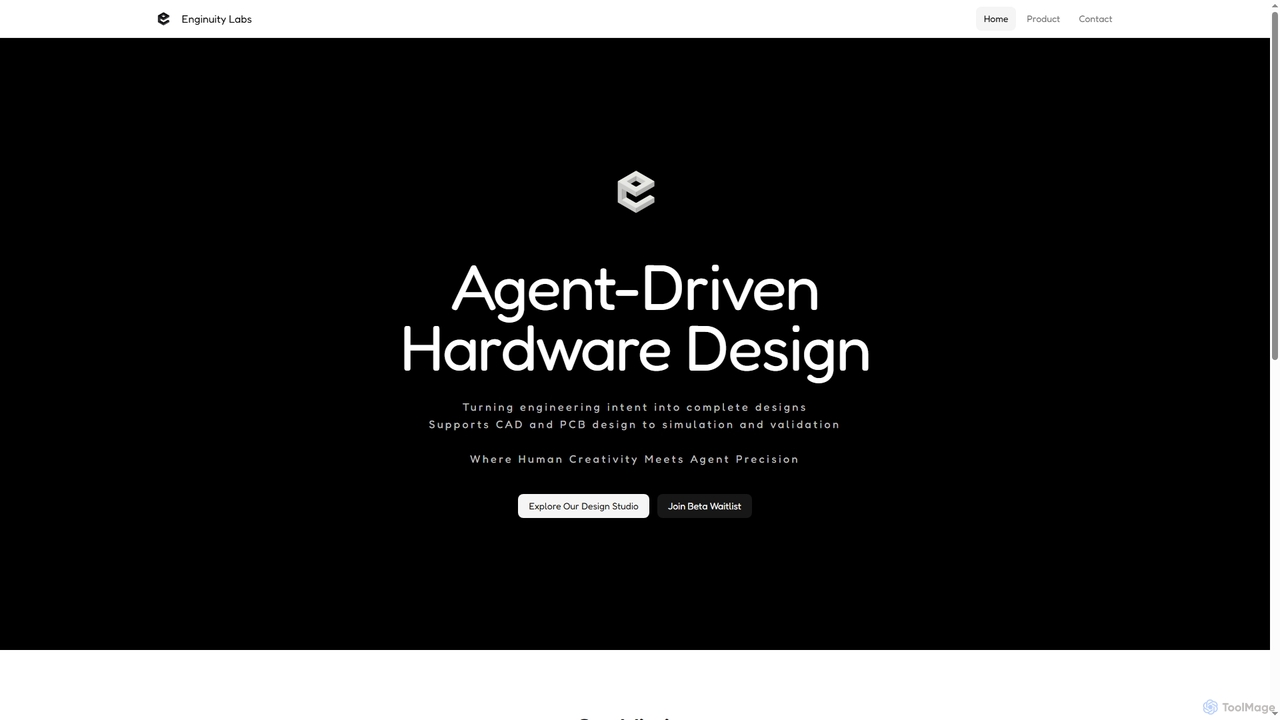
Enginuity Labs
Enginuity Labs offers an AI-powered engineering design studio, integrating intelligent agents into CAD, PCB, and simulation workflows. It …
Enginuity Labs offers an AI-powered engineering design studio, integrating intelligent agents into CAD, PCB, and simulation workflows. It automates repetitive tasks, enhances team collaboration with AI insights, and empowers engineers to focus on creativity while AI manages complexity in design processes.
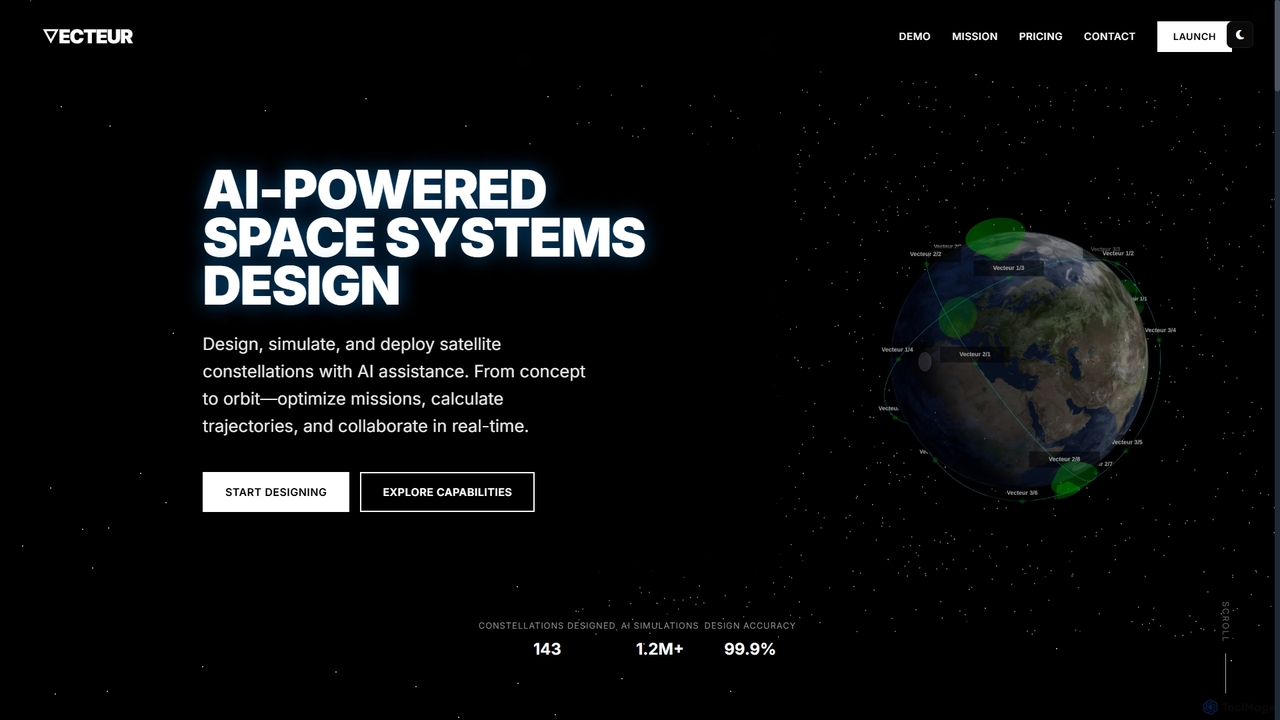
Vecteur
Vecteur is an AI-powered platform revolutionizing space systems engineering, enabling users to design, simulate, and deploy satellite constellations …
Vecteur is an AI-powered platform revolutionizing space systems engineering, enabling users to design, simulate, and deploy satellite constellations with unprecedented speed and accuracy. It offers intelligent design assistance, real-time simulation, and collaborative environments for various space missions.
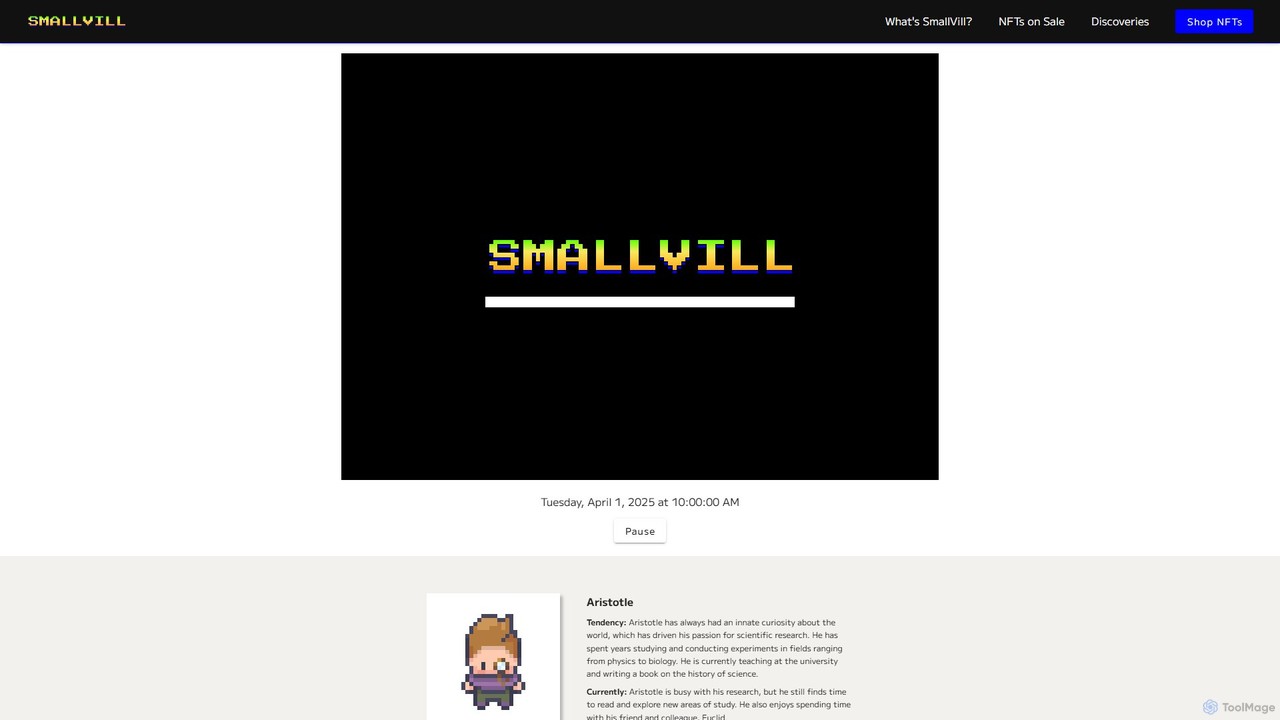
SmallVill
SmallVill is a groundbreaking virtual environment simulating the lives and interactions of dozens of AI agents. Inspired by …
SmallVill is a groundbreaking virtual environment simulating the lives and interactions of dozens of AI agents. Inspired by Stanford's research, it allows users to observe emergent social behaviors, from romantic planning to career changes, in a dynamic, modern village setting. It also features an exclusive NFT collection tied to its unique AI characters.
About Simulation
AI Simulation tools are a class of software that use artificial intelligence to create dynamic, data-driven models of real-world systems, processes, and environments. These tools leverage machine learning, particularly reinforcement learning, to enable virtual agents to learn, adapt, and make decisions within the simulated world. This allows users to test complex 'what-if' scenarios, optimize strategies, and train autonomous systems in a safe, cost-effective, and scalable manner. Their primary value lies in predicting outcomes for systems too complex or dangerous to experiment with in reality.
Core Features
- Dynamic Environment Modeling: Creates realistic and interactive virtual worlds with configurable physics, events, and conditions.
- Agent-Based Simulation: Models the behavior and interactions of numerous autonomous agents, such as vehicles, pedestrians, or customers.
- Reinforcement Learning Integration: Provides environments for training AI models through trial-and-error, allowing them to discover optimal behaviors.
- Scenario Generation: Automatically creates and runs thousands of variations of a situation to test system robustness and identify edge cases.
- Predictive Analytics: Uses simulation data to forecast future trends, identify potential risks, and analyze the impact of decisions.
Applicable Scenarios
These tools are crucial in industries like automotive for training self-driving cars, in logistics for optimizing supply chains, and in finance for modeling market risks. Urban planners use them to simulate traffic flow, while robotics engineers test robot behaviors in virtual environments before physical deployment. They are also applied in scientific research and game development.
Selection Criteria
When choosing an AI Simulation tool, consider its domain specificity—whether it's tailored for robotics, finance, or another field. Evaluate its scalability to handle the required complexity and number of agents. Assess its integration capabilities with your existing data sources and software stacks. Finally, consider the level of fidelity and realism required for your specific application.
SimulationUse Cases
Training Autonomous Vehicle Algorithms
An automotive engineering team uses an AI simulation platform to train and validate a self-driving car's perception and control systems. The platform generates a high-fidelity virtual city, complete with realistic traffic patterns, diverse weather conditions, and unpredictable pedestrian behavior. The AI agent drives millions of virtual miles, encountering rare and dangerous edge cases like sudden lane changes or road obstacles that would be unsafe to test on public roads. This process significantly accelerates development, improves the AI's decision-making reliability, and reduces the need for expensive physical prototypes and track testing.
Optimizing Supply Chain and Logistics Networks
A logistics manager for a global retail company uses an agent-based simulation to model their entire supply chain. Each warehouse, truck, and port acts as an autonomous agent with specific behaviors and constraints. The manager can test various scenarios, such as a sudden surge in demand, a port closure, or a new warehouse location. The AI runs thousands of simulations to identify potential bottlenecks, predict delivery times with greater accuracy, and discover the most cost-effective inventory and routing strategies. This proactive approach helps the company build a more resilient and efficient logistics network.
Modeling Financial Market Risks
A quantitative analyst at an investment firm uses an AI simulation to stress-test investment portfolios. The tool models the complex, non-linear interactions between various financial assets, incorporating macroeconomic indicators and historical volatility. The analyst can simulate thousands of potential market futures, including 'black swan' events like a sudden market crash or geopolitical crisis. The simulation helps quantify risks like Value at Risk (VaR) more accurately than traditional models and allows the firm to develop hedging strategies that are robust under a wider range of adverse conditions, protecting client investments.
Developing and Testing Robotics Systems
A robotics engineer is designing a new autonomous warehouse robot. Instead of building numerous physical prototypes, they use a simulation environment with accurate physics (a 'digital twin'). They can test the robot's navigation algorithms, object manipulation capabilities, and interaction with other robots in a virtual warehouse. The reinforcement learning module allows the robot to learn complex tasks, like efficient pathfinding or delicate item handling, through millions of trials in a compressed timeframe. This 'sim-to-real' approach drastically reduces development costs and time, allowing for more robust and optimized robot behavior before a single physical unit is built.
Simulating Urban Traffic Flow for City Planning
An urban planning department uses an AI simulation to analyze and improve traffic management in a major city. The model includes thousands of agent-based vehicles and pedestrians, each with unique origins, destinations, and behavioral patterns. Planners can test the impact of proposed infrastructure changes, such as adding a new subway line, converting a street to one-way, or adjusting traffic light timings. The simulation visualizes potential congestion points, predicts changes in average commute times, and evaluates the impact on air pollution, providing data-driven evidence to support policy decisions and optimize urban mobility for residents.
Modeling Disease Spread for Public Health
Public health researchers use an agent-based AI simulation to model the spread of an infectious disease. Each individual in a virtual population is an agent with attributes like age, location, and social behavior. The simulation models interactions at homes, workplaces, and public spaces. Researchers can test the effectiveness of various intervention strategies, such as vaccination campaigns, mask mandates, or school closures, by observing their impact on the simulated infection rate. This allows policymakers to compare the potential outcomes of different public health measures and make more informed decisions during a health crisis.