Debugg
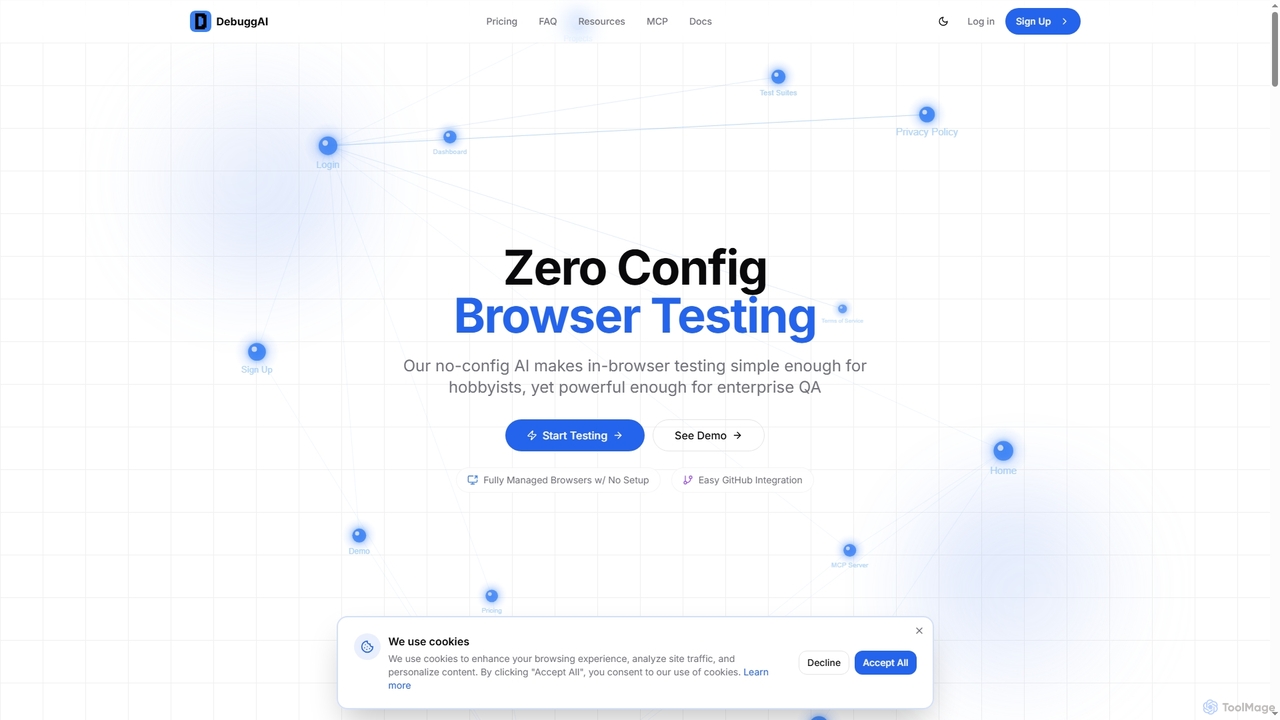
Debugg is an AI-powered platform that provides automated browser testing for every GitHub Pull Request. It offers zero-configuration, …
Debugg is an AI-powered platform that provides automated browser testing for every GitHub Pull Request. It offers zero-configuration, fully managed end-to-end testing, integrating seamlessly with your repository to deliver inline results and actionable insights directly in your PR comments, streamlining your development workflow.
TestPlan
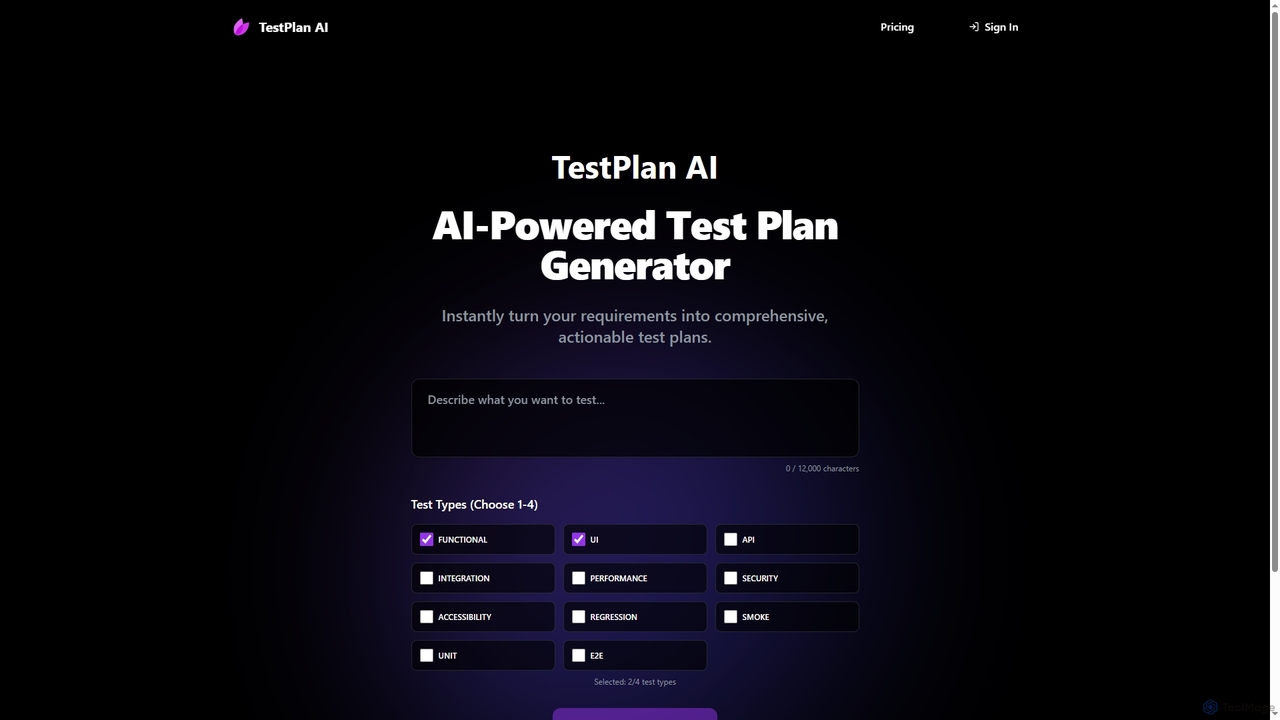
TestPlan is a powerful, AI-powered tool designed to instantly transform project requirements into comprehensive, actionable test plans and …
TestPlan is a powerful, AI-powered tool designed to instantly transform project requirements into comprehensive, actionable test plans and detailed test cases. It supports a wide range of test types, from functional to security, making software testing more efficient for development teams.
TestNeo
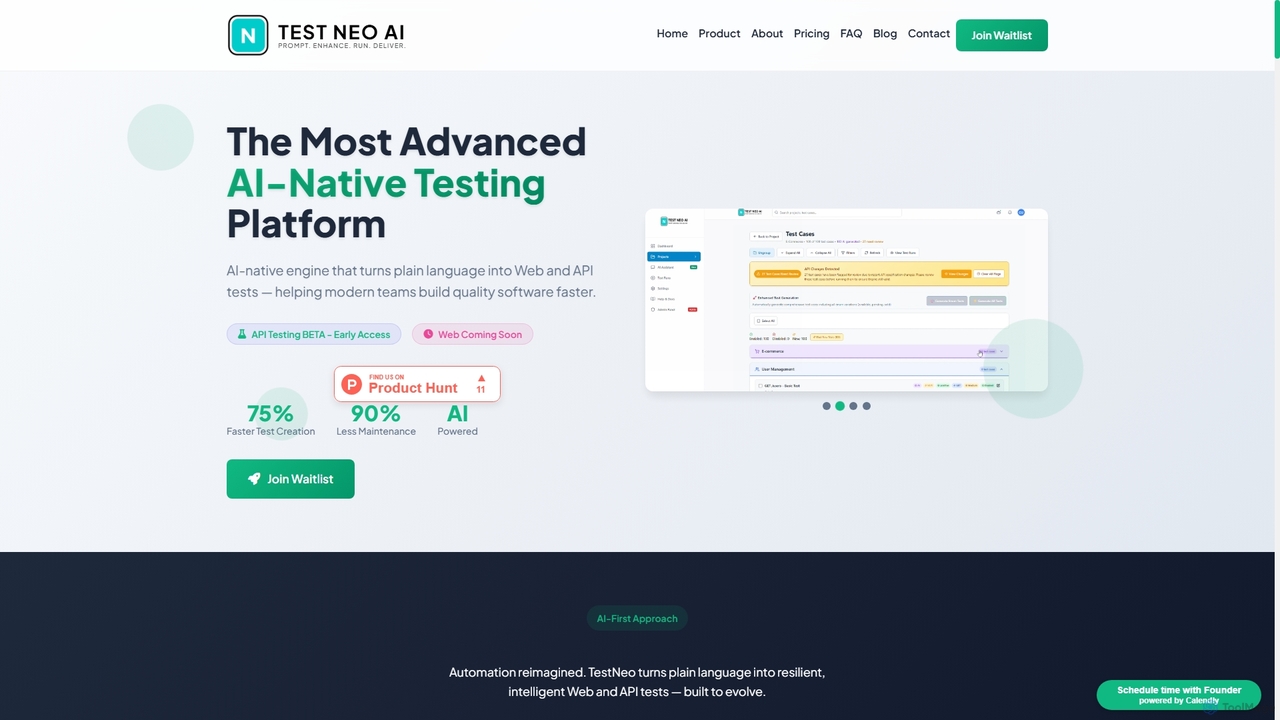
TestNeo is an AI-powered test automation platform that transforms natural language inputs into executable test scripts. It streamlines …
TestNeo is an AI-powered test automation platform that transforms natural language inputs into executable test scripts. It streamlines the testing process by eliminating manual scripting, offering self-healing automation, intelligent reporting, and seamless cloud execution. Designed for both technical and non-technical users, TestNeo accelerates API and performance testing, ensuring robust software quality with minimal effort.
DevBlogs
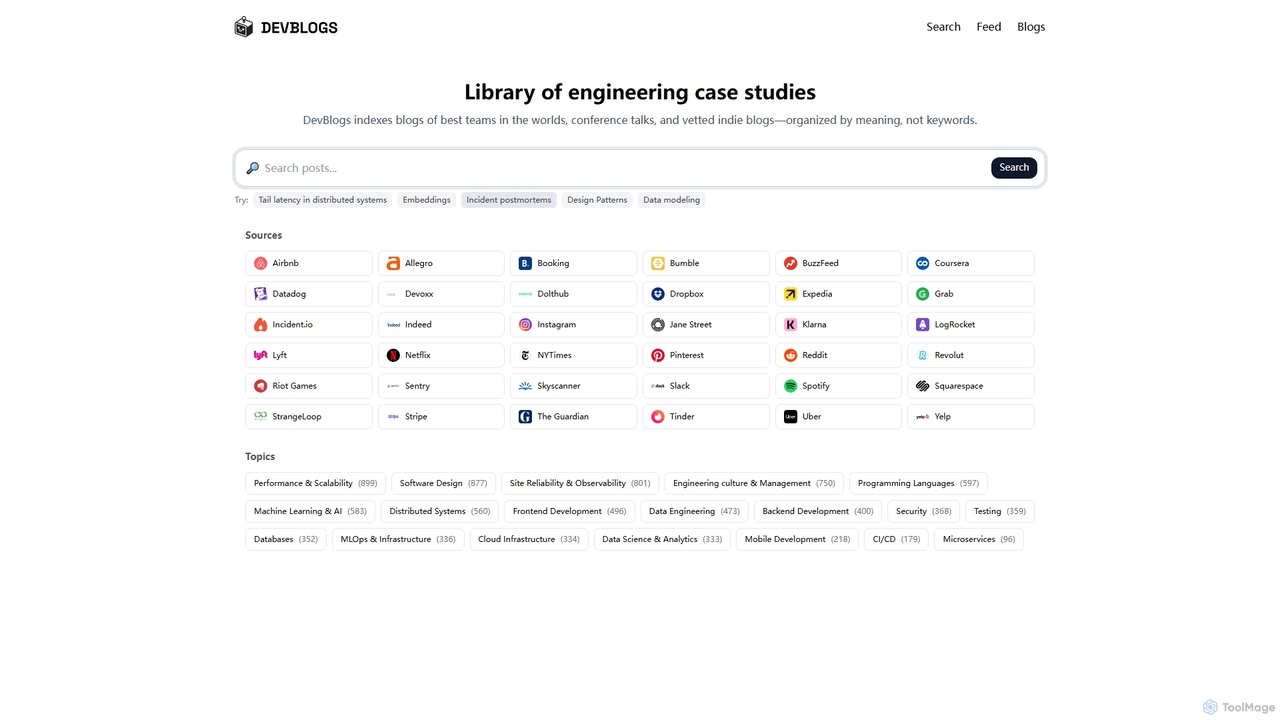
DevBlogs is a curated library indexing engineering case studies, tech blogs, and conference talks from leading global teams. …
DevBlogs is a curated library indexing engineering case studies, tech blogs, and conference talks from leading global teams. It organizes content by meaning and specific technical topics, providing a valuable resource for developers and engineers to discover insights and best practices.
About Testing
AI Testing tools are a specialized category within software development that leverage artificial intelligence to automate and enhance the software testing process. These tools utilize machine learning, natural language processing, and computer vision to generate test cases, execute tests, identify defects, and analyze results with greater efficiency and accuracy than traditional methods. Their primary value lies in accelerating quality assurance cycles, reducing manual effort, and improving overall software reliability across various stages of the development lifecycle.
Core Features
- Intelligent Test Case Generation: Automatically creates comprehensive test scenarios and data based on requirements, code changes, or user behavior patterns.
- Autonomous Test Execution: Executes tests across different platforms and environments without constant human intervention, adapting to UI changes.
- Predictive Defect Detection: Uses AI to analyze historical data and identify potential bugs or vulnerabilities early in the development process.
- Smart Regression Testing: Optimizes regression test suites by prioritizing tests most relevant to recent code changes, saving time and resources.
- Performance Anomaly Detection: Monitors application performance and uses AI to detect unusual patterns or bottlenecks that indicate potential issues.
Applicable Scenarios
AI testing tools are crucial for development teams practicing Agile and DevOps, where rapid iteration and continuous delivery are standard. They are widely adopted by QA engineers for automating repetitive tests, by developers for integrating testing into CI/CD pipelines, and by product managers to ensure high-quality releases. Specific applications include validating complex web applications, mobile apps, APIs, and microservices, especially in environments with frequent updates.
How to Choose
When selecting an AI testing tool, consider its compatibility with your existing tech stack and CI/CD pipeline, the breadth of its testing capabilities (e.g., functional, performance, security), and its ability to learn and adapt to application changes. Evaluate the ease of test creation and maintenance, the clarity of its reporting and analytics, and the vendor's support for AI model training and customization. Scalability, pricing models, and community support are also vital factors for long-term adoption.
TestingUse Cases
Automating Regression Testing for Web Applications
For large-scale web applications with frequent updates, QA teams can use AI testing tools to automatically generate and execute regression tests. The AI learns from previous test runs and UI changes, ensuring that new code deployments don't break existing functionalities without requiring extensive manual re-testing. This significantly reduces testing cycles and speeds up release times.
Intelligent Test Data Generation for Complex Systems
Developers working on systems with intricate data dependencies, such as financial platforms or e-commerce sites, often struggle with creating realistic and varied test data. AI testing tools can analyze database schemas and application logic to automatically generate synthetic, privacy-compliant test data that covers a wide range of edge cases, improving test coverage and data quality.
Early Bug Detection in Mobile App Development
Mobile app developers can integrate AI testing into their CI/CD pipelines to proactively identify defects. The AI can simulate diverse user interactions, explore various device configurations, and detect visual anomalies or crashes during nightly builds. This allows developers to catch and fix bugs much earlier, before they impact user experience or become more costly to resolve.
Performance Bottleneck Identification in Microservices
For architects and performance engineers managing distributed microservices, AI testing tools can continuously monitor service performance under varying loads. By applying machine learning, these tools can detect subtle performance degradations or unusual latency patterns that human eyes might miss, pinpointing the exact microservice or API causing the bottleneck, thus optimizing system efficiency.
Enhancing API Testing with Self-Healing Capabilities
QA automation engineers often face challenges with brittle API tests that break due to minor changes in API contracts. AI testing tools can employ self-healing mechanisms, automatically adapting test scripts to minor API endpoint or payload modifications. This reduces test maintenance overhead and ensures API tests remain robust and reliable even as the backend evolves.
Security Vulnerability Scanning in Development Lifecycle
Security teams can leverage AI testing tools to embed continuous security scanning within the software development lifecycle. These tools can analyze code for common vulnerabilities, identify potential attack vectors, and even simulate sophisticated attacks to uncover weaknesses in real-time. This proactive approach helps in building more secure applications from the ground up, reducing post-release security incidents.