Air
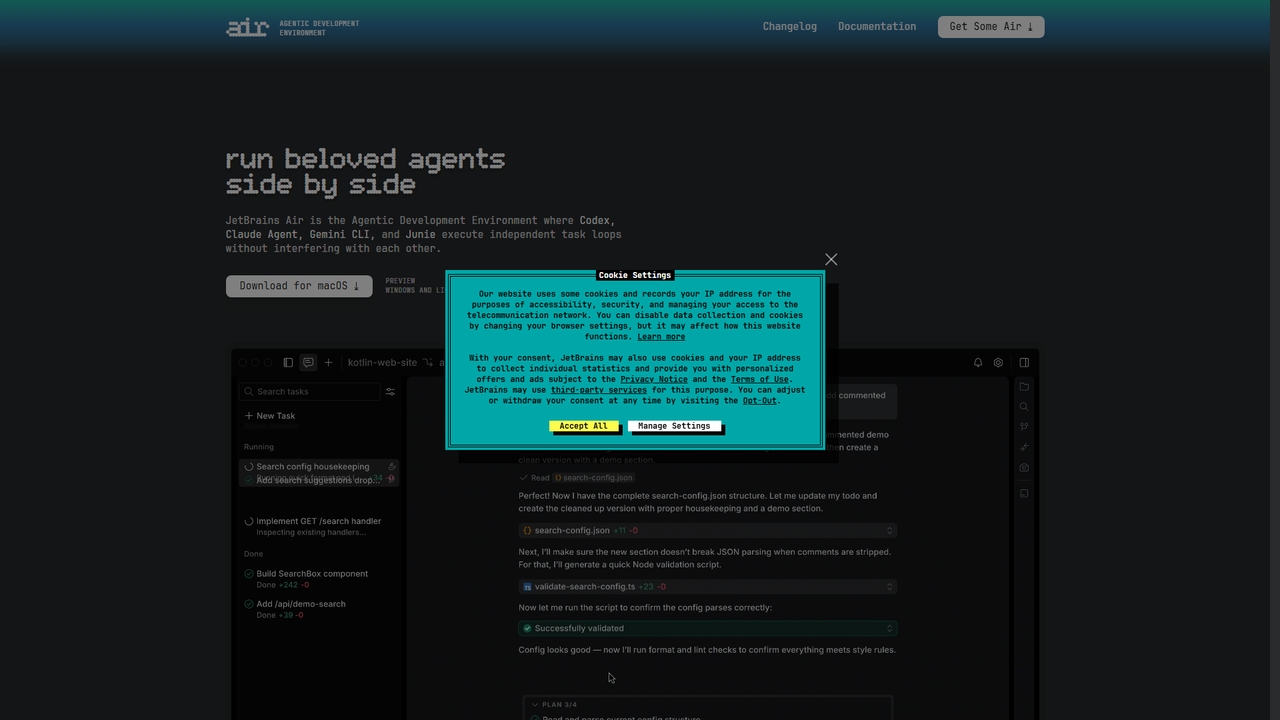
Air is an agentic development environment from JetBrains that enables developers to delegate and run multiple AI coding …
Air is an agentic development environment from JetBrains that enables developers to delegate and run multiple AI coding agents (like Claude Agent, Codex, Gemini CLI, and Junie) in parallel within isolated workspaces. It focuses on the workflow around AI agents, providing precise task definition with code-aware context, isolated execution environments, and comprehensive review tools to manage concurrent coding tasks efficiently.
Natic
Natic is a software studio dedicated to crafting innovative utility applications that enhance daily productivity, streamline development workflows, …
Natic is a software studio dedicated to crafting innovative utility applications that enhance daily productivity, streamline development workflows, and support various lifestyle needs. From robust code review tools for macOS to smart AI credit tracking and personal utility apps, Natic aims to make everyday tasks more efficient and effortless for developers and general users alike.
Grov
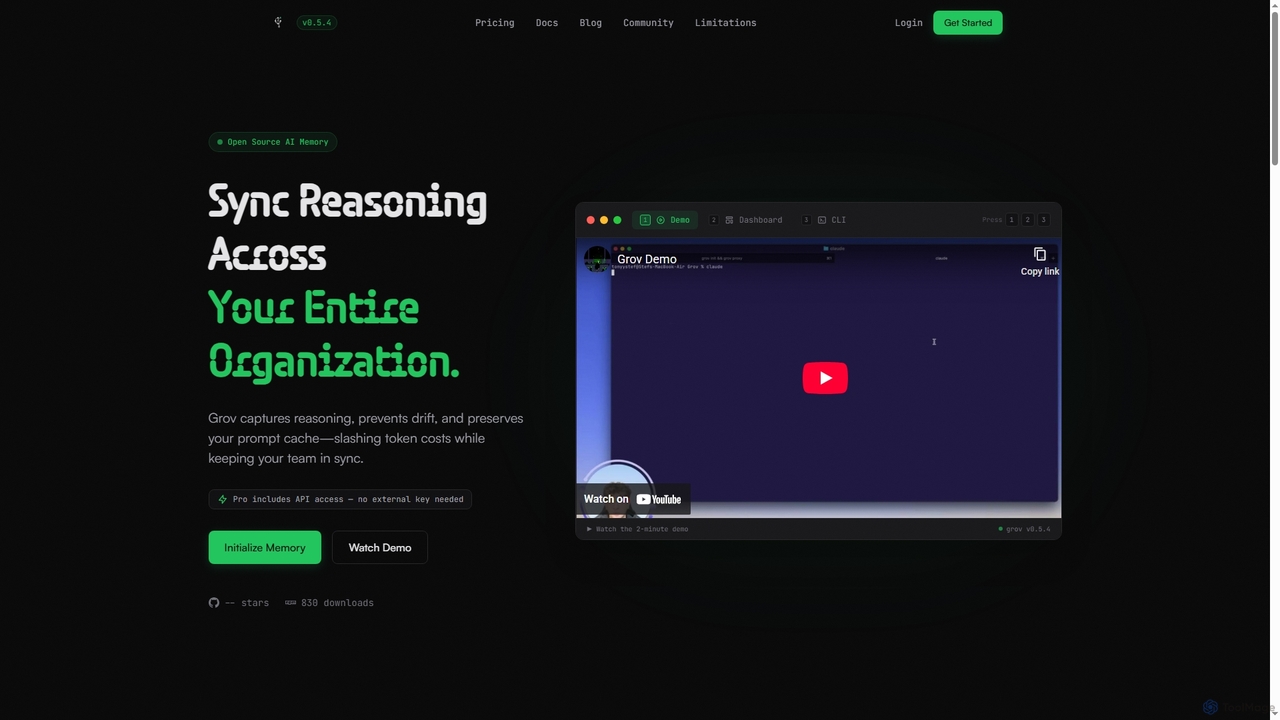
Grov is an open-source collective AI memory for engineering teams, designed to optimize Claude Code sessions. It captures …
Grov is an open-source collective AI memory for engineering teams, designed to optimize Claude Code sessions. It captures reasoning, prevents AI drift, and preserves prompt caches, significantly reducing token costs and enhancing team synchronization.
Autofix
Autofix is an AI agent purpose-built for deep code review, identifying security vulnerabilities, hardcoded secrets, and code quality …
Autofix is an AI agent purpose-built for deep code review, identifying security vulnerabilities, hardcoded secrets, and code quality issues. It generates verified patches to help development teams ship clean and secure code faster.
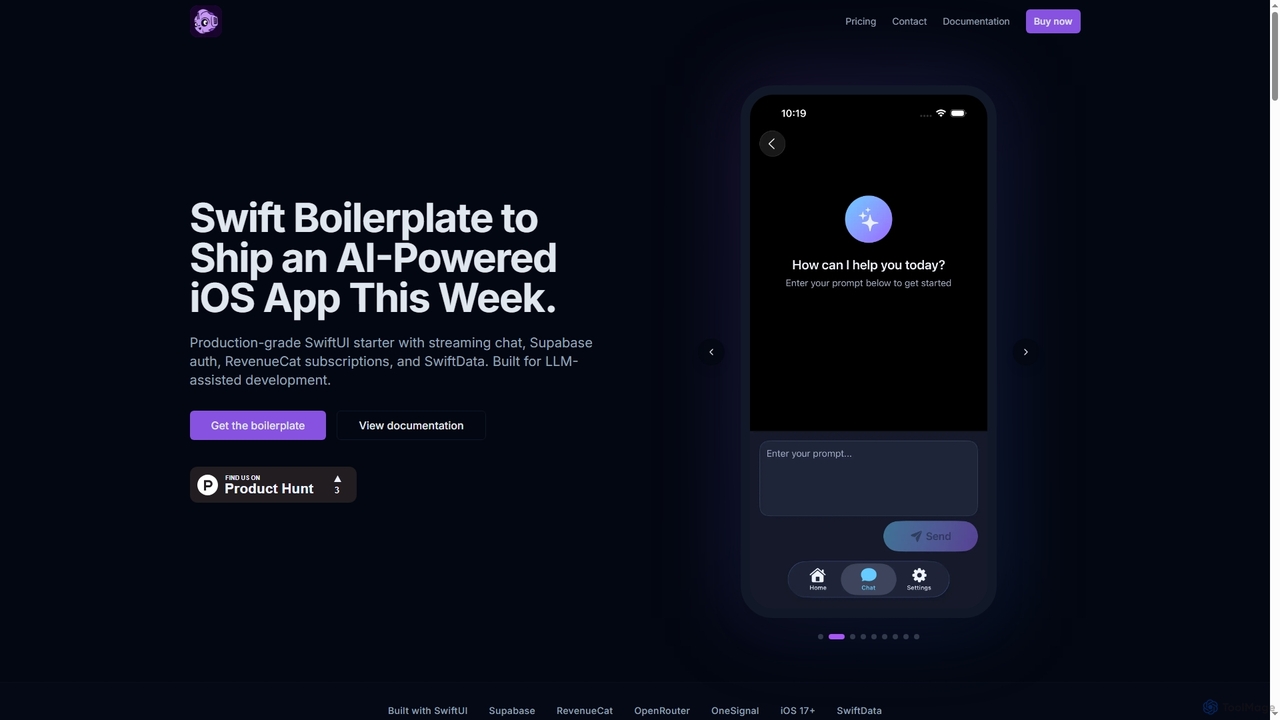
SwiftAI Boilerplate
SwiftAI Boilerplate is a production-grade SwiftUI starter kit designed to accelerate the development of AI-powered iOS applications. It …
SwiftAI Boilerplate is a production-grade SwiftUI starter kit designed to accelerate the development of AI-powered iOS applications. It provides pre-built modules for streaming AI chat, secure authentication (Supabase), subscriptions (RevenueCat), and robust data persistence (SwiftData), saving developers months of integration and setup time.
Zcrafter
Zcrafter is an AI-powered platform designed to modernize and streamline mainframe development workflows. It provides intelligent automation for …
Zcrafter is an AI-powered platform designed to modernize and streamline mainframe development workflows. It provides intelligent automation for tasks like job submission, COBOL code analysis, documentation, and one-click deployment, significantly reducing manual effort and accelerating development cycles for legacy systems.
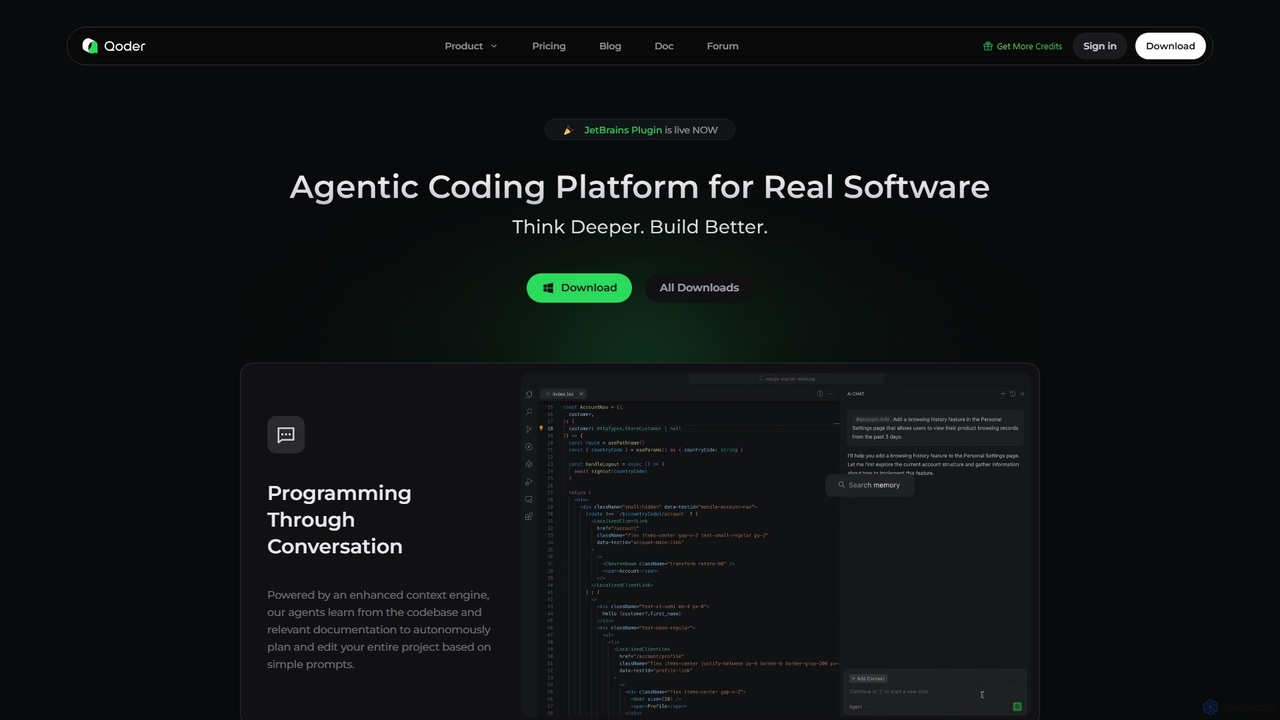
Qoder
Qoder is an agentic AI coding platform designed for real software development. It leverages an enhanced context engine …
Qoder is an agentic AI coding platform designed for real software development. It leverages an enhanced context engine to autonomously plan, code, and test entire projects based on simple prompts, integrating seamlessly into developer workflows via IDE, CLI, or JetBrains plugin.
About Software Development
AI Software Development tools are a class of intelligent applications designed to assist and automate various stages of the software development lifecycle (SDLC). These tools leverage large language models (LLMs) and machine learning to understand context, generate code, identify bugs, and optimize performance. They empower developers to build, test, and deploy software faster and with higher quality by acting as an intelligent pair programmer. This enhances productivity, reduces repetitive tasks, and allows teams to focus on complex problem-solving and innovation.
Core Features
- AI-Powered Code Generation: Creates code snippets, functions, or entire applications from natural language descriptions.
- Intelligent Code Completion: Provides context-aware suggestions for code, going beyond simple syntax to predict logical next steps.
- Automated Debugging & Bug Fixing: Analyzes code to identify errors, explains their root cause, and suggests or applies fixes automatically.
- Code Refactoring & Optimization: Suggests improvements to existing code for better performance, readability, and maintainability.
- Automated Test Generation: Creates unit tests, integration tests, and other test cases based on the existing codebase to improve coverage.
Use Cases
These tools are widely used by individual developers, agile teams, and large enterprises. Common applications include accelerating the development of new features, modernizing legacy systems by translating old code to new languages, and optimizing CI/CD pipelines through automated testing and code review. They are also valuable for learning new programming languages or frameworks by providing real-time examples and explanations.
How to Choose
When selecting an AI Software Development tool, consider its integration with your existing Integrated Development Environment (IDE) and workflow. Evaluate the breadth of supported programming languages and frameworks. Assess the quality and relevance of its code suggestions and its capabilities for specific tasks like debugging or testing. For teams, collaboration features and enterprise-level security policies are also critical factors.
Software DevelopmentUse Cases
Accelerating Prototyping and MVP Development
A startup founder with a new app idea uses an AI development tool to rapidly build a Minimum Viable Product (MVP). By providing high-level feature descriptions in natural language, such as 'Create a user login page with Google authentication' or 'Generate a REST API endpoint for product data,' the tool generates the necessary boilerplate code, database schemas, and API integrations. This process reduces the initial development time from several weeks to just a few days, allowing for faster market validation and iteration based on early user feedback.
Automating Unit and Integration Testing
A Quality Assurance (QA) engineer is tasked with increasing test coverage for a complex enterprise application. Instead of manually writing hundreds of test cases, they use an AI tool that analyzes the application's source code. The tool identifies critical code paths, edge cases, and potential failure points, then automatically generates comprehensive unit tests and integration tests in the project's testing framework (e.g., JUnit, PyTest). This not only saves significant time but also improves the robustness of the software by covering scenarios that a human tester might overlook.
Refactoring and Modernizing Legacy Code
A large financial institution needs to update a critical system written in an outdated language like COBOL. A development team uses an AI tool to analyze the legacy codebase. The tool first generates comprehensive documentation to explain the existing logic. Then, it automatically translates the code into a modern language such as Java or Python, while preserving the core business logic. It also identifies and suggests refactoring opportunities to improve code structure, remove redundancies, and enhance performance, significantly reducing the risk and cost associated with manual modernization projects.
Enhancing Daily Coding with an AI Assistant
A software developer integrates an AI assistant directly into their IDE (e.g., VS Code). While writing a new feature, the assistant provides real-time, context-aware code completions that go beyond simple function names, suggesting entire blocks of logic. When the developer encounters a complex algorithm or an unfamiliar API, they can ask the assistant for an explanation or an example implementation in plain English. The tool also proactively flags potential bugs, security vulnerabilities, and non-optimal code patterns, acting as a continuous code reviewer to improve quality from the very first line.
Generating Complex Database Queries from Natural Language
A data analyst needs to extract specific insights from a large, complex database but is not an expert in SQL. They use an AI tool where they can type a request in plain English, such as 'Show me the total sales for each product category in the last quarter, sorted from highest to lowest.' The AI tool translates this request into an optimized, complex SQL query, including joins, aggregations, and filtering. This democratizes data access, enabling non-technical team members to perform sophisticated data analysis without needing to learn a query language.
Automating Code Documentation and Onboarding
A project manager is onboarding new developers to a large, existing project with minimal documentation. To accelerate the process, they use an AI tool to scan the entire codebase. The tool automatically generates clear, consistent docstrings for functions and classes, explains the purpose of complex code blocks, and creates a high-level architectural overview. This living documentation can be updated automatically as the code changes, ensuring new team members can understand the project structure and contribute productively much faster than with traditional, often outdated, manual documentation.