ToolMage
Sign in

Best 2 Branding AI tools for Startup Tools

Popular Branding AI tools in Startup Tools include oneword and neardomain, helping you work more efficiently.

neardomain
Free

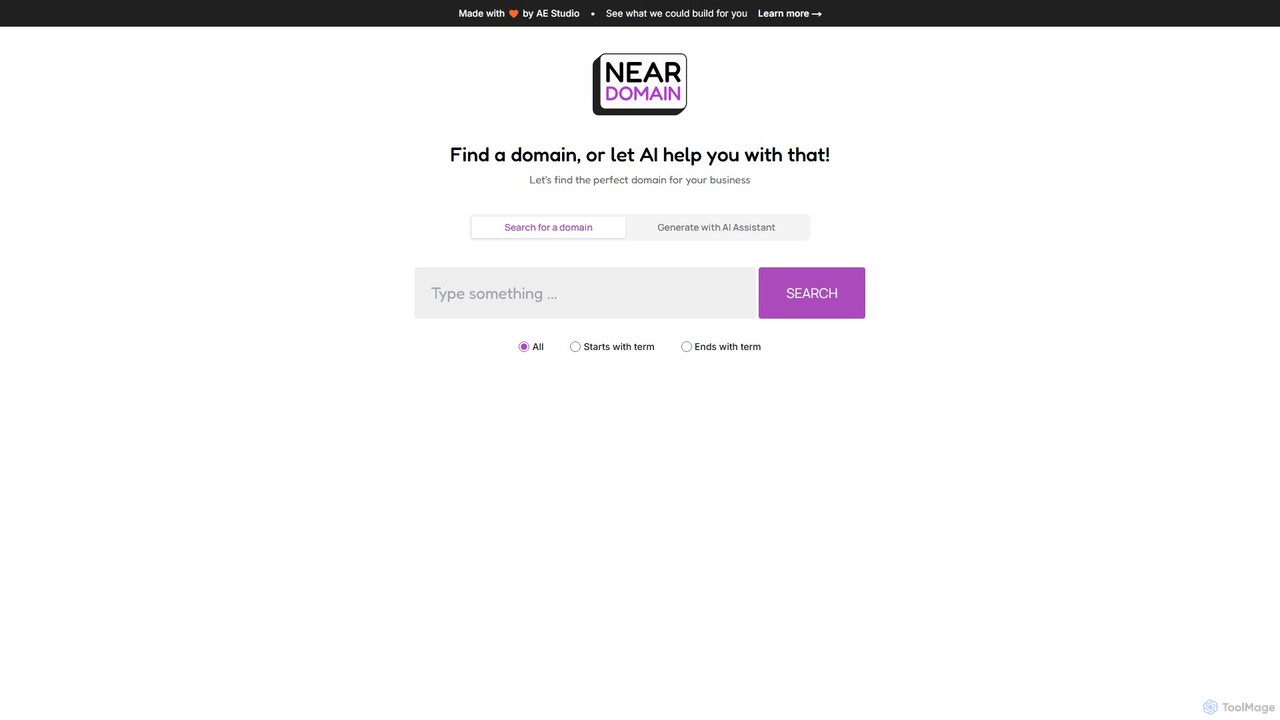
neardomain

An AI-powered domain name generator that helps you discover creative, brandable, and available .com domains. Simply enter one or two keywords, and neardomain instantly provides a list of unique suggestions, streamlining the process of finding the perfect name for your website or business.

Domain Name Generator
Visits 4.1KFavorites 93Likes 109
oneword
Paid

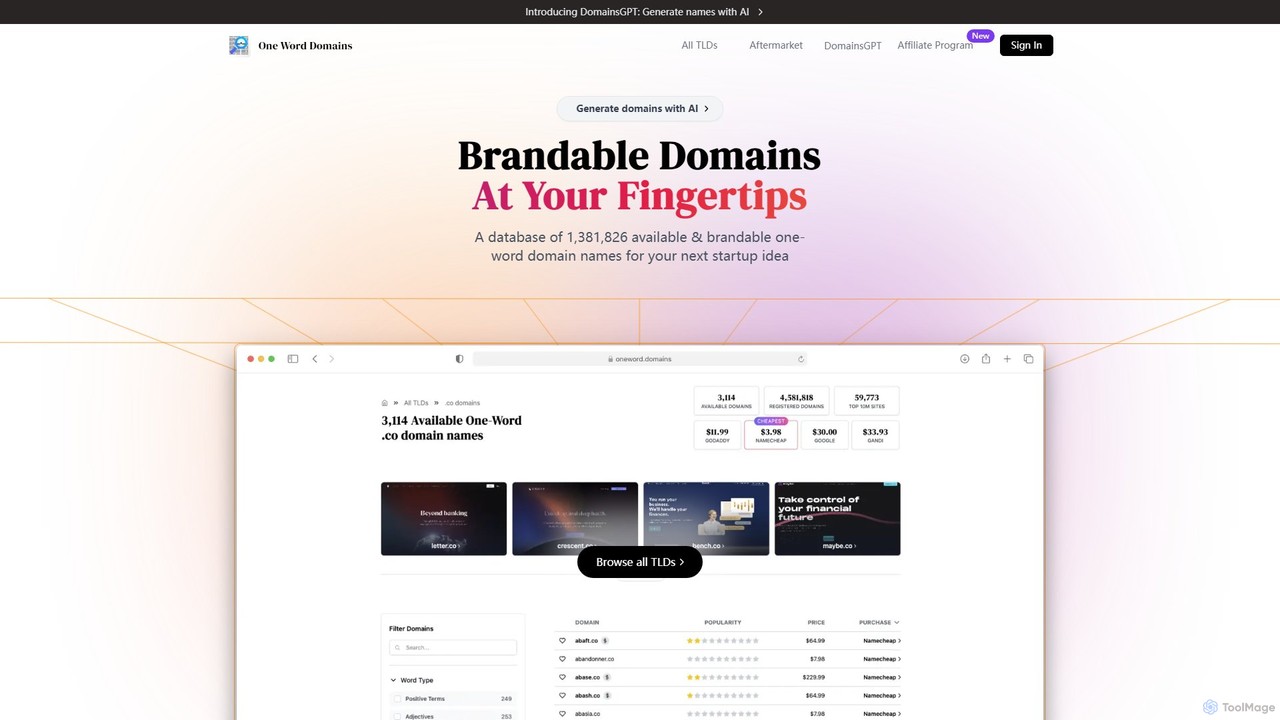
oneword

oneword is an AI-powered platform offering a massive, curated database of over 1.3 million available one-word domain names. It helps startups, developers, and businesses find short, brandable, and memorable domains across 93 TLDs. The tool uses AI to generate domain ideas and crawls registrars to provide real-time availability and price comparisons, simplifying the search for the perfect domain.

Domain Name Generator
Visits 17.6KFavorites 156Likes 120

About Branding

AI Branding tools are a suite of applications that leverage artificial intelligence to generate and manage a company's visual and verbal identity. These tools use algorithms trained on vast datasets of designs and text to create assets like logos, brand names, color palettes, and marketing copy. They enable startups and businesses to establish a cohesive and professional brand presence quickly and cost-effectively. This automation streamlines the creative process, offering numerous design variations and ensuring consistency across all platforms.

Core Features

  • AI Logo Generation: Creates unique logo concepts based on industry, keywords, and style preferences.
  • Brand Kit Creation: Automatically generates a comprehensive set of brand guidelines, including color palettes, typography, and usage rules.
  • Brand Name Generation: Suggests creative and available business names based on core concepts and values.
  • Voice & Tone Analysis: Analyzes text to ensure it aligns with a predefined brand personality (e.g., formal, witty, professional).
  • On-Brand Content Creation: Generates social media posts, ad copy, and other marketing materials that adhere to the established brand identity.

Use Cases

These tools are particularly valuable for early-stage startups needing to build a brand from scratch with limited resources. Marketing teams in larger companies use them to maintain brand consistency across numerous campaigns and channels. Freelancers and agencies also leverage these tools to rapidly prototype branding concepts for clients, accelerating the initial creative phase.

How to Choose

When selecting an AI Branding tool, consider the scope of assets you need—some focus solely on logos, while others offer a complete brand kit. Evaluate the level of customization and control offered after the initial generation. Also, check for integration capabilities with other design or marketing platforms and consider the pricing model, whether it's a one-time purchase for assets or a subscription for ongoing access.

Featured tool rankings

Branding use cases

1

Creating a Brand Identity for a New Startup

A founder of a new tech startup needs a complete brand identity, including a logo, color scheme, and font pairings, but has a limited budget and tight deadline. Using an AI branding tool, they input their company name, industry (e.g., 'SaaS', 'Fintech'), and desired style attributes ('modern', 'minimalist', 'trustworthy'). The tool generates hundreds of logo variations and corresponding brand kits in minutes. The founder can then select a preferred option and fine-tune the colors and typography, resulting in a professional, cohesive brand identity ready for their website and pitch deck in under an hour.

2

Generating On-Brand Social Media Content

A social media manager for a small e-commerce business needs to create a week's worth of visually consistent posts for Instagram and Facebook. Instead of manually designing each post, they use an AI branding tool that has their brand kit saved. They input a simple text prompt for each day, such as 'Announce 20% off flash sale' or 'Showcase new product arrival'. The AI generates multiple design options for each prompt, all using the correct brand fonts, colors, and logo placement. This allows the manager to schedule a full week of on-brand content in 30 minutes, a task that would previously take hours.

3

Brainstorming a Unique Business Name

An entrepreneur is launching a sustainable coffee subscription box but is struggling to find a catchy and available name. They use an AI brand name generator, providing keywords like 'eco', 'bean', 'morning', 'craft', and 'earth'. The tool returns hundreds of suggestions, categorized by style (e.g., modern, classic, abstract) and checks for domain name availability in real-time. Within minutes, the entrepreneur discovers a unique, memorable name like 'Earthly Grind' or 'EcoBrew Box' that resonates with their brand values and has an available '.com' domain, saving days of brainstorming and research.

4

Maintaining Brand Voice Consistency Across a Team

A content marketing agency has multiple writers creating blog posts and articles for a single client with a very specific brand voice: 'authoritative yet approachable'. To ensure consistency, the content manager uses an AI tool with a brand voice analysis feature. Before publishing, each writer runs their draft through the tool. The AI analyzes the text for tone, vocabulary, and sentence structure, comparing it against the client's approved guidelines. It provides specific suggestions, like 'Replace "might be able to" with "can" for a more confident tone,' helping all writers, regardless of their personal style, to adhere to the brand voice.

5

Rapidly Prototyping Logos for Client Presentations

A freelance designer is hired to rebrand a local bakery. To kickstart the project, the designer uses an AI logo generator to create a wide range of initial concepts to present to the client. They input details about the bakery, such as 'artisan', 'family-owned', 'warm', and 'bread'. The AI produces 50 different logo styles in various formats, from minimalist line art to illustrative emblems. The designer selects the top 5 concepts to refine manually, saving significant time in the initial ideation phase and allowing them to present a diverse set of high-quality options to the client much faster than starting from scratch.

6

Creating a Professional Pitch Deck Theme

A startup founder needs to create a compelling pitch deck for an investor meeting but lacks design skills. They use an AI branding tool that offers presentation templates. After generating their company logo and color palette with the same tool, they select a 'pitch deck' option. The AI automatically applies the brand's logo, colors, and fonts to a professionally structured presentation template with slides for the problem, solution, market size, team, and financials. This ensures the entire presentation is visually consistent and professional, allowing the founder to focus on the content and narrative rather than struggling with slide design.

Branding FAQ

What are AI Branding tools?

AI Branding tools are software applications that use artificial intelligence to automate the creation of brand identity assets. They can generate logos, suggest business names, create color palettes, and even write on-brand marketing copy. These tools analyze vast amounts of data to produce unique and relevant options based on user inputs like industry and style preferences. Their primary purpose is to provide startups, small businesses, and marketers with a fast, affordable, and accessible way to build a professional and consistent brand identity without needing extensive design skills.

How to choose the right AI Branding tool?

Choosing the right AI Branding tool depends on your specific needs. Consider the following factors:

  • Scope of Services: Do you just need a logo, or a complete brand kit with fonts, colors, and social media templates? Choose a tool that matches the breadth of assets you require.
  • Customization Level: Evaluate how much you can edit the generated designs. Good tools allow for fine-tuning of colors, layouts, and fonts after the initial creation.
  • Ease of Use: Look for a tool with an intuitive interface, especially if you don't have a design background. The process from input to final asset should be straightforward.
  • Asset Quality and Uniqueness: Check user reviews or examples to gauge the quality of the output. Ensure the tool generates vector files (like SVG) for logos so they can be scaled without losing quality.
  • Pricing Model: Compare costs, whether it's a one-time fee for a logo package or a monthly subscription for ongoing access to a suite of branding tools.
AI Branding vs. a Human Designer: What's the difference?

The main difference lies in process, cost, and strategic depth. AI Branding tools offer speed and affordability, generating numerous options in minutes based on algorithms. They are excellent for startups, small businesses, or initial brainstorming. A human designer, on the other hand, provides strategic thinking, market research, and a deep understanding of the client's unique vision. They engage in a collaborative process to create a bespoke brand identity that tells a story. While AI is a powerful tool for generating assets quickly, a human designer offers a level of creativity, nuance, and strategic partnership that AI currently cannot replicate.

Can AI-generated logos be trademarked?

The ability to trademark an AI-generated logo is a complex and evolving area of intellectual property law. In many jurisdictions, including the United States, copyright and trademark protection requires human authorship. A logo generated entirely by AI without significant human modification may not be eligible for protection. However, if a designer uses an AI tool as a starting point and then substantially modifies the output, the resulting work may be protectable. It is highly recommended to consult with an intellectual property attorney to understand the specific laws in your country and the level of human input required for a logo to be legally protected.

Who are AI Branding tools best suited for?

AI Branding tools are ideal for a range of users, particularly those who need professional branding assets quickly and affordably. Key user groups include:

  • Startups and Solopreneurs: For creating a foundational brand identity from scratch without a large budget for a design agency.
  • Small to Medium-sized Businesses (SMBs): For refreshing their brand or creating consistent marketing materials across various channels.
  • Marketing Teams: To quickly generate on-brand assets for campaigns, social media, and presentations, ensuring consistency and saving time.
  • Freelancers and Agencies: As a tool for rapid ideation and prototyping to present a wide array of initial concepts to clients.

Essentially, anyone who values speed, cost-efficiency, and a high volume of creative options for branding can benefit from these tools.