Manga TV
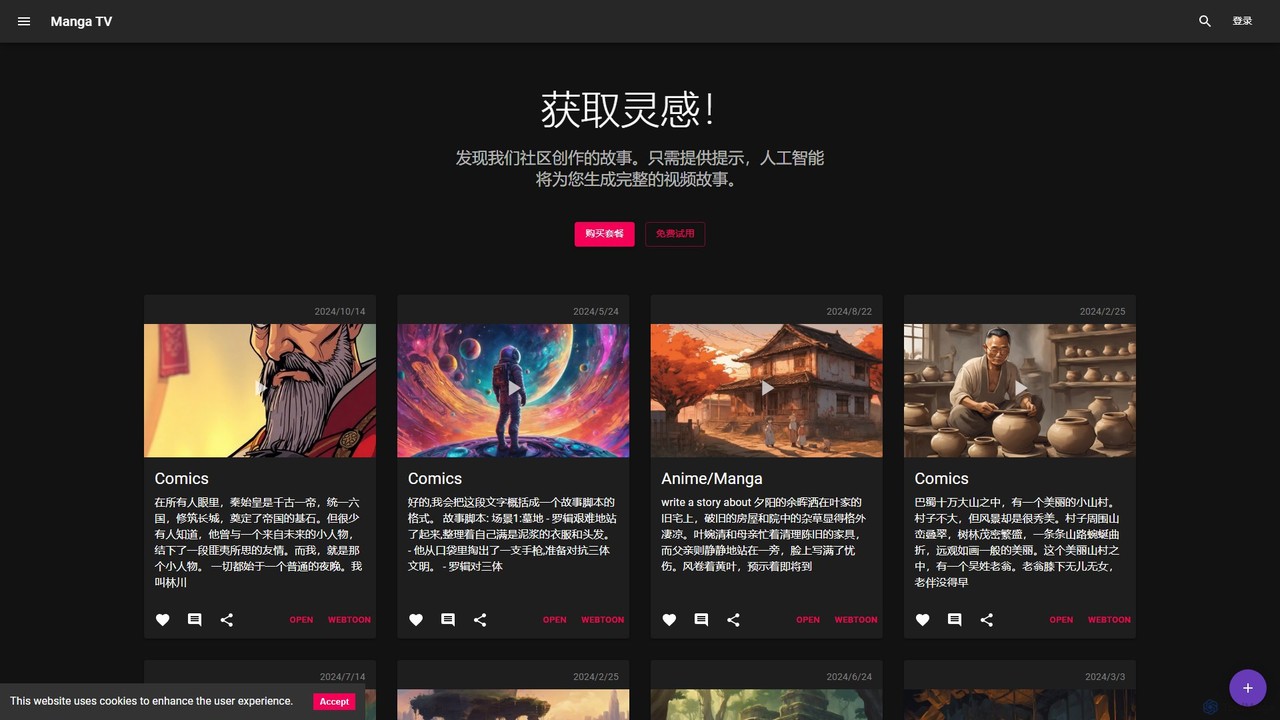
Manga TV is an AI-powered platform that transforms text prompts into complete, visually rich video stories and comics. …
Manga TV is an AI-powered platform that transforms text prompts into complete, visually rich video stories and comics. Leveraging advanced models like GPT-4, Gemini Pro, and Stable Diffusion XL, it enables creators to effortlessly generate animated manga, comics, and video narratives with high-quality images and lifelike voiceovers.
The Fable Studio
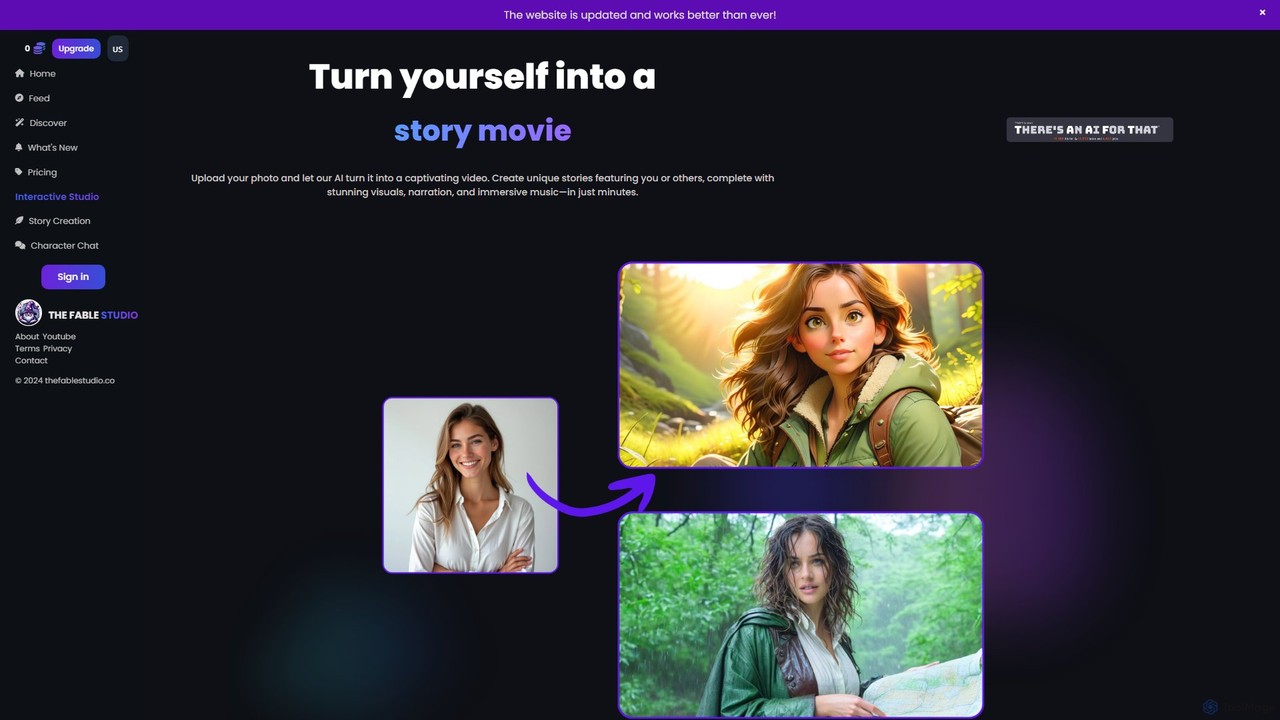
The Fable Studio is an AI-powered platform that transforms text-based stories into captivating animated videos. It automatically generates …
The Fable Studio is an AI-powered platform that transforms text-based stories into captivating animated videos. It automatically generates visuals, voiceovers, music, and customizable subtitles, enabling creators to produce magical and engaging narrative content effortlessly for social media, education, or entertainment.
mythinkingcap
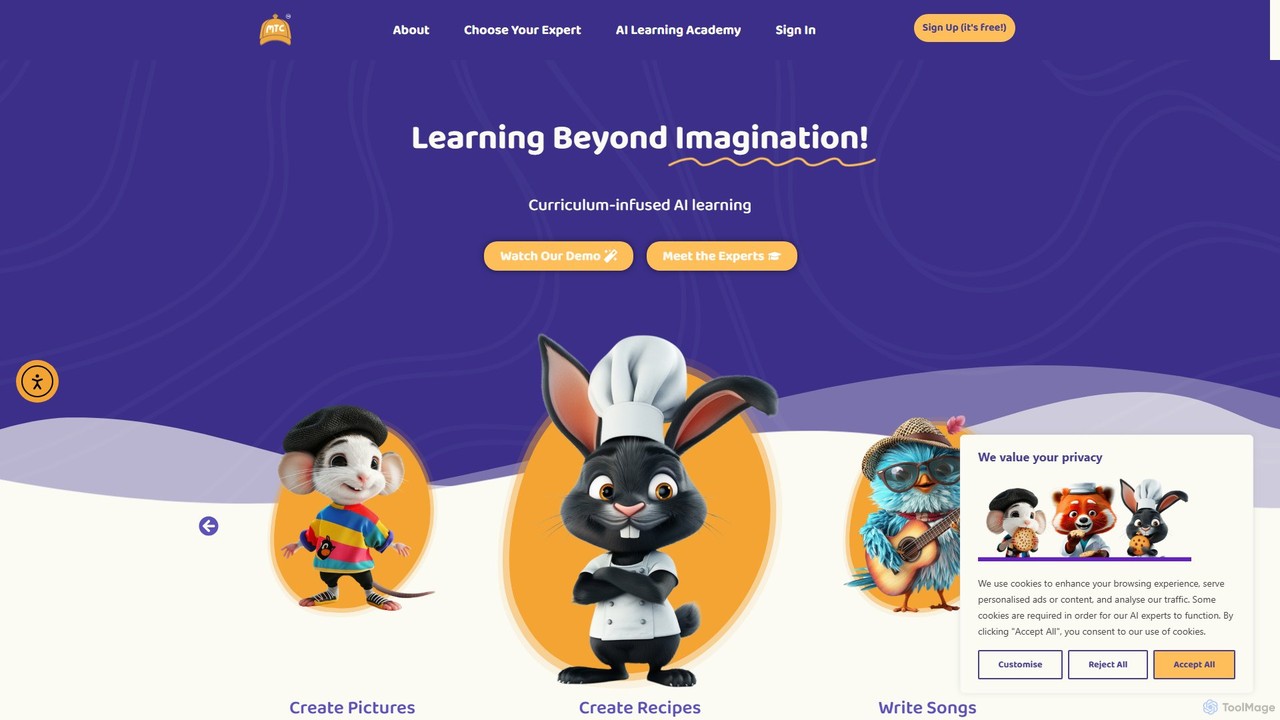
mythinkingcap is an interactive AI-powered educational platform designed for children. It offers a safe and engaging environment where …
mythinkingcap is an interactive AI-powered educational platform designed for children. It offers a safe and engaging environment where kids can learn by chatting with a variety of fun, expert AI characters. From exploring the solar system with an astronaut to creating stories with an owl, mythinkingcap makes learning a delightful adventure, sparking curiosity and providing age-appropriate knowledge.
About Story Generator
Story Generators are AI-powered tools designed to automatically create narrative content from user prompts. These tools utilize large language models (LLMs) trained on vast datasets of literature and text to generate coherent plots, characters, and dialogues. They serve as creative partners, helping users overcome writer's block, brainstorm ideas, and rapidly produce drafts for stories, scripts, or game narratives. Unlike general writing assistants, they are specifically optimized for narrative structures like plot progression and character development.
Core Features
- Prompt-Based Narrative Creation: Generates unique story segments or full narratives based on simple text inputs like a theme, character, or plot point.
- Genre and Style Control: Allows users to specify a literary genre (e.g., fantasy, sci-fi, mystery) and a desired writing tone or style.
- Character and Plot Customization: Provides options to define character traits, motivations, settings, and key plot twists to guide the generation process.
- Iterative Development: Enables users to build upon generated text, requesting continuations, alternative scenes, or dialogue expansions.
Use Cases
Story Generators are valuable for fiction writers, game developers, and screenwriters for ideation and first-draft creation. Content marketers use them to craft compelling brand stories. Educators and parents also utilize these tools to create personalized educational content or children's stories.
How to Choose
When selecting a Story Generator, consider the level of creative control it offers over plot and characters. Evaluate the quality and coherence of the generated text. Also, check the variety of genres and styles available and consider whether the tool's interface is intuitive for your workflow. For professional use, assess its ability to produce longer, more structured content.
Story GeneratorUse Cases
Brainstorming Novel Plots and Subplots
A fiction author is starting a new fantasy novel but feels stuck on the initial plot. They use a Story Generator by inputting key elements: 'a young mage discovers a forbidden spellbook' and 'an ancient empire on the brink of collapse'. The tool generates several distinct plot outlines, including unexpected twists and character arcs. The author can then select the most compelling direction or combine elements from different outputs to create a unique and complex narrative foundation, saving weeks of brainstorming and overcoming writer's block effectively.
Creating RPG Questlines and Lore
A solo game developer is designing a role-playing game (RPG) and needs to populate the world with engaging quests and background lore. Using a Story Generator, they input parameters like 'a haunted forest', 'a lost artifact', and 'a secretive guild of elves'. The AI generates multiple quest ideas, character backstories for NPCs, and descriptions of historical events. This allows the developer to quickly build a rich, coherent game world without hiring a dedicated writer, ensuring players have a deep and immersive narrative experience to explore.
Generating Short Stories for Content Marketing
A content marketer for a tech company wants to create a series of short, engaging stories for their blog and social media channels to illustrate the human impact of their products. They use a Story Generator with prompts like 'a small business owner struggling with inventory' and 'how our software helped them succeed'. The tool produces several short narrative drafts. The marketer then edits and refines these drafts, adding brand-specific details, to create relatable and emotionally resonant content that performs better than traditional marketing copy.
Developing Screenplay Concepts and Dialogue
A screenwriter has a concept for a TV series but needs to quickly develop multiple episode ideas and sample scenes. They use a Story Generator to explore different scenarios for their main characters. By providing character profiles and a basic premise, the AI generates outlines for several episodes, complete with plot points and key dialogue exchanges. This process allows the screenwriter to rapidly prototype their series concept, identify the most promising storylines, and create a compelling pitch package for producers, accelerating the development phase significantly.
Creating Personalized Bedtime Stories
A parent wants to create unique and engaging bedtime stories for their child. Instead of reading the same books repeatedly, they use a Story Generator. They input prompts featuring their child's name, favorite animals, and a moral lesson they want to teach, such as 'sharing toys'. The AI crafts a short, personalized story incorporating all these elements. This not only makes storytime more exciting and special for the child but also allows the parent to create educational content tailored to their child's interests and developmental needs on the fly.
Generating Educational Scenarios for Training
An instructional designer is creating a corporate training module on conflict resolution. To make the training more engaging, they need realistic scenarios. They use a Story Generator to create short narratives depicting common workplace conflicts, such as disagreements over project deadlines or communication breakdowns. By inputting roles ('project manager', 'junior developer') and a conflict theme, the AI generates varied and nuanced scenarios. These stories can then be used as case studies for discussion and role-playing exercises, making the training more practical and memorable for employees.