markme
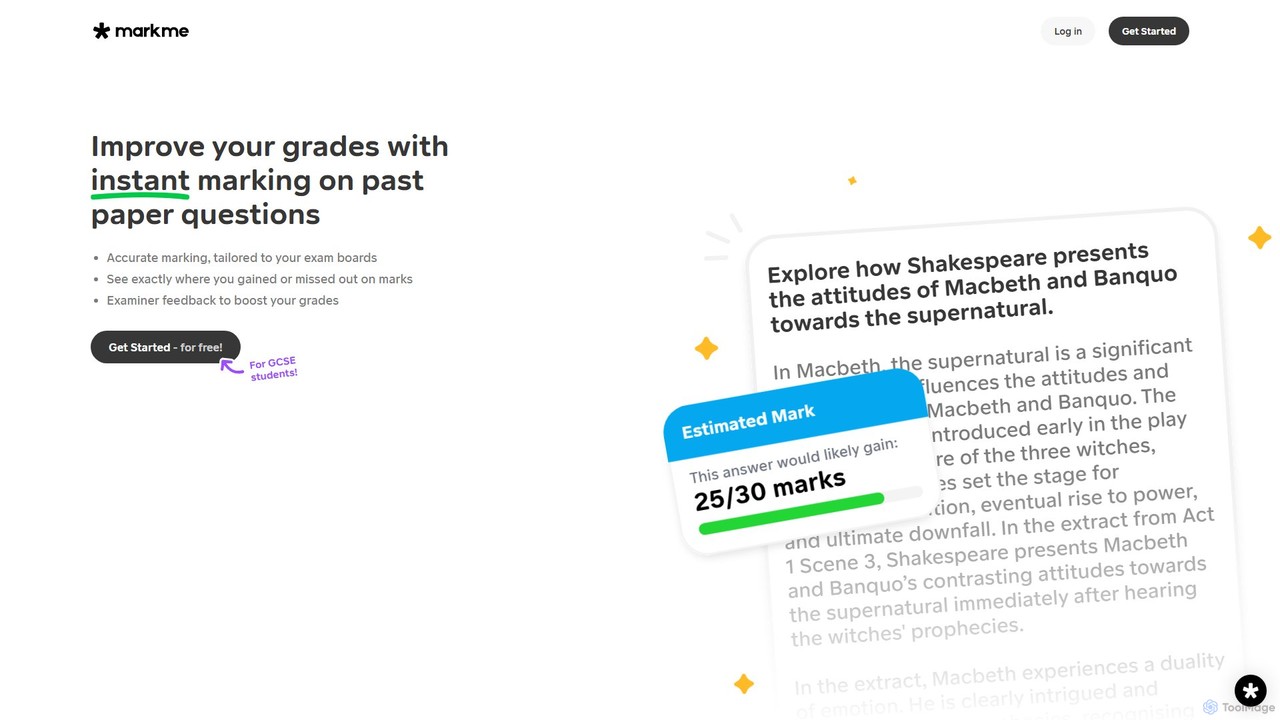
MarkMe is an AI-powered platform designed to help GCSE students improve their grades. It provides instant, accurate marking …
MarkMe is an AI-powered platform designed to help GCSE students improve their grades. It provides instant, accurate marking and detailed examiner-style feedback on past paper essay questions. Tailored to specific exam boards, it helps students understand where they gained or lost marks and offers actionable suggestions for improvement, acting as a 24/7 personal AI tutor for exam preparation.
lodown
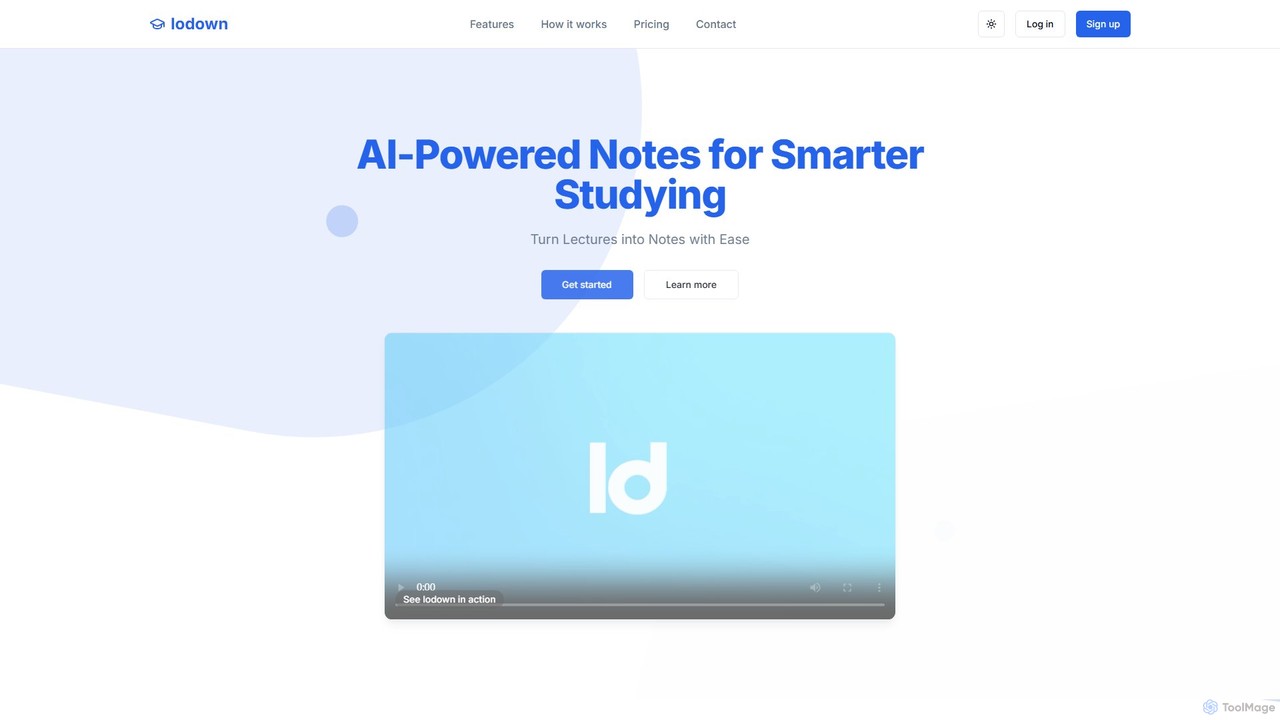
lodown is an AI-powered note-taking assistant designed for students. It automatically transcribes live or recorded lectures into organized, …
lodown is an AI-powered note-taking assistant designed for students. It automatically transcribes live or recorded lectures into organized, searchable, and study-ready notes. By structuring content with headings, summaries, and flashcards, lodown helps students save time, improve focus during class, and enhance their academic performance.
Qwizzard
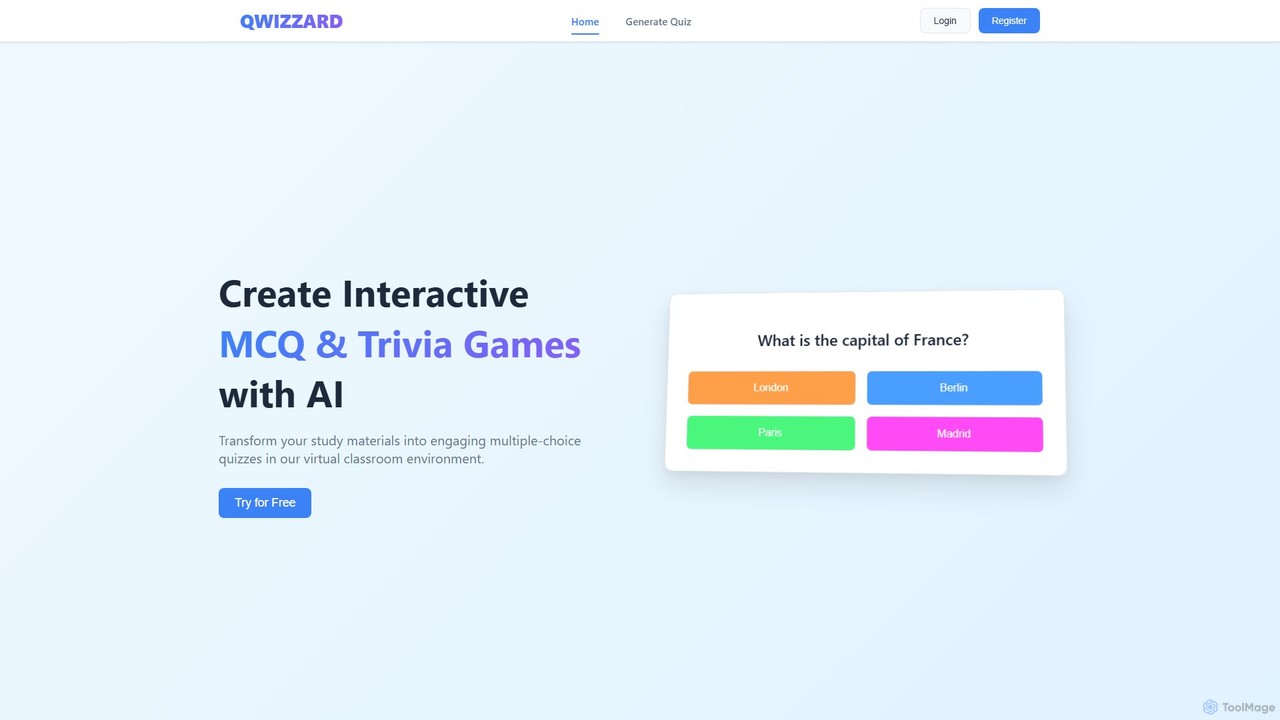
Qwizzard is an AI-powered question generator that transforms your documents, presentations, and study materials into interactive multiple-choice quizzes …
Qwizzard is an AI-powered question generator that transforms your documents, presentations, and study materials into interactive multiple-choice quizzes and trivia games. Ideal for educators, students, and trainers, it saves hours of preparation time and makes learning more engaging and effective through a virtual classroom experience with instant feedback.
About Student Tools
AI Student Tools are a category of software designed to support and enhance the academic journey through artificial intelligence. These tools leverage technologies like natural language processing (NLP) and machine learning to automate tasks such as research, writing, and problem-solving. They help students streamline their workflow, deepen their understanding of complex subjects, and improve the quality of their academic work. By providing instant feedback, summarizing dense information, and offering personalized learning support, these tools act as powerful academic assistants.
Core Features
- AI Writing Assistance: Provides grammar correction, style suggestions, plagiarism checks, and automated citation generation.
- Research & Summarization: Quickly analyzes articles, papers, and textbooks to extract key points and generate concise summaries.
- Personalized Tutoring: Offers step-by-step explanations for complex problems, answers subject-specific questions, and adapts to individual learning paces.
- Study Aid Creation: Automatically generates flashcards, quizzes, and mind maps from lecture notes or reading materials to aid revision.
- Problem Solving: Solves complex mathematical equations and scientific problems, often showing the detailed steps to reach the solution.
Use Cases
These tools are widely used by students from high school to university levels across all disciplines. They are particularly valuable for writing essays, preparing for exams, completing homework assignments, and conducting research for projects. For instance, a literature student might use an AI tool to analyze themes in a novel, while an engineering student could use one to solve differential equations.
How to Choose
When selecting an AI Student Tool, consider the specific subjects you need help with, as some tools specialize in STEM while others focus on humanities. Evaluate the accuracy of the information and citations provided. Check for integrations with your existing writing platforms like Google Docs or Word. Most importantly, be aware of and adhere to your institution's academic integrity policies regarding the use of AI assistance.
Student ToolsUse Cases
Streamlining Essay Writing and Research
A university student working on a history dissertation uses an AI tool to accelerate their research process. They input their research question, and the tool scans academic databases to find and summarize relevant papers, saving dozens of hours of manual searching. The student then uses the AI's writing assistant to structure their arguments, check for grammatical errors, and format citations in the correct style (e.g., APA, MLA). This allows them to focus on critical analysis and crafting a compelling narrative rather than on tedious administrative tasks.
Mastering Complex STEM Concepts
An engineering student struggling with thermodynamics uses an AI tutor for assistance. Instead of just providing answers, the tool breaks down complex formulas and concepts into smaller, digestible parts. The student can ask follow-up questions like 'Explain entropy in simpler terms' and receive tailored explanations with analogies. The tool also generates practice problems based on their weak areas, providing instant feedback on their solutions and helping them build confidence before an exam.
Efficient Exam Preparation and Revision
A medical student facing a large volume of information for their anatomy exam uploads their lecture slides and digital textbook chapters into an AI study tool. The tool automatically generates a set of interactive flashcards with key terms and diagrams. It also creates practice quizzes that adapt in difficulty based on the student's performance. This active recall method is more effective than passive reading, helping the student to identify knowledge gaps and focus their revision time more efficiently.
Improving Language Learning and Practice
A student learning French uses an AI language tutor to practice conversation skills. They can engage in spoken dialogues on various topics, and the AI provides real-time feedback on their pronunciation, grammar, and word choice. Unlike a traditional classroom, the AI is available 24/7 for practice and offers a non-judgmental environment to make mistakes and learn. The tool can also create personalized vocabulary lists based on words the student struggles with during conversations, making learning more targeted.
Organizing Notes and Group Projects
A team of students collaborating on a group project uses an AI tool to stay organized. After a virtual meeting, they upload the audio recording, and the AI transcribes it, summarizes the key decisions, and identifies action items for each team member. This ensures everyone is clear on their responsibilities and deadlines. The tool also helps them organize their shared research notes, automatically tagging documents by theme and creating a searchable knowledge base for their project, preventing information silos and redundant work.
Receiving Constructive Feedback on Presentations
A student preparing for a final presentation uses an AI presentation coach. They rehearse their speech in front of their webcam, and the tool analyzes their delivery. It provides feedback on pacing, use of filler words like 'um' and 'ah', body language, and tone of voice. The AI generates a report with specific, actionable suggestions, such as 'Try to vary your vocal pitch to keep the audience engaged' or 'You looked away from the camera 40% of the time.' This allows the student to practice and refine their public speaking skills in a private setting.