Best of the Year 3 results Surveys AI Tools

Popular AI tools in the Surveys field include Indie Polls、Surveysides、dezan, etc., helping you quickly improve efficiency.

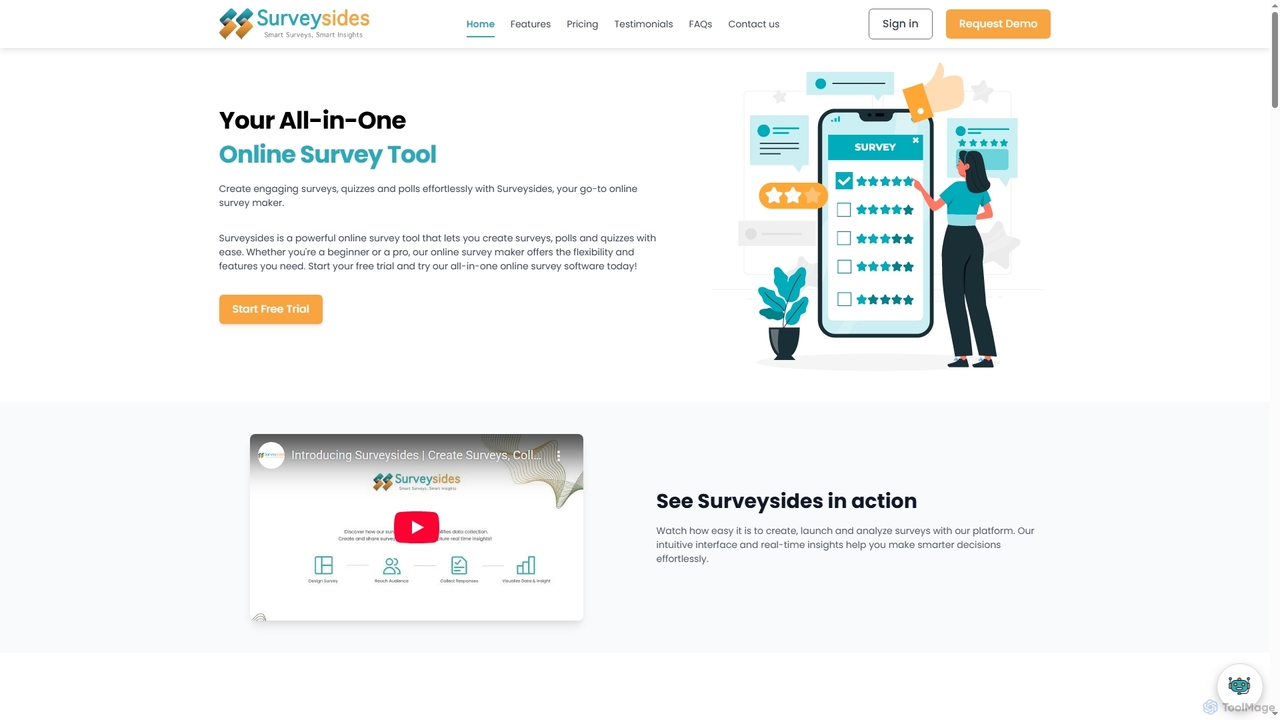
Surveysides

Surveysides

Surveysides is an all-in-one online survey tool designed to help users effortlessly create engaging surveys, quizzes, and polls. …

2.4K
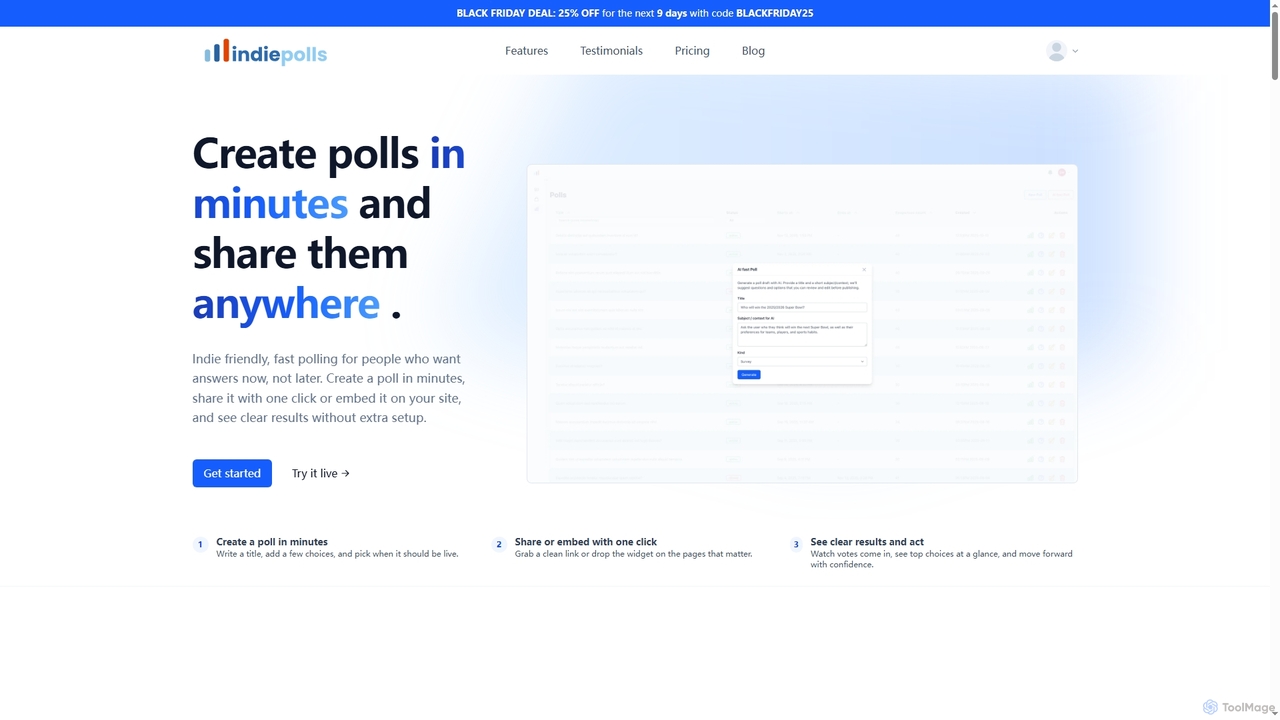
Indie Polls

Indie Polls

Indie Polls is a fast, lightweight, and privacy-friendly online polling tool designed for indie hackers, product teams, and …

2.4K
dezan

dezan

dezan is an AI-powered platform that enables users to generate targeted surveys in seconds. It automates the entire …

2.3K

About Surveys

Surveys are AI-powered tools designed to streamline the entire feedback collection and analysis process. These platforms leverage artificial intelligence, including Natural Language Processing (NLP) and machine learning, to automate survey creation, personalize respondent experiences, and extract deeper insights from qualitative and quantitative data. They empower businesses, researchers, and organizations to gather more accurate, comprehensive, and actionable feedback efficiently, transforming raw data into strategic intelligence for informed decision-making.

Core Features

  • Automated Question Generation: AI suggests relevant questions and formats based on survey goals, reducing design time and improving question quality.
  • Sentiment Analysis: Automatically analyzes open-ended responses to identify underlying emotions, attitudes, and opinions at scale.
  • Predictive Analytics: Forecasts trends and identifies key drivers from survey data, offering proactive insights.
  • Smart Data Visualization: Generates interactive dashboards and reports, highlighting critical findings and patterns without manual effort.
  • Personalized Survey Paths: Adapts follow-up questions in real-time based on previous answers, enhancing relevance and engagement for respondents.

Use Cases

AI survey tools are invaluable across various sectors, from market research firms seeking to understand consumer behavior to HR departments measuring employee satisfaction. They are also widely adopted by product teams for gathering user feedback and by academic researchers for efficient data collection and analysis, providing a robust solution for any organization needing to make data-driven decisions.

How to Choose

When selecting an AI survey tool, prioritize its AI capabilities, such as advanced NLP for text analysis and predictive modeling. Evaluate its integration options with existing CRM or analytics platforms, customization flexibility for branding and question types, and the robustness of its reporting and visualization features. Data security and compliance standards are also crucial, alongside a clear understanding of its pricing model and scalability to meet future needs.

SurveysUse Cases

1

Market Trend Identification from Open-Ended Feedback

Market researchers can utilize AI survey tools to analyze thousands of open-ended responses from consumer surveys. The AI automatically identifies recurring themes, emerging trends, and sentiment shifts across vast datasets, providing actionable insights into market demands and competitive landscapes much faster than manual coding. This allows for quicker adaptation of marketing strategies and product development.

2

Automated Customer Experience (CX) Feedback Analysis

Customer service departments and CX managers deploy AI surveys to collect post-interaction feedback. The AI instantly processes comments, categorizes issues by topic (e.g., shipping, product quality, support), and performs sentiment analysis to gauge customer satisfaction levels. This enables rapid identification of pain points and allows teams to prioritize improvements that directly impact customer loyalty and retention.

3

Enhancing Employee Engagement and Morale Surveys

HR professionals use AI survey platforms to conduct anonymous employee engagement surveys. The AI analyzes qualitative feedback to uncover underlying concerns, identify areas of high satisfaction, and detect potential issues like burnout or communication gaps. This provides HR with objective, data-driven insights to foster a positive work environment and implement targeted initiatives for employee well-being and productivity.

4

Streamlining Academic and Social Science Research

Academic researchers can leverage AI survey tools to manage complex qualitative studies. The AI assists in structuring questionnaires, automatically transcribing and coding interview responses, and identifying thematic patterns across large participant groups. This significantly reduces the time spent on manual data processing, allowing researchers to focus more on interpretation and theoretical development, accelerating research cycles.

5

Optimizing Product Feature Prioritization with User Feedback

Product managers utilize AI surveys to gather feedback on new features or product iterations. The AI analyzes user suggestions, bug reports, and preference ratings, identifying the most requested functionalities and potential usability issues. By quantifying user sentiment and demand, product teams can make data-backed decisions on feature prioritization, ensuring development efforts align with user needs and market value.

6

Efficient Event Feedback Collection and Analysis

Event organizers use AI survey tools to collect feedback from attendees post-event. The AI quickly processes comments on speakers, content, venue, and overall experience, performing sentiment analysis and topic extraction. This provides organizers with immediate, summarized insights into what worked well and areas for improvement, enabling them to refine future events and enhance attendee satisfaction effectively.

SurveysFrequently Asked Questions