Axell
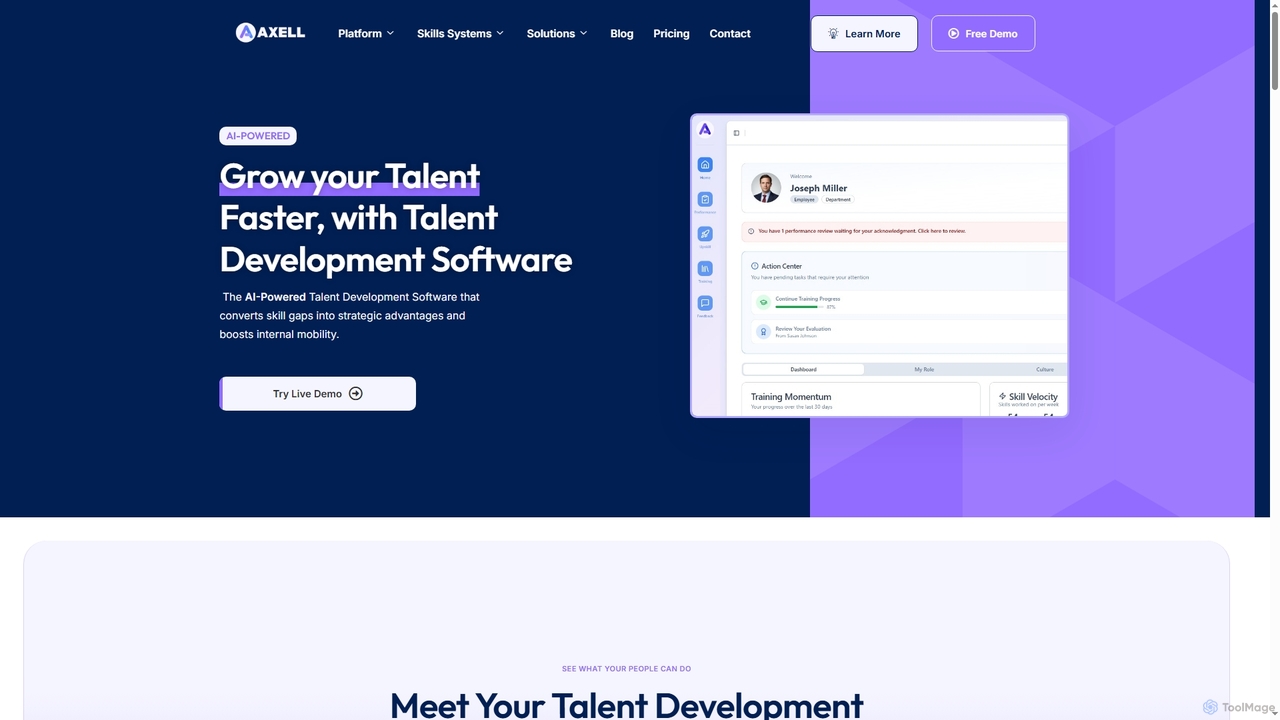
Axell is an AI-powered talent development software designed to transform skill gaps into strategic advantages. It automates performance …
Axell is an AI-powered talent development software designed to transform skill gaps into strategic advantages. It automates performance reviews, personalizes training, and clarifies career paths, significantly boosting internal mobility and aligning talent strategy with business objectives.
Cuvera
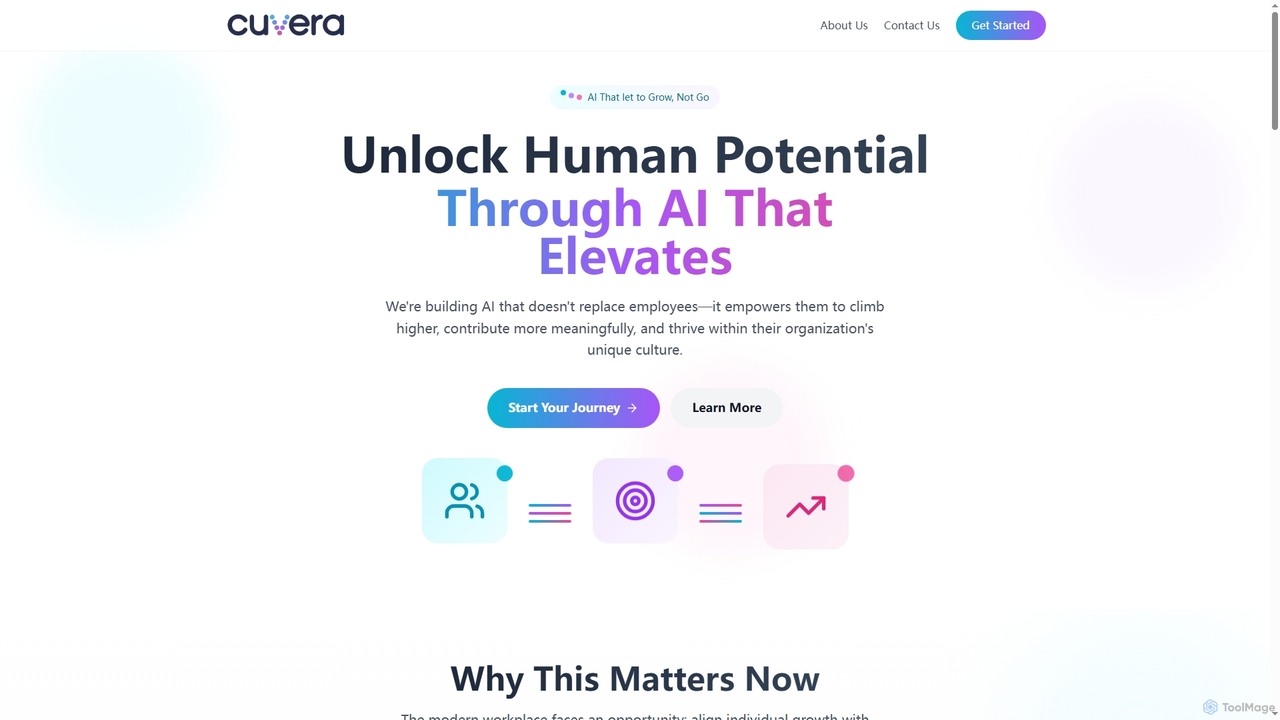
Cuvera is an AI-powered platform designed to unlock human potential within organizations by aligning individual employee growth with …
Cuvera is an AI-powered platform designed to unlock human potential within organizations by aligning individual employee growth with company objectives. It fosters a culture of continuous development, meaningful contributions, and enhanced retention, empowering employees rather than replacing them.
About Talent Management
AI Talent Management tools are a class of software that leverages artificial intelligence to optimize the entire employee lifecycle, from recruitment to retirement. These platforms use machine learning algorithms to analyze HR data, predict employee performance, identify skill gaps, and automate administrative tasks. They enable organizations to make data-driven decisions, enhance employee engagement, and build a more agile and skilled workforce. A key advantage is their ability to provide predictive insights for strategic workforce planning and reduce unconscious bias in hiring and promotion processes.
Core Features
- Predictive Hiring: Analyzes candidate data to predict job success and cultural fit, automating resume screening.
- Personalized Learning & Development: Recommends tailored training paths and content based on an individual's skills, role, and career goals.
- Performance Management Automation: Gathers and analyzes performance data from multiple sources to provide objective insights and identify top performers.
- Employee Engagement Analysis: Uses Natural Language Processing (NLP) to analyze feedback from surveys and communications to gauge team morale and sentiment.
- Internal Mobility & Succession Planning: Identifies suitable internal candidates for open roles and leadership positions based on skills and potential.
Use Cases
These tools are widely used by HR departments in mid-to-large enterprises, particularly in fast-growing sectors like technology, finance, and consulting. They are applied to scale recruitment efforts for high-volume hiring, reduce employee turnover by identifying at-risk individuals, and develop effective leadership pipelines through data-backed succession planning.
How to Choose
When selecting an AI Talent Management tool, consider its integration capabilities with your existing HRIS (Human Resource Information System). Evaluate the sophistication of its predictive models and data analytics features. Assess data security protocols and compliance with regulations like GDPR. Finally, consider the user experience for both HR administrators and employees to ensure high adoption rates.
Talent ManagementUse Cases
Automating High-Volume Recruitment Screening
A large retail company preparing for the holiday season needs to hire thousands of seasonal staff quickly. The HR team uses an AI Talent Management tool to process over 50,000 applications. The AI automatically screens resumes, assesses candidates against predefined criteria like availability and relevant experience, and shortlists the top 10%. This process reduces the time-to-hire from weeks to days and frees up recruiters to focus on interviewing the most qualified candidates, ensuring stores are adequately staffed for the peak season.
Identifying and Mitigating Employee Churn Risk
A fast-growing tech company is concerned about high employee turnover. They implement an AI platform that analyzes various data points, including employee sentiment from surveys, communication patterns, tenure, and performance data. The system identifies employees who are at a high risk of leaving in the next quarter. This allows HR business partners and managers to proactively intervene with targeted retention strategies, such as discussing career growth, offering new challenges, or adjusting workloads, ultimately reducing voluntary turnover by 15%.
Personalizing Employee Development Plans
A global consulting firm uses an AI-powered learning experience platform (LXP) to foster continuous development. The system analyzes an employee's current skills, project history, and stated career aspirations. It then recommends a personalized learning path, including online courses, articles, internal mentorship opportunities, and relevant upcoming projects. This data-driven approach ensures that training investments are aligned with both individual goals and business needs, increasing course completion rates by 40% and improving internal skill mobility.
Optimizing Internal Talent Mobility
A large financial institution wants to improve internal hiring to retain top talent. They deploy an AI-powered talent marketplace. This platform creates profiles for all employees, mapping their skills, experiences, and career interests. When a new role opens up, the AI proactively matches and recommends suitable internal candidates to the hiring manager. Employees can also browse open projects and roles that fit their profile. This initiative increased internal placements by 30% and significantly reduced recruitment costs and time-to-fill for critical roles.
Conducting Unbiased Performance Reviews
To reduce manager bias in annual reviews, a professional services firm adopts an AI tool that aggregates performance data throughout the year. The tool analyzes objective data like project completion rates and client feedback, as well as qualitative peer reviews, using NLP to detect sentiment and key themes. It generates a summary report for managers, highlighting objective achievements and areas for development. This provides a more holistic and fair basis for performance discussions, leading to increased employee trust in the review process.
Strategic Workforce Planning with AI
A manufacturing company facing industry disruption needs to plan its future workforce. Using an AI talent tool, the HR strategy team analyzes market trends, predicts which skills will become obsolete and which will be in high demand. The AI models forecast future talent needs based on the company's long-term business goals. This allows the company to proactively build a talent pipeline through targeted hiring, reskilling current employees for future roles, and partnering with educational institutions, ensuring they have the right skills to remain competitive.