SmartPrep
SmartPrep is an AI-powered lesson plan generator designed for educators. It streamlines the planning process by instantly creating …
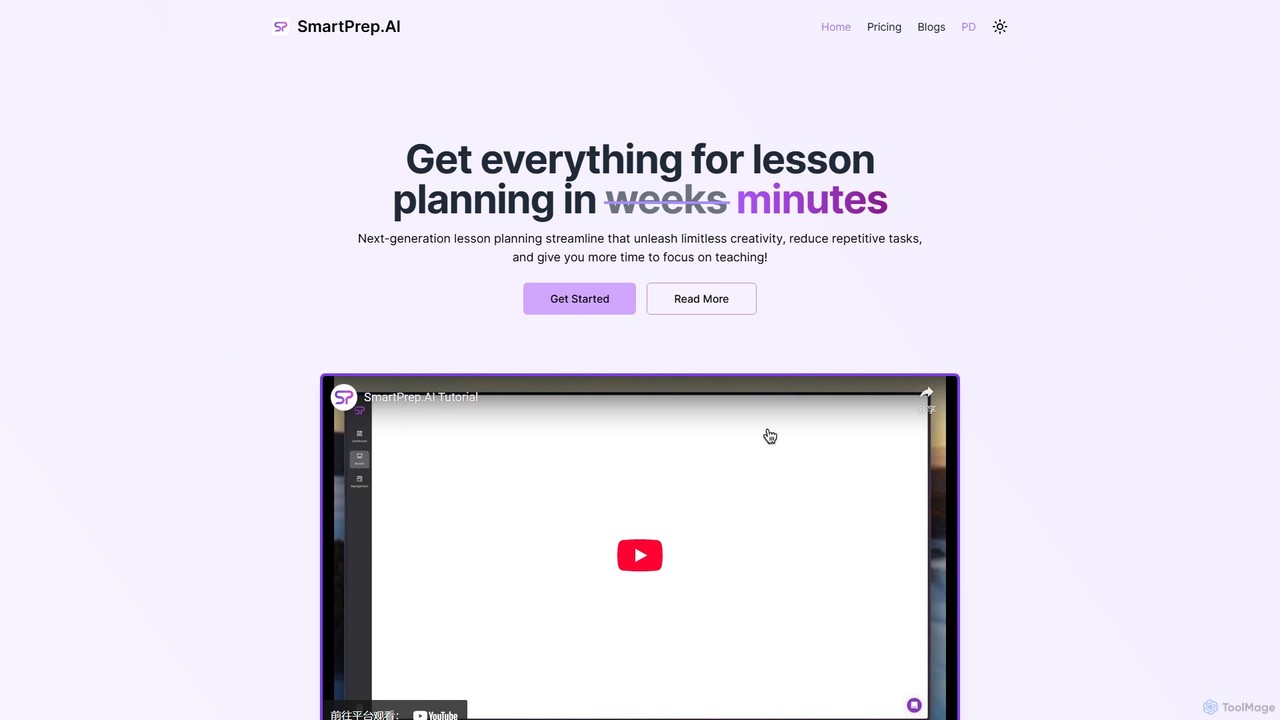
SmartPrep is an AI-powered lesson plan generator designed for educators. It streamlines the planning process by instantly creating comprehensive lesson bundles, including activities, web resources, and customizable assessments. This tool helps teachers save time, reduce repetitive tasks, and focus more on delivering engaging instruction.
About Resource Finder
Resource Finder tools are AI-powered platforms designed to locate and curate specific educational or research materials from vast digital libraries. They utilize natural language processing and semantic search to understand the context of a query, going beyond simple keyword matching. This enables educators, students, and researchers to efficiently discover highly relevant articles, videos, lesson plans, and datasets. These tools streamline the research process and enhance the quality of teaching materials.
Core Features
- Semantic Search: Understands the conceptual meaning behind queries to deliver more accurate and contextually relevant results.
- Content Curation: Automatically filters, groups, and suggests relevant materials based on specific learning objectives or research topics.
- Source Validation: Assesses the credibility, academic rigor, and relevance of sources to ensure high-quality information.
- Personalized Recommendations: Suggests new resources based on a user's search history, profile, or stated learning goals.
Use Cases
These tools are widely used in academic and professional settings. Educators use them to quickly find engaging content for lesson plans. University students and researchers leverage them to conduct comprehensive literature reviews and find supporting data. Curriculum developers also rely on them to source diverse and up-to-date educational materials for course creation.
How to Choose
When selecting a Resource Finder, consider the scope and depth of its database—does it cover your specific subject area (e.g., K-12, higher education, scientific research)? Evaluate its filtering capabilities, such as sorting by content type, publication date, or academic level. Also, check for integrations with Learning Management Systems (LMS) and features for citation management, which can significantly improve workflow efficiency.

Resource FinderUse Cases
Creating a Lesson Plan on Photosynthesis
A high school biology teacher needs to prepare an engaging lesson on photosynthesis for 10th-grade students. Instead of spending hours manually searching through various websites, they use an AI Resource Finder. By inputting the topic 'photosynthesis', grade level '10', and desired content types 'interactive simulations, videos, recent articles', the tool instantly curates a list of vetted resources. It provides a link to a PhET interactive simulation, a short educational video from a reputable science channel, and two recent articles on new discoveries in the field, all tailored to the specified academic level. This saves the teacher significant preparation time and enhances the quality of the lesson.
Conducting a Literature Review for a Thesis
A graduate student is beginning their thesis on 'AI ethics in healthcare'. They need to conduct a thorough literature review to understand the current state of research. Using an AI Resource Finder, they input their topic and specify parameters like 'peer-reviewed journals', 'published in the last 5 years', and 'highly cited'. The tool scans academic databases like IEEE Xplore, PubMed, and ACM Digital Library, returning a prioritized list of seminal papers and recent studies. It also visualizes connections between authors and topics, helping the student identify key research clusters and potential gaps in the literature, accelerating the initial research phase significantly.
Sourcing Materials for Curriculum Development
An instructional designer is tasked with creating a new online course on 'Sustainable Urban Planning'. They need to source a wide range of materials, including case studies, expert interviews, policy documents, and datasets. The AI Resource Finder helps them cast a wide net across different content types. They can search for 'case studies of green cities' and filter by region, or find 'expert interviews on sustainable infrastructure'. The tool aggregates content from university archives, government publications, and professional organizations, presenting a diverse and comprehensive collection of materials that would be difficult and time-consuming to assemble manually.
Developing Corporate Training Modules
A corporate trainer at a tech company is building a new training module on 'Data Privacy and Security'. To ensure the content is current and relevant, they use a Resource Finder to locate the latest industry white papers, articles on recent data breaches, and regulatory updates like GDPR and CCPA. The tool helps filter out outdated information and promotional content, focusing solely on authoritative sources from cybersecurity journals, legal publications, and tech industry reports. This ensures the training module is accurate, up-to-date, and provides real-world context for employees.
Personalized Learning Path for a New Skill
An individual wants to learn 'data visualization with Python' but doesn't know where to start. They use an AI Resource Finder that offers personalized learning path creation. By inputting their goal, current skill level ('beginner in Python, no data viz experience'), and preferred learning style ('video tutorials and hands-on projects'), the tool generates a curated learning path. It sequences resources logically, starting with introductory videos on Matplotlib and Seaborn, followed by intermediate articles, and finally suggesting practical datasets from Kaggle for hands-on projects. This structured approach prevents overwhelm and provides a clear roadmap for the learner.
Identifying Gaps in Academic Research
A postdoctoral researcher is exploring a niche field: 'the impact of quantum computing on cryptographic security'. To propose a novel research project, they first need to identify unexplored areas. They use an advanced AI Resource Finder that not only retrieves papers but also analyzes citation networks and topic clusters. The tool generates a visual map of the research landscape, highlighting densely researched areas and sparsely populated 'frontiers'. By examining these frontiers, the researcher can identify specific, unanswered questions, helping them formulate a unique and impactful research proposal that contributes new knowledge to the field.