The North
The North is a powerful yet simple OKR management platform designed to help teams shift from task-based outputs …
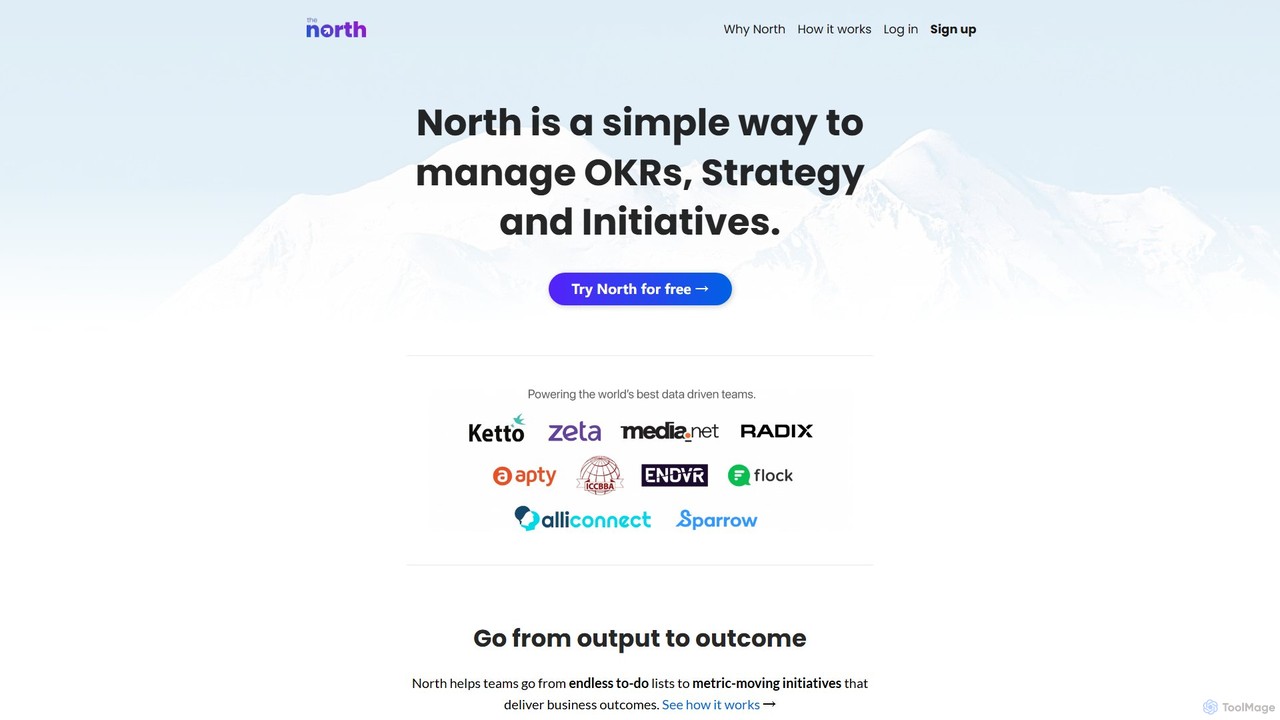
The North is a powerful yet simple OKR management platform designed to help teams shift from task-based outputs to metric-driven outcomes. It provides a unified space for managing strategy, objectives, key results, and initiatives, ensuring every team is aligned with core business goals. Ideal for data-driven companies of all sizes, it enhances transparency, focus, and collaboration, especially for remote teams.
About Strategy Planning
AI Strategy Planning tools are a specialized category of software that uses artificial intelligence to help teams formulate, analyze, and visualize business strategies. These tools leverage machine learning and data analysis to process market trends, competitor data, and internal performance metrics, generating actionable insights. They transform strategic planning from a static, manual process into a dynamic, data-driven workflow, enabling organizations to make more informed decisions. This focus on high-level decision support distinguishes them within the broader Team Collaboration ecosystem.
Core Features
- AI-Powered Analysis: Automatically synthesizes complex data to generate SWOT analyses, identify market opportunities, and assess competitive landscapes.
- Scenario Modeling & Forecasting: Simulates the potential outcomes of different strategic choices, allowing teams to evaluate risks and rewards before implementation.
- Goal & OKR Generation: Suggests relevant Objectives and Key Results (OKRs) based on high-level company goals and data-driven insights.
- Automated Roadmap Creation: Translates strategic objectives into visual, prioritized roadmaps with timelines, milestones, and dependencies.
- Intelligent Frameworks: Provides structured templates for business models like PESTLE or Porter's Five Forces, enhanced with AI-populated data.
Use Cases
These tools are primarily used by executive teams, business strategists, product managers, and marketing leaders. Common applications include annual business planning, developing go-to-market strategies for new products, evaluating market entry possibilities, and optimizing resource allocation for key initiatives.
How to Choose
When selecting an AI Strategy Planning tool, evaluate its data integration capabilities (e.g., connections to CRM, analytics platforms), the sophistication of its AI models, its collaborative features for team input, and its ability to export plans into project management systems for execution.

Strategy PlanningUse Cases
Formulating an Annual Business Strategy
A leadership team at a mid-sized company uses an AI Strategy Planning tool for their annual planning. They connect the tool to their sales CRM and financial software. The AI analyzes performance trends and market data, automatically generating a comprehensive SWOT analysis. During the meeting, the team uses the tool's scenario modeling to test different growth strategies, such as 'aggressive market expansion' versus 'product line diversification'. The AI provides projected revenue and risk scores for each scenario, enabling the team to build a data-backed strategic plan and generate initial OKRs for the upcoming year.
Planning a New Product Go-to-Market Strategy
A product manager is tasked with launching a new software product. They use an AI Strategy Planning tool to analyze the target market and competitive landscape. By inputting target audience demographics and competitor features, the AI suggests optimal pricing strategies and key marketing messages. The tool then helps generate a visual go-to-market roadmap, outlining key phases from pre-launch to post-launch, including marketing campaigns, sales enablement activities, and success metrics. This automates much of the initial research and structuring, allowing the product manager to focus on execution.
Assessing a New Market Entry Opportunity
A business development team is considering expanding into a new geographical region. They use an AI Strategy tool to conduct a rapid market analysis. The tool aggregates data on market size, growth rate, regulatory landscape, and local competitors. It generates a PESTLE (Political, Economic, Social, Technological, Legal, Environmental) analysis automatically. Based on this data, the AI provides a risk score for the market entry and suggests potential strategies, such as a joint venture or direct investment. This allows the team to make a data-informed recommendation to leadership in a fraction of the time required for manual research.
Optimizing Resource Allocation Across Portfolios
A Project Management Office (PMO) needs to allocate a limited budget across multiple strategic initiatives. Using an AI Strategy Planning tool, they input the details of each project, including expected ROI, resource requirements, and strategic alignment. The AI runs simulations to identify the optimal allocation mix that maximizes overall portfolio value while staying within budget constraints. It can also highlight potential resource conflicts and suggest adjustments to project timelines. This provides the PMO with a clear, data-driven justification for their budget allocation decisions.
Conducting Dynamic Competitive Analysis
A marketing strategy team needs to stay ahead of competitors. They use an AI tool that continuously monitors competitors' online activities, such as pricing changes, new feature announcements, and marketing campaigns. The tool analyzes this data and presents it on a dynamic dashboard, highlighting significant shifts in competitors' strategies. It can also generate alerts for specific events, allowing the team to react quickly. This transforms competitive analysis from a periodic report into a real-time strategic intelligence function, enabling more agile and responsive marketing planning.
Facilitating AI-Assisted Brainstorming Sessions
A strategy team holds a brainstorming session to identify new growth opportunities. They use a collaborative AI strategy tool as a digital whiteboard. As the team adds ideas, the AI categorizes them in real-time and suggests related concepts or potential challenges based on its knowledge base of business models and market data. For example, if a team member suggests 'subscription model', the AI might prompt them to consider 'tiered pricing' or 'freemium options'. This enhances the creative process by providing instant, structured feedback and expanding the team's thinking beyond their initial ideas.