Utilities Best in category 1 results Benchmarking AI Tool

Popular AI tools in the Benchmarking field of Utilities include Geekbench, etc., helping you quickly improve efficiency.

Geekbench

Geekbench

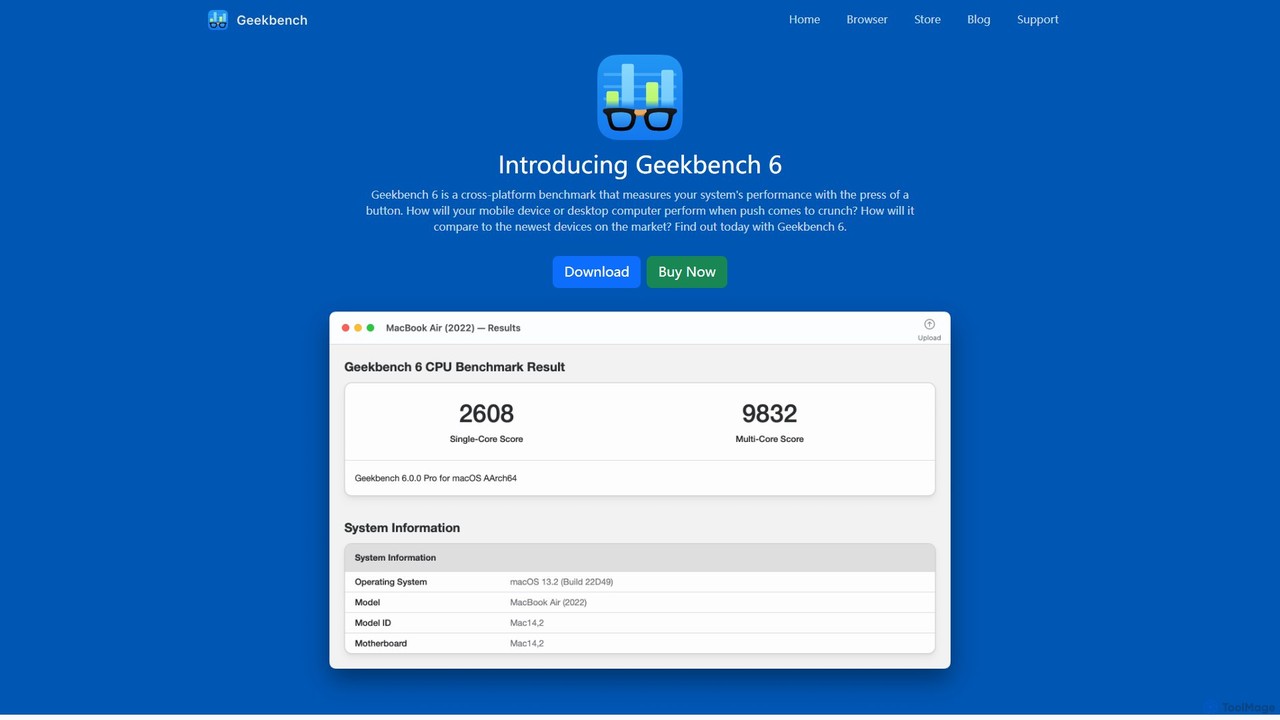
Geekbench is a leading cross-platform benchmarking tool that measures the performance of CPUs, GPUs, and AI/ML workloads. It …

925.2K

About Benchmarking

Benchmarking tools are AI-powered utilities designed to systematically evaluate the performance, efficiency, and capabilities of AI models, algorithms, or entire AI systems. These tools provide quantitative metrics and standardized tests, enabling objective comparison against established baselines, competing models, or specific performance targets. They are crucial for validating model effectiveness, identifying areas for improvement, and making informed deployment decisions across various AI applications, ensuring robust and reliable AI solutions.

Core Features

  • Standardized Datasets: Provide access to common, publicly available, or custom datasets for consistent and fair model evaluation across different AI solutions.
  • Performance Metrics: Calculate a wide array of key metrics such as accuracy, precision, recall, F1-score, latency, throughput, and resource consumption relevant to the specific AI task.
  • Comparative Analysis: Offer functionalities to compare multiple AI models or algorithms side-by-side on the same criteria, highlighting strengths and weaknesses.
  • Automated Testing: Enable the automation of testing processes, including data loading, model inference, metric calculation, and report generation, streamlining evaluation workflows.
  • Bias and Fairness Detection: Include features to identify and quantify potential biases within AI model outputs, ensuring fairness and ethical considerations are met across different demographic groups.

Use Cases

AI researchers and developers extensively use benchmarking tools to rigorously test new models and algorithms before deployment, ensuring they meet predefined performance thresholds and quality standards. Data scientists leverage them to objectively compare different machine learning algorithms or model architectures for a specific task, facilitating the selection of the most effective and efficient solution. Furthermore, businesses utilize these tools to validate the performance of third-party AI solutions against internal benchmarks or competitive offerings, ensuring optimal investment and integration.

How to Choose

When selecting an AI benchmarking tool, consider its compatibility with your existing AI frameworks (e.g., TensorFlow, PyTorch) and the types of data you work with. Evaluate the breadth of performance metrics it supports and its ability to handle large-scale, complex evaluations efficiently. Look for robust reporting and visualization features that simplify analysis, ease of integration into your existing MLOps pipelines, and the presence of strong community support or industry recognition for its benchmark standards. Scalability and security features are also paramount for enterprise-level adoption.

BenchmarkingUse Cases

1

Evaluating New AI Model Architectures

AI researchers use benchmarking tools to rigorously test novel neural network architectures against established baselines on public datasets like ImageNet or GLUE. This helps quantify improvements in accuracy, speed, or resource efficiency, validating research findings before publication or further development. It ensures that new models offer tangible advancements over existing solutions.

2

Comparing Commercial AI APIs

Businesses assess various third-party AI services (e.g., natural language processing, computer vision APIs) by running them through standardized tests with proprietary data. This allows for objective comparison of performance, cost, and latency to select the best vendor for specific business needs, ensuring optimal integration and value.

3

Optimizing Model Deployment Performance

MLOps engineers utilize benchmarking to measure the inference speed and resource consumption of trained models on different hardware configurations (e.g., CPU vs. GPU, edge devices). This guides optimization efforts to ensure efficient and scalable deployment in production environments, minimizing operational costs and maximizing responsiveness.

4

Detecting and Mitigating AI Bias

Data scientists employ specialized benchmarking tools to identify and quantify biases in AI models, particularly in sensitive applications like credit scoring or hiring. By testing model outputs across different demographic groups, they can uncover unfair predictions and work towards more equitable AI systems, promoting ethical AI development.

5

Validating AI System Robustness

Developers use benchmarking to test the resilience of AI systems against adversarial attacks or noisy input data. This involves systematically introducing perturbations to inputs and measuring the model's performance degradation, ensuring the system remains reliable under challenging real-world conditions and can withstand unexpected inputs.

6

Tracking Model Performance Over Time

Organizations implement continuous benchmarking as part of their MLOps pipeline to monitor the performance of deployed AI models. Regular re-evaluation against fresh data helps detect model drift or degradation, triggering retraining or recalibration to maintain optimal performance and ensure long-term reliability in dynamic environments.

BenchmarkingFrequently Asked Questions