
Enso
Enso is an AI-powered development environment designed for developers to parallelize intelligence across multiple AI agents within a …
Enso is an AI-powered development environment designed for developers to parallelize intelligence across multiple AI agents within a single project. It integrates advanced Git control, a robust code editor, and AI-driven code review, offering a seamless workflow with persistent AI sessions for each branch.

Cascade
Cascade is a creative development environment for modern web development. It allows users to visually explore parallel versions …
Cascade is a creative development environment for modern web development. It allows users to visually explore parallel versions of their projects, manage branches, and rapidly build new iterations with the help of an integrated AI assistant. Experiment freely and commit your best work.
ChetakAI
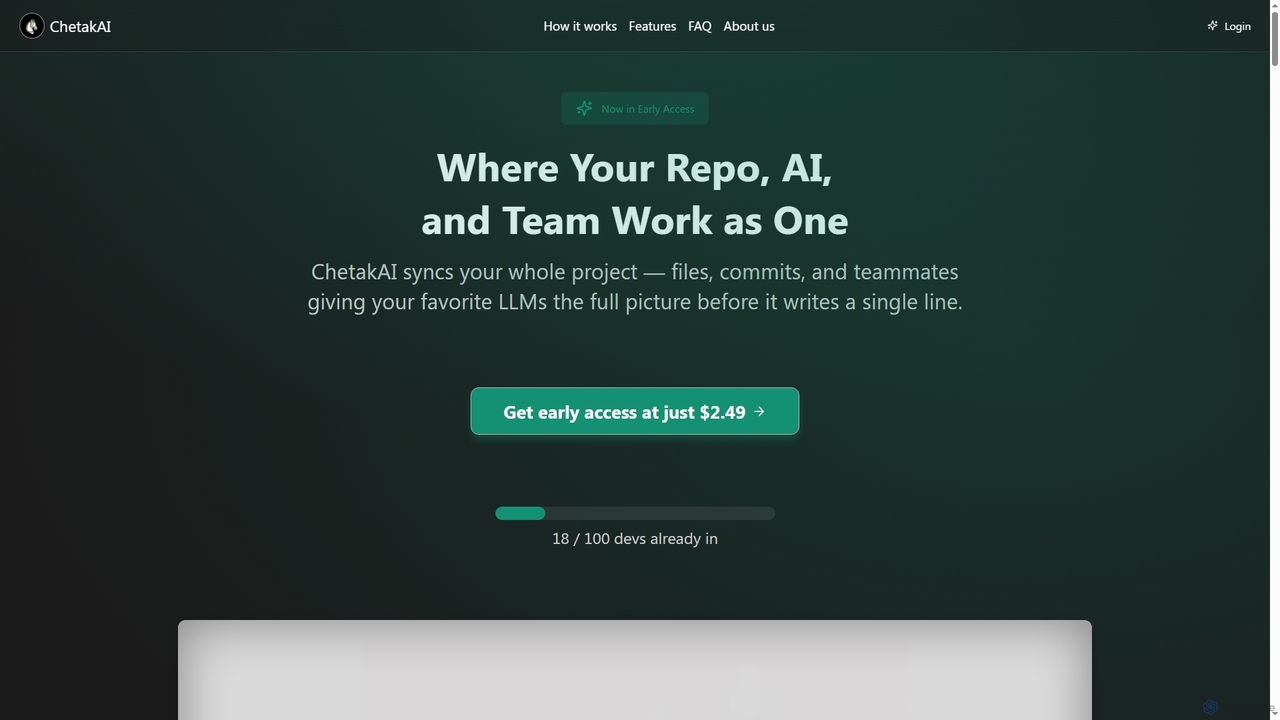
ChetakAI is an AI-powered development platform that unifies your code, AI, and team into a single, context-aware workspace. …
ChetakAI is an AI-powered development platform that unifies your code, AI, and team into a single, context-aware workspace. It syncs your entire project, including files, commits, and team activity, to provide large language models with a complete understanding before generating any code, enhancing collaboration and productivity.
About Version Control
Version Control tools are AI-powered systems designed to augment traditional software version control by automating tasks, providing intelligent insights, and improving development workflows. These tools leverage artificial intelligence to analyze code changes, predict potential issues, and facilitate more efficient collaboration among development teams. Their primary value lies in streamlining complex software projects, reducing errors, accelerating release cycles, and ensuring higher code quality through intelligent automation.
Core Features
- Intelligent Conflict Resolution: AI suggests optimal merge strategies and automatically resolves common code conflicts.
- Automated Code Review: AI identifies potential bugs, security vulnerabilities, and style violations in real-time.
- Predictive Branching & Merging: AI analyzes historical data to recommend efficient branching strategies and merge points.
- Semantic Versioning Assistance: AI helps in automatically generating release notes and version numbers based on commit messages.
- Enhanced Collaboration Insights: AI provides analytics on team contributions, code ownership, and workflow bottlenecks.
Applicable Scenarios
These tools are crucial for large-scale software development, where numerous contributors manage complex codebases. They are also vital in modern DevOps pipelines, integrating seamlessly with CI/CD for automated deployments, and highly beneficial for open-source projects to maintain code quality across distributed teams.
How to Choose
When selecting an AI Version Control tool, consider its integration capabilities with your existing VCS (e.g., Git, SVN), the specific AI features offered (e.g., code review, conflict resolution), its scalability to handle growing repositories, and its security and compliance standards to protect your codebase.
Version ControlUse Cases
Automated Code Quality Assurance
Developers use AI version control to automatically scan new commits for bugs, security flaws, and style inconsistencies before merging. This proactive approach ensures higher code quality from the outset, significantly reducing the manual effort and time traditionally spent on code reviews and debugging.
Streamlined Merge Conflict Resolution
Development teams facing frequent merge conflicts leverage AI version control to intelligently suggest resolutions, automatically apply common fixes, and highlight critical areas requiring human oversight. This capability drastically speeds up the integration process, minimizing downtime and developer frustration.
Optimizing Branching Strategies
Project managers and lead developers utilize AI version control to analyze historical commit patterns, project dependencies, and team activity. The AI recommends optimal branching and merging strategies, helping to minimize risks, prevent integration issues, and accelerate the delivery of new features.
Predictive Bug Detection in CI/CD
DevOps engineers integrate AI version control into their Continuous Integration/Continuous Delivery (CI/CD) pipelines. The AI predicts potential build failures or runtime errors based on code changes, enabling proactive identification and resolution of issues before they impact deployment, thus enhancing release stability.
Enhanced Collaboration and Contribution Tracking
Open-source project maintainers use AI version control to gain deep insights into contributor activity, identify key areas of code ownership, and automatically generate summaries of changes for release notes. This fosters better community engagement and simplifies the management of diverse contributions.
Automated Semantic Versioning and Release Notes
Development teams employ AI version control to automatically parse commit messages and code changes, generating accurate semantic version numbers and comprehensive release notes. This automation simplifies the release management process, ensuring consistency and clarity for users and stakeholders.