ToolMage
Sign in

Best 1 Ai Film Platform for Video

Popular Ai Film Platform in Video include DreamFlare, helping you work more efficiently.

DreamFlare
Free

DreamFlare

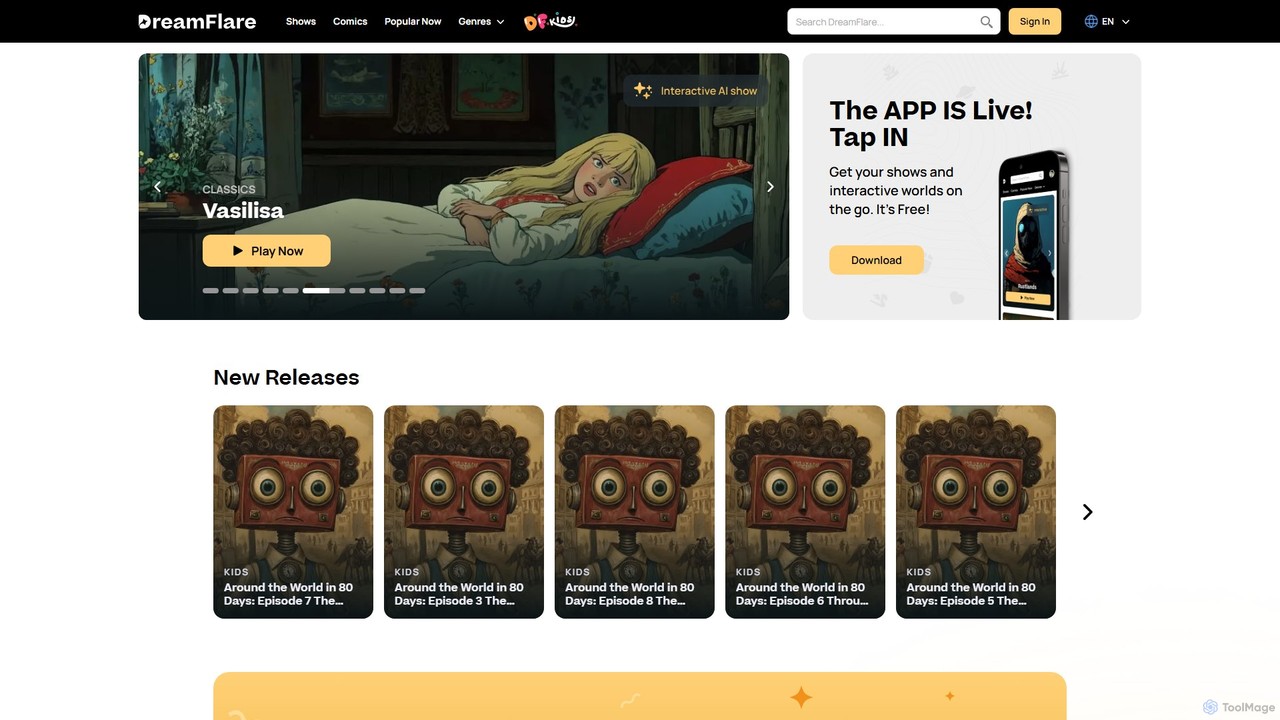
DreamFlare is a pioneering entertainment platform dedicated to showcasing AI-generated short films and series. It offers a vast and diverse library of content across numerous genres, including fantasy, sci-fi, anime, comedy, and history, providing a unique streaming experience powered by the creative potential of artificial intelligence.

Generative Art
Visits 7.8KFavorites 160Likes 147

About Ai Film Platform

An AI Film Platform is a specialized suite of tools that uses generative AI to create, edit, and produce narrative-driven cinematic content. These platforms go beyond simple video generation by interpreting scripts, maintaining character consistency, and constructing coherent scenes to form a complete story. They empower creators to translate text-based ideas directly into visual sequences, significantly accelerating the pre-production and production workflow. This technology is particularly valuable for visualizing concepts, producing animated content, and creating short films with minimal resources.

Core Features

  • Script-to-Screen Generation: Automatically transforms written scripts or screenplays into corresponding video scenes with characters, actions, and dialogue.
  • Consistent Character & Style: Maintains the appearance of characters and the overall visual aesthetic across multiple shots and scenes for narrative continuity.
  • AI-Powered Storyboarding: Generates visual storyboards from scene descriptions, helping to plan camera angles, shots, and sequences.
  • Cinematic Control: Offers controls for virtual camera movements, lighting, depth of field, and other cinematic elements to enhance storytelling.
  • Integrated Post-Production: Includes AI-driven tools for editing, color grading, sound design, and adding visual effects to finalize the film.

Applicable Scenarios

AI Film Platforms are used by independent filmmakers for rapid prototyping and producing short films. Advertising agencies leverage them to create story-driven commercials and marketing content. Animation studios and game developers also use these platforms to generate cutscenes, pre-visualizations, and supplementary animated content, streamlining complex production pipelines.

Selection Criteria

When choosing an AI Film Platform, evaluate the quality and realism of the video output. Assess its ability to maintain character and style consistency throughout a project. Consider the level of creative control offered over camera angles, character expressions, and scene composition. Also, check for integration capabilities with standard video editing software and review the platform's pricing model, whether it's based on subscription or generation time.

Ai Film Platform use cases

1

Prototype a Short Film Concept

An independent filmmaker has a script for a 5-minute animated short but lacks the budget for a full animation team. Using an AI Film Platform, they input their script, define character appearances, and set a specific visual style (e.g., 'Ghibli-inspired watercolor'). The platform generates a full-length animatic, including character movements, dialogue synchronization, and basic scene transitions. This allows the filmmaker to have a complete visual prototype to present to investors and apply for grants, turning a text document into a compelling pitch deck in a matter of hours instead of months.

2

Generate Narrative Ad Campaigns

A marketing agency is tasked with creating a series of short, story-driven video ads for a new product. Instead of costly live-action shoots, the creative team uses an AI Film Platform. They input several short story concepts and generate multiple visual variations for each. The platform maintains brand consistency by using a predefined color palette and character model. The team can quickly A/B test different narrative endings or character reactions, producing a full campaign of five distinct video ads in a single week, a process that would traditionally take over a month and a much larger budget.

3

Accelerate Pre-visualization for Feature Films

A visual effects supervisor for a major studio needs to pre-visualize a complex action sequence involving fantasy creatures. They use an AI Film Platform to quickly generate a dynamic storyboard and animatic. By inputting descriptions from the script like 'A dragon swoops down over a medieval castle,' the platform creates multiple shot options with varying camera angles and movements. This AI-generated pre-visualization serves as a clear visual guide for the VFX, animation, and cinematography teams, ensuring everyone shares the same vision before committing to expensive production resources. It reduces ambiguity and saves weeks of manual storyboarding.

4

Create Animated Educational Content

An educational content creator wants to produce an animated series explaining historical events. Lacking animation skills, they turn to an AI Film Platform. They write a script for an episode about ancient Rome, defining key characters like Julius Caesar. The platform generates scenes of Caesar giving speeches in the Forum and legions marching, all in a consistent, educational art style. The creator can easily adjust details, such as the accuracy of the soldiers' armor or the architecture, by refining the text prompts. This enables a single person to produce a high-quality, animated educational series without needing a team of animators.

5

Visualize a Novel for a Film Pitch

An author has written a science-fiction novel and wants to pitch it to film studios. To make their pitch more impactful than a simple manuscript, they use an AI Film Platform to create a 'concept trailer'. They select three key, action-packed scenes from the book and write them out as short scripts. The AI generates these scenes, maintaining a consistent look for the main character and the futuristic world. The author then edits these clips together into a 2-minute trailer. This visual aid helps studio executives immediately grasp the story's tone and cinematic potential, significantly increasing the chances of securing a production deal.

6

Generate In-Game Cinematic Cutscenes

A small indie game development studio needs to create several cinematic cutscenes for their new role-playing game. Lacking a dedicated animator, they use an AI Film Platform. The lead writer inputs the script and dialogue for a scene where the hero confronts the villain. They specify the game's low-poly art style and define the character models. The platform generates the full cutscene, complete with dramatic camera angles, character animations, and lip-syncing. The developers can then export this sequence and integrate it directly into their game engine, saving hundreds of hours of manual animation and rigging work.

Ai Film Platform FAQ

What is an AI Film Platform?

An AI Film Platform is an integrated software solution that uses generative artificial intelligence to create narrative-driven films and cinematic sequences. Unlike basic video generators, these platforms are designed for storytelling, allowing users to input scripts, define characters, and set visual styles. They then automatically generate coherent scenes, maintain character consistency across the film, and offer controls for cinematic elements like camera angles and lighting. Their primary purpose is to streamline the filmmaking process from concept to a visual product, enabling creators to produce short films, animations, or pre-visualizations efficiently.

How does an AI Film Platform differ from an AI Video Generator?

The primary difference lies in their scope and purpose. An AI Video Generator typically creates short, isolated clips from text prompts, focusing on generating a single scene or concept. An AI Film Platform is a more comprehensive system built for narrative continuity. Key distinctions include:

  • Narrative Structure: Film platforms are designed to handle multi-scene scripts and maintain consistency in characters, locations, and style across an entire story.
  • Character Consistency: They offer advanced features to create and reuse specific character models throughout the film, which is a major challenge for simple video generators.
  • Cinematic Control: Film platforms provide more granular control over filmmaking elements like camera movement, shot types (e.g., close-up, wide shot), and scene pacing.
  • Workflow Integration: They often function as an end-to-end solution, incorporating storyboarding, generation, and basic editing tools.
In short, a video generator makes clips, while a film platform aims to make a complete, coherent movie.

What are the key features to look for in an AI Film Platform?

When evaluating an AI Film Platform, focus on features that support narrative filmmaking. Key features include:

  • High-Quality Visual Generation: The ability to produce aesthetically pleasing and coherent visuals that match your desired style.
  • Strong Character Consistency: The platform must be able to generate the same character with consistent features and clothing across different scenes and actions.
  • Granular Scene Control: Look for options to direct camera angles, movements (pan, tilt, zoom), lighting, and character expressions.
  • Script Interpretation: A good platform can accurately translate script elements—actions, dialogue, and setting descriptions—into visual scenes.
  • Export and Integration Options: The ability to export high-resolution video and integrate with professional editing software like Adobe Premiere Pro or DaVinci Resolve is crucial for a professional workflow.

Who is the ideal user for an AI Film Platform?

AI Film Platforms are ideal for a range of creators and professionals who want to produce narrative video content efficiently. This includes:

  • Independent Filmmakers: For creating short films, concept pitches, and pre-visualizations without a large budget or crew.
  • Content Creators & YouTubers: To produce animated stories, explainers, or historical reenactments that would otherwise require complex animation skills.
  • Marketing & Advertising Agencies: For rapidly prototyping and producing story-driven commercials and social media campaigns.
  • Game Developers: To generate cinematic cutscenes and trailers for their games, saving on animation resources.
  • Authors & Screenwriters: To visualize scenes from their scripts or novels to create compelling pitches for studios.
Essentially, anyone with a story to tell visually, but who may lack the traditional resources of a film production, can benefit greatly.

What are the current limitations of AI Film Platforms?

While powerful, AI Film Platforms have several limitations. The technology is still evolving, and users may encounter challenges such as:

  • Nuanced Emotions: AI can struggle to generate subtle emotional expressions and complex human interactions authentically.
  • Complex Action Sequences: Choreographing intricate and physically plausible action scenes remains a significant hurdle.
  • Logical Consistency: Maintaining perfect logical consistency (e.g., an object staying in the same place between shots) can sometimes be an issue.
  • Creative Unpredictability: The AI's interpretation of a prompt may not always align perfectly with the creator's vision, requiring multiple attempts and prompt refinement.
  • High Computational Cost: Generating high-resolution, long-form video can be resource-intensive and may come with significant costs depending on the platform's pricing model.
These tools are best viewed as powerful assistants for rapid creation and visualization, rather than complete replacements for human creativity and direction.