Website Tools Best in category 1 results Chatbots AI Tool

Popular AI tools in the Chatbots field of Website Tools include Custocom, etc., helping you quickly improve efficiency.

Custocom

Custocom

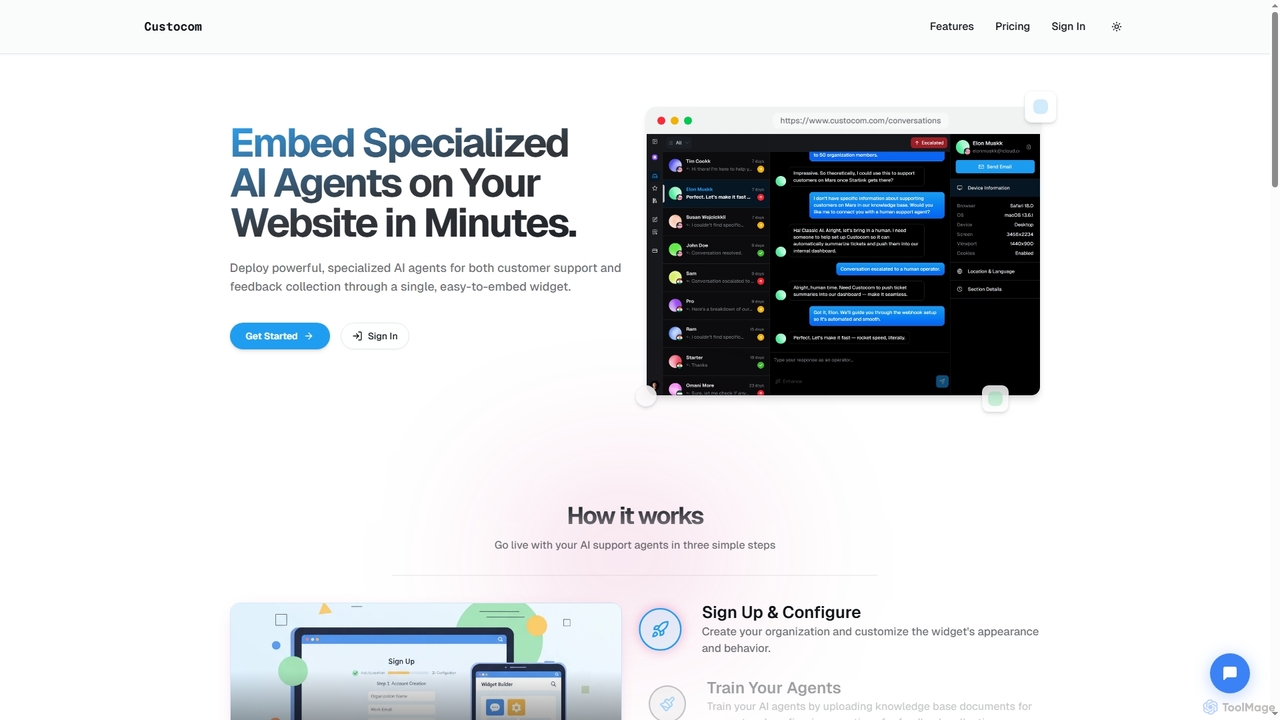
Custocom is an AI-powered B2B SaaS platform that integrates customer support and feedback collection into a single, easy-to-embed …

2.1K

About Chatbots

Chatbots are AI-powered conversational agents designed to simulate human conversation through text or voice interfaces. These tools leverage natural language processing (NLP) and machine learning to understand user queries, provide instant responses, and automate interactions. Integrated into websites, messaging apps, or customer service platforms, chatbots enhance user experience by offering 24/7 support, guiding users, and streamlining various online processes.

Core Features

  • Natural Language Understanding (NLU): Interprets user intent and context from free-form text or speech.
  • Automated Responses: Delivers pre-programmed or dynamically generated answers to common questions.
  • Integration Capabilities: Connects seamlessly with CRM, e-commerce platforms, and other business systems.
  • Multi-channel Deployment: Operates across websites, social media, messaging apps, and voice assistants.
  • Personalization: Adapts interactions based on user history and preferences for a tailored experience.

Applicable Scenarios

Businesses across various sectors utilize chatbots for enhancing customer engagement and operational efficiency. They are commonly deployed in customer support to handle routine inquiries, in sales to qualify leads, and in marketing to personalize user journeys. E-commerce sites use them for product recommendations, while healthcare providers use them for appointment scheduling and information dissemination.

How to Choose

Selecting the right chatbot involves evaluating several factors. Consider the complexity of conversations it needs to handle (rule-based vs. AI-driven), its integration capabilities with existing systems (CRM, helpdesk), and the channels it needs to support (web, mobile, social). Also, assess the ease of setup, customization options, scalability, and the vendor's support and analytics features.

ChatbotsUse Cases

1

Automated Customer Support for E-commerce

An e-commerce business uses a chatbot on its website to handle common customer inquiries such as order status, shipping information, return policies, and product FAQs. The chatbot provides instant, accurate answers 24/7, reducing the need for human agents to respond to repetitive questions and allowing them to focus on more complex issues. This significantly improves customer satisfaction and reduces support costs.

2

Automate Customer Support Inquiries

Customer service teams can deploy AI chatbots on their websites to handle a high volume of routine questions, such as 'What are your operating hours?' or 'How do I reset my password?'. The chatbot provides instant, accurate answers, freeing human agents to focus on complex issues. This significantly reduces response times and improves overall customer satisfaction, especially outside business hours.

3

Lead Generation and Qualification on Websites

Marketing teams deploy chatbots on landing pages to engage website visitors, ask qualifying questions about their needs and budget, and collect contact information. The chatbot can then route qualified leads directly to sales representatives or schedule a demo, ensuring that sales teams receive high-quality prospects and improving conversion rates by automating the initial engagement phase.

4

Qualify and Nurture Sales Leads

Sales and marketing teams use chatbots to engage website visitors, ask qualifying questions about their needs and budget, and collect contact information. Based on responses, the chatbot can direct qualified leads to sales representatives or provide relevant content to nurture them further. This automates the initial sales funnel stages, ensuring only high-potential leads reach human sales teams.

5

Internal HR and IT Support for Employees

Large organizations utilize chatbots to provide instant support to employees for HR-related queries (e.g., leave policies, benefits, payroll) and IT issues (e.g., password resets, software installation guides). This self-service option reduces the workload on HR and IT departments, provides employees with immediate answers, and improves overall operational efficiency by automating routine support tasks.

6

Offer Personalized Product Recommendations

E-commerce businesses can integrate chatbots to act as virtual shopping assistants. When a customer browses products, the chatbot can proactively ask about their preferences, style, or budget. Based on this input, it recommends suitable products, answers specific product questions, and guides them through the purchase process, enhancing the shopping experience and potentially increasing conversion rates.

7

Interactive Product Guidance and Recommendations

Retail websites employ chatbots to guide customers through product catalogs, answer specific questions about features, specifications, and compatibility, and offer personalized recommendations based on their preferences or previous purchases. This enhances the shopping experience, helps customers find suitable products faster, and can lead to increased sales and reduced cart abandonment rates.

8

Streamline User Onboarding and FAQs

Software companies and online platforms utilize chatbots to guide new users through the onboarding process, explaining features and answering common setup questions. Instead of searching through extensive documentation, users can simply ask the chatbot for help. This reduces the learning curve, improves user retention, and decreases the burden on support staff for basic inquiries.

9

Educational Content Delivery and Tutoring

Educational platforms and e-learning providers use chatbots to deliver interactive learning content, answer student questions about course material, provide instant feedback on quizzes, and guide learners through complex topics. This creates a personalized learning experience, supports self-paced study, and makes educational resources more accessible and engaging for students.

10

Provide Internal HR Support

Organizations can deploy internal chatbots to assist employees with HR-related queries, such as 'How do I request leave?' or 'What are the company's expense policies?'. The chatbot provides immediate access to company policies, benefits information, and forms, reducing the workload on HR departments and ensuring employees get quick, consistent answers without human intervention.

11

Automated Appointment Scheduling and Booking

Service-based businesses, such as clinics, salons, or consulting firms, deploy chatbots on their websites or messaging apps to allow customers to schedule, reschedule, or cancel appointments automatically. The chatbot integrates with calendar systems, checks availability, and sends confirmations, streamlining the booking process, reducing administrative overhead, and providing convenience for clients outside business hours.

12

Manage Event Registration and Info

Event organizers can use chatbots to automate the registration process for webinars, conferences, or workshops. The chatbot can collect attendee details, process payments, and provide event schedules, speaker information, and venue directions. This offers a convenient, interactive way for participants to register and get real-time updates, simplifying event management.

ChatbotsFrequently Asked Questions