TheNoah
TheNoah is the world's first pre-trained, zero-code AI platform designed for enterprises and domain experts. It offers over …
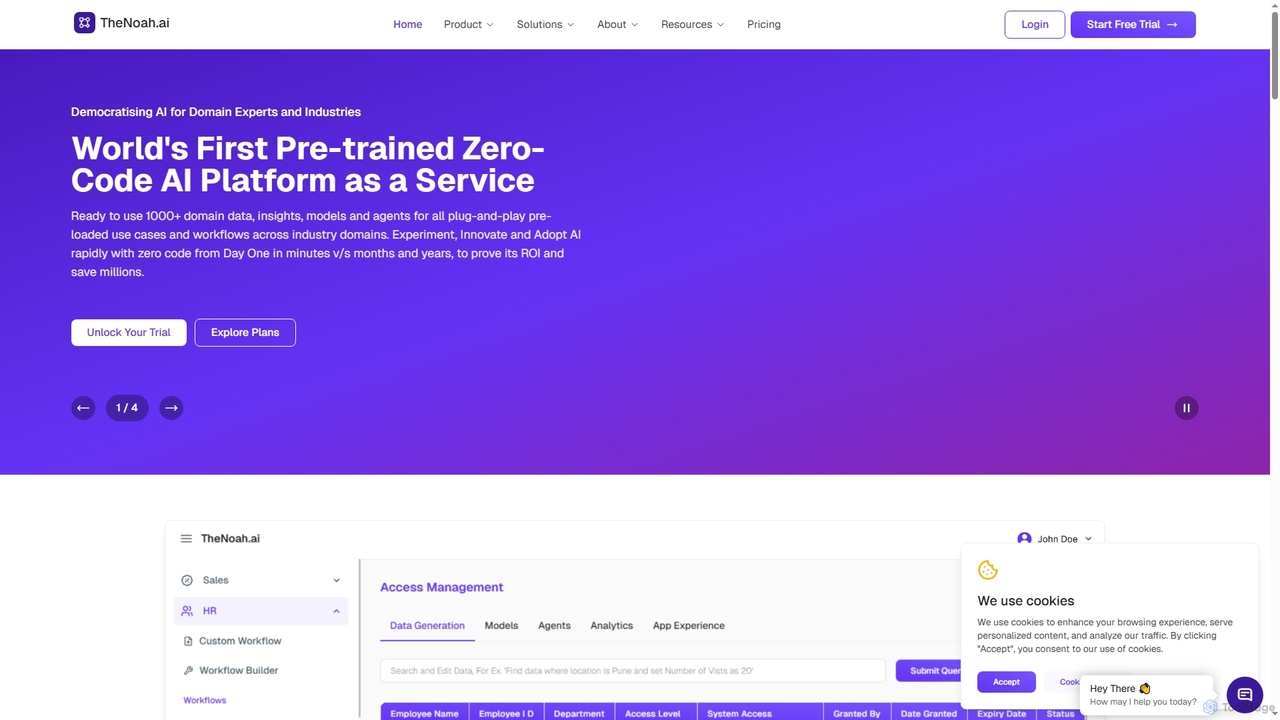
TheNoah is the world's first pre-trained, zero-code AI platform designed for enterprises and domain experts. It offers over 1000 ready-to-use domain-specific models, AI agents, and data simulation capabilities to rapidly automate workflows, generate actionable insights, and accelerate AI adoption across industries without requiring technical expertise.
Ctrly
Ctrly is a revolutionary Chrome extension that automates your signature process. Simply press Ctrl + Y to instantly …
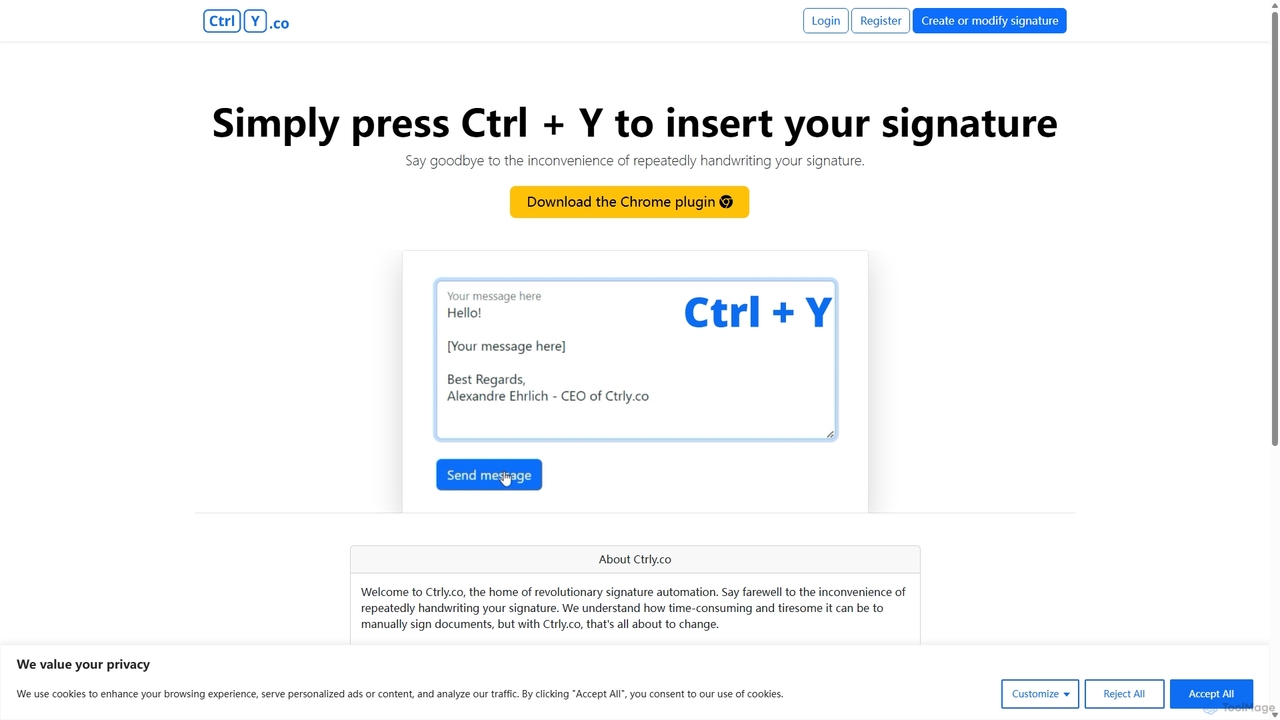
Ctrly is a revolutionary Chrome extension that automates your signature process. Simply press Ctrl + Y to instantly insert your pre-saved digital signature into any web-based document, email, or form. It eliminates the need for printing, signing, and scanning, saving you valuable time and boosting productivity. Ideal for professionals, entrepreneurs, and anyone who frequently signs digital documents, Ctrly streamlines your workflow with unparalleled ease and efficiency.
About Automation
Automation tools are AI-powered solutions designed to autonomously execute repetitive tasks, complex processes, and data-driven decisions within various workflows. Leveraging machine learning, natural language processing, and computer vision, these tools streamline operations, enhance efficiency, and minimize human error. They transform manual, time-consuming activities into seamless, intelligent sequences, freeing up human capital for strategic initiatives.
Core Features
- Intelligent Task Orchestration: Automatically sequence and execute tasks across different applications, adapting to real-time conditions.
- AI-driven Data Processing: Extract, transform, and validate unstructured data from documents, emails, and other sources with high accuracy.
- Predictive Action & Decision Making: Anticipate needs and trigger actions or make recommendations based on learned patterns and data analysis.
- Natural Language Understanding & Generation: Process human language inputs for automated communication, content generation, and sentiment analysis.
- Cognitive Robotic Process Automation (RPA): Automate rule-based tasks with added AI intelligence to handle exceptions and complex scenarios.
Applicable Scenarios
Businesses across finance, customer service, marketing, IT, and HR extensively utilize AI automation. Typical applications include automating invoice processing, intelligent customer support responses, personalized marketing campaign execution, and streamlined IT incident management.
How to Choose
When selecting an AI automation tool, consider its integration capabilities with your existing systems, the complexity and types of tasks it can handle (e.g., structured vs. unstructured data), scalability for future growth, and the level of AI intelligence required. Evaluate ease of use, security features, vendor support, and pricing models to ensure alignment with your operational requirements and budget.

AutomationUse Cases
Automated Customer Support Triage
Customer service teams leverage AI automation to intelligently categorize and route incoming customer queries from various channels (email, chat, social media). The AI analyzes intent and sentiment, providing instant answers for common FAQs or escalating complex issues to the most appropriate human agent with relevant context. This significantly reduces response times and improves customer satisfaction.
Intelligent Document Processing for Finance
Financial departments use AI automation to process large volumes of unstructured documents like invoices, receipts, and contracts. The AI extracts key data points (e.g., vendor, amount, date), validates them against existing records, and automatically inputs the information into ERP or accounting systems. This eliminates manual data entry, reduces errors, and accelerates financial closing processes.
Personalized Marketing Campaign Execution
Marketing teams deploy AI automation to create and execute highly personalized campaigns. The AI analyzes customer behavior, preferences, and historical data to segment audiences, predict optimal messaging, and automatically trigger email sequences, social media posts, or ad placements at the most effective times. This significantly boosts engagement, conversion rates, and ROI for marketing efforts.
IT Operations Incident Management
IT departments utilize AI automation to proactively monitor system logs, network traffic, and application performance for anomalies. Upon detection of potential issues, the AI automatically creates incident tickets, prioritizes them based on severity, and can even trigger automated remediation scripts or alert the relevant on-call teams. This minimizes downtime, reduces manual intervention, and improves overall system reliability.
Automated HR Onboarding Workflows
HR departments streamline the new employee onboarding process using AI automation. The AI guides new hires through necessary paperwork, automatically sends welcome emails, assigns mandatory training modules, sets up system access, and schedules initial meetings. This ensures a consistent, compliant, and efficient onboarding experience, reducing administrative burden on HR staff and improving new hire satisfaction.
Supply Chain Optimization and Predictive Logistics
Logistics and supply chain managers use AI automation to optimize inventory, procurement, and delivery. The AI analyzes historical data, market trends, and real-time conditions to predict demand, automatically reorder stock, optimize shipping routes, and manage supplier communications. This leads to reduced operational costs, minimized stockouts, and improved on-time delivery performance across the entire supply chain.