ToolMage
Sign in

AI TOOL COMPARISON

Aide vs Devassistant.ai

What is the difference, and which fits your workflow? Compare features, usage, pricing models and traffic side by side.

Jump to key differences

Product overview

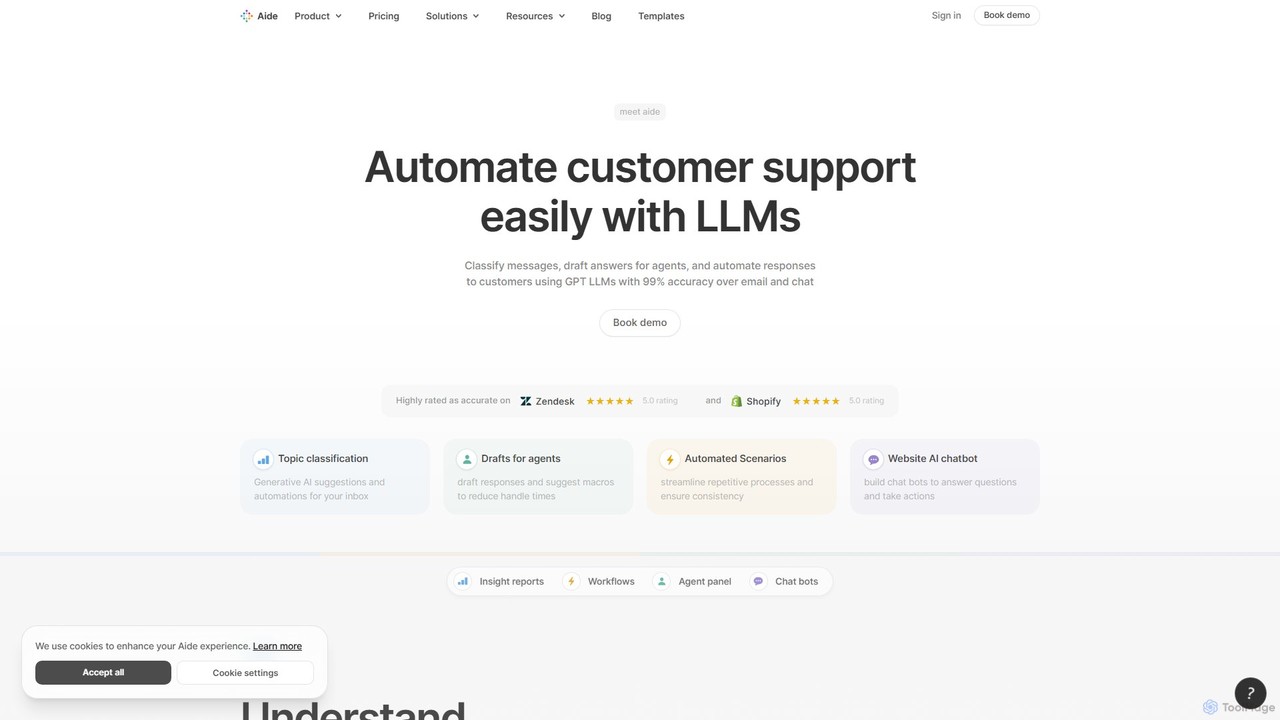
Aide Product overview

Aide is an AI-powered multi-agent coding assistant that automates software development directly within your GitHub workflow. It interprets GitHub issues, autonomously generates code, creates pull requests, and iterates based on your feedback, effectively acting as a team of AI engineers on your codebase.

Preview

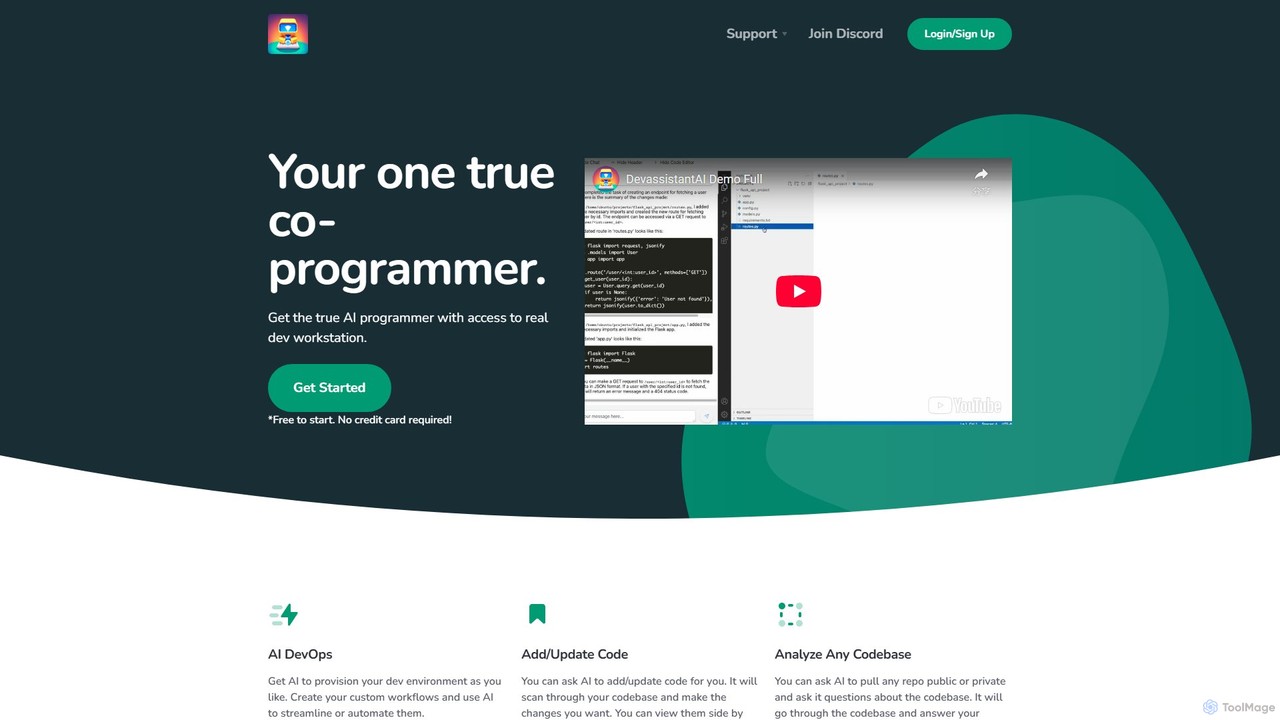
Devassistant.ai Product overview

Devassistant.ai is an advanced AI co-programmer that automates DevOps, analyzes entire codebases, and intelligently adds or updates code. It streamlines development workflows by provisioning environments, answering complex questions about your code, and making changes within a cloud-based VS Code interface, boosting productivity and code quality.

Preview

Quick facts

Compare product focus, pricing models and audiences. Highlighted rows indicate different listed information; unknown pricing does not mean free.

Aide VS Devassistant.ai — Quick facts
Quick factsAideDevassistant.ai
Pricing modelFreemiumFreemium
Product typeWebWeb
Primary focusCode GenerationCode Assistant
Audience and rolesNo data availableNo data available
CategoriesCode Generation · Code Assistant · AutomationCode Assistant · Infrastructure As Code · Automation
AddedAug 9, 2025Aug 4, 2025
UpdatedNov 19, 2026Nov 19, 2026

Features, usage and use cases

Explore the listed product descriptions, features and workflows. Taxonomy labels alone are not feature evaluations.

Aide

Aide introduces AgentFarm, a state-of-the-art multi-agent system designed to revolutionize the software development lifecycle. Positioned as a powerful AI coding partner, Aide excels at understanding complex tasks and autonomously executing them within your existing GitHub environment. By leveraging parallel AI agents, it can handle development tasks you would typically assign to a mid-level engineer, from creating new features to fixing bugs and refactoring code. The platform has demonstrated top-tier performance, ranking #1 on the SWE-Bench benchmark, showcasing its advanced capabilities in real-world software engineering challenges.

The core philosophy of Aide is to seamlessly integrate into a developer's natural workflow, eliminating the need for context switching or complex setups. It operates directly through GitHub issues and pull requests, allowing developers to collaborate with AI agents just as they would with human colleagues. This approach not only accelerates development cycles but also frees up engineering teams to focus on high-level architectural decisions, product strategy, and mission-critical problems, leaving the routine coding tasks to a reliable and efficient AI workforce.

How to use Aide

The process of using Aide is designed to be intuitive and deeply integrated with GitHub:

  1. Create a GitHub Issue: Simply open a new issue in your repository and describe the task you need done. You can write a simple request without needing to provide exhaustive detail.
  2. AI Agent Takes Over: An AI agent will automatically pick up the issue, analyze the request, and begin working on the code.
  3. Receive a Pull Request: The agent will open a Pull Request (PR) with the proposed code changes for you to review.
  4. Iterate and Collaborate: You can review the PR and provide feedback by commenting directly on it. The agent will understand your comments and push new commits to address your feedback.
  5. Merge When Ready: Once you are satisfied with the agent's work, you can merge the PR into your main branch, completing the task.

Core Features of Aide

  • Parallel Multi-Agent System: Deploys multiple AI agents that can work on different tasks in your codebase simultaneously, dramatically increasing throughput.
  • GitHub-Native Integration: Works seamlessly within your existing GitHub workflow with a one-click setup. No external tools or platforms are needed.
  • Autonomous Task Execution: Agents can independently handle tasks like feature implementation, bug fixing, and code refactoring based on simple issue descriptions.
  • Automated PR Workflow: Automates the entire process from issue creation to PR submission, including smart suggestions and iterative improvements based on feedback.
  • Automatic Code Reviews: The AI agents can perform preliminary code reviews, ensuring code quality and adherence to best practices.
  • Continuous Operation: Agents continue to work in the background on your repository, even when you are not actively monitoring them.

Use Cases for Aide

Aide is versatile and can be applied to a wide range of software development scenarios:

  • Feature Development: Describe a new feature in a GitHub issue and let Aide's agents build it for you.
  • Bug Squashing: Assign bug reports to Aide for quick analysis and automated fixes.
  • Code Refactoring & Modernization: Modernize legacy code or refactor complex sections of your application for better performance and maintainability.
  • Automating Repetitive Tasks: Handle routine tasks like updating dependencies, writing boilerplate code, or generating documentation.
  • Scaling Engineering Teams: Augment your human team with AI agents to handle a larger volume of development tasks without increasing headcount.

Advantages of Aide

Integrating Aide into your development process offers significant benefits:

  • Massive Productivity Boost: Automates time-consuming coding tasks, allowing developers to ship features faster.
  • Enhanced Focus: Frees up engineers to concentrate on creative, strategic, and architectural aspects of a project.
  • Scalability: Effortlessly scale your development capacity by deploying more agents as needed.
  • Improved Code Quality: Leverages AI for smart suggestions and automated reviews, leading to more robust and maintainable code.
  • Streamlined Workflow: The native GitHub integration ensures a smooth, frictionless experience without disrupting existing processes.

Pricing and Plans

Aide offers a straightforward pricing model to get started:

  • Free Trial: You can try Aide for free to see its capabilities. The free trial allows you to open up to 3 Pull Requests without requiring a credit card.
  • Paid Plan: For continued use, the standard plan is priced at $49 per month, which includes up to 1,000 Pull Requests. This provides a cost-effective way to integrate a powerful AI engineering team into your workflow. To upgrade, you can purchase a plan, and the app will be upgraded within 24 hours.

Devassistant.ai

Devassistant.ai positions itself as a comprehensive AI Co-programmer, designed to fundamentally transform the software development lifecycle. It's not just a code completion tool; it's an intelligent partner for developers, DevOps engineers, and technical teams. By integrating deeply into the development workflow, from environment setup to code analysis and generation, Devassistant.ai aims to eliminate tedious tasks, accelerate project timelines, and enhance overall code quality. It operates within a secure, cloud-based environment, providing the power of a sophisticated AI that understands the full context of your private or public repositories.

How to use Devassistant.ai

Getting started with Devassistant.ai is a streamlined process designed for developer efficiency:

  1. Connect Your Repository: Sign up on the platform and securely connect your Git account (e.g., GitHub, GitLab, Bitbucket). Grant access to the public or private repositories you want the AI to work with.
  2. Provision Your Environment: Use natural language prompts to instruct the AI on your desired development environment. For example, you could ask it to "Set up a Python 3.10 environment with Django and PostgreSQL." The AI will handle the configuration and provisioning.
  3. Analyze and Understand: Once a repository is indexed, you can ask complex questions about the codebase. For instance, "Explain the authentication flow in this project" or "Where is the database connection logic defined?" The AI will scan the code and provide detailed, context-aware answers.
  4. Generate or Modify Code: Interact with the AI to write new code or refactor existing parts. You can issue commands like, "Create a new API endpoint for user profiles with GET and POST methods" or "Refactor this function to be more efficient."
  5. Review and Commit: All AI-generated changes are presented in a clear, side-by-side diff view within a familiar cloud-based VS Code interface. You can review the suggestions, make manual adjustments, and then commit the changes directly to your repository.
  6. Automate Workflows: Define custom, multi-step workflows to automate repetitive tasks. You could create a workflow that runs linters, executes unit tests, and then prepares a pull request, all triggered by a single command.

Core Features of Devassistant.ai

  • AI-Powered DevOps: Automates the provisioning and management of development environments. The AI can interpret your needs and generate the necessary configuration files (like Dockerfiles) to create a consistent and reproducible environment for your team.
  • Intelligent Code Generation & Updates: Goes beyond simple autocompletion. The AI has a holistic understanding of your entire codebase, allowing it to add new features, fix bugs, and refactor code while maintaining consistency with existing patterns and styles.
  • Full Codebase Analysis: Ingests and indexes entire repositories, enabling you to ask high-level questions about architecture, data flow, dependencies, or specific implementation details. This is invaluable for onboarding new developers or understanding legacy systems.
  • Custom Workflow Automation: Provides a powerful engine to create and execute custom development workflows. Chain together commands to streamline processes like testing, building, and deploying, all orchestrated by the AI.
  • Integrated Cloud VS Code Experience: Offers a seamless and familiar development environment in the cloud. The side-by-side diff viewer makes it easy to review, accept, or modify AI-generated code changes before committing.
  • Secure and Private: Built with security in mind, ensuring that your private codebases are handled securely and remain confidential.

Use Cases for Devassistant.ai

Devassistant.ai is versatile and can be applied in various scenarios:

  • Rapid Prototyping: Quickly scaffold a new application, including the environment, boilerplate code, and basic API endpoints, in a fraction of the time it would take manually.
  • Legacy Code Modernization: Analyze and understand complex, poorly documented legacy code. Use the AI to assist in refactoring the code to modern standards and adding comprehensive test coverage.
  • Onboarding New Engineers: Drastically reduce the time it takes for new team members to become productive. They can ask Devassistant.ai questions about the codebase instead of interrupting senior developers.
  • Complex Feature Development: Delegate the mundane aspects of feature development, such as writing unit tests, creating data models, or setting up new modules, allowing developers to focus on the core business logic.
  • Automated Code Review Prep: Use the AI to perform a preliminary review of your code, catching potential bugs, style inconsistencies, and security vulnerabilities before it goes to a human reviewer.

Advantages of Devassistant.ai

By integrating Devassistant.ai into your workflow, you gain several competitive advantages:

  • Massive Productivity Boost: Automates time-consuming tasks, freeing up developers to solve more complex problems and innovate.
  • Improved Code Quality and Consistency: The AI helps enforce coding standards and can identify potential issues early in the development process.
  • Accelerated Development Cycles: From environment setup to deployment, every step is streamlined, leading to faster delivery of features.
  • Reduced Knowledge Silos: The AI acts as a central, always-available expert on your codebase, making knowledge accessible to everyone on the team.

Pricing and Plans

Devassistant.ai likely operates on a freemium model, offering different tiers to suit various needs. While specific details should be confirmed on the official website, a typical structure might be:

  • Free Plan: Ideal for individual developers or students, offering access to core features with limitations on usage, private repository analysis, or compute time.
  • Pro Plan: A paid monthly subscription for professional developers, offering higher usage limits, full support for private repositories, and priority access to new features.
  • Team/Enterprise Plan: Custom pricing for organizations, featuring collaborative tools, centralized billing, advanced security controls, dedicated support, and options for on-premise deployment.

For the most accurate and up-to-date pricing information, please visit the official Devassistant.ai website.

Positioning

Their taxonomy shows where the products overlap and where each one has a more distinct focus. Unknown fields are shown explicitly and are never filled with assumptions.

Categories

Shared
Code AssistantAutomation
Only Aide
Code Generation
Only Devassistant.ai
Infrastructure As Code

Tags

Shared
automationcode generationdeveloper toolssoftware development
Only Aide
ai pair programmercode reviewgithubmulti-agent systempull requestsswe-bench
Only Devassistant.ai
AI programmercode analysiscoding assistantdevopsGitvscode

Audience and roles

Shared
No listed items
Only Aide
No listed items
Only Devassistant.ai
No listed items

Traffic comparison

Traffic is shown on the same scale so differences in market visibility are not visually understated.

How to interpret the traffic data

Both charts share the same months and vertical scale. Each tool identifies its latest reporting month; missing months are left blank, not counted as zero. Regional and source visit counts are estimates calculated from the reported shares.

Aide monthly traffic:

Latest traffic · 2026-05

Monthly visits
7.6K
Avg. visit duration
0:04
Pages per visit
1.5
Bounce rate
38.77%
Data updated 2026-06-15

Monthly traffic trend

  • 2025-09: 28.9K
  • 2026-01: 7.9K
  • 2026-02: 3.8K
  • 2026-03: 1.8K
  • 2026-04: 3.7K
  • 2026-05: 7.6K

Top regions

Top 5 countries/regions
Country/regionPercentageEstimated visits
🇬🇧United Kingdom28.41%2.2K
🇺🇸United States28.05%2.1K
🇮🇳India19.11%1.4K
🇮🇩Indonesia13.39%1K
🇵🇰Pakistan11.04%837

Search keywords

aideaide ai downloadaide.devaide dev download for pcaide.dv

Devassistant.ai monthly traffic:

Latest traffic · 2026-05

Monthly visits
1.9K
Avg. visit duration
1:25
Pages per visit
2.76
Bounce rate
31.66%
Data updated 2026-06-15

Monthly traffic trend

  • 2025-09: 349
  • 2026-01: 58
  • 2026-02: 15
  • 2026-03: 568
  • 2026-04: 296
  • 2026-05: 1.9K

Top regions

Top 5 countries/regions
Country/regionPercentageEstimated visits
🇳🇬Nigeria100%1.9K

Search keywords

dev assistdevassist ai

Community signals

Ratings, comments, favorites, and likes are community signals—not a substitute for product fit.

Aide

Rating
No data available
Comments
0
Favorites
171
Likes
210

Devassistant.ai

Rating
No data available
Comments
0
Favorites
193
Likes
194

Aide vs Devassistant.ai · Comparison FAQ

What do Aide and Devassistant.ai have in common?
Both tools are listed under Code Assistant、Automation. These categories indicate overlapping use cases; compare their detailed descriptions for workflows, capabilities and limitations.
Are Aide and Devassistant.ai free?
Listed pricing models: Aide — Freemium; Devassistant.ai — Freemium. Missing pricing is not proof of a free plan, and freemium does not mean every feature is free. Check official sites for current plans, limits and trials.
How should I choose between Aide and Devassistant.ai?
The primary listed category is Code Generation for Aide, and Code Assistant for Devassistant.ai. Compare features, steps and use cases, then verify pricing, data permissions and deployment needs. This page does not include hands-on testing and does not declare a winner from traffic or tags.

Sources and comparison methodology

This page is assembled from ToolMage product listings, taxonomy, traffic statistics and on-site user feedback. It is not a hands-on test or an independent review.

  • Feature and plan descriptions reflect information in the listings, not real-time guarantees. Verify pricing, quotas, availability and privacy terms on the official sites.
  • Traffic uses the reporting months shown. Missing statistics do not mean zero visits, and different periods do not establish growth or superiority. Regional and source visit counts are estimates based on shares.
  • Different tags indicate differences in the listings, not proof that the other product lacks a capability. Ratings, favorites and visits are not used to declare a winner.

Related comparisons