ToolMage
Sign in

AI TOOL COMPARISON

Devassistant.ai vs TRAE

What is the difference, and which fits your workflow? Compare features, usage, pricing models and traffic side by side.

Jump to key differences

Product overview

Devassistant.ai Product overview

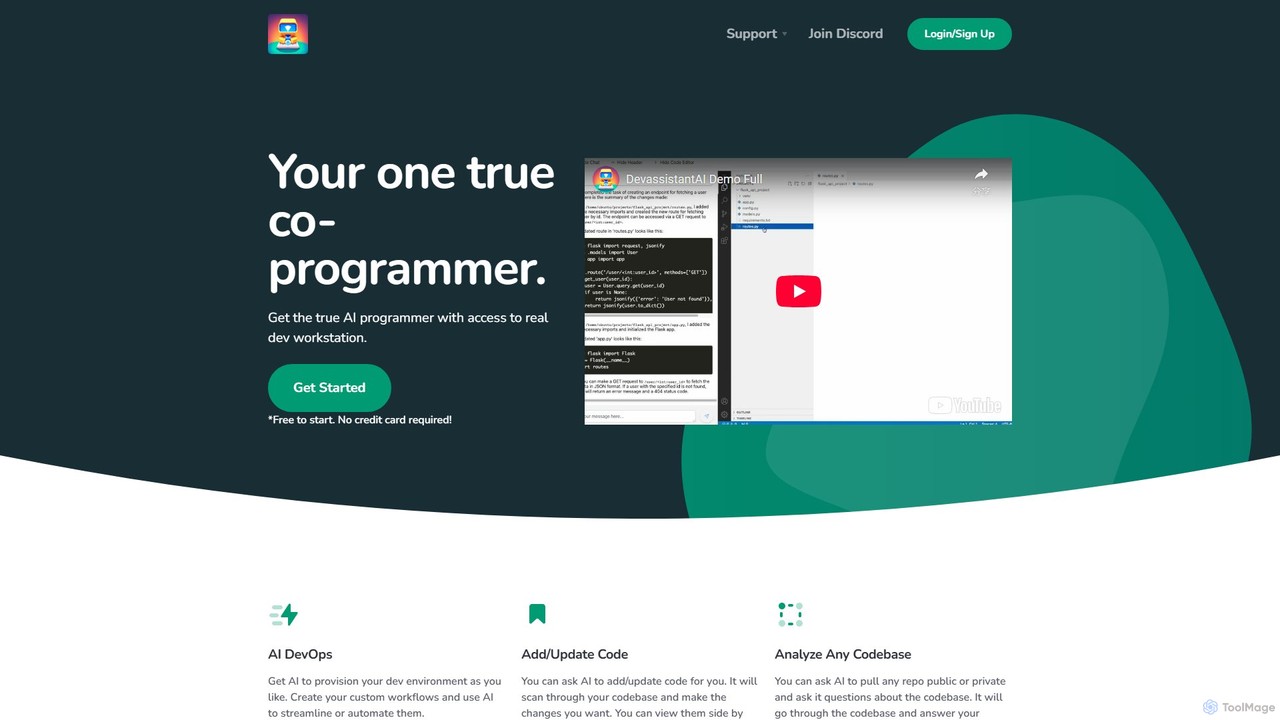
Devassistant.ai is an advanced AI co-programmer that automates DevOps, analyzes entire codebases, and intelligently adds or updates code. It streamlines development workflows by provisioning environments, answering complex questions about your code, and making changes within a cloud-based VS Code interface, boosting productivity and code quality.

Preview

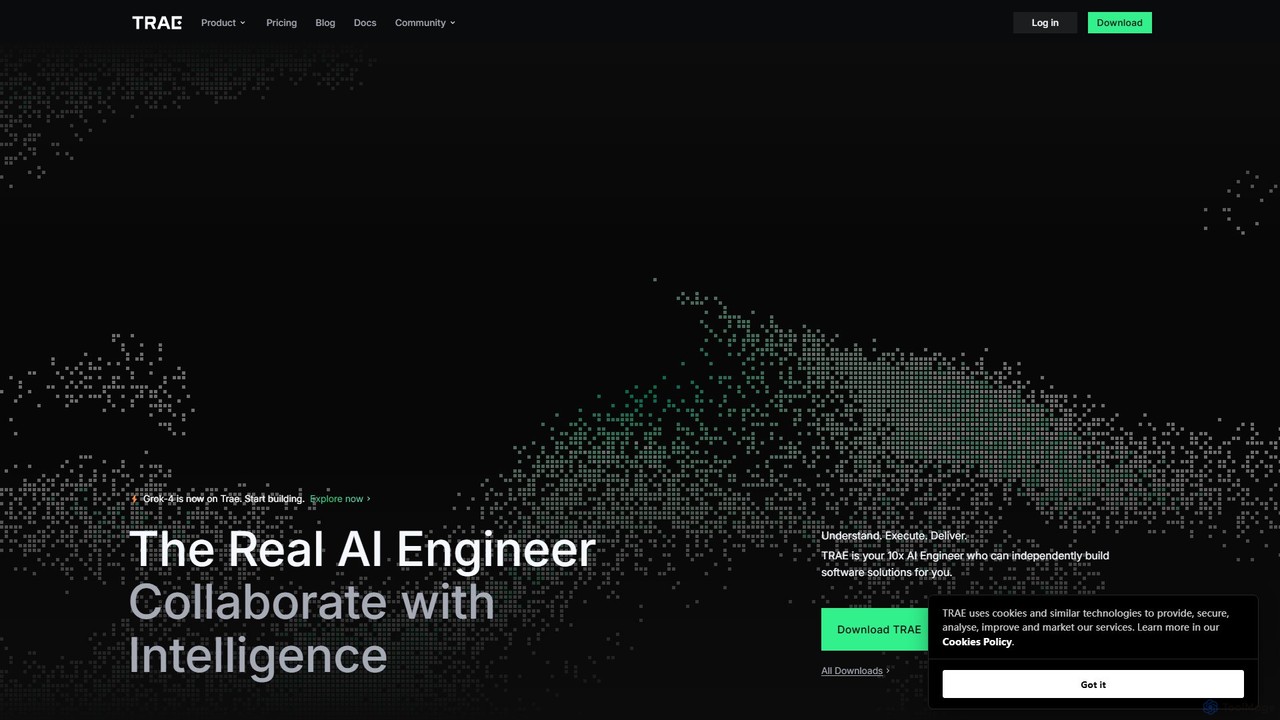
TRAE Product overview

TRAE is an AI-powered Integrated Development Environment (IDE) designed to function as a 10x AI Engineer. It automates the entire software development lifecycle, from idea to deployment, by understanding your vision, planning workflows, and executing tasks autonomously. Featuring dual development modes (IDE and SOLO), a customizable agent ecosystem, and deep contextual understanding, TRAE aims to revolutionize human-AI collaboration in coding.

Preview

Quick facts

Compare product focus, pricing models and audiences. Highlighted rows indicate different listed information; unknown pricing does not mean free.

Devassistant.ai VS TRAE — Quick facts
Quick factsDevassistant.aiTRAE
Pricing modelFreemiumFreemium
Product typeWebApp
Primary focusCode AssistantCode Assistant
Audience and rolesNo data availableNo data available
CategoriesCode Assistant · Infrastructure As Code · AutomationCode Assistant · Integrated Development Environment · Automation
AddedAug 4, 2025Aug 8, 2025
UpdatedNov 19, 2026Nov 19, 2026

Features, usage and use cases

Explore the listed product descriptions, features and workflows. Taxonomy labels alone are not feature evaluations.

Devassistant.ai

Devassistant.ai positions itself as a comprehensive AI Co-programmer, designed to fundamentally transform the software development lifecycle. It's not just a code completion tool; it's an intelligent partner for developers, DevOps engineers, and technical teams. By integrating deeply into the development workflow, from environment setup to code analysis and generation, Devassistant.ai aims to eliminate tedious tasks, accelerate project timelines, and enhance overall code quality. It operates within a secure, cloud-based environment, providing the power of a sophisticated AI that understands the full context of your private or public repositories.

How to use Devassistant.ai

Getting started with Devassistant.ai is a streamlined process designed for developer efficiency:

  1. Connect Your Repository: Sign up on the platform and securely connect your Git account (e.g., GitHub, GitLab, Bitbucket). Grant access to the public or private repositories you want the AI to work with.
  2. Provision Your Environment: Use natural language prompts to instruct the AI on your desired development environment. For example, you could ask it to "Set up a Python 3.10 environment with Django and PostgreSQL." The AI will handle the configuration and provisioning.
  3. Analyze and Understand: Once a repository is indexed, you can ask complex questions about the codebase. For instance, "Explain the authentication flow in this project" or "Where is the database connection logic defined?" The AI will scan the code and provide detailed, context-aware answers.
  4. Generate or Modify Code: Interact with the AI to write new code or refactor existing parts. You can issue commands like, "Create a new API endpoint for user profiles with GET and POST methods" or "Refactor this function to be more efficient."
  5. Review and Commit: All AI-generated changes are presented in a clear, side-by-side diff view within a familiar cloud-based VS Code interface. You can review the suggestions, make manual adjustments, and then commit the changes directly to your repository.
  6. Automate Workflows: Define custom, multi-step workflows to automate repetitive tasks. You could create a workflow that runs linters, executes unit tests, and then prepares a pull request, all triggered by a single command.

Core Features of Devassistant.ai

  • AI-Powered DevOps: Automates the provisioning and management of development environments. The AI can interpret your needs and generate the necessary configuration files (like Dockerfiles) to create a consistent and reproducible environment for your team.
  • Intelligent Code Generation & Updates: Goes beyond simple autocompletion. The AI has a holistic understanding of your entire codebase, allowing it to add new features, fix bugs, and refactor code while maintaining consistency with existing patterns and styles.
  • Full Codebase Analysis: Ingests and indexes entire repositories, enabling you to ask high-level questions about architecture, data flow, dependencies, or specific implementation details. This is invaluable for onboarding new developers or understanding legacy systems.
  • Custom Workflow Automation: Provides a powerful engine to create and execute custom development workflows. Chain together commands to streamline processes like testing, building, and deploying, all orchestrated by the AI.
  • Integrated Cloud VS Code Experience: Offers a seamless and familiar development environment in the cloud. The side-by-side diff viewer makes it easy to review, accept, or modify AI-generated code changes before committing.
  • Secure and Private: Built with security in mind, ensuring that your private codebases are handled securely and remain confidential.

Use Cases for Devassistant.ai

Devassistant.ai is versatile and can be applied in various scenarios:

  • Rapid Prototyping: Quickly scaffold a new application, including the environment, boilerplate code, and basic API endpoints, in a fraction of the time it would take manually.
  • Legacy Code Modernization: Analyze and understand complex, poorly documented legacy code. Use the AI to assist in refactoring the code to modern standards and adding comprehensive test coverage.
  • Onboarding New Engineers: Drastically reduce the time it takes for new team members to become productive. They can ask Devassistant.ai questions about the codebase instead of interrupting senior developers.
  • Complex Feature Development: Delegate the mundane aspects of feature development, such as writing unit tests, creating data models, or setting up new modules, allowing developers to focus on the core business logic.
  • Automated Code Review Prep: Use the AI to perform a preliminary review of your code, catching potential bugs, style inconsistencies, and security vulnerabilities before it goes to a human reviewer.

Advantages of Devassistant.ai

By integrating Devassistant.ai into your workflow, you gain several competitive advantages:

  • Massive Productivity Boost: Automates time-consuming tasks, freeing up developers to solve more complex problems and innovate.
  • Improved Code Quality and Consistency: The AI helps enforce coding standards and can identify potential issues early in the development process.
  • Accelerated Development Cycles: From environment setup to deployment, every step is streamlined, leading to faster delivery of features.
  • Reduced Knowledge Silos: The AI acts as a central, always-available expert on your codebase, making knowledge accessible to everyone on the team.

Pricing and Plans

Devassistant.ai likely operates on a freemium model, offering different tiers to suit various needs. While specific details should be confirmed on the official website, a typical structure might be:

  • Free Plan: Ideal for individual developers or students, offering access to core features with limitations on usage, private repository analysis, or compute time.
  • Pro Plan: A paid monthly subscription for professional developers, offering higher usage limits, full support for private repositories, and priority access to new features.
  • Team/Enterprise Plan: Custom pricing for organizations, featuring collaborative tools, centralized billing, advanced security controls, dedicated support, and options for on-premise deployment.

For the most accurate and up-to-date pricing information, please visit the official Devassistant.ai website.

TRAE

TRAE is a next-generation, AI-native Integrated Development Environment (IDE) that positions itself as an intelligent partner for developers, aiming to provide a 10x productivity boost. Dubbed the "AI Engineer," TRAE is engineered to understand complex software requirements, plan the development process, utilize the right tools, execute coding tasks with precision, and deploy production-ready software. It goes beyond a simple coding assistant by integrating AI into the entire development lifecycle, from the initial concept to the final launch. With support for powerful models like Grok-4, TRAE empowers developers to build faster and smarter.

The platform is built on the principle of "Collaborate with Intelligence," offering a seamless experience that merges human creativity with AI efficiency. It deeply understands the development context by analyzing code repositories, online documentation, and user-provided information, ensuring the generated code is accurate and relevant. TRAE's vision is to create a future where human-AI collaboration is the standard, making the development process more intuitive, creative, and less stressful.

How to use TRAE

Getting started with TRAE is designed to be a smooth transition for developers. First, you download the TRAE application, which functions as a standalone IDE. Upon launching, you can choose between two primary modes:

  1. IDE Mode: This mode preserves your existing workflow, allowing for granular control. The AI acts as a collaborator within the familiar IDE interface, providing smart suggestions, autocompletions, and assistance on demand. You can chat with the AI, ask it to refactor code, or generate snippets.
  2. SOLO Mode: For maximum automation, you can switch to SOLO mode. In this mode, you delegate entire tasks or features to TRAE's "Context Engineer." The AI independently plans and executes the development process, presenting you with the final result for approval. You can simply "Accept or Reject" the changes, letting the AI handle the heavy lifting.

To interact with the AI, you can use natural language prompts in the chat interface or use the special `@Agent` command to invoke specific custom agents for specialized tasks. The CUE feature further enhances productivity by predicting your next edit with a single 'Tab' keystroke, allowing you to apply smart suggestions across multiple lines instantly.

Core Features of TRAE

  • Autonomous SOLO Mode: An AI-driven mode where TRAE's Context Engineer independently builds and ships software solutions based on your requirements.
  • Collaborative IDE Mode: A traditional yet enhanced IDE experience where the AI works alongside you, offering intelligent assistance without disrupting your workflow.
  • Open Agent Ecosystem: Create, customize, and share AI agents. These agents can be equipped with specific tools, skills, and logic, allowing you to build a specialized AI team for your projects.
  • Deep Context Understanding: TRAE connects to your code repositories, web searches, and documents to gain a comprehensive understanding of your project, leading to highly accurate and context-aware code generation.
  • CUE Predictive Editing: An intelligent feature that anticipates your next coding move. By pressing 'Tab', you can jump to the next logical change or apply multi-line suggestions, significantly speeding up the editing process.
  • Multi-Model Support: Integration with cutting-edge AI models like Grok-4 and Claude 3.7 ensures high-quality code generation and problem-solving capabilities.
  • External Tool Integration: Through the Model Context Protocol (MCP), TRAE agents can utilize various external tools, expanding their capabilities to solve more complex problems.
  • Privacy-First Architecture: Emphasizes user privacy with a "local-first" approach. Codebase files are stored on your device, and data handling is minimized and secured.

Use Cases for TRAE

TRAE is versatile and can be applied to numerous development scenarios:

  • Rapid Application Development: Quickly build full-fledged applications from scratch. Users have reported building RAG apps in under 30 minutes without writing a single line of code.
  • Automated Task Completion: Delegate complex tasks like bug fixing, feature implementation, or API integration to SOLO mode and let the AI handle the entire process.
  • Learning New Technologies: Use TRAE as a learning partner. For example, developers have used it to learn new languages like Rust, with the AI providing guidance and generating example code.
  • Code Refactoring and Optimization: Analyze existing codebases, identify areas for improvement, and let the AI perform complex refactoring tasks to enhance code quality and performance.
  • Team Productivity Enhancement: Accelerate development cycles for entire teams by automating repetitive coding tasks and enabling developers to focus on high-level architecture and problem-solving.

Advantages of TRAE

TRAE offers significant advantages over traditional IDEs and coding assistants:

  • Unprecedented Speed: Drastically reduces development time by automating large parts of the coding process.
  • Enhanced Productivity: The combination of autonomous agents and intelligent assistance empowers a single developer to achieve the output of a much larger team.
  • Superior User Experience: Features a sleek, intuitive, and highly praised UI/UX that makes coding a more enjoyable and less stressful experience.
  • High Accuracy: The deep contextual understanding ensures that the AI's output is not just generic code but is tailored to the specific needs of your project.
  • Flexibility and Control: The dual-mode system allows developers to choose their preferred level of AI intervention, from full collaboration to full automation.

Pricing and Plans

TRAE offers a freemium model to cater to different user needs:

  • Free Plan: $0 per month. This plan is ideal for individual developers and small projects. It includes 10 Fast requests and 50 Slow requests for Premium models, 1000 requests for Advanced models, and 5000 autocompletions per month. No credit card is required.
  • Pro Plan: $10 per month (with a promotional price of $3 for the first month for new subscribers). This plan is designed for professional developers and teams. It offers 600 Fast requests and unlimited Slow requests for Premium models, unlimited requests for Advanced models, and unlimited autocompletions. Pro users also get access to exclusive features like SOLO Mode.

Payments can be made via Alipay, Paypal, Union Pay, Visa, Mastercard, and other major credit cards.

Positioning

Their taxonomy shows where the products overlap and where each one has a more distinct focus. Unknown fields are shown explicitly and are never filled with assumptions.

Categories

Shared
Code AssistantAutomation
Only Devassistant.ai
Infrastructure As Code
Only TRAE
Integrated Development Environment

Tags

Shared
code generationcoding assistantdeveloper toolssoftware development
Only Devassistant.ai
AI programmerautomationcode analysisdevopsGitvscode
Only TRAE
ai engineerautonomous agentGrok-4ideproductivityprogrammingVS Code alternative

Audience and roles

Shared
No listed items
Only Devassistant.ai
No listed items
Only TRAE
No listed items

Traffic comparison

Traffic is shown on the same scale so differences in market visibility are not visually understated.

How to interpret the traffic data

Both charts share the same months and vertical scale. Each tool identifies its latest reporting month; missing months are left blank, not counted as zero. Regional and source visit counts are estimates calculated from the reported shares.

Devassistant.ai monthly traffic:

Latest traffic · 2026-05

Monthly visits
1.9K
Avg. visit duration
1:25
Pages per visit
2.76
Bounce rate
31.66%
Data updated 2026-06-15

Monthly traffic trend

  • 2025-09: 349
  • 2026-01: 58
  • 2026-02: 15
  • 2026-03: 568
  • 2026-04: 296
  • 2026-05: 1.9K

Top regions

Top 5 countries/regions
Country/regionPercentageEstimated visits
🇳🇬Nigeria100%1.9K

Search keywords

dev assistdevassist ai

TRAE monthly traffic:

Latest traffic · 2026-05

Monthly visits
2.3M
Avg. visit duration
3:23
Pages per visit
3.92
Bounce rate
35.2%
Data updated 2026-06-15

Monthly traffic trend

  • 2025-09: 2.5M
  • 2026-01: 2.8M
  • 2026-02: 2.5M
  • 2026-03: 2.7M
  • 2026-04: 2.7M
  • 2026-05: 2.3M

Top regions

Top 5 countries/regions
Country/regionPercentageEstimated visits
🇨🇳China69.96%1.6M
🇺🇸United States9.42%219.8K
🇮🇳India7.7%179.7K
🇧🇷Brazil7%163.3K
🇭🇰Hong Kong5.92%138.1K

Traffic sources

Source typePercentageEstimated visits
Direct91.01%2.1M
Referral8.33%194.4K
Email0.66%15.4K

Search keywords

traetrae aitrae idetrae solotrea

Community signals

Ratings, comments, favorites, and likes are community signals—not a substitute for product fit.

Devassistant.ai

Rating
No data available
Comments
0
Favorites
193
Likes
194

TRAE

Rating
No data available
Comments
0
Favorites
198
Likes
195

Devassistant.ai vs TRAE · Comparison FAQ

What do Devassistant.ai and TRAE have in common?
Both tools are listed under Code Assistant、Automation. These categories indicate overlapping use cases; compare their detailed descriptions for workflows, capabilities and limitations.
Are Devassistant.ai and TRAE free?
Listed pricing models: Devassistant.ai — Freemium; TRAE — Freemium. Missing pricing is not proof of a free plan, and freemium does not mean every feature is free. Check official sites for current plans, limits and trials.
How should I choose between Devassistant.ai and TRAE?
The primary listed category is Code Assistant for Devassistant.ai, and Code Assistant for TRAE. Compare features, steps and use cases, then verify pricing, data permissions and deployment needs. This page does not include hands-on testing and does not declare a winner from traffic or tags.

Sources and comparison methodology

This page is assembled from ToolMage product listings, taxonomy, traffic statistics and on-site user feedback. It is not a hands-on test or an independent review.
  • Feature and plan descriptions reflect information in the listings, not real-time guarantees. Verify pricing, quotas, availability and privacy terms on the official sites.
  • Traffic uses the reporting months shown. Missing statistics do not mean zero visits, and different periods do not establish growth or superiority. Regional and source visit counts are estimates based on shares.
  • Different tags indicate differences in the listings, not proof that the other product lacks a capability. Ratings, favorites and visits are not used to declare a winner.

Related comparisons