ToolMage
Sign in
Base
Academic · 6.2K monthly visits

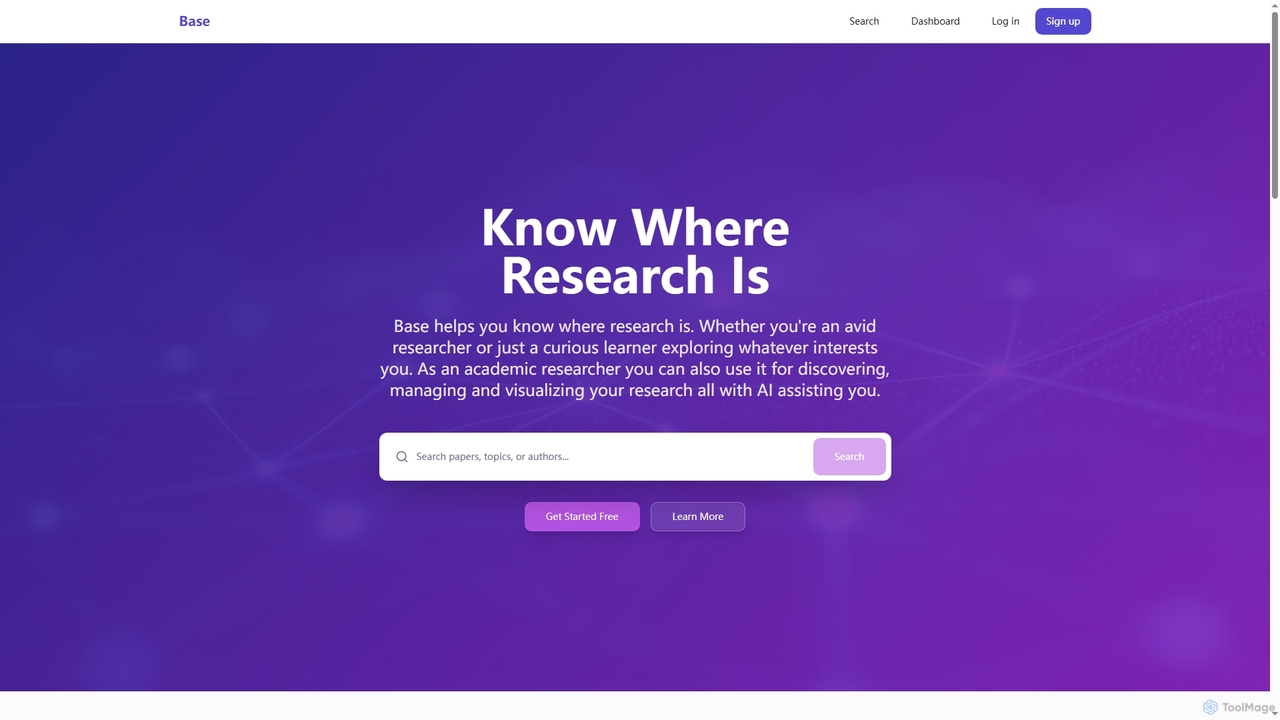
Base is an AI-powered research platform for academics and learners. It enables searching over 240 million papers, visualizing research landscapes with interactive graphs, organizing findings, and using an AI chat to uncover deeper insights from credible sources.

VS
PaperBrain
Academic · 3.4K monthly visits

PaperBrain is an AI-powered research assistant designed to help students, academics, and researchers understand complex academic papers effortlessly. Upload a PDF, and PaperBrain will provide summaries, answer your questions, and explain intricate concepts, accelerating your literature review and research workflow.

Base vs PaperBrain: pricing, features, traffic, and use cases

Compare Base and PaperBrain across positioning, pricing, traffic, and user feedback using structured factual data.

Updated Aug 5, 2026

Product overview

Base Product overview

Base is an AI-powered research platform for academics and learners. It enables searching over 240 million papers, visualizing research landscapes with interactive graphs, organizing findings, and using an AI chat to uncover deeper insights from credible sources.
Preview

PaperBrain Product overview

PaperBrain is an AI-powered research assistant designed to help students, academics, and researchers understand complex academic papers effortlessly. Upload a PDF, and PaperBrain will provide summaries, answer your questions, and explain intricate concepts, accelerating your literature review and research workflow.

Preview

Detailed feature comparison

FeatureBasePaperBrain
Primary categoryAcademicAcademic
Added2025-11-082025-08-07
PricingFreemiumFreemium
Official websitebasedid.compaperbrain.study
Product typeWebsiteWebsite
Performance data
User ratingNot verifiedNot verified
Comments00
Monthly visits6.2K3.4K
Monthly growth255.1%Not verified
Favorites102105
DetailsView detailsView details

Base vs PaperBrain monthly traffic

Compare Base and PaperBrain by monthly reach, traffic trend, visit depth, top regions, and acquisition sources.

How to interpret the traffic data

In the Base vs PaperBrain monthly traffic comparison, Base currently shows 6.2K visits and PaperBrain shows 3.4K; Base has about 1.9 times the visible traffic of PaperBrain, an absolute difference of about 2.9K visits. This reflects visible reach, not feature quality or paid users.

Only Base has complete third-party traffic details; PaperBrain uses visits recorded inside ToolMage. These scopes cannot estimate market share directly, and on-site views should not be treated as the product’s total website traffic.

Base monthly traffic:

Latest traffic

Monthly visits
6.2K
Avg. visit duration
8:34
Pages per visit
8.87
Bounce rate
24.35%
Data updated 2026-06-15

Monthly traffic trend

  • 2026/1: 16.3K Monthly visits
  • 2026/2: 5.5K Monthly visits
  • 2026/3: 3.6K Monthly visits
  • 2026/4: 1.8K Monthly visits
  • 2026/5: 6.2K Monthly visits

Top regions

Top 5 countries/regions
Country/regionPercentageTraffic
🇮🇳India98.83%6.2K
🇺🇸United States1.17%73

Traffic sources

Source typePercentageTraffic
Direct86.88%5.4K
Referral13.12%820

Search keywords

based referencebase for resaerchbase for researchhow to visualize a research problemresearch base

PaperBrain monthly traffic:

Latest traffic

Monthly visits
3.4K
Traffic-based selection guidance: The current traffic scope is not sufficient for a reliable product ranking. Treat monthly visits as a market-interest signal, then decide using taxonomy, use cases, pricing, and a like-for-like trial rather than reading exposure as product capability.

Usage comparison

Compare the core capabilities of Base and PaperBrain

Base Core features

Academic
Research
Literature Review

PaperBrain Core features

Academic
Research
Writing Assistant

Use cases

Base Use cases

academic papers
literature review
research assistant
scientific research
AI search
citation analysis
data visualization
knowledge management
OpenAlex
research

PaperBrain Use cases

academic papers
literature review
research assistant
scientific research
AI for science
PDF analysis
study tool
summarizer

Best suited roles

Base Best suited roles

Academic Researcher
Data Analyst
Journalist
Librarian
Policy Analyst
R&D Professional
Scientist
Student

PaperBrain Best suited roles

No verified data available

Base vs PaperBrain:In-depth comparison and selection guidance

First decide whether the products solve the same kind of need

This in-depth Base vs PaperBrain comparison uses only the product records, taxonomy, audience, traffic, and community signals available on this page. Base is primarily listed under “Academic”, while PaperBrain is primarily listed under “Academic”, so the first decision is whether your actual task matches their recorded scope.

The structured fields currently show these decision-relevant differences: Monthly visits (Base: 6.2K; PaperBrain: 3.4K); Favorites (Base: 102; PaperBrain: 105); Website (Base: basedid.com; PaperBrain: paperbrain.study); Added (Base: 2025-11-08; PaperBrain: 2025-08-07). These facts are more useful for selection than brand visibility alone.

What market visibility and monthly traffic mean

In the Base vs PaperBrain monthly traffic comparison, Base currently shows 6.2K visits and PaperBrain shows 3.4K; Base has about 1.9 times the visible traffic of PaperBrain, an absolute difference of about 2.9K visits. This reflects visible reach, not feature quality or paid users.

Only Base has complete third-party traffic details; PaperBrain uses visits recorded inside ToolMage. These scopes cannot estimate market share directly, and on-site views should not be treated as the product’s total website traffic.

The current traffic scope is not sufficient for a reliable product ranking. Treat monthly visits as a market-interest signal, then decide using taxonomy, use cases, pricing, and a like-for-like trial rather than reading exposure as product capability.

Product positioning, use cases, and roles

Base and PaperBrain currently overlap in shared categories: Academic and Research; shared tags: academic papers, literature review, research assistant, and scientific research. This can place both on the same shortlist, but it does not prove equal implementation, depth, or cost.

Base's unique categories/tags are Literature Review, AI search, citation analysis, data visualization, knowledge management, OpenAlex, and research; PaperBrain's are Writing Assistant, AI for science, PDF analysis, study tool, and summarizer. These unique fields are the strongest differentiators: validate the product whose recorded scope matches the task instead of following traffic alone.

What ratings, comments, and favorites can tell you

Base has no verified rating, 0 comments, 102 favorites, and 106 likes;PaperBrain has no verified rating, 0 comments, 105 favorites, and 116 likes。

Neither product has enough rating or comment samples for a credible reputation ranking.

Selection guidance by actual need

When to evaluate Base first

Put Base on the priority trial list when the task aligns with “Academic” and especially Literature Review, AI search, citation analysis, data visualization, knowledge management, and OpenAlex, or the users include Academic Researcher, Data Analyst, Journalist, and Librarian. This follows recorded positioning and does not imply unlisted capabilities are absent.

Base also currently records: pricing is freemium, product type is website, 6.2K verified monthly visits, no verified user rating. Verify any hard requirement around price, platform, or reach before trial, and do not let sparse review data substitute for testing.

When to evaluate PaperBrain first

Put PaperBrain on the priority trial list when the task aligns with “Academic” and especially Writing Assistant, AI for science, PDF analysis, study tool, and summarizer. This follows recorded positioning and does not imply unlisted capabilities are absent.

PaperBrain also currently records: pricing is freemium, product type is website, 3.4K on-site monthly views, no verified user rating. Verify any hard requirement around price, platform, or reach before trial, and do not let sparse review data substitute for testing.

How to validate the recommendation before deciding

The available data describes positioning, public visibility, and community signals, but it cannot prove output quality, speed, integration effort, privacy, or long-term cost in your workflow. Before deciding, run the same representative tasks in Base and PaperBrain, then record completion time, accuracy, manual corrections, and the real paid threshold. A like-for-like trial turns this comparison into a defensible adoption decision.

Comparison FAQ

How should I choose between Base and PaperBrain?
Compare positioning, pricing, taxonomy, and traffic maturity, then verify the latest details on each official website.
Where does this comparison data come from?
The factual baseline is derived from product, taxonomy, traffic, and community data. Reviewed editorial conclusions show their source and verification date.
What do unknown fields mean?
Unknown means there is not enough reliable evidence; the page does not fill gaps with assumptions.

Related AI tools

Epsilon
Freemium

Epsilon

Epsilon is an advanced AI search engine designed for scientific research. It scans over 200 million academic papers and patents to deliver synthesized, evidence-based answers with inline citations. It dramatically accelerates literature reviews, evidence gathering, and data synthesis, helping researchers, students, and professionals save countless hours of work.

Academic Research
Visits 16.2KFavorites 126Likes 128
PaperPilot
Freemium

PaperPilot

PaperPilot is an AI-powered research assistant designed to streamline the academic workflow for students, researchers, and professionals. It helps users quickly discover, analyze, and understand complex research papers. With features like AI-driven summarization, question-answering with documents, and literature review automation, PaperPilot accelerates the entire research process from discovery to writing, making knowledge management more efficient and insightful.

Academic
Visits 3.5KFavorites 149Likes 119
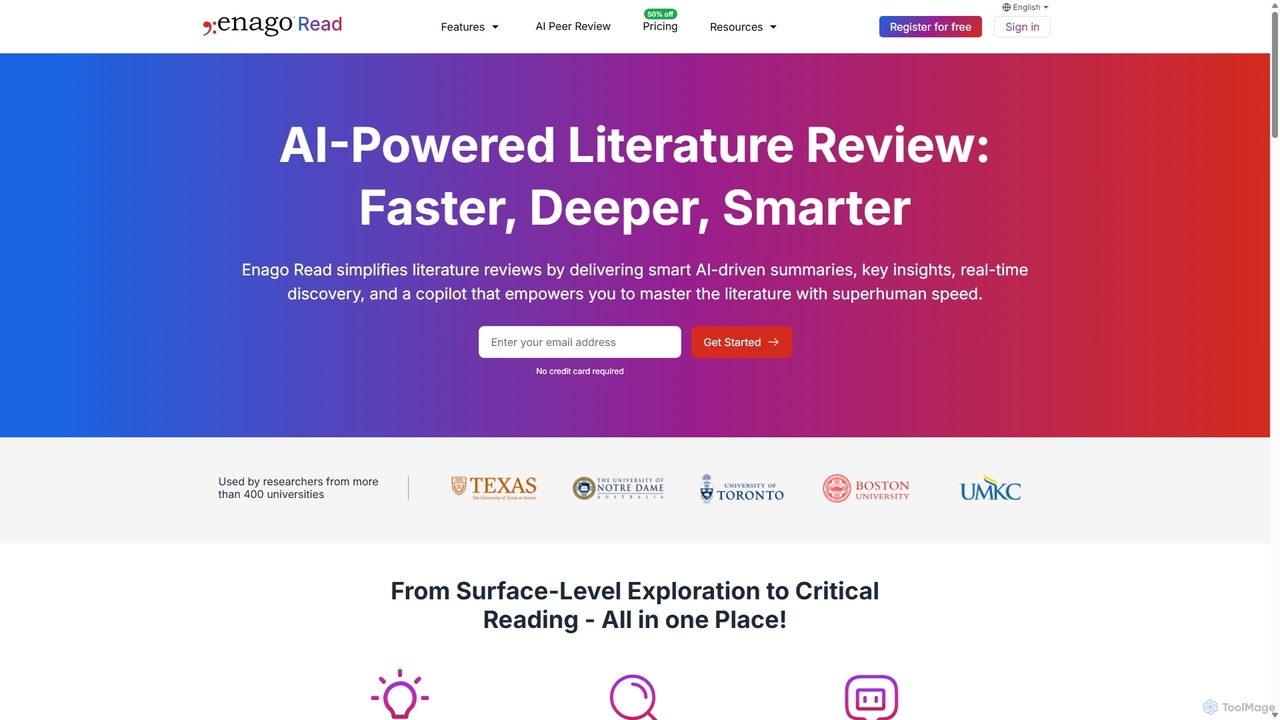
Enago Read
Freemium

Enago Read

Enago Read is an AI-powered research assistant designed to accelerate literature reviews. It helps researchers and students discover, read, and analyze academic papers with features like AI-generated summaries, key insights, and an interactive AI Copilot to chat with documents. It streamlines the entire research workflow from exploration to critical analysis.

Research
Visits 6.4KFavorites 119Likes 123
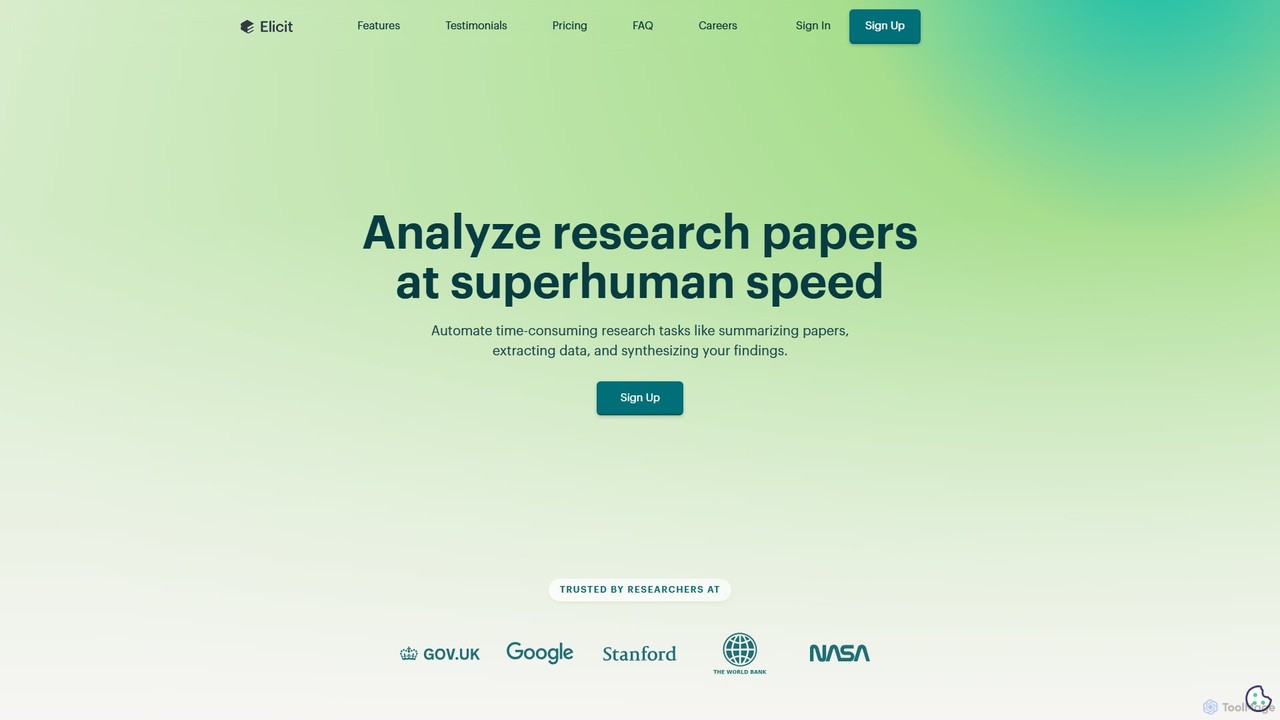
Elicit
Freemium

Elicit

Elicit is an AI research assistant designed to automate and accelerate the literature review process. It helps researchers find relevant papers, summarize key findings, extract data, and synthesize information from a vast database of over 125 million academic articles. Elicit streamlines time-consuming tasks, enabling users to analyze more evidence with greater accuracy and speed.

Academia
Visits 2.1MFavorites 107Likes 114
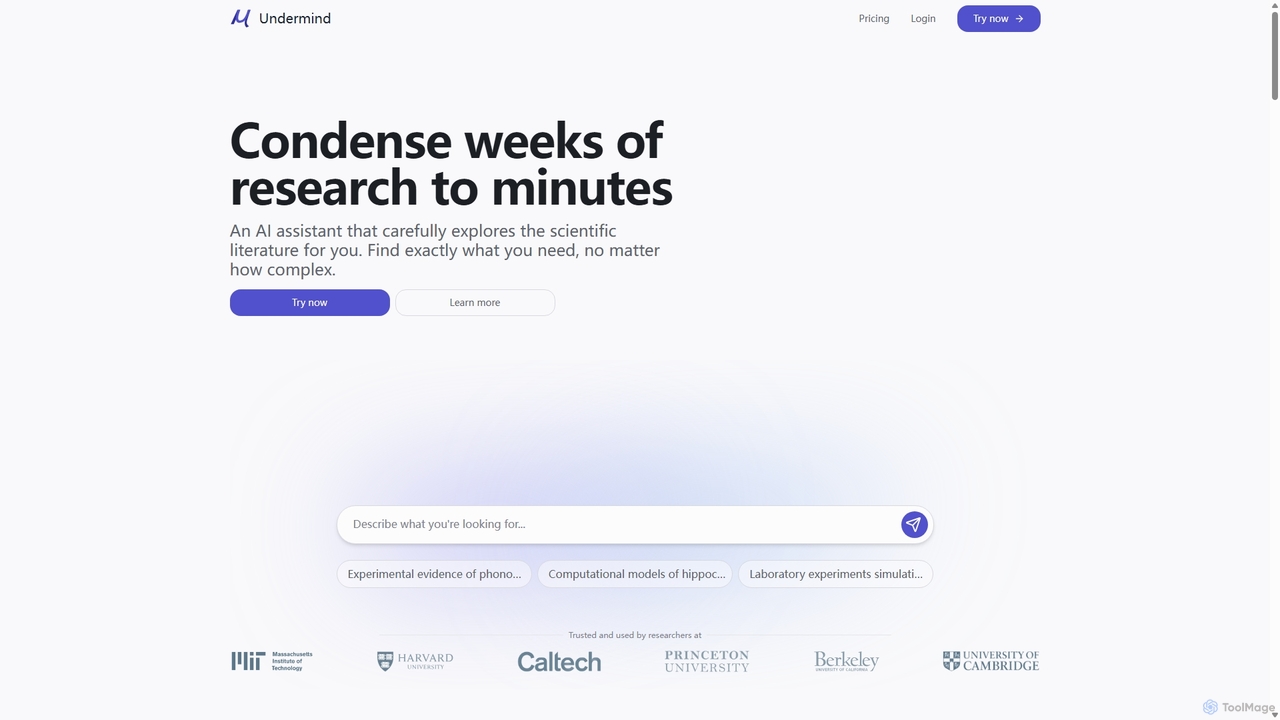
Undermind
Freemium

Undermind

An AI-powered research assistant designed for scientists and academics. It automates literature reviews by exploring thousands of scientific papers, traversing citation graphs, and synthesizing information. Undermind condenses weeks of research into minutes, helping users assess novelty, identify gaps, and uncover cross-disciplinary insights with verifiable, citation-backed responses.

Academic
Visits 328.7KFavorites 82Likes 77
Connected Papers
Freemium

Connected Papers

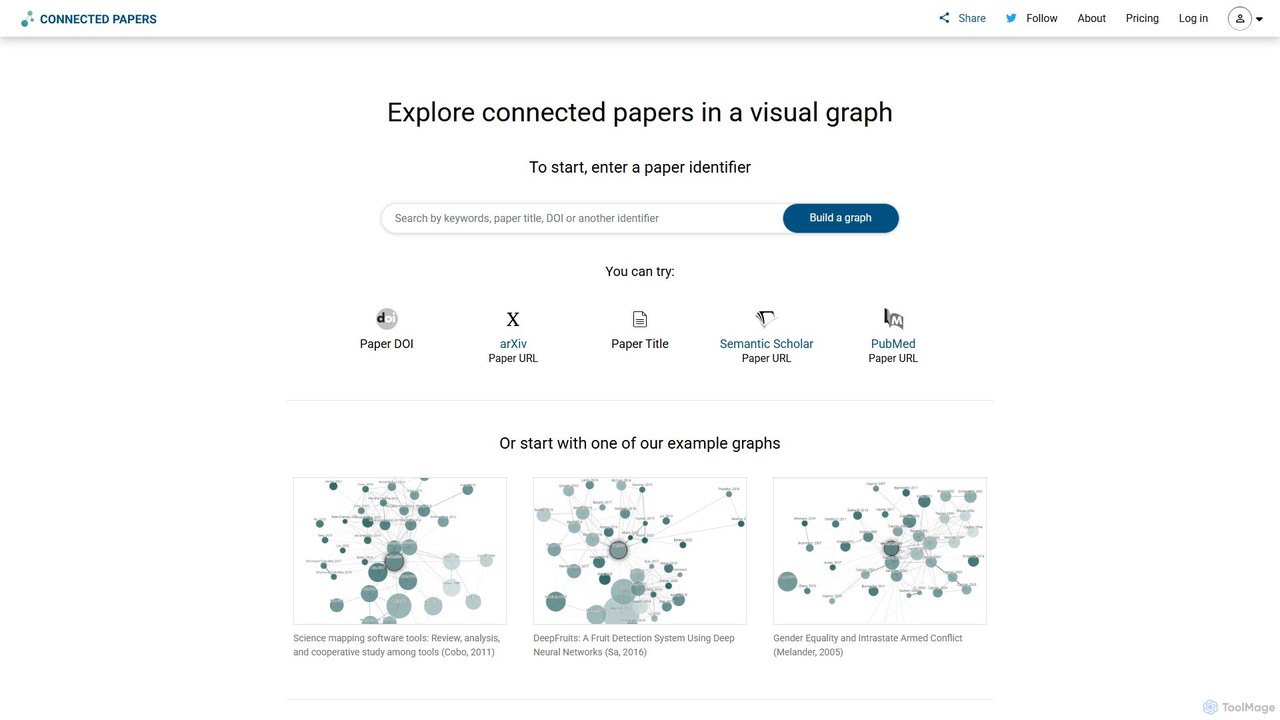
Connected Papers is a unique visual tool designed for researchers, students, and scientists. It helps you find and explore academic papers relevant to your work by generating interactive graphs. Instead of traditional lists, you get a visual map of a research field, allowing you to quickly discover trends, important prior works, and derivative studies, significantly speeding up your literature review process.

Academic
Visits 876.4KFavorites 144Likes 113
thepaperlens
Paid

thepaperlens

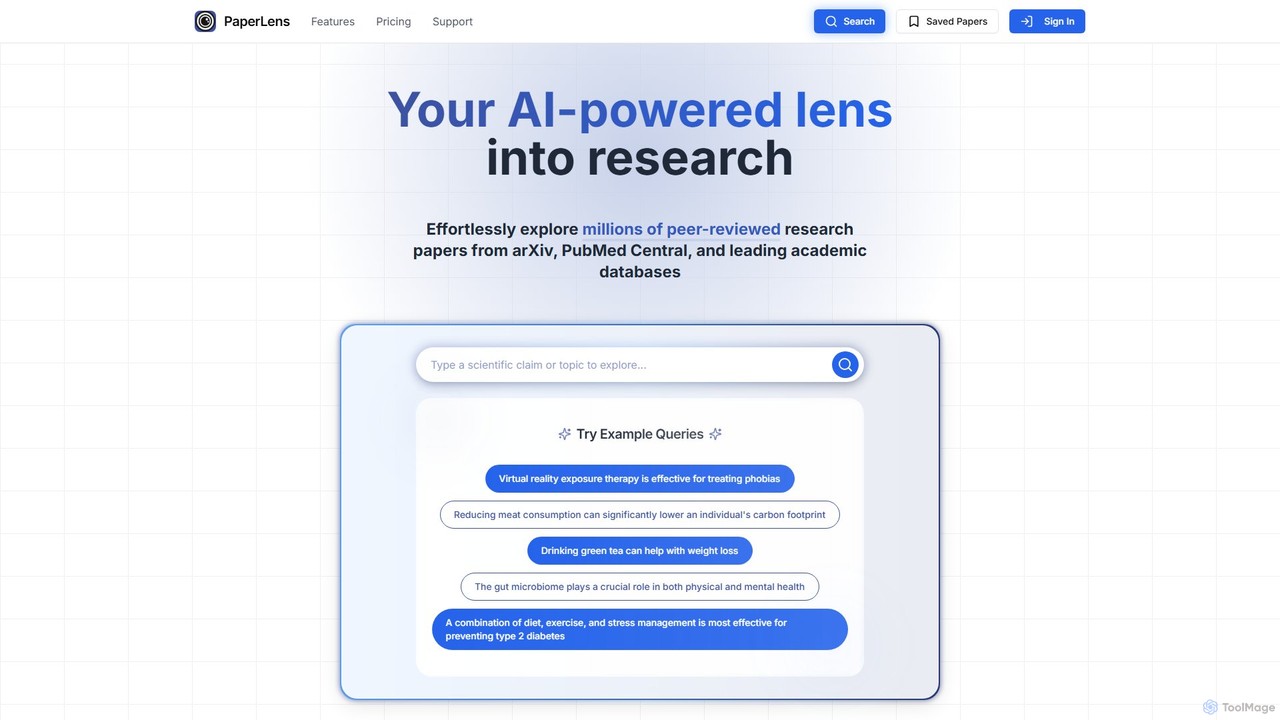
ThePaperLens is an AI-powered research platform that simplifies literature reviews. Using advanced RAG technology, it provides precise semantic search across millions of papers from databases like arXiv and PubMed Central. Features include an interactive AI research assistant chatbot for summaries and insights, smart filtering, and paper-saving capabilities. It's designed for students, academics, and professionals to accelerate their research process and uncover key information efficiently.

Academic
Visits 3.9KFavorites 129Likes 124
Scholarcy
Freemium

Scholarcy

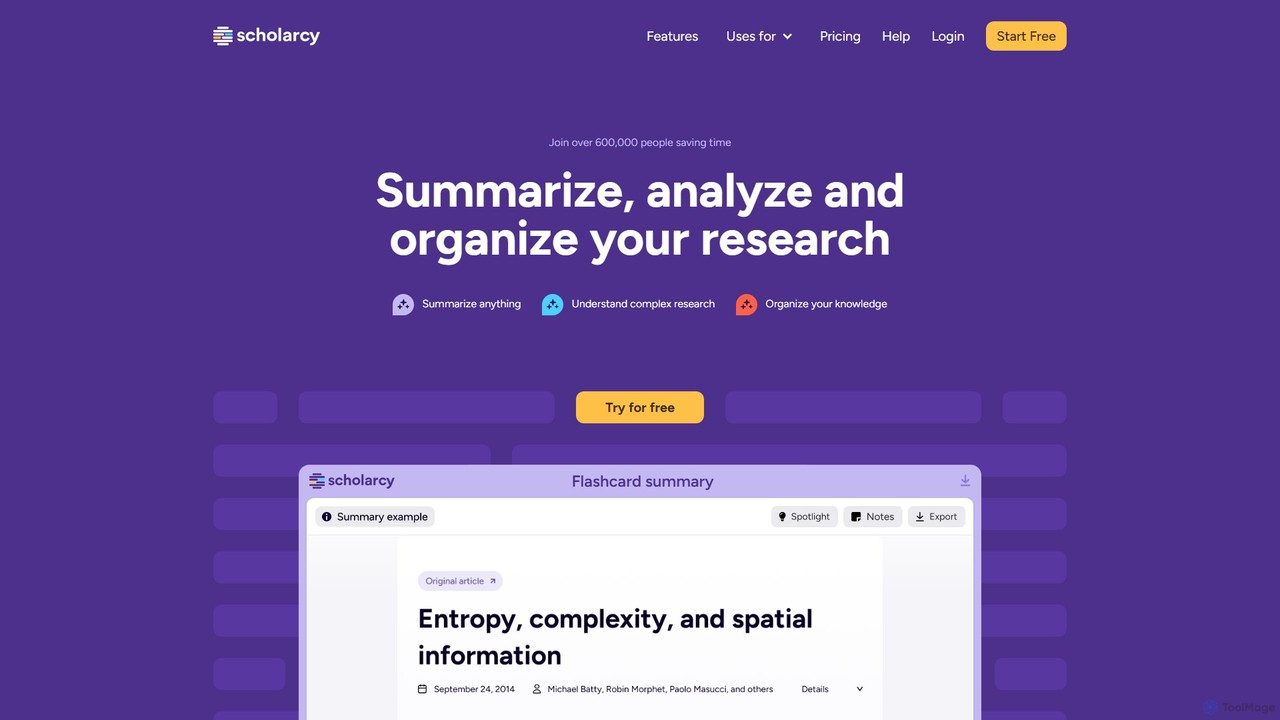
Scholarcy is an AI-powered research assistant that transforms long articles, papers, and book chapters into interactive summary flashcards. It helps students, researchers, and academics to quickly read, understand, and analyze complex texts. By highlighting key findings, extracting references, and enabling critical analysis, Scholarcy streamlines the literature review process and boosts research productivity.

Academic
Visits 283.1KFavorites 100Likes 106
Papers
Freemium

Papers

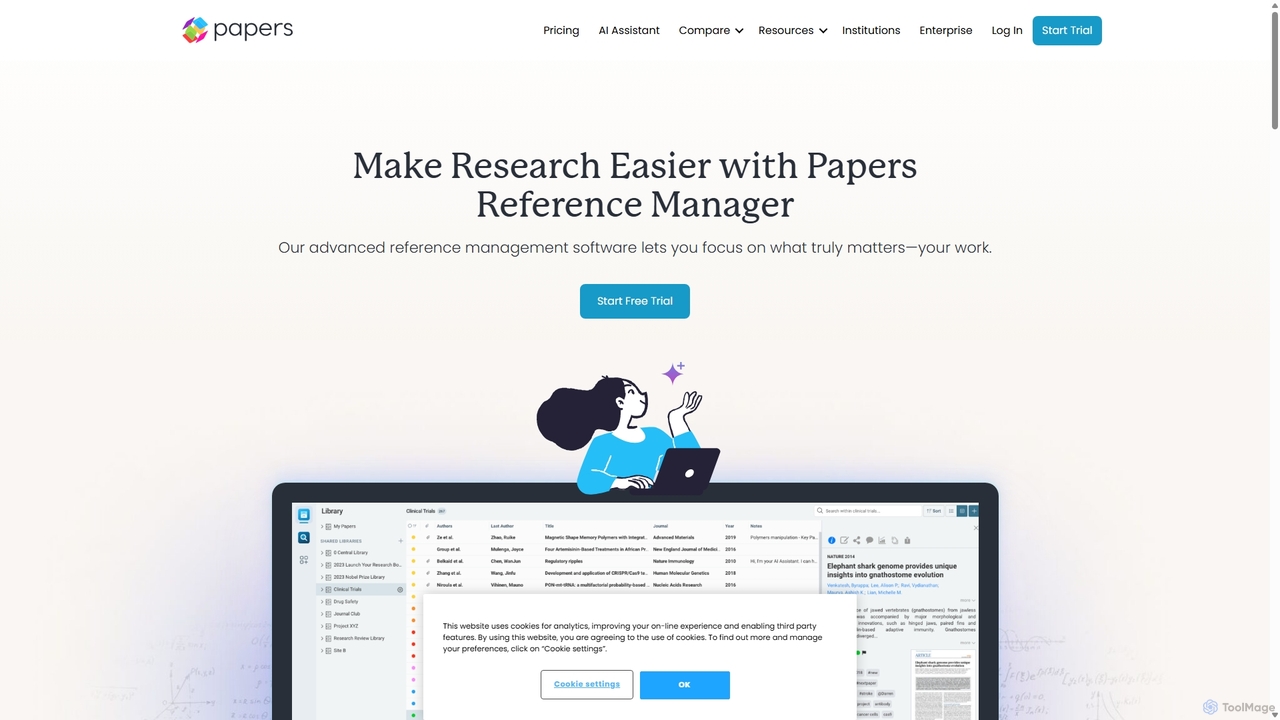
Papers is an advanced AI-powered reference management software designed for students, academics, and corporate researchers. It helps you organize, discover, analyze, and cite your research materials, streamlining your entire workflow from literature discovery to manuscript writing.

Academic
Visits 69.3KFavorites 106Likes 108
ZotAI
Freemium

ZotAI

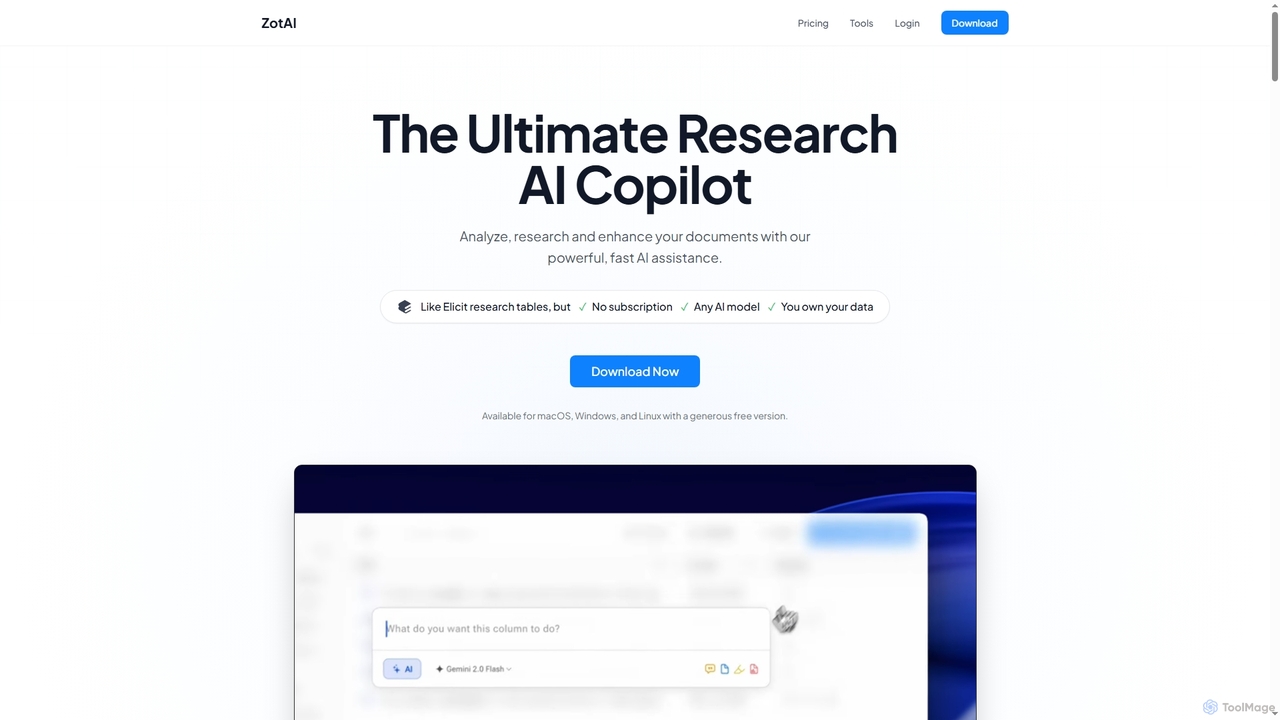
ZotAI is an ultimate AI research assistant designed for academics and researchers. It helps analyze, research, and enhance documents with powerful, fast AI assistance, offering seamless Zotero integration, support for all major AI models, and robust data privacy features including offline processing. It's a one-time purchase desktop application for Windows, Mac, and Linux.

Knowledge Management
Visits 5.4KFavorites 72Likes 66
OpenRead
Freemium

OpenRead

OpenRead is an AI-powered research platform designed to streamline the entire research workflow. It integrates paper discovery, reading, note-taking, and analysis into a single, seamless experience. Users can interact with documents via AI chat, compare multiple papers, generate summaries, and visualize research connections, significantly boosting research efficiency and depth.

Academic Tools
Visits 82.3KFavorites 146Likes 152
Paperguide
Freemium

Paperguide

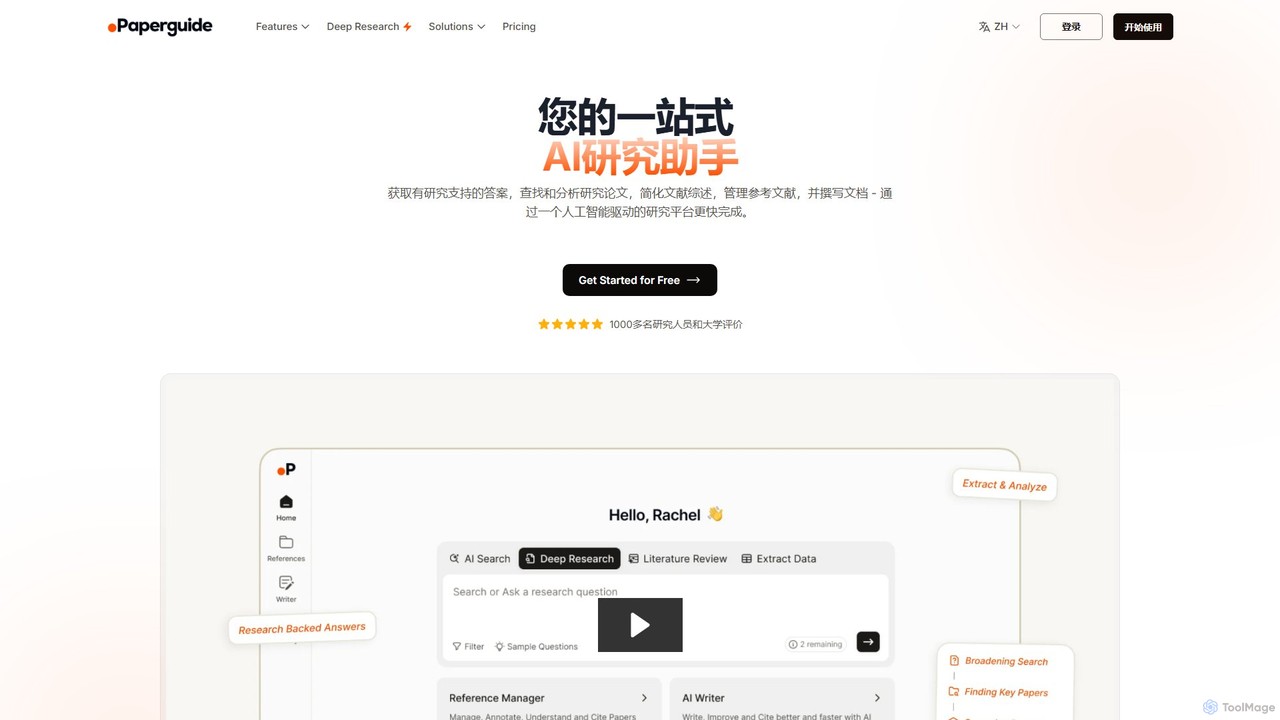
Paperguide is an all-in-one AI research assistant designed to accelerate academic and professional research. It helps users find papers, get research-backed answers, conduct literature reviews, manage references, and write documents with AI assistance. By leveraging a vast database of over 200 million papers, it streamlines the entire research workflow from discovery to final draft.

Academic
Visits 290.4KFavorites 99Likes 106
scite
Freemium

scite

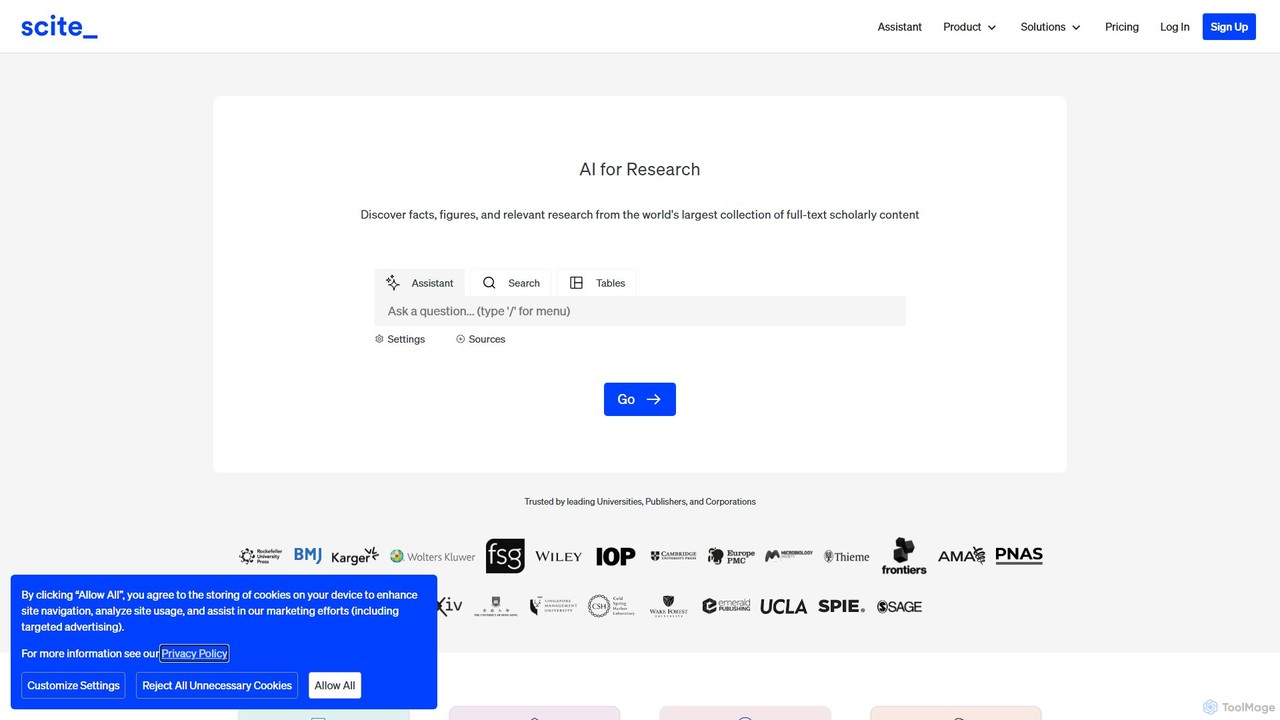
scite is an AI-powered research platform that helps users discover and evaluate scientific literature. Its core feature, Smart Citations, shows how research papers have been cited by others, classifying citations as supporting, contrasting, or mentioning, thus providing deeper context beyond simple citation counts.

Academic
Visits 1MFavorites 143Likes 124
txyz
Freemium

txyz

txyz is an all-in-one AI-powered research platform designed to streamline the entire knowledge workflow for academics, researchers, and professionals. It integrates advanced semantic search, AI-assisted reading and analysis, and intelligent writing tools to accelerate knowledge discovery, comprehension, and creation. Trusted by over 500,000 users, txyz helps you find relevant papers, gain deep insights from documents, and manage your research library efficiently.

Academic
Visits 113KFavorites 110Likes 107
VortiX
Freemium

VortiX

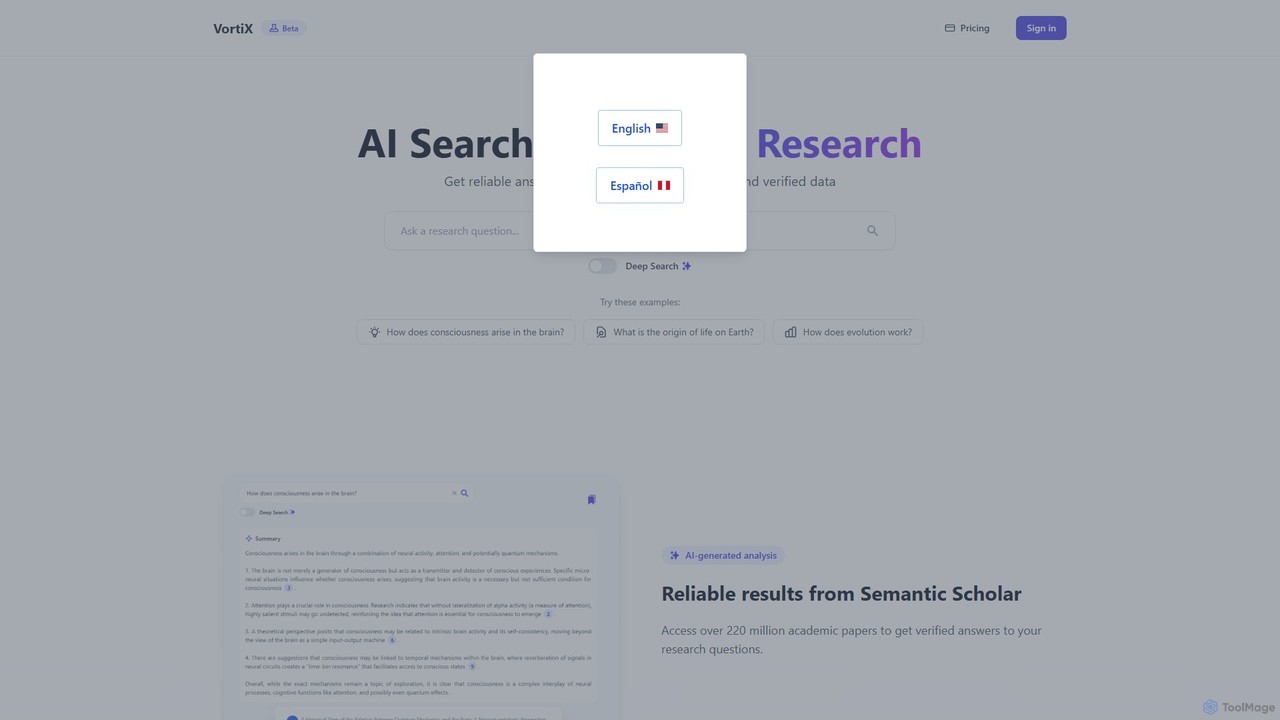
VortiX is an AI-powered search engine designed for scientific research. It provides reliable, evidence-based answers by searching a massive database of over 220 million academic papers from Semantic Scholar. Users can conduct deep searches, get AI-generated analyses, and interact directly with research papers through a chat interface to efficiently extract key information and accelerate their research workflow.

Academic
Visits 3.5KFavorites 121Likes 115