ToolMage
Sign in

AI TOOL COMPARISON

Codebuff vs Cursor

What is the difference, and which fits your workflow? Compare features, usage, pricing models and traffic side by side.

Jump to key differences

Product overview

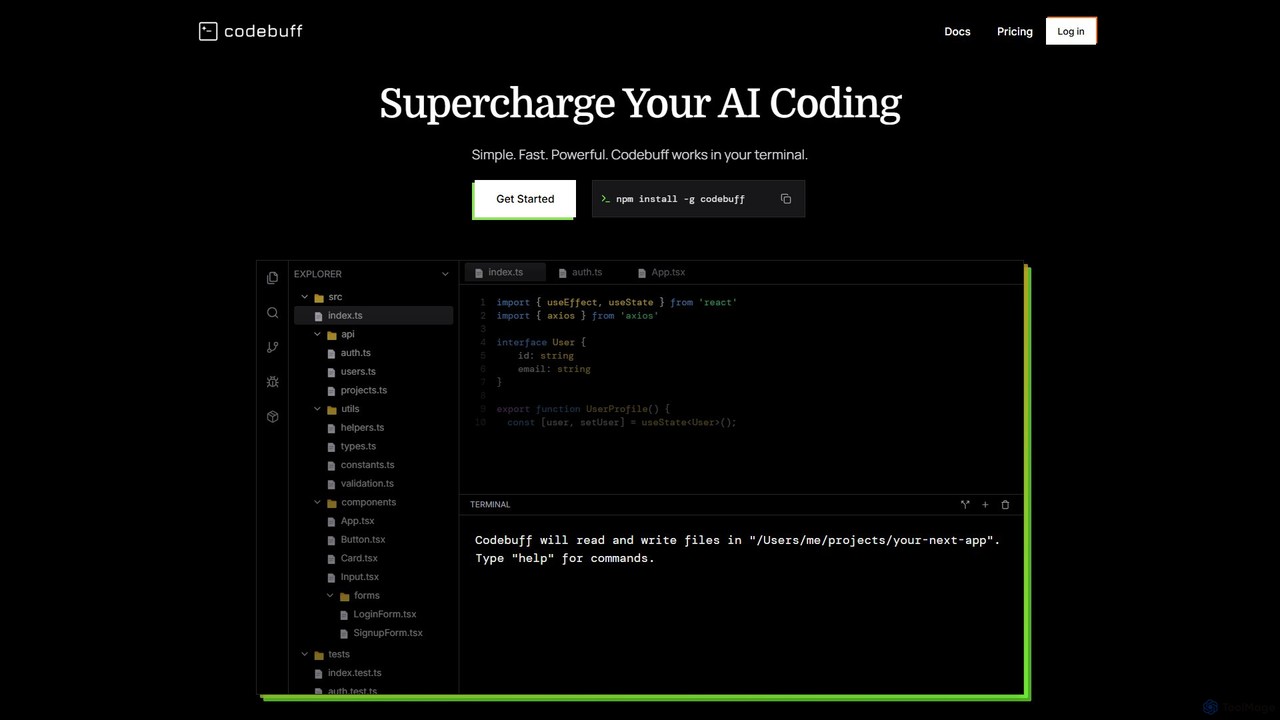
Codebuff Product overview

Codebuff is a powerful AI coding assistant that operates directly in your terminal. It deeply understands your entire codebase, enabling it to perform complex tasks like surgical code edits, feature implementation, and large-scale refactoring with unparalleled speed and accuracy. It learns from your project context and integrates seamlessly into any tech stack.

Preview

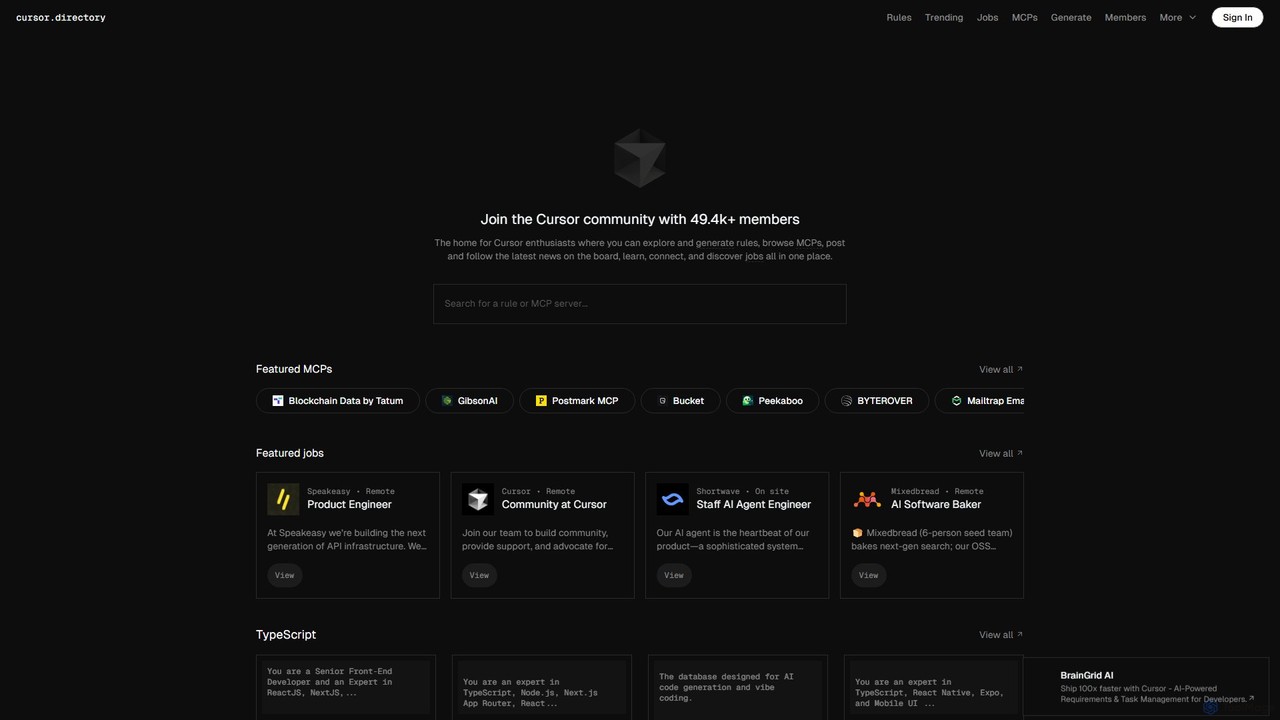
Cursor Product overview

Cursor is an AI-first code editor designed for modern software development. Built as a fork of VS Code, it integrates powerful AI capabilities directly into the editing experience, allowing developers to chat with their codebase, generate, edit, and debug code with unprecedented speed and context-awareness.

Preview

Quick facts

Compare product focus, pricing models and audiences. Highlighted rows indicate different listed information; unknown pricing does not mean free.

Codebuff VS Cursor — Quick facts
Quick factsCodebuffCursor
Pricing modelFreemiumFreemium
Product typeAppApp
Primary focusCode GenerationCode Generation
Audience and rolesNo data availableNo data available
CategoriesCode Generation · Code Assistant · Developer ToolsCode Generation · Code Assistant · Developer Tools
AddedAug 4, 2025Aug 2, 2025
UpdatedNov 19, 2026Nov 19, 2026

Features, usage and use cases

Explore the listed product descriptions, features and workflows. Taxonomy labels alone are not feature evaluations.

Codebuff

Codebuff is a next-generation AI coding agent designed to supercharge your development workflow directly from the terminal. Unlike other AI tools that operate in a separate window or have limited context, Codebuff indexes and deeply understands your entire codebase in seconds. This total codebase awareness allows it to generate highly accurate and context-aware code, perform precise edits, and execute complex refactoring tasks that other tools struggle with. It's built for professional developers who demand speed, precision, and seamless integration into their existing environment.

By building a complete map of your project, including hidden dependencies and structural patterns, Codebuff delivers solutions that respect your project's architecture and coding style. It continuously learns from your interactions, storing project-specific knowledge in human-readable Markdown files (`knowledge.md`). This persistent memory means you don't have to repeat yourself, and the assistant becomes more effective and tailored to your needs over time.

How to use Codebuff

Getting started with Codebuff is straightforward and designed for a hassle-free setup. It works with any tech stack and doesn't require special environments.

  1. Installation: Install Codebuff globally using npm with a single command: npm install -g codebuff. You'll need Node.js version 18 or higher.
  2. Initialization: Navigate to your project's root directory in the terminal and simply run the command: codebuff. The tool will automatically index your codebase.
  3. Interaction: Once running, you can interact with Codebuff using natural language prompts. Ask it to add features, write tests, refactor code, or even run terminal commands. For example, you can ask it to "implement a dark/light mode toggle" or "refactor the user authentication service to use a new database schema."
  4. Configuration (Advanced): For more control, you can create a .codebuffignore file to exclude specific files/folders from its context, similar to .gitignore. You can also create a codebuff.json file to configure startup processes, file change hooks, and agent behavior, turning Codebuff into a central hub for your development environment.

Core Features of Codebuff

  • Total Codebase Awareness: Indexes your entire project in seconds to build a deep understanding of its structure, dependencies, and patterns.
  • Surgical Code Edits: Makes precise, pinpoint changes to your files while respecting existing code style and architecture, rather than rewriting entire files.
  • Terminal-Native Interface: Works directly in your command line, integrating seamlessly into your existing workflow without needing a separate IDE or editor.
  • Continuous Learning: Persists project knowledge and conversation context in knowledge.md files, allowing it to learn and improve with every session.
  • Multi-Model Architecture: Intelligently uses a combination of top-tier AI models (including Claude Sonnet, Gemini Pro, and Gemini Flash) to select the best one for each specific task, optimizing for speed, cost, and quality.
  • Zero-Setup & Tech-Stack Agnostic: Requires only an npm install and works with any programming language or framework.
  • Advanced Configuration: Supports custom configurations for ignoring files (.codebuffignore) and managing development processes (codebuff.json).
  • Performance Modes: Offers different modes like --lite for cost savings, --max for complex problems, and --experimental for cutting-edge features.

Use Cases for Codebuff

Codebuff is versatile and can be used for a wide range of development tasks:

  • Feature Development: Quickly implement new features, from frontend components in React to backend API endpoints. For example, converting an entire application from dark mode to a new light mode design.
  • Large-Scale Refactoring: Perform complex structural changes across multiple files and directories with a single prompt, a task that could take a human developer hours or days.
  • Test Generation: Autonomously write unit tests, integration tests, and end-to-end tests based on your existing code and requirements.
  • Codebase Q&A: Ask questions about your project, such as "Where is the API key configured?" or "Explain how the user authentication flow works."
  • Build & CLI Automation: Execute terminal commands, configure build scripts, and manage your development environment directly through the AI agent.
  • Onboarding & Exploration: Help new developers get up to speed on a large, unfamiliar codebase by explaining its structure and functionality.

Advantages of Codebuff

Codebuff stands out from competitors like GitHub Copilot and Cursor by offering a fundamentally different and more powerful approach:

  • Superior Speed and Efficiency: It's significantly faster than alternatives like Claude Code, performing tasks in a fraction of the time with fewer steps.
  • Unmatched Contextual Understanding: Its ability to analyze the entire codebase leads to far fewer hallucinations and more accurate, relevant suggestions.
  • Seamless Workflow Integration: By living in the terminal, it eliminates context switching and integrates with any developer's preferred tools.
  • Cost-Effective: The pay-as-you-go model with a generous free tier, combined with optimized model usage, makes it more affordable than many competitors for equivalent tasks.
  • Precise and Non-Intrusive: It makes targeted edits instead of wholesale file replacements, giving the developer more control and confidence in the changes.

Pricing and Plans

Codebuff uses a simple, usage-based pricing model that is flexible and transparent.

  • Pay As You Go: Users receive 500 free credits monthly. After the free credits are used, the rate is just $0.01 per credit. Credits are consumed based on the complexity of the task, and they never expire. This plan is ideal for individual developers.
  • Team Plan: For $19 per user/month, this plan includes a team management dashboard, pooled credit usage for the entire team, and the same pay-as-you-go rate of $0.01 per credit for usage beyond the pooled amount.
  • Enterprise Plan: Offers custom pricing for larger organizations. It includes all features of the Team plan, plus dedicated support and custom integration options. Interested parties can contact the founders directly.

Cursor

Cursor is a revolutionary AI-native code editor engineered to significantly accelerate the software development lifecycle. It is built on the solid foundation of Visual Studio Code, which means developers can enjoy a familiar interface and retain access to their favorite extensions, themes, and keybindings, all while benefiting from deeply integrated, state-of-the-art AI functionalities. Unlike other AI coding assistants that operate in a separate window, Cursor embeds AI directly into the core workflow, making it a seamless and intuitive partner for any programming task.

The editor's standout feature is its ability to understand the entire context of your project. You can point the AI to specific files or folders using the '@' symbol, enabling it to provide highly relevant and accurate suggestions, code generations, or explanations based on your entire codebase. This makes it incredibly powerful for tasks like understanding legacy code, implementing features that span multiple files, or hunting down complex bugs.

How to use Cursor

Getting started with Cursor is straightforward:

  1. Download and install the Cursor application from its official website. It's available for macOS, Windows, and Linux.
  2. Open any of your existing project folders. Since it's a VS Code fork, it will recognize your project structure immediately.
  3. To chat with the AI about your code, press Cmd+L (Mac) or Ctrl+L (Windows/Linux). You can ask it to explain concepts, suggest an implementation plan, or find relevant code snippets.
  4. To generate or edit code, highlight a section of code (or just place your cursor) and press Cmd+K (Mac) or Ctrl+K (Windows/Linux). A prompt will appear, allowing you to describe the changes you want, such as "Refactor this function to be more efficient" or "Add error handling."
  5. Reference your entire codebase by typing '@' in the chat or edit prompt, followed by a file or symbol name. For example: "Based on the schema in @models/user.ts, create an API endpoint for user creation."
  6. Use the built-in AI-powered debugger to identify and fix issues with a single click.
  7. Explore and apply "Cursor Rules" from the Cursor Directory to customize the AI's behavior for specific frameworks or coding standards, such as ensuring all new components follow Next.js best practices.

Core Features of Cursor

  • Codebase-Aware AI Chat: Engage in a conversation with an AI that has full context of your entire project repository.
  • Inline AI Editing & Generation: Generate, refactor, and edit code directly within the editor using natural language prompts.
  • One-Click Bug Fixes: Automatically diagnose and fix linter errors, runtime exceptions, and other bugs.
  • Generate from Scratch: Create new files, components, tests, and documentation from a high-level description.
  • VS Code Extension Compatibility: Continue using all your favorite extensions from the VS Code marketplace.
  • Customizable "Rules": Define specific guidelines and best practices for the AI to follow, ensuring consistent and high-quality code output. This is supported by a community-driven Cursor Directory.
  • Migration & Onboarding: Quickly get up to speed on a new or unfamiliar codebase by asking the AI to explain how different parts work together.

Use Cases for Cursor

Cursor is versatile and can be applied across the development spectrum:

  • Rapid Prototyping: Quickly scaffold new applications or features for frameworks like React, Vue, Next.js, or Django by describing the desired functionality.
  • Legacy Code Maintenance: Safely refactor and modernize old codebases by having the AI explain complex logic and suggest improvements.
  • Test-Driven Development: Generate comprehensive unit and integration tests for your functions and components automatically.
  • Learning New Technologies: Use Cursor as a learning companion to understand new programming languages, frameworks, or libraries by asking for explanations and examples in the context of your project.
  • API Integration: When working with a new API, provide the documentation to Cursor and ask it to write the necessary client-side code.

Advantages of Cursor

The primary advantage of Cursor is its deep, contextual integration of AI into the development workflow. This leads to:

  • Increased Productivity: Automate repetitive and time-consuming tasks, allowing developers to focus on high-level problem-solving.
  • Improved Code Quality: Leverage AI to enforce best practices, catch bugs early, and write cleaner, more maintainable code.
  • Faster Onboarding: New team members can become productive faster by using the AI to navigate and understand existing codebases.
  • Seamless Experience: By building on VS Code, Cursor offers a world-class editor experience without a steep learning curve.

Pricing and Plans

Cursor operates on a freemium model:

  • Free Plan: Offers a limited number of "slow" GPT-3.5 queries and a smaller set of "fast" GPT-4 queries per month, suitable for individual developers or those wanting to try the tool.
  • Pro Plan: A paid monthly subscription for individual professionals, offering a significantly higher number of fast GPT-4 queries, access to the latest AI models, and features like "Codebase-aware context".
  • Business Plan: Designed for teams, this plan includes all Pro features plus team management, centralized billing, and enhanced security and privacy controls.

Positioning

Their taxonomy shows where the products overlap and where each one has a more distinct focus. Unknown fields are shown explicitly and are never filled with assumptions.

Categories

Shared
Code GenerationCode AssistantDeveloper Tools
Only Codebuff
No listed items
Only Cursor
No listed items

Tags

Shared
code generationdeveloper toolsjavascriptpythonrefactoringtypescript
Only Codebuff
ai pair programmerclicode assistantcodebase analysisterminal
Only Cursor
AI assistantcode editordebugginggpt-4ideprogrammingsoftware developmentVS Code

Audience and roles

Shared
No listed items
Only Codebuff
No listed items
Only Cursor
No listed items

Traffic comparison

Traffic is shown on the same scale so differences in market visibility are not visually understated.

How to interpret the traffic data

Both charts share the same months and vertical scale. Each tool identifies its latest reporting month; missing months are left blank, not counted as zero. Regional and source visit counts are estimates calculated from the reported shares.

Codebuff monthly traffic:

Latest traffic · 2026-05

Monthly visits
56.5K
Avg. visit duration
0:46
Pages per visit
2.48
Bounce rate
40.88%
Data updated 2026-06-15

Monthly traffic trend

  • 2025-09: 44K
  • 2026-01: 8.6K
  • 2026-02: 49.9K
  • 2026-03: 50.5K
  • 2026-04: 22.5K
  • 2026-05: 56.5K

Top regions

Top 5 countries/regions
Country/regionPercentageEstimated visits
🇮🇳India43.22%24.4K
🇻🇳Vietnam23.15%13.1K
🇨🇳China13.41%7.6K
🇺🇸United States10.8%6.1K
🇧🇷Brazil9.42%5.3K

Traffic sources

Source typePercentageEstimated visits
Direct89.04%50.3K
Referral10.96%6.2K

Search keywords

code buffcodebuffcodebuff custom urlfreebuffreebuff

Cursor monthly traffic:

Latest traffic · 2026-05

Monthly visits
179.4K
Avg. visit duration
0:35
Pages per visit
3.59
Bounce rate
45.07%
Data updated 2026-06-15

Monthly traffic trend

  • 2025-09: 365.8K
  • 2026-01: 329.7K
  • 2026-02: 255K
  • 2026-03: 275.2K
  • 2026-04: 192.2K
  • 2026-05: 179.4K

Top regions

Top 5 countries/regions
Country/regionPercentageEstimated visits
🇺🇸United States49.77%89.3K
🇨🇳China22.85%41K
🇩🇪Germany9.76%17.5K
🇻🇳Vietnam9.67%17.3K
🇦🇷Argentina7.95%14.3K

Traffic sources

Source typePercentageEstimated visits
Direct85.37%153.1K
Referral12.45%22.3K
Email2.18%3.9K

Search keywords

cursorcursor careerscursor directorycursor rulesrobinhood mcp

Community signals

Ratings, comments, favorites, and likes are community signals—not a substitute for product fit.

Codebuff

Rating
No data available
Comments
0
Favorites
174
Likes
153

Cursor

Rating
No data available
Comments
0
Favorites
181
Likes
173

Codebuff vs Cursor · Comparison FAQ

What do Codebuff and Cursor have in common?
Both tools are listed under Code Generation、Code Assistant、Developer Tools. These categories indicate overlapping use cases; compare their detailed descriptions for workflows, capabilities and limitations.
Are Codebuff and Cursor free?
Listed pricing models: Codebuff — Freemium; Cursor — Freemium. Missing pricing is not proof of a free plan, and freemium does not mean every feature is free. Check official sites for current plans, limits and trials.
How should I choose between Codebuff and Cursor?
The primary listed category is Code Generation for Codebuff, and Code Generation for Cursor. Compare features, steps and use cases, then verify pricing, data permissions and deployment needs. This page does not include hands-on testing and does not declare a winner from traffic or tags.

Sources and comparison methodology

This page is assembled from ToolMage product listings, taxonomy, traffic statistics and on-site user feedback. It is not a hands-on test or an independent review.

  • Feature and plan descriptions reflect information in the listings, not real-time guarantees. Verify pricing, quotas, availability and privacy terms on the official sites.
  • Traffic uses the reporting months shown. Missing statistics do not mean zero visits, and different periods do not establish growth or superiority. Regional and source visit counts are estimates based on shares.
  • Different tags indicate differences in the listings, not proof that the other product lacks a capability. Ratings, favorites and visits are not used to declare a winner.

Related comparisons