
ToolMage
Sign in

AI TOOL COMPARISON

Flowscript vs Sutro

What is the difference, and which fits your workflow? Compare features, usage, pricing models and traffic side by side.

Jump to key differences

Product overview

Flowscript Product overview

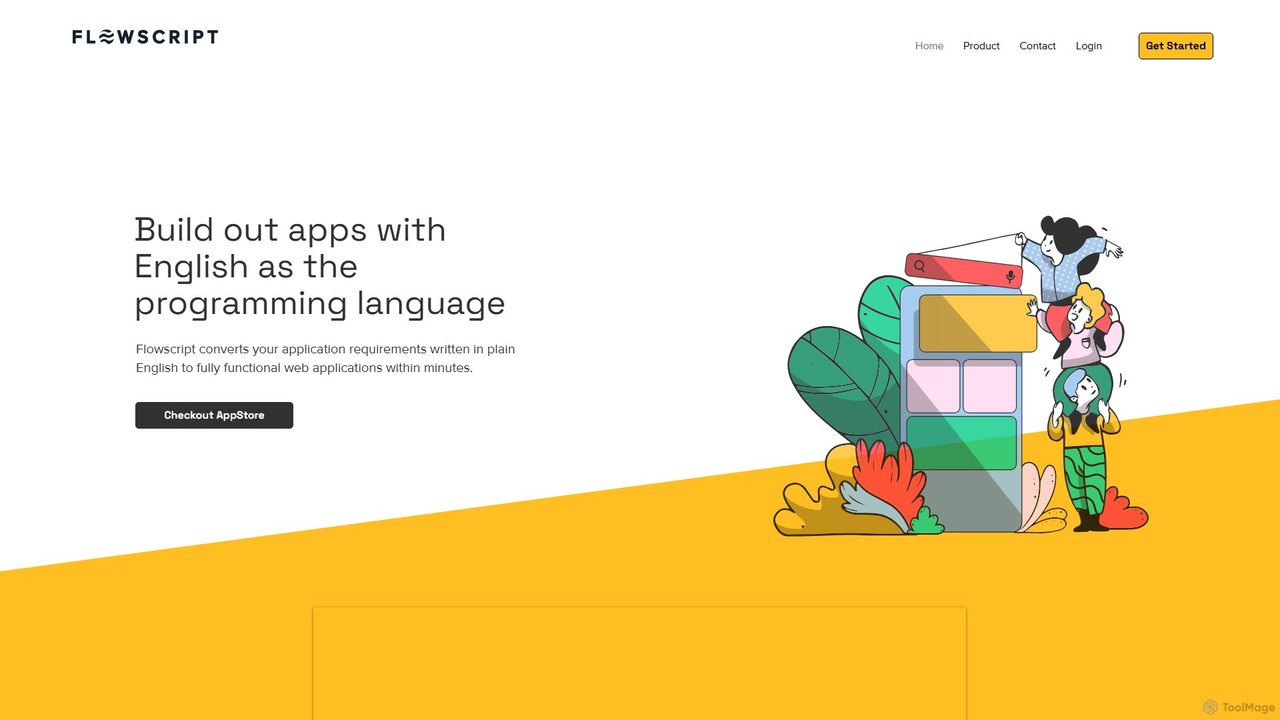
Flowscript is a revolutionary no-code platform that transforms plain English into fully functional web applications. Its AI-powered engine interprets your requirements to build apps with complex workflows, robust data management, and security rules in minutes. This empowers anyone, regardless of technical skill, to become a developer, streamlining processes and bringing ideas to life at the speed of thought.

Preview

Sutro Product overview

Sutro is an AI-powered application builder that transforms natural language prompts into secure, custom software in minutes. Designed for non-technical users, it automates the entire development process, from generating requirements to building full-stack web and mobile apps. Sutro helps businesses replace expensive SaaS, streamline internal workflows, and create custom productivity tools without writing a single line of code, emphasizing speed, security, and accessibility.

Preview

Quick facts

Compare product focus, pricing models and audiences. Highlighted rows indicate different listed information; unknown pricing does not mean free.

Flowscript VS Sutro — Quick facts
Quick factsFlowscriptSutro
Pricing modelNo data availableFreemium
Product typeWebWeb
Primary focusInternal ToolsInternal Tools
Audience and rolesNo data availableNo data available
CategoriesInternal Tools · No Code & Low Code · Workflow AutomationInternal Tools · No Code & Low Code · Workflow Automation
AddedAug 8, 2025Aug 6, 2025
UpdatedNov 19, 2026Nov 19, 2026

Features, usage and use cases

Explore the listed product descriptions, features and workflows. Taxonomy labels alone are not feature evaluations.

Flowscript

Flowscript is pioneering a new era in software development where plain English becomes the programming language. This innovative, AI-powered platform is designed to democratize application creation, enabling users to convert their ideas and requirements into fully functional web applications within minutes. By leveraging advanced AI, specifically models from OpenAI, Flowscript interprets natural language descriptions to construct applications with robust business logic, secure data handling, and complex, multi-step workflows. This eliminates the traditional barriers of coding, making everyone a potential developer.

The platform is built to dramatically accelerate the development lifecycle. What would typically take a team of developers days or even weeks to build can now be accomplished in a fraction of the time. This speed allows businesses to be more agile, responding to market changes and internal needs with unprecedented efficiency. Flowscript is not just a tool; it's a new methodology for building software that aligns development directly with business requirements.

How to use Flowscript

Using Flowscript is an intuitive process that replaces complex coding with simple, descriptive language:

  1. Define Your Requirements: Begin by writing a detailed document in plain English. Describe the application's purpose, user roles, data structures (e.g., 'a customer has a name, email, and a list of orders'), business rules ('an order can only be approved by a manager'), and the steps in your workflow.
  2. AI-Powered Generation: Submit this requirements document to the Flowscript engine. The AI analyzes your text, understands the entities, relationships, and processes, and automatically generates the underlying database schema, business logic, and user interface components.
  3. Review and Iterate: The generated application is immediately available for review. A key feature of Flowscript is that your requirements document acts as living documentation. To make changes or add features, you simply update the English text, and the application will be regenerated to reflect the new specifications.
  4. Deploy and Manage: Once satisfied, you can deploy the application. Flowscript offers flexibility in data management, allowing you to store your data securely in the cloud or on-premise, giving you full control over your information.

Core Features of Flowscript

  • AI-Powered Workflows: Utilizes OpenAI to dynamically build complex task flows and business logic based on your plain English requirements.
  • Relational Data Tables: Easily define and manage the data needed for your application, including setting up relationships between different data tables and enforcing business rules and validations.
  • Documentation is the Code: Your requirements document is a living entity, always perfectly mirroring the current state of your application, ensuring documentation is never outdated.
  • Dynamic Form Generation: Automatically creates sophisticated forms capable of handling various data types, including file uploads, nested data elements, and other complexities.
  • Secure Multi-User Operations: Built to handle intricate and secure data operations involving multiple user roles and permissions, ensuring data integrity and security.
  • Public Engagement Portal: Includes functionality to create public-facing portals, allowing anonymous users or customers to interact with your application, submit forms, or access information.
  • Flexible Data Storage: Provides the choice to store your application's data securely in the cloud or on your own on-premise servers for maximum control.

Use Cases for Flowscript

Flowscript is versatile and can be applied to a wide range of scenarios:

  • Internal Tool Development: Quickly build custom internal tools for HR, operations, or finance, such as employee onboarding systems, project management trackers, or expense approval workflows.
  • Minimum Viable Product (MVP) Creation: Entrepreneurs and startups can rapidly build and launch functional MVPs to test their business ideas and gather user feedback without a large initial investment in development.
  • Business Process Automation: Digitize and automate complex manual processes within an organization, improving efficiency and reducing the chance of human error.
  • Customer-Facing Portals: Create portals for customer support, order tracking, or service requests, enhancing customer engagement and interaction.

Advantages of Flowscript

Flowscript offers significant advantages over traditional development methods:

  • Radical Accessibility: Empowers business users, analysts, and domain experts to build the tools they need without writing a single line of code.
  • Unmatched Speed: Reduces the application development lifecycle from weeks or months to mere minutes or hours.
  • Cost Efficiency: Significantly lowers development costs by reducing the need for large, specialized development teams.
  • Agile and Iterative: Makes it incredibly easy to adapt and evolve applications as business needs change.
  • Guaranteed Consistency: By treating the documentation as the source code, it eliminates discrepancies between the application and its documentation.

Pricing and Plans

Flowscript's specific pricing and plan details are not publicly available on the website. The platform encourages interested users to sign up with their email to receive updates on the latest features and product news, which may include future pricing information. For direct inquiries about enterprise use or demos, it is recommended to contact the Flowscript team through their website.

Sutro

Sutro is a revolutionary AI-powered application builder that empowers anyone to create secure, custom software simply by describing their idea in natural language. This platform is designed to bridge the gap between idea and execution, allowing users to generate full-stack, production-ready web and mobile applications in minutes, completely bypassing the complexities and costs of traditional development. Sutro positions itself as the next evolution beyond no-code, handling 100% of the development work to deliver tailored solutions that fit precise business needs, effectively making the old 'build vs. buy' dilemma obsolete.

How to use Sutro

Using Sutro is an intuitive, three-step process designed for maximum simplicity and efficiency:

  1. Prompt: Begin by describing your problem or the software solution you envision in plain English. The more descriptive you are, the better Sutro can understand your requirements. For example, you could prompt: "Build a project management tool for my team to track tasks, deadlines, and assignees."
  2. Review and Refine: Sutro's AI rigorously analyzes your prompt and translates it into detailed software specifications and data models. It automatically generates collections (like database tables) and properties (like columns) for your application. You can review these AI-generated structures and customize them as needed to ensure they perfectly match your vision.
  3. Generate and Deploy: Once you are satisfied with the specifications, Sutro generates the complete, full-stack application. This includes the frontend user interface, backend logic, and database. The resulting software is secure, scalable, and ready for immediate use or further iteration.

Core Features of Sutro

  • Natural Language to Software: The core of Sutro is its ability to interpret plain English prompts and convert them into functional, multi-featured applications.
  • Automated Full-Stack Development: Sutro generates both the frontend and backend of an application, including essential CRUD (Create, Read, Update, Delete) operations, without any manual coding.
  • Intelligent Data Modeling: The AI automatically designs a logical data model for your app, creating structured collections and properties that you can easily manage and modify.
  • Enterprise-Grade Security & Compliance: Security is a foundational aspect of Sutro, not an afterthought. All generated applications are built with enterprise-level security and compliance standards in mind.
  • Web & Mobile App Generation: The platform is capable of building applications for both web browsers and mobile devices, offering flexibility for various use cases.
  • Seamless Integrations: Sutro is designed to connect with your existing tech stack, allowing the custom apps to integrate with the tools and workflows your team already uses.
  • Zero-Code Experience: Unlike many low-code platforms that still require technical knowledge, Sutro offers a true zero-code experience, making software development accessible to everyone, regardless of their technical background.

Use Cases for Sutro

Sutro is versatile and can be used to build a wide range of custom software solutions:

  • Custom SaaS Replacement: Build tailored software to replace expensive, one-size-fits-all SaaS applications, paying only for the features you need.
  • Internal Process Automation: Streamline and automate unique internal workflows, from employee onboarding to expense reporting, without relying on IT or development teams.
  • Bespoke Productivity Tools: Create custom tools for project management, CRM, data tracking, or team collaboration that are perfectly aligned with your team's processes.
  • Customer Portals: Develop user-friendly portals for clients to access information, track orders, or use services, enhancing customer experience.
  • Rapid Prototyping & MVPs: Quickly build and test Minimum Viable Products (MVPs) to validate business ideas in the market with minimal investment of time and resources.
  • Intelligent Forms & Data Capture: Generate beautiful, functional forms to capture, analyze, and act on data more efficiently than with standard spreadsheets or form builders.

Advantages of Sutro

Sutro offers significant advantages over traditional development and existing no-code tools. It provides unmatched speed, allowing you to go from concept to a working application in minutes. This drastically reduces costs by eliminating the need for developer salaries and expensive SaaS subscriptions. It truly democratizes software development, empowering non-technical team members to build the exact tools they need. Furthermore, users retain full ownership of their ideas, applications, and data, ensuring control and security.

Pricing and Plans

Sutro operates on a freemium model. Users can get started and create software for free, which includes limited functionality and data management capabilities. This is ideal for small projects or for testing the platform's capabilities. For more advanced needs, Sutro offers several paid plans that unlock private projects, access to additional functionality, and expansive data management options, catering to the needs of growing businesses and enterprise teams.

Positioning

Their taxonomy shows where the products overlap and where each one has a more distinct focus. Unknown fields are shown explicitly and are never filled with assumptions.

Categories

Shared
Internal ToolsNo Code & Low CodeWorkflow Automation
Only Flowscript
No listed items
Only Sutro
No listed items

Tags

Shared
internal toolslow-codenatural language processingno-codeworkflow automation
Only Flowscript
AI developmentapplication builderbusiness process automationtext-to-appweb app generator
Only Sutro
AI generatorapp buildercustom softwarerapid prototypingSaaS replacementsoftware development

Audience and roles

Shared
No listed items
Only Flowscript
No listed items
Only Sutro
No listed items

Traffic comparison

Traffic is shown on the same scale so differences in market visibility are not visually understated.

How to interpret the traffic data

Both charts share the same months and vertical scale. Each tool identifies its latest reporting month; missing months are left blank, not counted as zero. Regional and source visit counts are estimates calculated from the reported shares.

Flowscript

No data available

Sutro monthly traffic:

Latest traffic · 2026-05

Monthly visits
1.8K
Avg. visit duration
0:27
Pages per visit
1.89
Bounce rate
38.44%
Data updated 2026-06-15

Monthly traffic trend

  • 2025-09: 3.2K
  • 2026-01: 1.5K
  • 2026-02: 1.6K
  • 2026-03: 2.8K
  • 2026-04: 3.1K
  • 2026-05: 1.8K

Top regions

Top 5 countries/regions
Country/regionPercentageEstimated visits
🇺🇸United States57.35%1K
🇧🇷Brazil42.65%757

Search keywords

graphifykirosupabasesuperbasesutro

Community signals

Ratings, comments, favorites, and likes are community signals—not a substitute for product fit.

Flowscript

Rating
No data available
Comments
0
Favorites
156
Likes
175

Sutro

Rating
No data available
Comments
0
Favorites
158
Likes
156

Flowscript vs Sutro · Comparison FAQ

What do Flowscript and Sutro have in common?
Both tools are listed under Internal Tools、No Code & Low Code、Workflow Automation. These categories indicate overlapping use cases; compare their detailed descriptions for workflows, capabilities and limitations.
Are Flowscript and Sutro free?
Listed pricing models: Flowscript — No data available; Sutro — Freemium. Missing pricing is not proof of a free plan, and freemium does not mean every feature is free. Check official sites for current plans, limits and trials.
How should I choose between Flowscript and Sutro?
The primary listed category is Internal Tools for Flowscript, and Internal Tools for Sutro. Compare features, steps and use cases, then verify pricing, data permissions and deployment needs. This page does not include hands-on testing and does not declare a winner from traffic or tags.

Sources and comparison methodology

This page is assembled from ToolMage product listings, taxonomy, traffic statistics and on-site user feedback. It is not a hands-on test or an independent review.

  • Feature and plan descriptions reflect information in the listings, not real-time guarantees. Verify pricing, quotas, availability and privacy terms on the official sites.
  • Traffic uses the reporting months shown. Missing statistics do not mean zero visits, and different periods do not establish growth or superiority. Regional and source visit counts are estimates based on shares.
  • Different tags indicate differences in the listings, not proof that the other product lacks a capability. Ratings, favorites and visits are not used to declare a winner.

Related comparisons