ToolMage
Sign in

AI TOOL COMPARISON

PostgresML vs Weaviate

What is the difference, and which fits your workflow? Compare features, usage, pricing models and traffic side by side.

Jump to key differences

Product overview

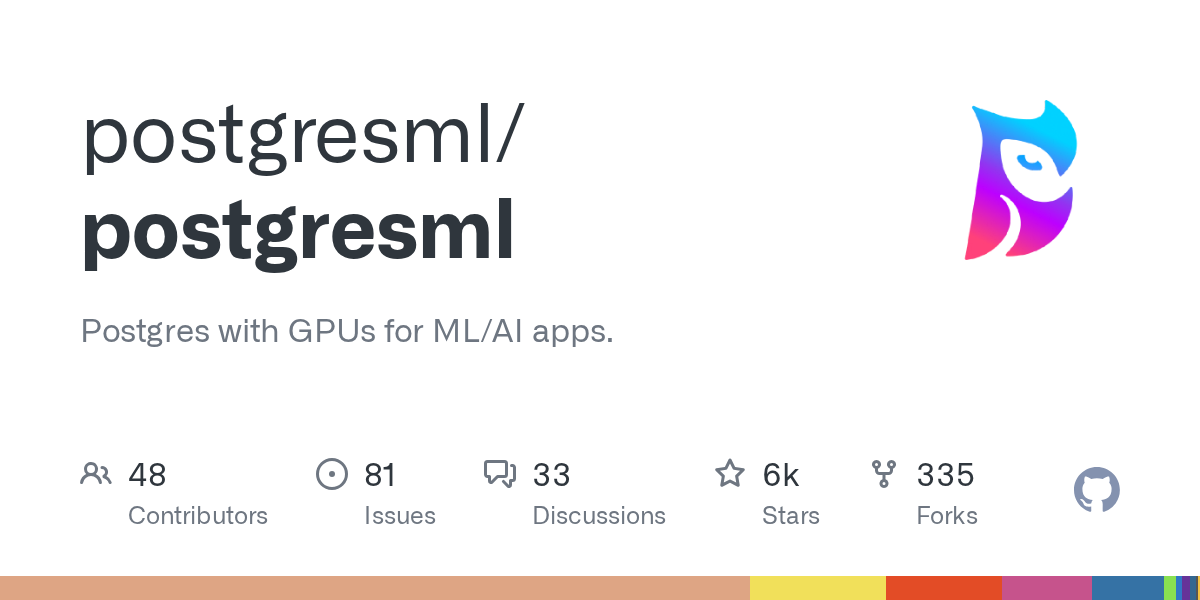
PostgresML Product overview

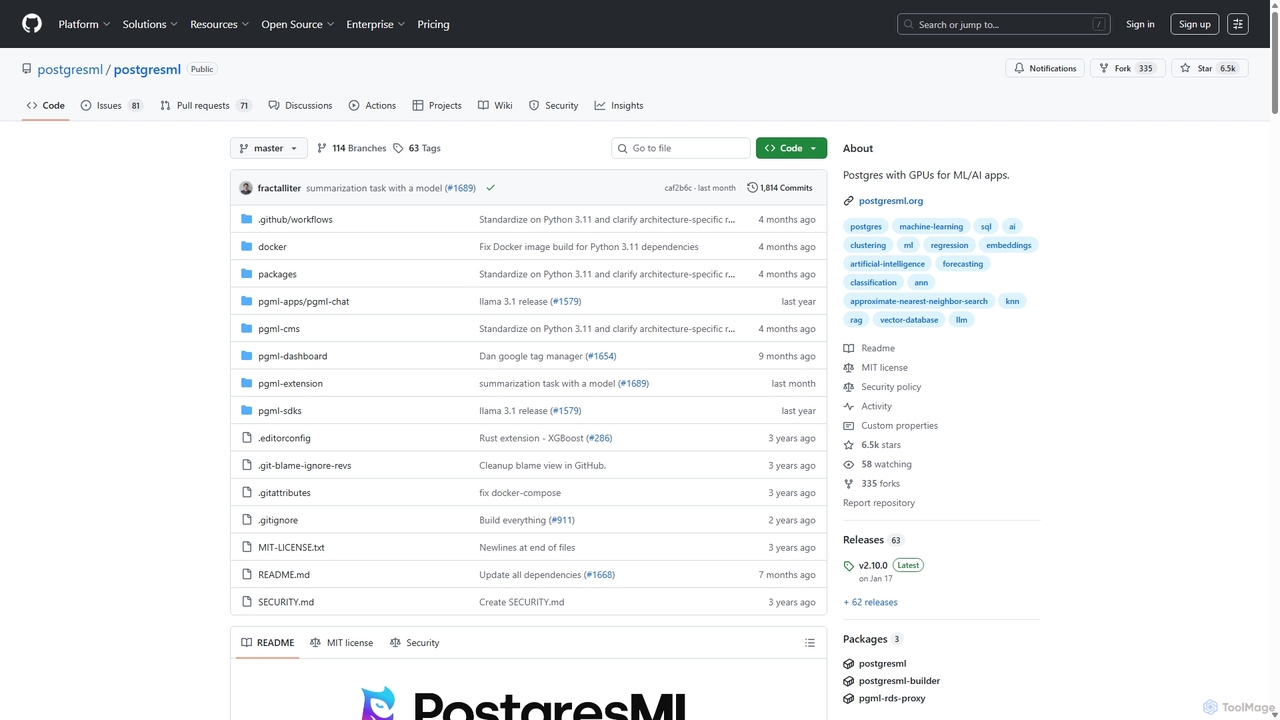
PostgresML is a powerful open-source extension that integrates machine learning and AI directly into your PostgreSQL database. It enables GPU-accelerated inference, vector search, and complete RAG pipelines using simple SQL commands, eliminating data movement and simplifying the MLOps stack for high-performance, scalable AI applications.

Preview

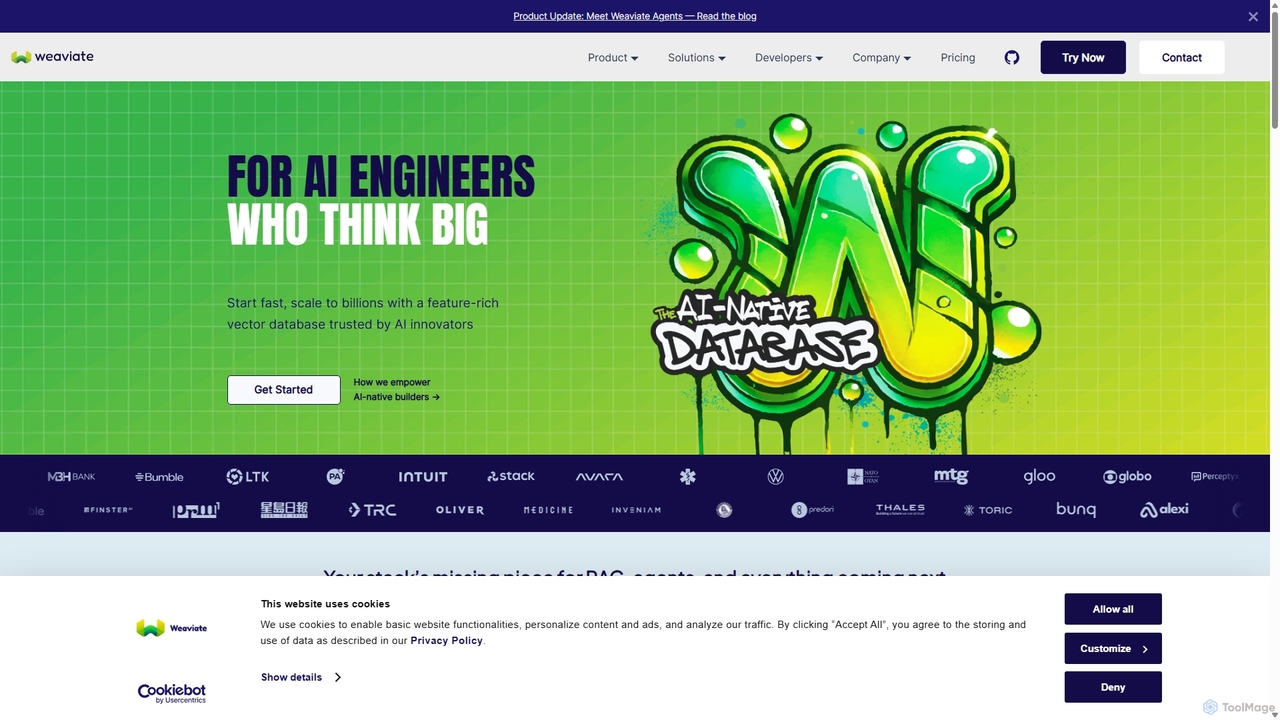
Weaviate Product overview

Weaviate is an open-source, AI-native vector database designed for developers. It enables scalable, low-latency vector, keyword, and hybrid search. Ideal for building AI applications like semantic search, recommendation engines, and Retrieval-Augmented Generation (RAG) systems, it integrates seamlessly with popular machine learning models to store and query data based on semantic meaning.

Preview

Quick facts

Compare product focus, pricing models and audiences. Highlighted rows indicate different listed information; unknown pricing does not mean free.

PostgresML VS Weaviate — Quick facts
Quick factsPostgresMLWeaviate
Pricing modelFreemiumFreemium
Product typeWebWeb
Primary focusMlopsVector Database
Audience and rolesAI Application Developer · Backend Engineer · Data Analyst · Database Administrator · Data Scientist · Machine Learning Engineer · Product Manager · Software DeveloperAI Researcher · Data Scientist · DevOps Engineer · Machine Learning Engineer · Product Manager · Software Developer
CategoriesMlops · Vector Database · DatabaseVector Database · Database
AddedSep 1, 2025Sep 10, 2025
UpdatedNov 19, 2026Nov 19, 2026

Features, usage and use cases

Explore the listed product descriptions, features and workflows. Taxonomy labels alone are not feature evaluations.

PostgresML

PostgresML is a transformative open-source extension that brings machine learning and AI capabilities directly into the PostgreSQL database. By embedding models and algorithms within the data layer, it fundamentally changes how AI applications are built. The core philosophy is that it's more efficient, manageable, and reliable to move models to the data, rather than constantly moving large, dynamic datasets to the models. This approach eliminates complex data pipelines, reduces latency, and enhances security.

PostgresML turns your existing database into a full-featured AI platform. It supports a wide range of functionalities, from traditional machine learning models like classification and regression to cutting-edge deep learning applications involving Large Language Models (LLMs) and vector search. By leveraging the power of GPUs, it accelerates computations and model inference, making real-time AI feasible for high-throughput systems.

How to use PostgresML

Getting started with PostgresML is designed to be straightforward, with options for both cloud and self-hosted environments.

  1. PostgresML Cloud (Recommended): The easiest way to begin is by signing up for a free account on the PostgresML Cloud. This provides you with a serverless, fully managed PostgreSQL database in seconds, complete with access to GPUs and state-of-the-art LLMs without any setup overhead.
  2. Self-Hosting: For users who prefer to manage their own infrastructure, PostgresML can be self-hosted using Docker. You can pull the official image and run it with a simple command, giving you full control over your environment. The command is typically: docker run -it -v postgresml_data:/var/lib/postgresql -p 5433:5432 -p 8000:8000 ghcr.io/postgresml/postgresml:latest.
  3. Executing Queries: Once set up, you interact with PostgresML using standard SQL. You can train models (e.g., pgml.train()), make predictions (e.g., pgml.predict()), and execute complex AI pipelines. For example, generating text embeddings is as simple as calling the pgml.embed() function on a text column.
  4. Using SDKs: For seamless application integration, PostgresML offers specific client libraries like Korvus (for Python, JavaScript, Rust, and C) and postgresml-django, which integrate the entire RAG pipeline into a single database query or ORM operation.

Core Features of PostgresML

  • In-Database ML/AI: Run machine learning and AI operations directly within PostgreSQL, eliminating the need for separate systems and data transfers.
  • GPU Acceleration: Leverages GPU power for significantly faster computations and model inference, crucial for real-time applications.
  • Large Language Models (LLMs): Integrates and utilizes state-of-the-art LLMs from hubs like Hugging Face directly in your database.
  • End-to-End RAG Pipeline: Provides built-in SQL functions for the entire Retrieval-Augmented Generation (RAG) workflow: pgml.chunk for text splitting, pgml.embed for generating vector embeddings, pgml.rank for re-ranking results, and pgml.transform for text generation.
  • Vector Search: Seamlessly integrates with pgvector for efficient and scalable high-dimensional vector similarity search.
  • Diverse ML Algorithms: Includes over 47 built-in classification and regression algorithms (like XGBoost) for traditional machine learning tasks.
  • High Performance & Scalability: Delivers 8-40x faster inference compared to HTTP-based model serving and is designed to support millions of transactions per second with horizontal scaling.
  • Comprehensive NLP Tasks: Supports a wide range of NLP tasks including text classification, summarization, translation, question answering, and text generation.

Use Cases for PostgresML

PostgresML is ideal for developers and data scientists building a new generation of AI-powered applications.

  • Semantic Search & Recommendation Engines: Build powerful search systems that understand user intent by using vector embeddings to find semantically similar items.
  • AI-Powered Chatbots & Q&A Systems: Implement sophisticated RAG pipelines to build chatbots that can answer questions based on a private knowledge base stored within the database.
  • Real-time Fraud Detection: Train and deploy classification models directly in the database to analyze transaction data in real-time and flag suspicious activities with low latency.
  • Data Analysis & Business Intelligence: Use in-database NLP to summarize customer reviews, classify support tickets, or extract insights from unstructured text data without ever moving it out of Postgres.
  • Personalized Content Generation: Leverage LLMs to generate personalized marketing copy, product descriptions, or email responses based on user data stored in the database.

Advantages of PostgresML

The primary advantage of PostgresML is its architectural simplicity and efficiency.

  • Reduced Latency: By co-locating models and data, it eliminates network overhead, leading to faster query performance.
  • Enhanced Security & Privacy: Data remains within the secure confines of your database, simplifying compliance and reducing the risk of data breaches.
  • Simplified MLOps Stack: It consolidates the data store, model serving, and vector database into a single system, reducing infrastructure complexity and operational costs.
  • Developer Experience: Allows developers to use familiar SQL to build and deploy complex AI features, lowering the barrier to entry and accelerating development cycles.
  • Scalability: Built on the robust and scalable foundation of PostgreSQL, it can handle enterprise-grade workloads.

Pricing and Plans

PostgresML operates on a freemium model, offering flexibility for different needs.

  • Open Source Self-Hosting: The PostgresML extension is open-source (MIT license) and can be self-hosted for free, giving you complete control over your environment.
  • PostgresML Cloud: A managed, serverless cloud platform is available. It includes a generous free tier that allows developers to get started quickly with a free database, GPU access, and pre-configured LLMs. Paid plans are available for applications requiring more resources, dedicated GPUs, and enterprise-level support.

Weaviate

Weaviate is a high-performance, open-source, AI-native vector database that empowers developers to build the next generation of intelligent applications. It is specifically designed to store, index, and search through data objects and their corresponding vector embeddings, allowing for searches based on semantic meaning and context rather than just keywords. This makes it a fundamental component for applications involving semantic search, recommendation systems, question-answering bots, and Retrieval-Augmented Generation (RAG).

How to use Weaviate

Getting started with Weaviate involves a few key steps, making it accessible for developers with varying levels of expertise in AI:

  1. Deployment: Choose your preferred deployment method. You can use the fully managed Weaviate Cloud Services (WCS) for a serverless experience, deploy it using Docker or Kubernetes for self-hosting, or run it locally for development.
  2. Define a Schema: Before importing data, you define a schema that describes your data classes (e.g., 'Article', 'Product') and their properties (e.g., 'title', 'content'). In the schema, you specify which properties should be vectorized and which vectorizer module to use (e.g., OpenAI, Cohere, Hugging Face).
  3. Import Data: Add your data objects to Weaviate. If you've configured a vectorizer module, Weaviate will automatically process the specified text fields and generate vector embeddings for them, storing them alongside the original data.
  4. Perform Queries: Use Weaviate's powerful query capabilities through its client libraries (Python, TypeScript, Go, Java) or its GraphQL and RESTful APIs. You can perform vector searches (finding objects similar to a given text or vector), keyword searches, or powerful hybrid searches that combine both methods for optimal relevance.

Core Features of Weaviate

  • Hybrid Search: Combines traditional sparse keyword search (BM25) with modern dense vector search (ANN) to deliver highly relevant results that understand both lexical and semantic queries.
  • Generative Search (RAG): Natively supports Retrieval-Augmented Generation. It efficiently retrieves the most relevant context from your data to feed into Large Language Models (LLMs), reducing hallucinations and providing factual, up-to-date answers.
  • Scalability and Performance: Engineered to handle billions of data objects with low-latency queries. It supports horizontal scaling through sharding and ensures high availability with replication.
  • Modular Ecosystem: A flexible, pluggable architecture allows you to integrate your favorite vectorization models, LLMs, and other tools directly into the database, simplifying your MLOps pipeline.
  • Advanced Filtering: Apply complex, structured filters on object properties during a vector search. This allows you to perform semantic searches within specific categories, date ranges, or user-defined tags.
  • Open Source: Weaviate is an open-source project with a vibrant community, ensuring transparency, continuous improvement, and no vendor lock-in.

Use Cases for Weaviate

Weaviate is versatile and can be used to power a wide range of AI-driven features:

  • Semantic Search: Create search engines that understand the intent and context behind a user's query, going beyond simple keyword matching for documents, products, or images.
  • Q&A Systems and Chatbots: Build intelligent chatbots and question-answering systems using RAG. Weaviate provides the factual knowledge base, allowing LLMs to generate accurate and context-aware responses.
  • Recommendation Engines: Suggest relevant products, articles, or content to users by finding items with similar vector embeddings.
  • Multimodal Search: Store and search across different data types, including text, images, and more, enabling queries like "find images similar to this text description."

Advantages of Weaviate

Weaviate stands out as a developer-friendly and enterprise-ready solution. Its key advantages include its AI-native design, which simplifies building complex AI features. The powerful hybrid search capability ensures state-of-the-art relevance. Its open-source nature fosters community collaboration and provides flexibility, while the managed Weaviate Cloud Service offers a hassle-free, scalable infrastructure, allowing teams to focus on building applications rather than managing databases.

Pricing and Plans

Weaviate offers a flexible pricing structure to suit different needs:

  • Open Source: Completely free to download, use, and self-host. Ideal for local development, research, and projects where you manage your own infrastructure.
  • Weaviate Cloud Services (WCS) - Serverless: A fully managed, pay-as-you-go option. It includes a generous free tier (sandbox) perfect for prototyping and small-scale applications. As you grow, you only pay for the resources you use (e.g., storage, compute).
  • Weaviate Cloud Services (WCS) - Dedicated Clusters: An enterprise-grade solution providing dedicated infrastructure for maximum performance, security, and isolation. This plan is suitable for large-scale production workloads and comes with enterprise support and features like private networking. Pricing is based on the cluster configuration.

Positioning

Their taxonomy shows where the products overlap and where each one has a more distinct focus. Unknown fields are shown explicitly and are never filled with assumptions.

Categories

Shared
Database
Only PostgresML
MlopsVector Database
Only Weaviate
Vector Database

Tags

Shared
databasemachine learningNLPopen sourceRAGvector database
Only PostgresML
AI infrastructureembeddingsGPUllmMLOpspostgresqlSQL
Only Weaviate
AI-nativedeveloper toolhybrid searchsemantic search

Audience and roles

Shared
Data ScientistMachine Learning EngineerProduct ManagerSoftware Developer
Only PostgresML
AI Application DeveloperBackend EngineerData AnalystDatabase Administrator
Only Weaviate
AI ResearcherDevOps Engineer

Traffic comparison

Traffic is shown on the same scale so differences in market visibility are not visually understated.

How to interpret the traffic data

Both charts share the same months and vertical scale. Each tool identifies its latest reporting month; missing months are left blank, not counted as zero. Regional and source visit counts are estimates calculated from the reported shares.

PostgresML

No data available

Weaviate monthly traffic:

Latest traffic · 2026-05

Monthly visits
137.9K
Avg. visit duration
0:32
Pages per visit
1.74
Bounce rate
43.21%
Data updated 2026-06-15

Monthly traffic trend

  • 2025-09: 287.8K
  • 2026-01: 188.9K
  • 2026-02: 165.9K
  • 2026-03: 184.5K
  • 2026-04: 169.2K
  • 2026-05: 137.9K

Top regions

Top 5 countries/regions
Country/regionPercentageEstimated visits
🇮🇳India40.22%55.5K
🇺🇸United States29.54%40.7K
🇻🇳Vietnam12%16.6K
🇬🇧United Kingdom9.72%13.4K
🇨🇳China8.52%11.8K

Traffic sources

Source typePercentageEstimated visits
Direct64.6%89.1K
Referral30.48%42K
Email4.92%6.8K

Search keywords

agentic workflowscontext engineeringweaviateweaviate academyweaviate import data

Community signals

Ratings, comments, favorites, and likes are community signals—not a substitute for product fit.

PostgresML

Rating
No data available
Comments
0
Favorites
183
Likes
167

Weaviate

Rating
No data available
Comments
0
Favorites
179
Likes
176

PostgresML vs Weaviate · Comparison FAQ

What do PostgresML and Weaviate have in common?
Both tools are listed under Database. These categories indicate overlapping use cases; compare their detailed descriptions for workflows, capabilities and limitations.
Are PostgresML and Weaviate free?
Listed pricing models: PostgresML — Freemium; Weaviate — Freemium. Missing pricing is not proof of a free plan, and freemium does not mean every feature is free. Check official sites for current plans, limits and trials.
How should I choose between PostgresML and Weaviate?
The primary listed category is Mlops for PostgresML, and Vector Database for Weaviate. Compare features, steps and use cases, then verify pricing, data permissions and deployment needs. This page does not include hands-on testing and does not declare a winner from traffic or tags.

Sources and comparison methodology

This page is assembled from ToolMage product listings, taxonomy, traffic statistics and on-site user feedback. It is not a hands-on test or an independent review.

  • Feature and plan descriptions reflect information in the listings, not real-time guarantees. Verify pricing, quotas, availability and privacy terms on the official sites.
  • Traffic uses the reporting months shown. Missing statistics do not mean zero visits, and different periods do not establish growth or superiority. Regional and source visit counts are estimates based on shares.
  • Different tags indicate differences in the listings, not proof that the other product lacks a capability. Ratings, favorites and visits are not used to declare a winner.

Related comparisons