ToolMage
Sign in

AI TOOL COMPARISON

Neosync vs PostgresML

What is the difference, and which fits your workflow? Compare features, usage, pricing models and traffic side by side.

Jump to key differences

Product overview

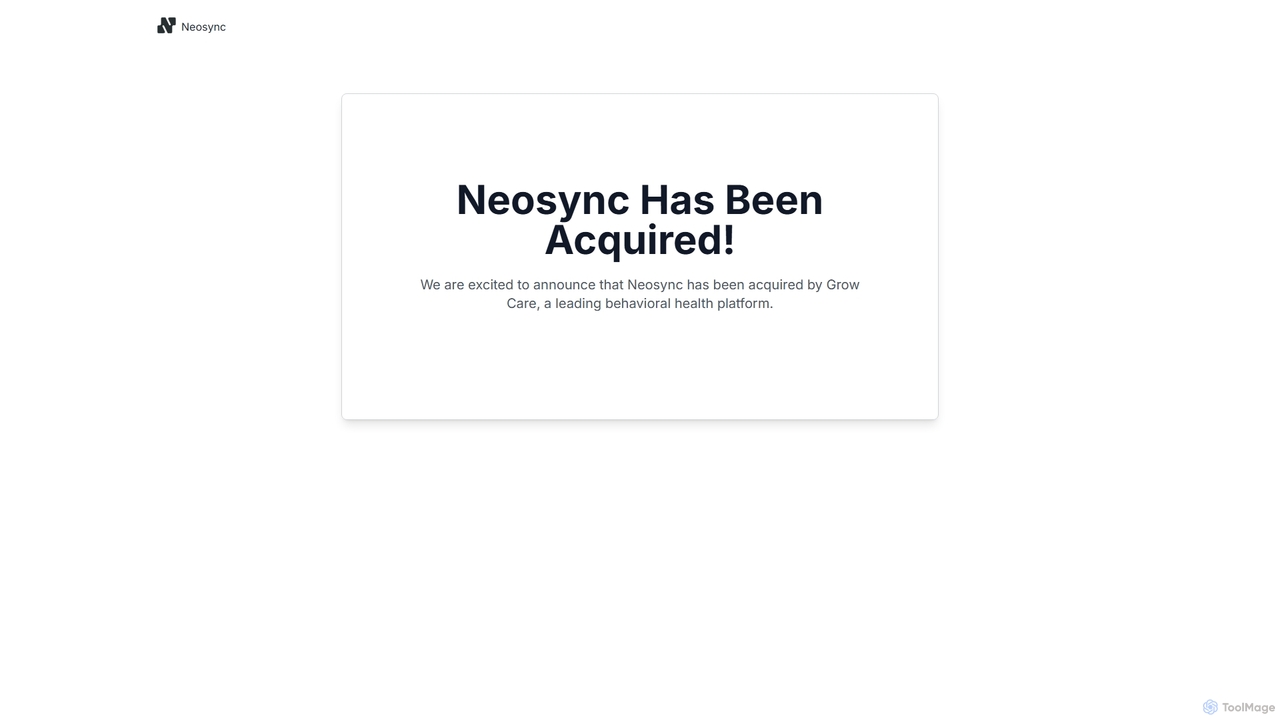
Neosync Product overview

Neosync is an open-source platform for data anonymization and synthetic data generation. It helps developers and data scientists create safe, privacy-compliant, and realistic datasets for testing, development, and AI model training, ensuring referential integrity across databases.

Preview

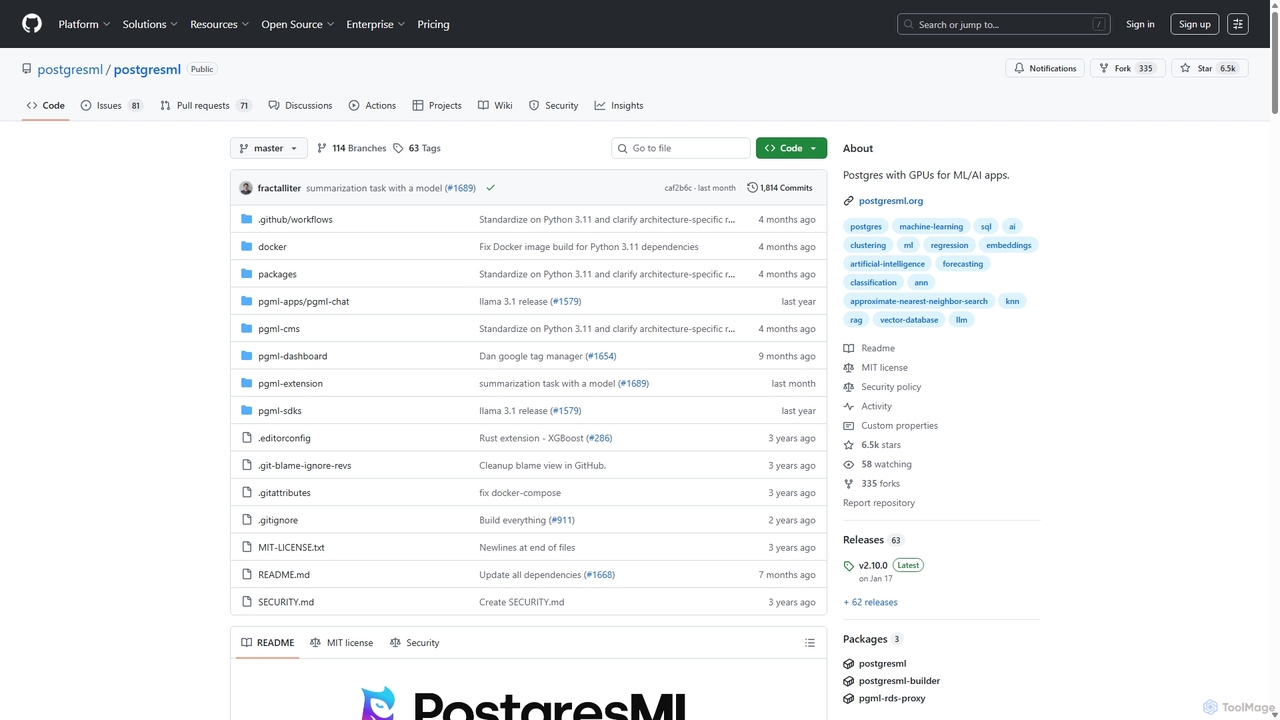
PostgresML Product overview

PostgresML is a powerful open-source extension that integrates machine learning and AI directly into your PostgreSQL database. It enables GPU-accelerated inference, vector search, and complete RAG pipelines using simple SQL commands, eliminating data movement and simplifying the MLOps stack for high-performance, scalable AI applications.

Preview

Quick facts

Compare product focus, pricing models and audiences. Highlighted rows indicate different listed information; unknown pricing does not mean free.

Neosync VS PostgresML — Quick facts
Quick factsNeosyncPostgresML
Pricing modelFreemiumFreemium
Product typeWebWeb
Primary focusData GenerationMlops
Audience and rolesData Analyst · Database Administrator · Data Scientist · DevOps Engineer · Machine Learning Engineer · Product Manager · Security Analyst · Software DeveloperAI Application Developer · Backend Engineer · Data Analyst · Database Administrator · Data Scientist · Machine Learning Engineer · Product Manager · Software Developer
CategoriesData Generation · Database · PrivacyMlops · Vector Database · Database
AddedOct 2, 2025Sep 1, 2025
UpdatedNov 19, 2026Nov 19, 2026

Features, usage and use cases

Explore the listed product descriptions, features and workflows. Taxonomy labels alone are not feature evaluations.

Neosync

Neosync is a powerful, open-source tool designed to address critical data privacy and utility challenges faced by modern development teams. It specializes in two core areas: data anonymization and synthetic data generation. By transforming sensitive production data into safe, de-identified versions, Neosync enables developers to work with realistic datasets in local and staging environments without risking data breaches or violating privacy regulations like GDPR, HIPAA, and CCPA.

The platform is built with developers in mind, offering seamless integration into existing workflows. It can connect to various data sources, primarily relational databases like PostgreSQL and MySQL, and allows users to define rules for transforming data while preserving its structural and statistical integrity. This means that relationships between tables (foreign keys) are maintained, ensuring the anonymized or synthetic data behaves just like the real thing, which is crucial for accurate testing and reliable application development.

How to use Neosync

Using Neosync typically follows a structured, developer-centric workflow:

  1. Connect to a Data Source: Start by configuring Neosync to connect to your production or source database (e.g., PostgreSQL, MySQL). This is often done via a configuration file or a user interface.
  2. Define Data Transformation Jobs: Create a job to specify how the data should be handled. You'll identify the tables and columns you want to include.
  3. Configure Anonymization Rules: For each sensitive column (e.g., names, emails, phone numbers, social security numbers), you select a 'Transformer'. Neosync provides a library of pre-built transformers (e.g., random string generator, email masker, address randomizer) to replace real data with realistic but fake data.
  4. Generate Synthetic Data: If you need to create data from scratch, you can define a schema and use Neosync to populate it with large volumes of statistically-sound, referentially-intact data. This is ideal for load testing or training ML models without any real data.
  5. Maintain Referential Integrity: Neosync automatically handles foreign key relationships, ensuring that if you anonymize a user ID in one table, all corresponding records in other tables are updated consistently.
  6. Execute and Sync: Run the job to process the data and sync the resulting safe dataset to a destination of your choice, such as a local developer database, a staging environment, or a cloud storage bucket.

Core Features of Neosync

  • Data Anonymization: A rich set of data transformers to mask, substitute, or generate fake data for various data types, effectively removing Personally Identifiable Information (PII).
  • Synthetic Data Generation: Ability to create large-scale, high-fidelity synthetic datasets that mirror the statistical properties and schema of your production data.
  • Referential Integrity Preservation: Intelligently maintains relationships across tables and databases, preventing broken links and ensuring data consistency.
  • Data Subsetting: Create smaller, targeted, and fully functional subsets of your production database, accelerating development and testing cycles.
  • Open-Source and Extensible: As an open-source project, it offers transparency, community support, and the ability to create custom transformers to meet specific needs.
  • Database Compatibility: Natively supports popular databases like PostgreSQL and MySQL, with a growing list of integrations.

Use Cases for Neosync

Neosync is invaluable for a variety of scenarios:

  • Local Development & Testing: Provides developers with safe, production-like data on their local machines, eliminating the security risks associated with using real production data.
  • CI/CD Pipelines: Automate the creation of fresh, anonymized data for every test run in your continuous integration and deployment pipelines.
  • AI and Machine Learning: Train ML models on large, realistic datasets without compromising user privacy.
  • Sales Demos and Presentations: Create compelling product demonstrations with realistic-looking data that contains no sensitive customer information.
  • Third-Party Data Sharing: Securely share data with partners or researchers by first anonymizing all sensitive information.
  • Regulatory Compliance: Helps organizations meet the requirements of privacy laws like GDPR, HIPAA, and CCPA by de-identifying data used in non-production environments.

Advantages of Neosync

Neosync offers several key advantages:

  • Enhanced Security and Privacy: Drastically reduces the risk of data breaches by removing sensitive data from development and testing environments.
  • Increased Developer Velocity: Speeds up development cycles by providing instant access to safe and realistic data, eliminating data-related bottlenecks.
  • High-Fidelity Data: The focus on referential integrity and statistical preservation ensures that the test data is a true reflection of production data, leading to fewer bugs.
  • Cost-Effective: The open-source model makes it an accessible solution for teams of all sizes, with options for enterprise support and managed services.
  • Flexibility: Can be self-hosted and customized to fit unique data structures and security requirements.

Pricing and Plans

Neosync operates on a freemium model. The core platform is open-source and free to use, allowing anyone to self-host and leverage its data anonymization and synthesis capabilities. For organizations requiring more advanced features, managed services, or dedicated support, Neosync typically offers paid enterprise or cloud plans. These plans often include features like role-based access control, priority support, and managed infrastructure.

PostgresML

PostgresML is a transformative open-source extension that brings machine learning and AI capabilities directly into the PostgreSQL database. By embedding models and algorithms within the data layer, it fundamentally changes how AI applications are built. The core philosophy is that it's more efficient, manageable, and reliable to move models to the data, rather than constantly moving large, dynamic datasets to the models. This approach eliminates complex data pipelines, reduces latency, and enhances security.

PostgresML turns your existing database into a full-featured AI platform. It supports a wide range of functionalities, from traditional machine learning models like classification and regression to cutting-edge deep learning applications involving Large Language Models (LLMs) and vector search. By leveraging the power of GPUs, it accelerates computations and model inference, making real-time AI feasible for high-throughput systems.

How to use PostgresML

Getting started with PostgresML is designed to be straightforward, with options for both cloud and self-hosted environments.

  1. PostgresML Cloud (Recommended): The easiest way to begin is by signing up for a free account on the PostgresML Cloud. This provides you with a serverless, fully managed PostgreSQL database in seconds, complete with access to GPUs and state-of-the-art LLMs without any setup overhead.
  2. Self-Hosting: For users who prefer to manage their own infrastructure, PostgresML can be self-hosted using Docker. You can pull the official image and run it with a simple command, giving you full control over your environment. The command is typically: docker run -it -v postgresml_data:/var/lib/postgresql -p 5433:5432 -p 8000:8000 ghcr.io/postgresml/postgresml:latest.
  3. Executing Queries: Once set up, you interact with PostgresML using standard SQL. You can train models (e.g., pgml.train()), make predictions (e.g., pgml.predict()), and execute complex AI pipelines. For example, generating text embeddings is as simple as calling the pgml.embed() function on a text column.
  4. Using SDKs: For seamless application integration, PostgresML offers specific client libraries like Korvus (for Python, JavaScript, Rust, and C) and postgresml-django, which integrate the entire RAG pipeline into a single database query or ORM operation.

Core Features of PostgresML

  • In-Database ML/AI: Run machine learning and AI operations directly within PostgreSQL, eliminating the need for separate systems and data transfers.
  • GPU Acceleration: Leverages GPU power for significantly faster computations and model inference, crucial for real-time applications.
  • Large Language Models (LLMs): Integrates and utilizes state-of-the-art LLMs from hubs like Hugging Face directly in your database.
  • End-to-End RAG Pipeline: Provides built-in SQL functions for the entire Retrieval-Augmented Generation (RAG) workflow: pgml.chunk for text splitting, pgml.embed for generating vector embeddings, pgml.rank for re-ranking results, and pgml.transform for text generation.
  • Vector Search: Seamlessly integrates with pgvector for efficient and scalable high-dimensional vector similarity search.
  • Diverse ML Algorithms: Includes over 47 built-in classification and regression algorithms (like XGBoost) for traditional machine learning tasks.
  • High Performance & Scalability: Delivers 8-40x faster inference compared to HTTP-based model serving and is designed to support millions of transactions per second with horizontal scaling.
  • Comprehensive NLP Tasks: Supports a wide range of NLP tasks including text classification, summarization, translation, question answering, and text generation.

Use Cases for PostgresML

PostgresML is ideal for developers and data scientists building a new generation of AI-powered applications.

  • Semantic Search & Recommendation Engines: Build powerful search systems that understand user intent by using vector embeddings to find semantically similar items.
  • AI-Powered Chatbots & Q&A Systems: Implement sophisticated RAG pipelines to build chatbots that can answer questions based on a private knowledge base stored within the database.
  • Real-time Fraud Detection: Train and deploy classification models directly in the database to analyze transaction data in real-time and flag suspicious activities with low latency.
  • Data Analysis & Business Intelligence: Use in-database NLP to summarize customer reviews, classify support tickets, or extract insights from unstructured text data without ever moving it out of Postgres.
  • Personalized Content Generation: Leverage LLMs to generate personalized marketing copy, product descriptions, or email responses based on user data stored in the database.

Advantages of PostgresML

The primary advantage of PostgresML is its architectural simplicity and efficiency.

  • Reduced Latency: By co-locating models and data, it eliminates network overhead, leading to faster query performance.
  • Enhanced Security & Privacy: Data remains within the secure confines of your database, simplifying compliance and reducing the risk of data breaches.
  • Simplified MLOps Stack: It consolidates the data store, model serving, and vector database into a single system, reducing infrastructure complexity and operational costs.
  • Developer Experience: Allows developers to use familiar SQL to build and deploy complex AI features, lowering the barrier to entry and accelerating development cycles.
  • Scalability: Built on the robust and scalable foundation of PostgreSQL, it can handle enterprise-grade workloads.

Pricing and Plans

PostgresML operates on a freemium model, offering flexibility for different needs.

  • Open Source Self-Hosting: The PostgresML extension is open-source (MIT license) and can be self-hosted for free, giving you complete control over your environment.
  • PostgresML Cloud: A managed, serverless cloud platform is available. It includes a generous free tier that allows developers to get started quickly with a free database, GPU access, and pre-configured LLMs. Paid plans are available for applications requiring more resources, dedicated GPUs, and enterprise-level support.

Positioning

Their taxonomy shows where the products overlap and where each one has a more distinct focus. Unknown fields are shown explicitly and are never filled with assumptions.

Categories

Shared
Database
Only Neosync
Data GenerationPrivacy
Only PostgresML
MlopsVector Database

Tags

Shared
databaseopen source
Only Neosync
data anonymizationdata maskingdeveloper toolsGDPRHIPAAPIIprivacysecuritysynthetic datatest data
Only PostgresML
AI infrastructureembeddingsGPUllmmachine learningMLOpsNLPpostgresqlRAGSQLvector database

Audience and roles

Shared
Data AnalystDatabase AdministratorData ScientistMachine Learning EngineerProduct ManagerSoftware Developer
Only Neosync
DevOps EngineerSecurity Analyst
Only PostgresML
AI Application DeveloperBackend Engineer

Traffic comparison

Traffic is shown on the same scale so differences in market visibility are not visually understated.

How to interpret the traffic data

Both charts share the same months and vertical scale. Each tool identifies its latest reporting month; missing months are left blank, not counted as zero. Regional and source visit counts are estimates calculated from the reported shares.

Neosync

No data available

PostgresML

No data available

Community signals

Ratings, comments, favorites, and likes are community signals—not a substitute for product fit.

Neosync

Rating
No data available
Comments
0
Favorites
166
Likes
155

PostgresML

Rating
No data available
Comments
0
Favorites
183
Likes
167

Neosync vs PostgresML · Comparison FAQ

What do Neosync and PostgresML have in common?
Both tools are listed under Database. These categories indicate overlapping use cases; compare their detailed descriptions for workflows, capabilities and limitations.
Are Neosync and PostgresML free?
Listed pricing models: Neosync — Freemium; PostgresML — Freemium. Missing pricing is not proof of a free plan, and freemium does not mean every feature is free. Check official sites for current plans, limits and trials.
How should I choose between Neosync and PostgresML?
The primary listed category is Data Generation for Neosync, and Mlops for PostgresML. Compare features, steps and use cases, then verify pricing, data permissions and deployment needs. This page does not include hands-on testing and does not declare a winner from traffic or tags.

Sources and comparison methodology

This page is assembled from ToolMage product listings, taxonomy, traffic statistics and on-site user feedback. It is not a hands-on test or an independent review.

  • Feature and plan descriptions reflect information in the listings, not real-time guarantees. Verify pricing, quotas, availability and privacy terms on the official sites.
  • Traffic uses the reporting months shown. Missing statistics do not mean zero visits, and different periods do not establish growth or superiority. Regional and source visit counts are estimates based on shares.
  • Different tags indicate differences in the listings, not proof that the other product lacks a capability. Ratings, favorites and visits are not used to declare a winner.

Related comparisons