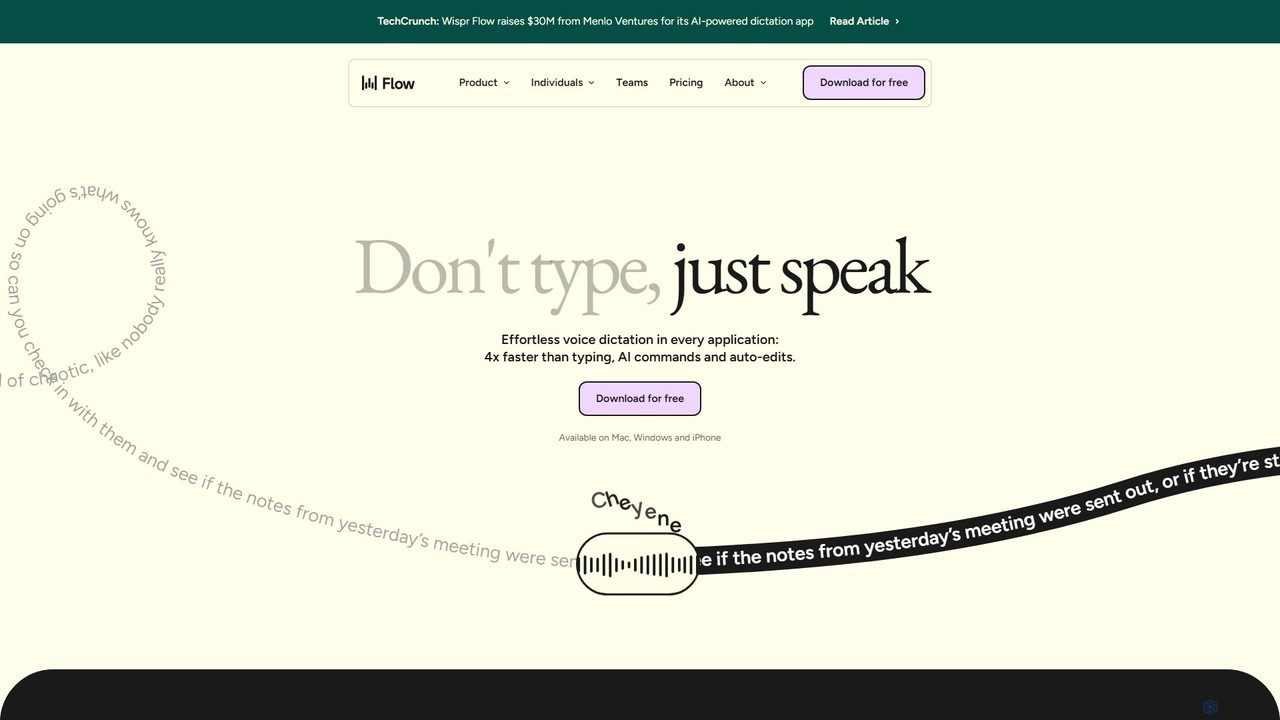
wisprflow
wisprflow is an AI-powered voice dictation application that transcribes speech into text 4x faster than typing. It works …
wisprflow is an AI-powered voice dictation application that transcribes speech into text 4x faster than typing. It works across Mac, Windows, and iPhone, featuring AI auto-edits, a personal dictionary, and support for over 100 languages. It's designed to boost productivity and provide accessibility for all users.
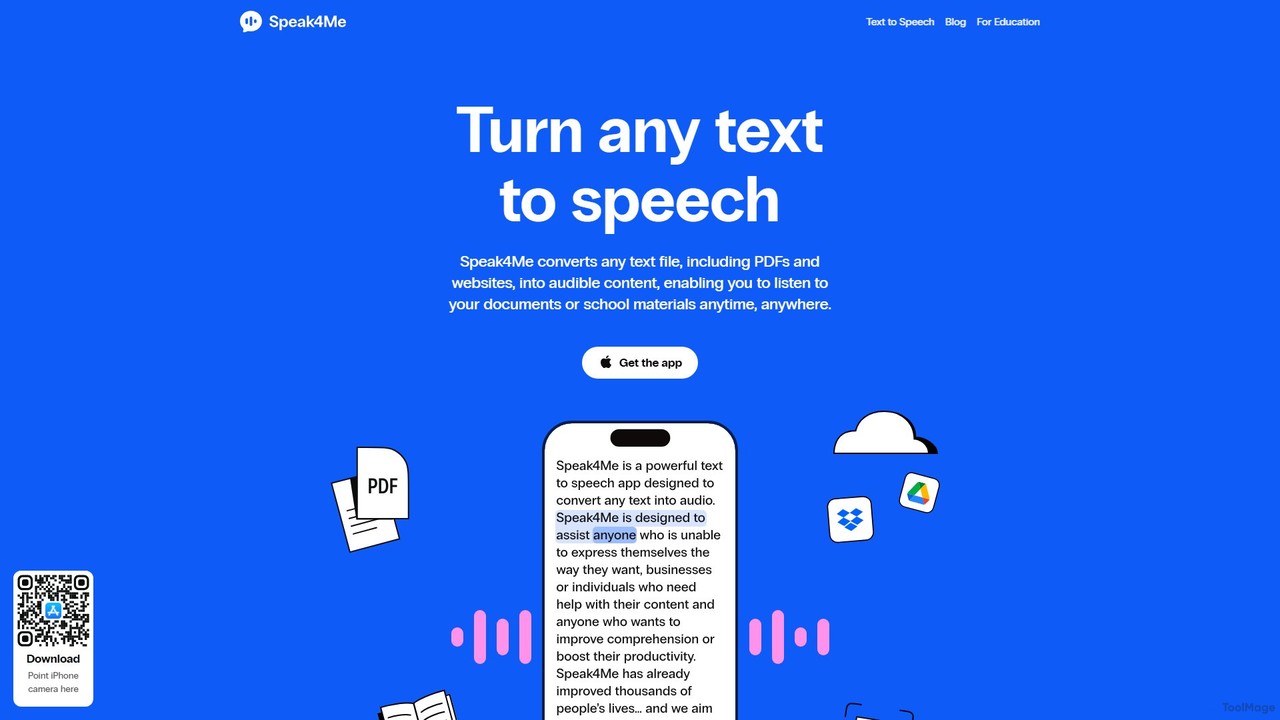
Speak4Me
Speak4Me is an advanced text-to-speech iOS app that converts any text from documents, websites, or scanned pages into …
Speak4Me is an advanced text-to-speech iOS app that converts any text from documents, websites, or scanned pages into natural-sounding audio. It features AI-powered chat for summarizing and querying documents, seamless cloud integration, and robust accessibility tools for users with dyslexia or ADHD. Listen to content on the go, increase productivity, and enhance your reading and learning experience.
About Assistive Technology
AI Assistive Technology is a class of tools using artificial intelligence to enhance the functional capabilities of individuals with disabilities. These tools leverage machine learning to provide adaptive, personalized support, going beyond traditional assistive devices. They play a crucial role in breaking down barriers, promoting independence, and fostering greater inclusion in digital and physical environments. By learning from user interactions, AI assistive tools offer dynamic solutions for communication, navigation, and learning.
Core Features
- Text-to-Speech (TTS) & Speech-to-Text (STT): Converts written content into natural-sounding audio and transcribes spoken words into text in real-time.
- Computer Vision: Utilizes cameras to identify objects, read text, and describe scenes for users with visual impairments.
- Predictive Communication: Suggests words or phrases to speed up typing and communication for users with motor or speech difficulties.
- Adaptive Learning Interfaces: Personalizes content and user interfaces to suit the cognitive and learning needs of the user.
Use Cases
These tools are vital for individuals with visual, hearing, cognitive, motor, and learning disabilities. In education, they help students with dyslexia access texts. In the workplace, they enable employees with mobility impairments to control their environment. For daily living, they assist visually impaired individuals in navigating public spaces and identifying products.
How to Choose
When selecting an AI assistive tool, consider the specific disability it addresses. Evaluate its compatibility with your existing devices (e.g., smartphone, computer) and its integration capabilities with other software. Assess the level of personalization and the tool's learning curve. User reviews and trial versions can provide valuable insights into its real-world effectiveness.
Assistive TechnologyUse Cases
Real-time Scene Description for the Visually Impaired
A visually impaired individual navigating an unfamiliar supermarket can use an AI assistive app on their smartphone. By pointing the camera, the app's computer vision feature audibly describes the surroundings in real-time. It can read aisle signs, identify specific products on the shelf like 'Brand X Cereal,' and even read nutritional information from the packaging. This empowers the user to shop independently and confidently, transforming a challenging task into a manageable one without needing human assistance.
Live Conversation Captioning for the Hearing Impaired
A deaf or hard-of-hearing professional participating in a fast-paced team meeting uses an AI tool that provides real-time speech-to-text transcription. The application runs on their tablet or laptop, capturing the spoken dialogue from multiple speakers and displaying it as text. The AI can distinguish between different speakers and provides a highly accurate transcript instantly. This enables full participation, ensuring no critical information is missed and allowing the professional to contribute to the discussion effectively.
Predictive Text for Augmentative Communication
An individual with cerebral palsy who uses an eye-tracking device to communicate relies on an AI-powered augmentative and alternative communication (AAC) system. As they look at letters on a screen, the AI predicts the words and sentences they intend to form based on context and their personal communication history. This significantly reduces the number of selections needed to construct a message, making communication faster, less fatiguing, and more fluid. The AI adapts over time, learning their unique vocabulary and phrasing.
Adaptive Reading Support for Dyslexia
A student with dyslexia uses an AI-powered reading tool to process their digital textbooks. The software automatically adjusts the text format—modifying fonts, increasing spacing, and changing background colors—to a personalized setting that maximizes readability for them. As they read, they can click any word to hear it pronounced by a natural-sounding text-to-speech engine. The AI can also provide simplified definitions or visual aids for complex terms, adapting the support level based on the text's difficulty and the student's past performance.
Voice-Controlled Smart Home for Mobility Impairment
A person with quadriplegia uses an AI voice assistant integrated with their smart home devices to live more independently. From their bed or wheelchair, they can issue voice commands to turn lights on and off, adjust the thermostat, lock doors, and operate the television. The AI learns their voice patterns and common commands, becoming more responsive over time. This technology transforms their living space into an accessible environment, significantly reducing their reliance on caregivers for basic daily tasks.
Cognitive Support for Task Management
An employee with ADHD uses an AI-powered assistant to manage their workday. The tool helps break down large projects, like 'Prepare Quarterly Report,' into smaller, actionable steps such as 'Gather sales data,' 'Create charts,' and 'Write summary.' It sends intelligent reminders based on deadlines and the user's focus patterns, suggesting when to take breaks to avoid burnout. The AI can also help prioritize tasks based on urgency and importance, providing a clear, structured workflow that mitigates executive function challenges.