Maum.ai
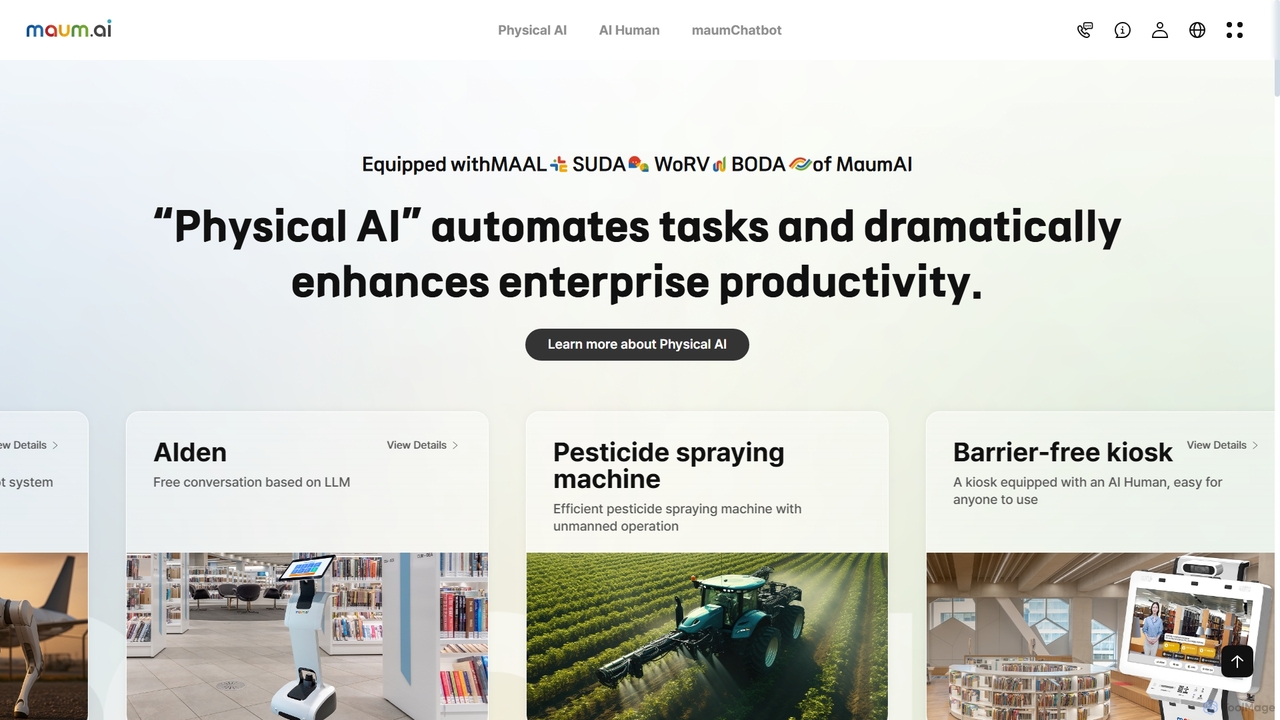
Maum.ai is a comprehensive enterprise AI platform specializing in "Physical AI," which integrates conversational AI, vision, robotics, and …
Maum.ai is a comprehensive enterprise AI platform specializing in "Physical AI," which integrates conversational AI, vision, robotics, and on-premise LLMs. It offers end-to-end solutions from AI-powered chatbots and virtual humans to autonomous robots for various industries, enhancing productivity and automation.
XenonStack
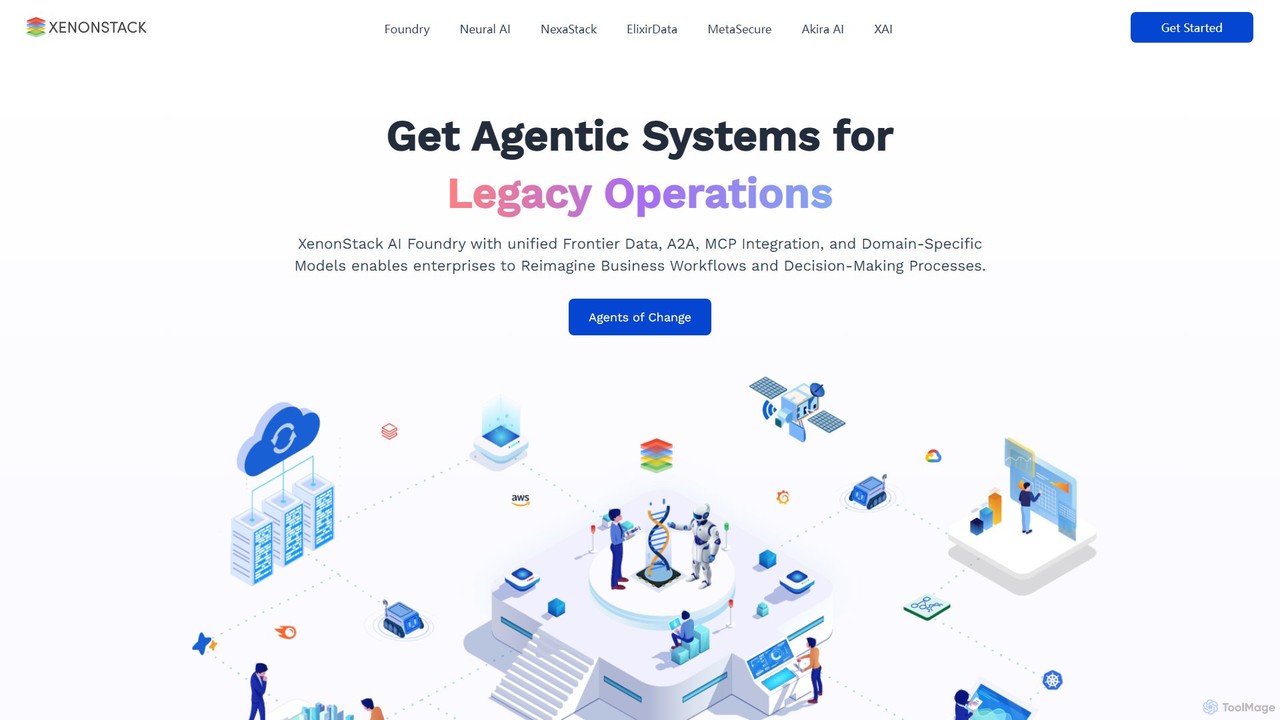
XenonStack is an enterprise-grade AI platform designed to build, deploy, and manage Agentic AI systems. It provides a …
XenonStack is an enterprise-grade AI platform designed to build, deploy, and manage Agentic AI systems. It provides a comprehensive 'Data Foundry' and a suite of tools to automate complex workflows, enhance decision-making, and ensure responsible AI governance. It empowers businesses to transform their operations through autonomous, intelligent agents.
eMACH.ai
eMACH.ai is a comprehensive, composable, and intelligent Open Finance platform for the BFSI sector. It leverages a modern …
eMACH.ai is a comprehensive, composable, and intelligent Open Finance platform for the BFSI sector. It leverages a modern MACH architecture (Microservices, API-first, Cloud-native, Headless) and integrated AI to help banks and financial institutions accelerate digital transformation. The platform includes low-code development tools (iTurmeric) and an enterprise AI suite (Purple Fabric) to build, deploy, and manage innovative financial solutions at scale, empowering both developers and business experts.
Google Cloud
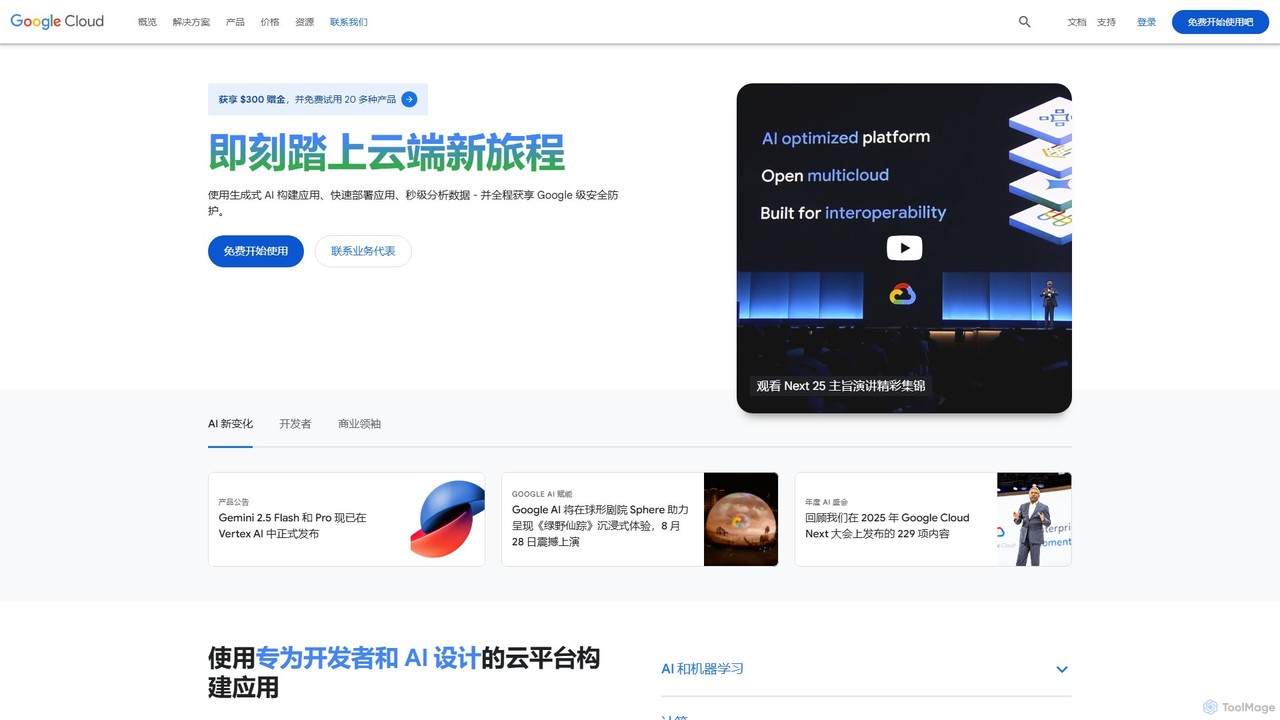
Google Cloud is a comprehensive suite of cloud computing services that provides infrastructure, platform, and serverless environments. It …
Google Cloud is a comprehensive suite of cloud computing services that provides infrastructure, platform, and serverless environments. It excels in AI/ML with Vertex AI and Gemini, data analytics with BigQuery, and offers scalable, secure infrastructure for businesses of all sizes, from startups to global enterprises.
Swiftask
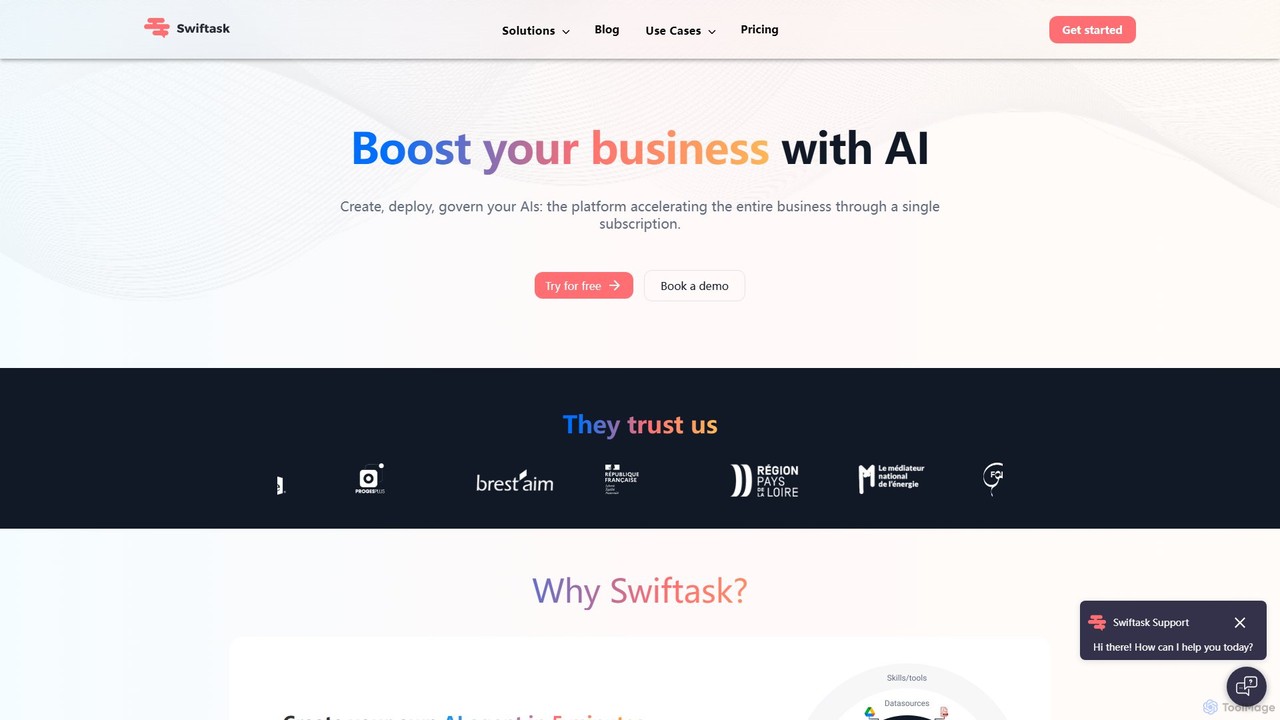
Swiftask is an all-in-one AI workspace designed for businesses to create, deploy, and govern custom AI agents without …
Swiftask is an all-in-one AI workspace designed for businesses to create, deploy, and govern custom AI agents without any coding. It integrates over 80 leading AI models, allowing teams to automate workflows, enhance productivity, and leverage company data securely through a single, cost-effective subscription.
OpenGPT
OpenGPT is an all-in-one AI ecosystem and community platform. It features a comprehensive GPTs Store for custom AI …
OpenGPT is an all-in-one AI ecosystem and community platform. It features a comprehensive GPTs Store for custom AI applications, a Prompt Marketplace for creators, and direct access to leading models like Gemini Pro, ChatGPT-4, DALL-E 3, and Imagen 2 for chat, image, and video generation.
AWS
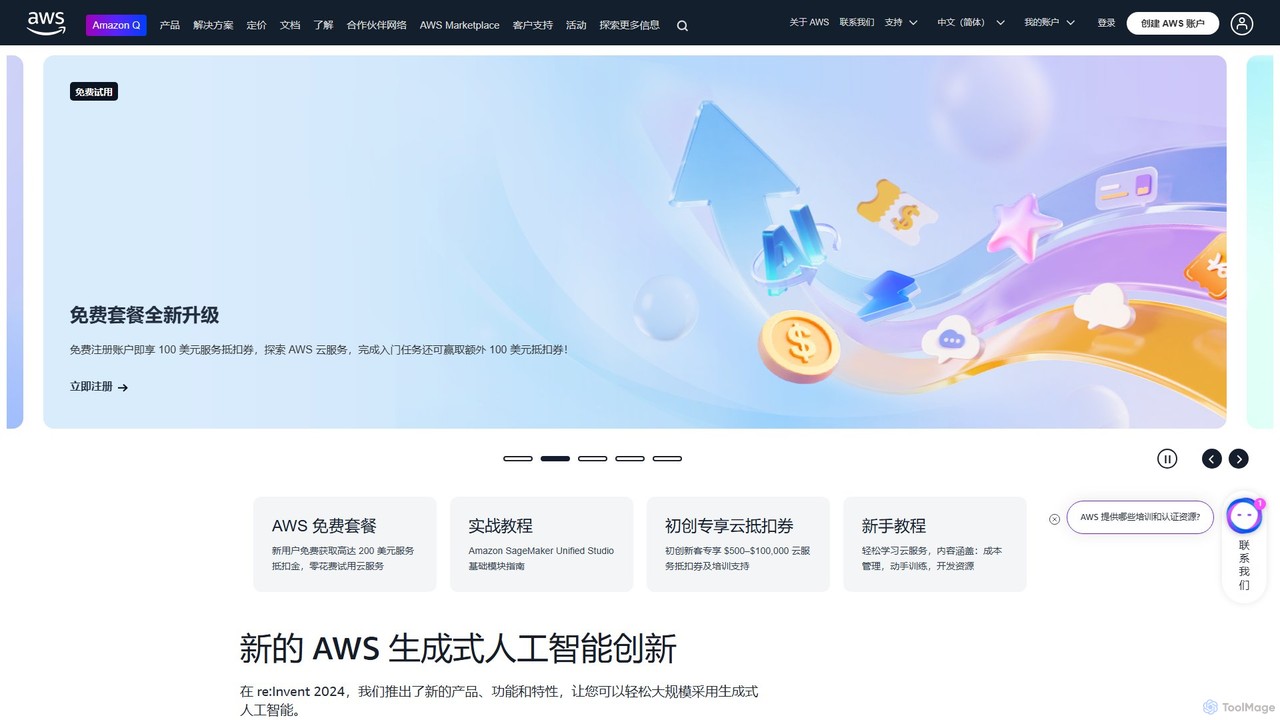
Amazon Web Services (AWS) is the world's most comprehensive and broadly adopted cloud platform, offering over 200 fully …
Amazon Web Services (AWS) is the world's most comprehensive and broadly adopted cloud platform, offering over 200 fully featured services from data centers globally. It provides a vast suite of AI and machine learning tools, including Amazon Bedrock for building generative AI applications with leading foundation models, Amazon SageMaker for the complete ML lifecycle, and the powerful Amazon Nova models for advanced text, image, and video generation.
Actcast
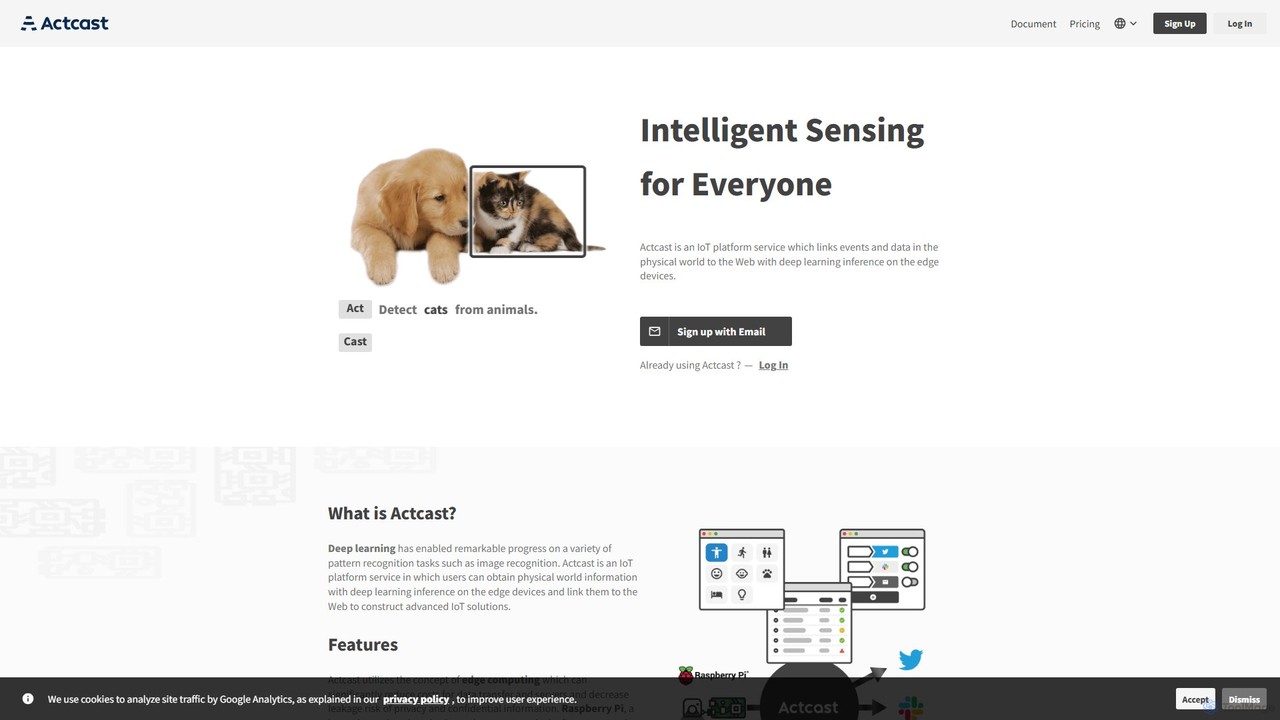
Actcast is an IoT platform service that enables developers to deploy deep learning models on edge devices like …
Actcast is an IoT platform service that enables developers to deploy deep learning models on edge devices like Raspberry Pi. It connects physical world events to web services through on-device AI inference, focusing on edge computing to reduce costs, lower latency, and enhance data privacy.
About Ai Platform
AI Platforms are integrated software environments that provide the foundational tools for building, deploying, and managing artificial intelligence applications. These platforms streamline the entire machine learning lifecycle (MLOps) by offering a unified workspace for data preparation, model training, validation, and operationalization. They empower data scientists, developers, and engineers to accelerate the development of AI solutions, from simple predictive models to complex deep learning systems. By centralizing resources and automating workflows, AI Platforms reduce technical barriers and enable organizations to scale their AI initiatives efficiently.
Core Features
- Unified MLOps Workflow: Provides a centralized environment to manage the entire lifecycle, from data ingestion and model training to deployment and monitoring.
- Model Development Tools: Offers access to popular frameworks (like TensorFlow, PyTorch), pre-built algorithms, and automated machine learning (AutoML) capabilities.
- Scalable Compute Resources: Delivers on-demand access to powerful computing infrastructure (CPUs, GPUs) required for training large-scale models.
- Deployment and Serving: Simplifies the process of deploying trained models as scalable and reliable APIs or services for application integration.
- Data Management & Governance: Includes tools for data preparation, versioning, feature storage, and ensuring security and compliance.
Use Cases
AI Platforms are widely used across industries such as finance for real-time fraud detection, healthcare for developing diagnostic models from medical imaging, and retail for creating personalized recommendation engines. They are essential for any organization looking to build custom AI solutions, manage multiple machine learning projects, or establish a standardized, collaborative environment for their data science teams.
How to Choose
When selecting an AI Platform, consider the scope of its features—does it cover the end-to-end lifecycle or specialize in a specific area? Evaluate its integration capabilities with your existing data sources and cloud infrastructure. Assess its scalability to handle future growth in data volume and model complexity. Finally, consider the user experience: is it a code-first environment for expert developers or a low-code/no-code platform for business users?
Ai PlatformUse Cases
Build an Enterprise-Level Fraud Detection System
A financial services company uses an AI Platform to develop and deploy a real-time transaction fraud detection model. Their data science team utilizes the platform's integrated environment to ingest terabytes of historical transaction data, perform feature engineering, and train multiple machine learning models using distributed computing resources. The platform's MLOps capabilities allow them to version control models, automate retraining pipelines, and deploy the best-performing model as a low-latency API. This API is then integrated into their core payment processing system, enabling them to score millions of transactions daily and block fraudulent activities instantly, significantly reducing financial losses.
Accelerate Medical Imaging Analysis for Research
A medical research institute leverages an AI Platform to accelerate the analysis of large-scale medical imaging datasets, such as MRIs and CT scans. Researchers use the platform's data management tools to securely store, annotate, and version petabytes of sensitive patient data. The platform provides access to pre-configured environments with deep learning frameworks and powerful GPUs, enabling them to train complex computer vision models for tasks like tumor segmentation and disease classification. The collaborative features of the platform allow multiple researchers to work on the same project, share experiments, and reproduce results, significantly speeding up the research and development cycle for new diagnostic tools.
Develop a Personalized E-commerce Recommendation Engine
An online retail company uses an AI Platform to build and manage a sophisticated product recommendation engine. Their machine learning engineers leverage the platform to process vast amounts of customer data, including browsing history, purchase patterns, and product ratings. Using the platform's AutoML capabilities, they quickly experiment with different recommendation algorithms to find the most effective model. Once deployed, the model serves real-time, personalized recommendations across the website and mobile app. The platform's monitoring tools track the model's performance and business impact (e.g., click-through rate, conversion lift), enabling continuous improvement and A/B testing of new recommendation strategies.
Optimize Supply Chain with Demand Forecasting Models
A global logistics company employs an AI Platform to improve its supply chain efficiency. Data scientists use the platform to build and manage demand forecasting models that predict future shipment volumes. They integrate various data sources, such as historical shipping data, economic indicators, and weather patterns. The platform's collaborative notebooks and experiment tracking features enable the team to iterate on models efficiently. The deployed forecasting model provides weekly predictions to the operations team, allowing them to optimize inventory levels, allocate transportation resources more effectively, and reduce operational costs, leading to improved delivery times and customer satisfaction.
Enable Citizen Data Scientists with a Low-Code Platform
A large enterprise empowers its business analysts and domain experts to build their own AI models using a low-code AI Platform. A marketing analyst, without a deep coding background, uses the platform's visual interface to upload customer data, select a target variable (like 'customer churn'), and run an AutoML process. The platform automatically cleans the data, engineers features, and trains several models, presenting the best one with an explanation of its key drivers. The analyst can then deploy this model to generate a weekly list of at-risk customers, enabling proactive retention campaigns. This democratizes AI, allowing business units to solve their own problems quickly without relying solely on a central data science team.
Manage the Lifecycle of a Customer Service Chatbot
A technology company uses an AI Platform to build, deploy, and continuously improve a sophisticated customer service chatbot. The platform provides tools for natural language processing (NLP), allowing developers to train intent recognition and entity extraction models on their support ticket data. After deploying the initial chatbot model, the platform's monitoring features track its performance, identifying conversations where the bot failed or provided incorrect answers. This feedback loop allows the team to collect new training data, retrain the model to handle more complex queries, and redeploy the improved version with minimal downtime, ensuring the chatbot becomes more helpful and accurate over time.