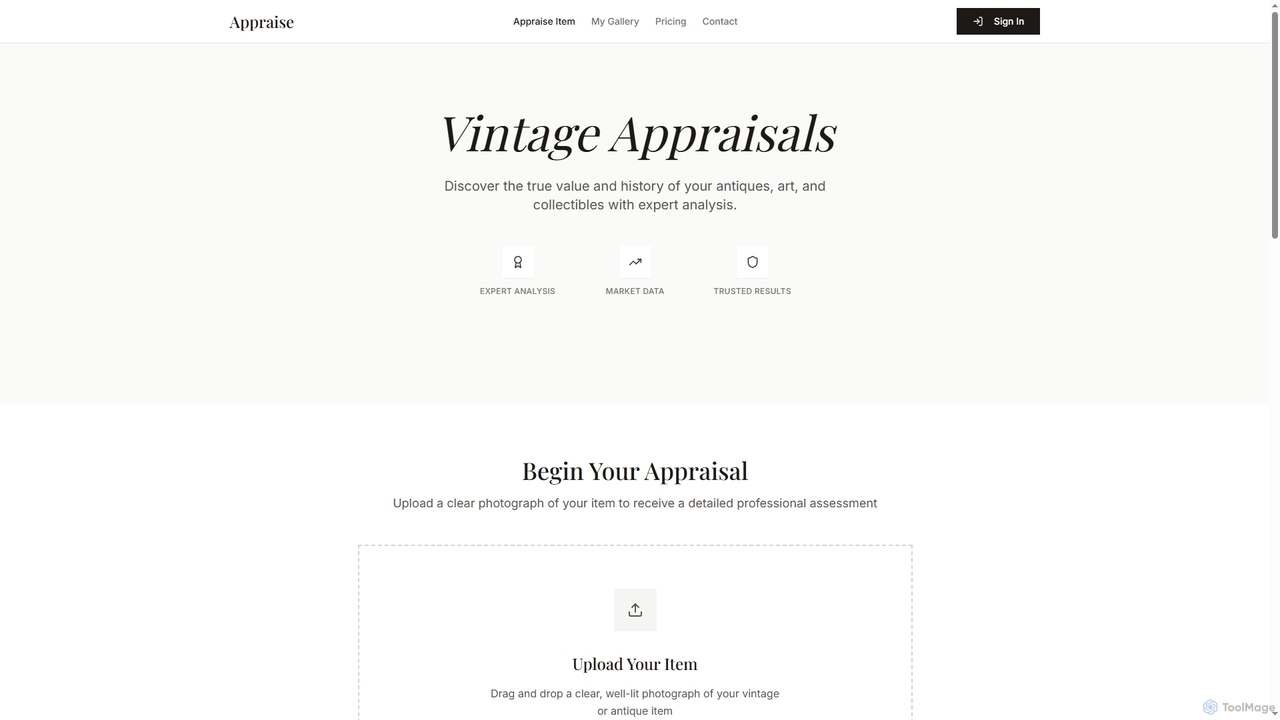
Appraisal tools are AI-powered solutions designed to evaluate, analyze, and assess various aspects of artistic and design works. Leveraging advanced computer vision, machine learning, and aesthetic algorithms, these tools provide objective insights into authenticity, market value, quality, and style. They empower artists, collectors, and businesses to make informed decisions, streamline verification processes, and protect intellectual property within the dynamic realm of art and design.
Core Features
- Authenticity Verification: Analyzes visual patterns, brushstrokes, and material composition to detect forgeries or confirm originality.
- Market Value Estimation: Predicts potential market prices by comparing works against vast databases of historical sales, artist reputation, and current trends.
- Quality & Style Analysis: Assesses aesthetic attributes, technical execution, and stylistic coherence, offering objective feedback on design elements.
- Intellectual Property Monitoring: Scans for unauthorized use or replication of original designs and artworks across digital platforms.
Applicable Scenarios
Art galleries and auction houses use these tools for pre-acquisition due diligence and cataloging. Individual artists and designers leverage them to understand market positioning and protect their creations. Insurance companies utilize AI appraisal for accurate valuation of art collections, while e-commerce platforms employ them for quality control of user-submitted designs.
How to Choose
When selecting an AI appraisal tool, consider its accuracy in specific art forms or design types, the breadth and recency of its underlying data sets, and its integration capabilities with existing workflows. Evaluate the transparency of its valuation models and the level of detail provided in its analysis reports, ensuring it meets your specific needs for objectivity and reliability.