ToolMage
Sign in

Best 1 Vehicle Analytics AI tools for Automotive

Popular Vehicle Analytics AI tools in Automotive include AutoPredict, helping you work more efficiently.

AutoPredict
Freemium

AutoPredict

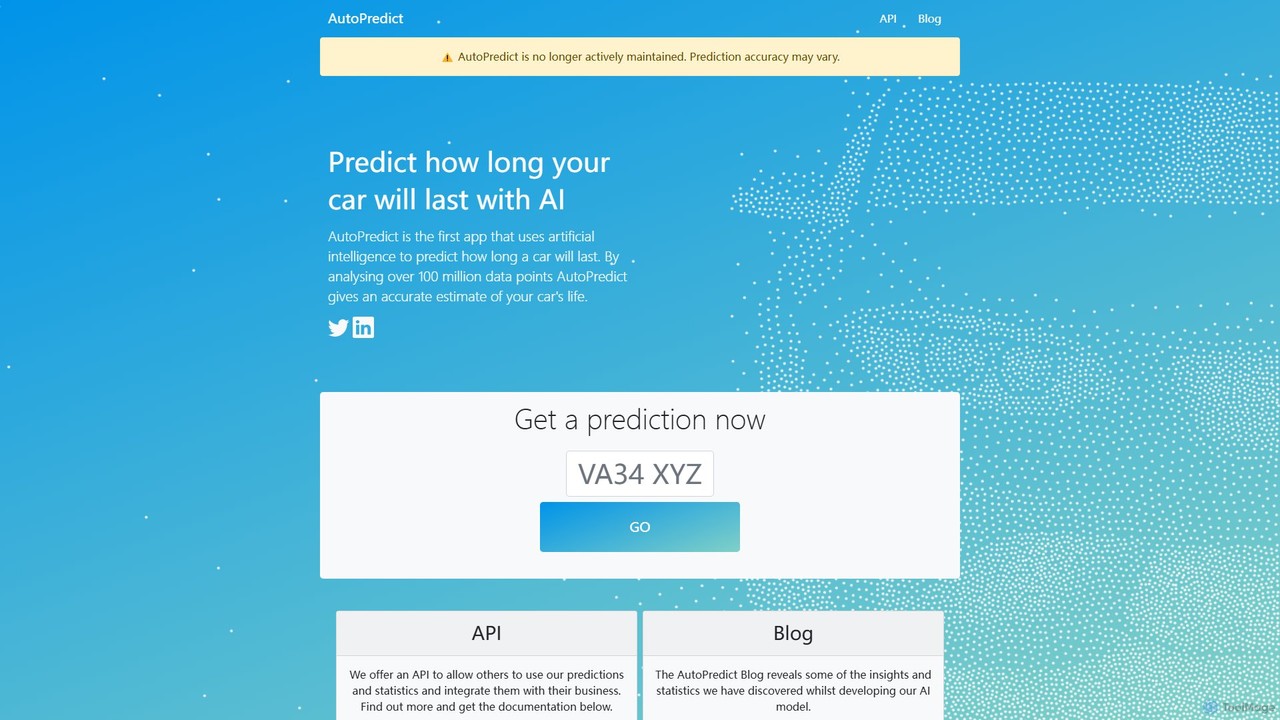
AutoPredict is an AI-powered tool that predicts a car's lifespan by analyzing over 100 million data points from MOT histories. It provides data-driven estimates for car buyers and owners. Please note, the service is no longer actively maintained, and prediction accuracy may vary. An API is available for business integration.

Vehicle Analytics
Visits 7.7KFavorites 112Likes 121

About Vehicle Analytics

Vehicle Analytics are AI-powered tools designed to collect, process, and interpret data generated by vehicles. Leveraging advanced telematics, sensor data, and machine learning algorithms, these tools provide deep insights into vehicle performance, operational efficiency, and driver behavior. They are crucial for optimizing fleet operations, enhancing safety, and enabling data-driven decision-making across the automotive and transportation sectors.

Core Features

  • Real-time Vehicle Tracking: Monitor vehicle location, speed, and status in real-time for improved logistics and security.
  • Driver Behavior Analysis: Evaluate driving patterns such as acceleration, braking, cornering, and speeding to identify risks and promote safer driving.
  • Predictive Maintenance: Analyze diagnostic trouble codes (DTCs) and sensor data to anticipate potential mechanical failures before they occur.
  • Fuel Efficiency Optimization: Track fuel consumption and identify inefficiencies to reduce operational costs and environmental impact.
  • Route Optimization: Suggest the most efficient routes based on traffic, road conditions, and delivery schedules.

Use Cases

Vehicle Analytics tools are indispensable for fleet management companies seeking to reduce operational costs and improve service delivery. Automotive manufacturers utilize them for R&D and post-sales performance monitoring. Insurance providers leverage these insights for usage-based insurance models and risk assessment.

How to Choose

When selecting a Vehicle Analytics solution, consider its data acquisition capabilities (e.g., OBD-II, CAN bus, OEM APIs), the depth of its analytical insights (real-time vs. predictive), integration with existing fleet management or ERP systems, and the clarity and customizability of its reporting dashboards.

Vehicle Analytics use cases

1

Optimizing Fleet Logistics and Route Planning

Fleet managers utilize Vehicle Analytics to gain real-time visibility into their entire fleet. By analyzing GPS data, traffic conditions, and delivery schedules, they can dynamically optimize routes, minimize idle time, and ensure timely deliveries. This leads to significant reductions in fuel consumption and operational costs, while improving overall service efficiency and customer satisfaction.

2

Implementing Predictive Maintenance for Commercial Vehicles

Logistics and transportation companies leverage Vehicle Analytics to move from reactive to proactive maintenance strategies. Tools monitor engine diagnostics, tire pressure, fluid levels, and other sensor data, using AI to predict potential component failures. This allows for scheduled maintenance before breakdowns occur, minimizing costly downtime, extending vehicle lifespan, and ensuring fleet reliability.

3

Enhancing Driver Safety and Training Programs

Companies with large vehicle fleets, such as ride-sharing services or delivery companies, use Vehicle Analytics to monitor and analyze driver behavior. Data on speeding, harsh braking, rapid acceleration, and sharp cornering helps identify high-risk drivers. This information can then be used to provide targeted coaching, implement incentive programs for safe driving, and ultimately reduce accident rates and insurance premiums.

4

Developing Usage-Based Insurance (UBI) Models

Insurance providers employ Vehicle Analytics to collect granular data on individual driving habits, including mileage, speed, time of day, and geographic location. This data enables them to create highly personalized insurance premiums that accurately reflect a driver's actual risk profile. UBI models incentivize safer driving and offer fairer pricing, benefiting both insurers and policyholders.

5

Monitoring Electric Vehicle (EV) Battery Health and Performance

Operators of electric vehicle fleets, including public transport or corporate shuttles, use specialized Vehicle Analytics to track critical EV metrics. This includes battery state of charge, degradation over time, charging cycles, and energy consumption patterns. Such insights are vital for optimizing charging infrastructure, maximizing battery lifespan, and ensuring the operational readiness of the EV fleet.

6

Analyzing Vehicle Performance for Automotive R&D

Automotive manufacturers and engineering teams integrate Vehicle Analytics into their research and development processes. During vehicle testing, these tools collect vast amounts of performance data, including engine output, suspension dynamics, braking efficiency, and emissions. This detailed analysis helps engineers identify design flaws, validate new technologies, and refine vehicle performance before market launch.

Vehicle Analytics FAQ

What are Vehicle Analytics?

Vehicle Analytics are AI-driven solutions that collect, process, and interpret data from vehicles to provide actionable insights. They typically leverage telematics, sensor data, and machine learning to understand vehicle performance, driver behavior, and operational efficiency. Common applications include fleet management, predictive maintenance, and usage-based insurance.

How do Vehicle Analytics tools collect data?

Vehicle Analytics tools collect data through various methods. The most common include On-Board Diagnostics (OBD-II) ports, which provide engine and performance data; CAN bus (Controller Area Network) interfaces for deeper vehicle system insights; and specialized telematics devices equipped with GPS, accelerometers, and gyroscopes. Some advanced systems also integrate with OEM APIs for direct data access.

What are the main benefits of using Vehicle Analytics?

The primary benefits of Vehicle Analytics include significant cost reductions through optimized fuel consumption and predictive maintenance, leading to less downtime. They also enhance safety by monitoring and improving driver behavior, reduce environmental impact, and provide valuable data for strategic decision-making in logistics, product development, and insurance risk assessment. Overall, they boost operational efficiency and profitability.

How does Vehicle Analytics differ from basic GPS tracking?

While basic GPS tracking primarily provides real-time location and route history, Vehicle Analytics offers a much deeper and broader scope. Vehicle Analytics goes beyond location to analyze engine diagnostics, fuel consumption, driver behavior (e.g., harsh braking, speeding), and vehicle health. It uses this rich data to provide predictive insights, optimize operations, and inform strategic decisions, whereas GPS tracking is mainly for positional awareness.

What should I consider when choosing a Vehicle Analytics solution?

When selecting a Vehicle Analytics solution, consider its compatibility with your vehicle types and data sources (e.g., OBD-II, CAN bus). Evaluate the depth of its analytical capabilities, such as real-time monitoring, historical reporting, and predictive modeling. Look for robust integration options with your existing fleet management or ERP systems, user-friendly dashboards, and scalable pricing models that fit your operational needs and budget.