ToolMage
Sign in

Best 1 Web3 Development AI tools for Blockchain

Popular Web3 Development AI tools in Blockchain include Third, helping you work more efficiently.

Third
Free

Third

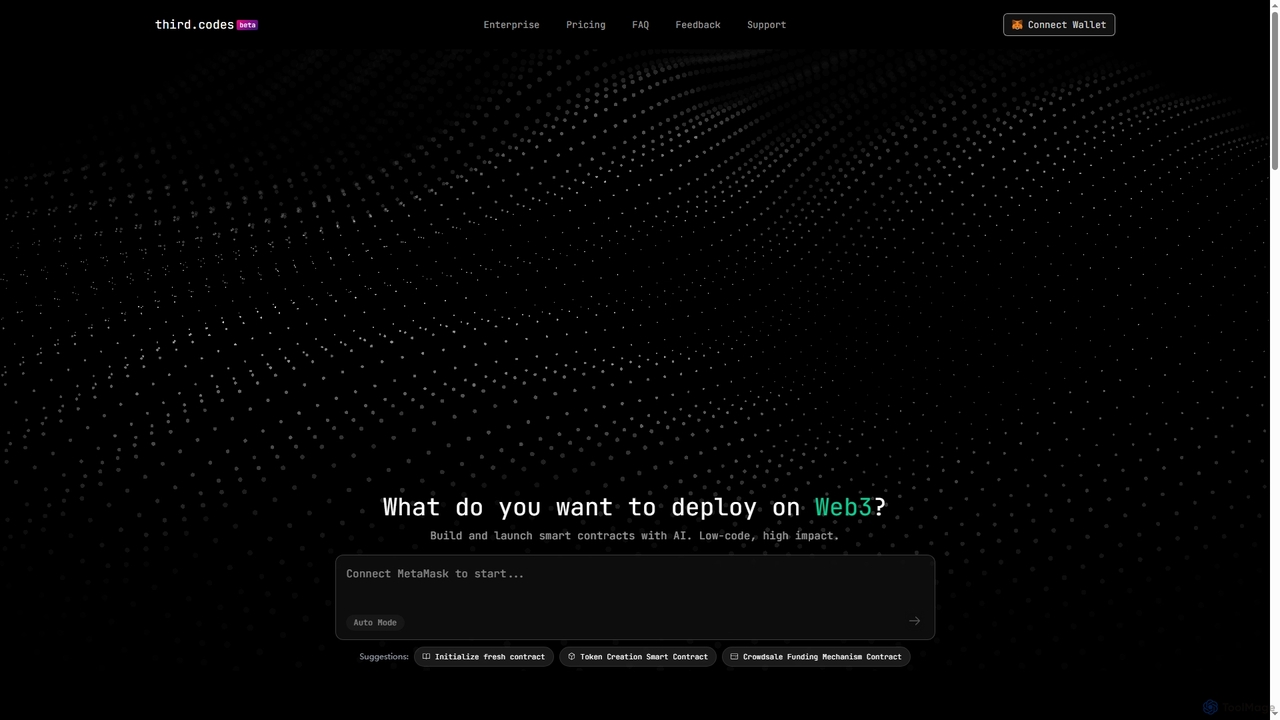
Third is an AI-powered platform for instantly generating, debugging, and deploying Solidity smart contracts across all EVM-compatible blockchains. It simplifies Web3 development, allowing users to create complex contracts like ERC20 tokens, NFTs, DAOs, and DEXs from simple prompts, with one-click deployment.

Web3 Development
Visits 6.4KFavorites 175Likes 156

About Web3 Development

Web3 Development tools are a category of specialized software and frameworks designed to build, deploy, and manage decentralized applications (dApps) and other blockchain-based solutions. These tools leverage blockchain technology to enable secure, transparent, and immutable interactions, moving beyond traditional centralized web architectures. They empower developers to create smart contracts, integrate with various blockchain protocols, and build the foundational infrastructure for decentralized finance (DeFi), non-fungible tokens (NFTs), and metaverse projects.

Core Features

  • Smart Contract IDEs & Frameworks: Environments for writing, testing, and deploying self-executing contracts on blockchains.
  • Blockchain Node & API Access: Tools for interacting with blockchain networks, querying data, and submitting transactions.
  • Wallet Integration SDKs: Libraries to connect dApps with popular cryptocurrency wallets for user authentication and transaction signing.
  • Decentralized Storage Solutions: Integration with IPFS or Arweave for storing application data in a decentralized manner.
  • Tokenization & NFT Standards: Tools and libraries for creating and managing fungible (ERC-20) and non-fungible (ERC-721, ERC-1155) tokens.

Applicable Scenarios

Web3 Development tools are essential for blockchain engineers, dApp developers, and project teams building decentralized ecosystems. They are used in creating DeFi lending platforms, developing NFT marketplaces for digital art and collectibles, and building play-to-earn blockchain games. These tools also facilitate the development of decentralized autonomous organizations (DAOs) and supply chain traceability solutions.

How to Choose

When selecting Web3 Development tools, consider the target blockchain compatibility (e.g., Ethereum, Solana, Polygon), the ease of use of SDKs and APIs, and the robustness of security features for smart contract auditing. Evaluate community support, documentation quality, and the scalability options offered by the tools to ensure they meet your project's long-term needs and technical requirements.

Web3 Development use cases

1

Deploying Secure Smart Contracts for DeFi Protocols

Blockchain developers utilize specialized IDEs and testing frameworks to write, audit, and deploy robust smart contracts for decentralized finance applications, ensuring secure and transparent execution of financial transactions like lending, borrowing, and yield farming. This minimizes vulnerabilities and builds user trust in the protocol.

2

Building a Decentralized Social Media Platform

dApp developers integrate blockchain for user identity management, content ownership, and tokenized reward systems. Web3 development tools enable the creation of immutable content records, censorship resistance, and direct user monetization, fostering a community-driven and transparent social environment.

3

Creating an NFT Marketplace for Digital Collectibles

Developers leverage Web3 SDKs and smart contract templates to build platforms where users can mint, list, and trade non-fungible tokens. These tools handle the complexities of token standards (ERC-721/1155), wallet integration, and secure transaction processing, enabling artists and collectors to engage in a decentralized digital economy.

4

Developing Play-to-Earn Blockchain Games

Game developers use Web3 development kits to integrate in-game assets as NFTs and establish token economies. This allows players to truly own their digital items, trade them on secondary markets, and earn cryptocurrency rewards through gameplay, creating new economic models within the gaming industry.

5

Implementing Decentralized Identity (DID) Solutions

Enterprises and developers employ Web3 protocols and tools to build self-sovereign identity systems. This enables individuals to control their personal data, issue verifiable credentials, and securely authenticate across various dApps without relying on centralized authorities, enhancing privacy and security.

6

Automating Supply Chain Traceability with Blockchain

Businesses utilize Web3 development frameworks to create transparent and immutable records of product journeys from origin to consumer. By integrating IoT data with blockchain, these tools ensure authenticity, reduce fraud, and provide consumers with verifiable information about product provenance and ethical sourcing.

Web3 Development FAQ

What are Web3 Development tools?

Web3 Development tools are software and frameworks specifically designed for building decentralized applications (dApps) and interacting with blockchain networks. They enable developers to write and deploy smart contracts, integrate cryptocurrency wallets, manage decentralized data storage, and create tokenized assets, forming the backbone of the decentralized internet.

How do Web3 Development tools differ from traditional web development tools?

Web3 Development tools fundamentally differ by focusing on decentralization, immutability, and trustless interactions. Unlike traditional tools that build on centralized servers and databases, Web3 tools interact directly with blockchain networks, utilize smart contracts for logic, and prioritize user ownership of data and assets through cryptography and tokenomics. This shift requires specialized SDKs, APIs, and development environments.

What are the key components of a Web3 development stack?

A typical Web3 development stack includes several key components: smart contract languages (e.g., Solidity, Rust) and development environments (IDEs), blockchain nodes or node providers (e.g., Infura, Alchemy) for network interaction, front-end frameworks (e.g., React, Vue) integrated with Web3 libraries (e.g., Web3.js, Ethers.js), and often decentralized storage solutions like IPFS for hosting dApp assets.

How to choose the right Web3 Development tools?

When selecting Web3 Development tools, consider several key factors. First, assess blockchain compatibility with your target network (e.g., Ethereum, Solana). Evaluate the ease of use of SDKs and APIs, and the quality of documentation. Prioritize tools with robust security features for smart contract auditing and strong community support. Finally, consider scalability options and the overall cost-effectiveness for your project's long-term needs.

What are the main challenges in Web3 development?

Web3 development faces several challenges, including blockchain scalability limitations, high transaction fees (gas costs) on some networks, and the complexity of ensuring smart contract security to prevent exploits. Additionally, user experience can be challenging due to wallet management and transaction confirmations, alongside evolving regulatory landscapes and the need for robust developer tooling and education.

Who uses Web3 Development tools?

Web3 Development tools are primarily used by blockchain developers, dApp engineers, smart contract auditors, and project teams building decentralized solutions. This includes individuals and organizations that create DeFi protocols, NFT marketplaces, blockchain games, decentralized autonomous organizations (DAOs), and other applications that leverage the unique properties of blockchain technology.