Khorus
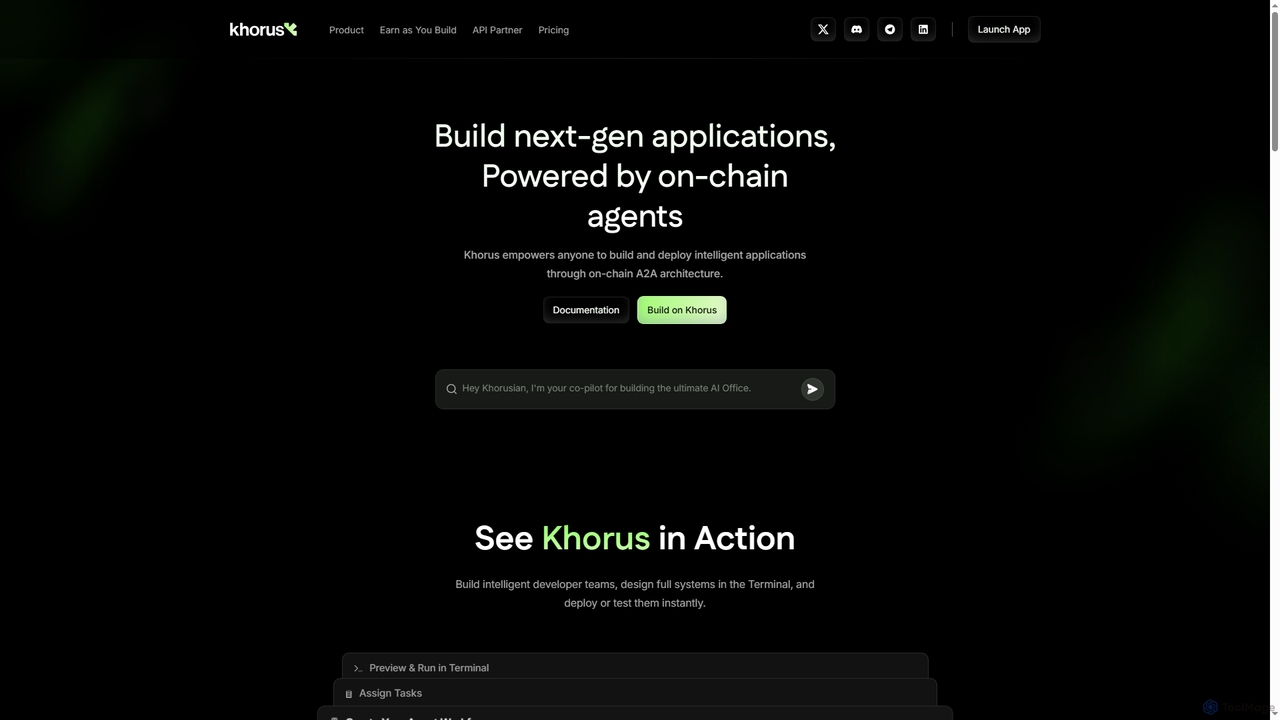
Khorus is a universal communication layer for intelligent systems, empowering developers to build and deploy next-gen AI applications …
Khorus is a universal communication layer for intelligent systems, empowering developers to build and deploy next-gen AI applications through an on-chain Agent-to-Agent (A2A) architecture. It facilitates real-time collaboration, task delegation, and autonomous execution among AI agents and robotics, fostering a decentralized agent economy and marketplace for scalable modules and workflows.
Openfabric
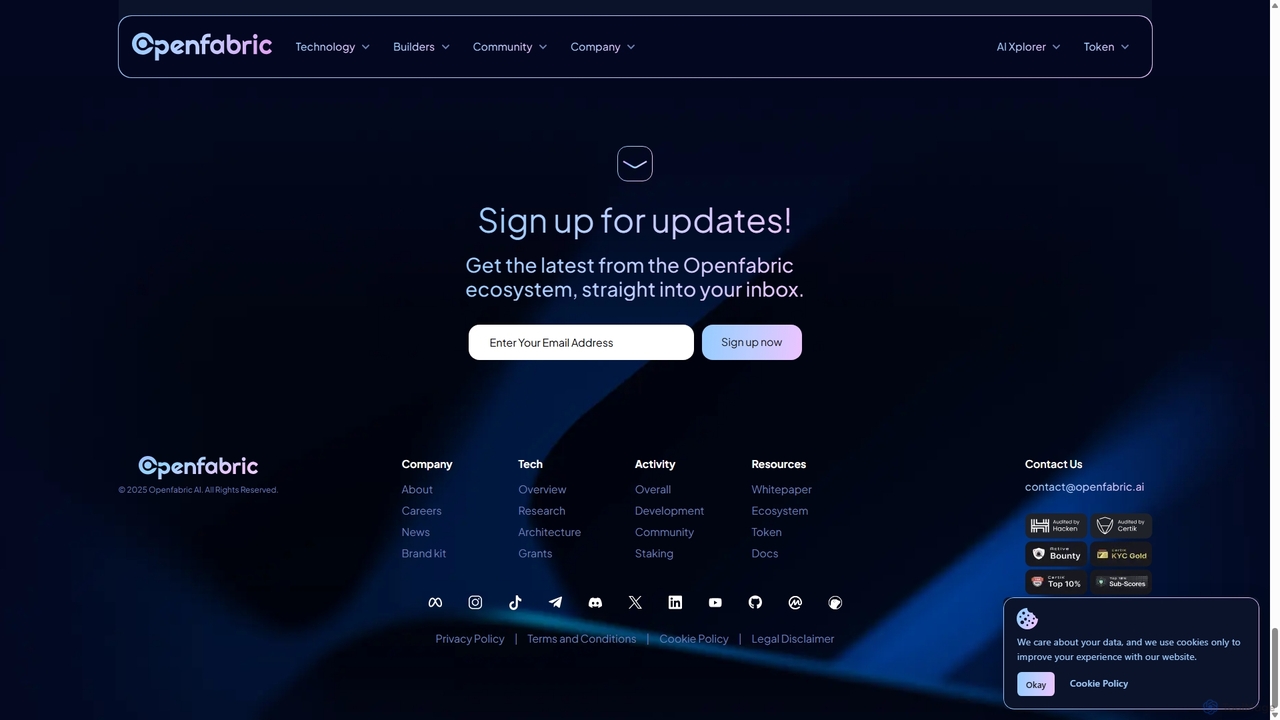
Openfabric is a decentralized Layer-1 blockchain protocol designed for building, connecting, and monetizing AI applications. It creates a …
Openfabric is a decentralized Layer-1 blockchain protocol designed for building, connecting, and monetizing AI applications. It creates a planetary-scale network that unites AI innovators, data providers, infrastructure providers, and users in a collaborative and fair marketplace, aiming to make AI accessible to everyone.
senexic
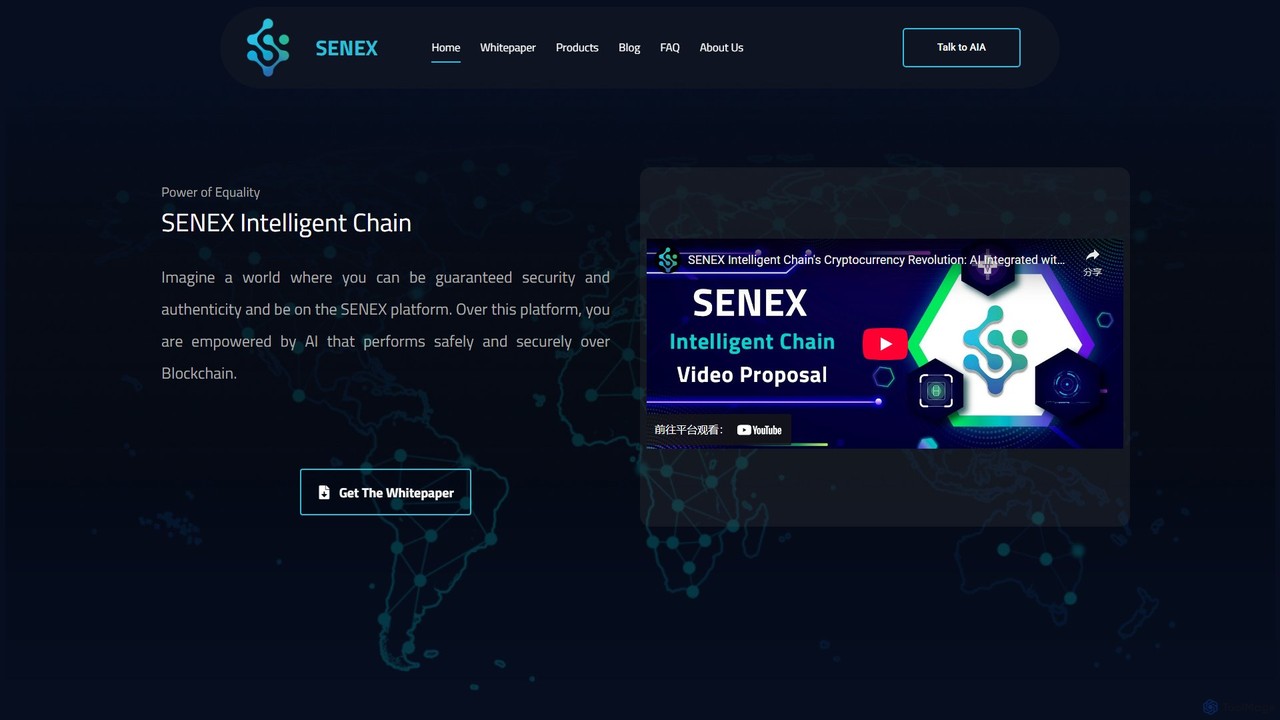
senexic is a pioneering platform that merges Artificial Intelligence with Blockchain technology to create the 'Intelligent Chain.' It …
senexic is a pioneering platform that merges Artificial Intelligence with Blockchain technology to create the 'Intelligent Chain.' It offers a decentralized, secure, and private environment for data processing and AI applications. By leveraging a distributed network, senexic ensures data ownership and anonymity, powering solutions from personal assistants to complex financial and medical analysis.
THINK
THINK is a decentralized protocol for a new, agent-powered internet. It enables developers and creators to build, connect, …
THINK is a decentralized protocol for a new, agent-powered internet. It enables developers and creators to build, connect, and deploy interoperable AI agents that are fully owned by users. By leveraging blockchain and open-source technology, THINK aims to create a composable, permissionless ecosystem where intelligence is portable and data sovereignty is paramount.
About Decentralized Ai
Decentralized AI is a class of artificial intelligence systems that operate on distributed networks, often leveraging blockchain or distributed ledger technologies. These systems aim to overcome the limitations of centralized AI by distributing data, computation, and control across multiple nodes. This approach enhances data privacy, censorship resistance, and transparency, allowing for more secure and auditable AI models and applications.
Core Features
- Distributed Training: AI models are trained across a network of independent nodes, preserving data locality and privacy.
- Data Ownership & Privacy: Users retain control over their data, which is processed locally or in encrypted forms on the decentralized network.
- Censorship Resistance: No single entity can unilaterally shut down or alter the AI system, ensuring continuous operation and neutrality.
- Transparent & Auditable Algorithms: AI models and their decision-making processes can be made open-source and verifiable on a public ledger.
- Tokenized Incentives: Participants in the network (e.g., data providers, compute providers) are often rewarded with tokens for their contributions.
Use Cases
Decentralized AI finds application in scenarios requiring high data privacy and trust, such as secure healthcare data analysis, verifiable supply chain optimization, and peer-to-peer AI marketplaces. It enables collaborative AI development without centralizing sensitive information, fostering innovation in privacy-preserving machine learning.
How to Choose
When selecting a Decentralized AI solution, consider the level of decentralization, the network's scalability and transaction costs, the robustness of its privacy-preserving mechanisms, and the strength of its community and developer ecosystem. Evaluate the specific use case requirements against the platform's technical architecture and incentive model.
Decentralized AiUse Cases
Secure Federated Learning for Healthcare Data
Healthcare providers can train AI models on patient data distributed across various hospitals without centralizing sensitive information. Decentralized AI platforms enable federated learning, where models are trained locally and only aggregated insights are shared, ensuring patient privacy and compliance with regulations like GDPR.
Censorship-Resistant Content Moderation
Social media platforms or content publishers can implement decentralized AI for content moderation, distributing the decision-making process across a network of independent validators. This prevents a single entity from having absolute control over content filtering, promoting fairness and reducing bias while resisting external censorship attempts.
Verifiable AI for Supply Chain Audits
Companies can use decentralized AI to analyze and verify data across complex supply chains, from raw material sourcing to final product delivery. AI models operating on a blockchain can provide transparent and immutable records of product origins, quality checks, and ethical compliance, enhancing trust and accountability for consumers and regulators.
Peer-to-Peer AI Model Marketplaces
AI developers can offer their trained models as services on decentralized marketplaces, allowing users to access and pay for specific AI functionalities (e.g., image recognition, natural language processing) directly. This eliminates intermediaries, provides fair compensation to creators, and ensures transparent usage tracking via smart contracts.
Decentralized Autonomous Organizations (DAOs) with AI Governance
DAOs can integrate decentralized AI to automate complex governance decisions, manage treasury funds, or optimize resource allocation based on collective intelligence. The AI's logic and decision-making processes are transparent and auditable on the blockchain, ensuring that automated actions align with the DAO's community-driven objectives.
Privacy-Preserving Personal AI Assistants
Individuals can deploy personal AI assistants that operate on their local devices or private decentralized networks, ensuring that personal data used for training and inference remains under their sole control. This empowers users with highly personalized AI services without compromising privacy or relying on centralized cloud providers.