Business Best in category 2 results Agent Management AI Tool

Popular AI tools in the Agent Management field of Business include Wand、Cubeo AI, etc., helping you quickly improve efficiency.

Wand

Wand

Wand is an enterprise-grade operating system for creating and managing a hybrid workforce of humans and AI agents. …

30.4K
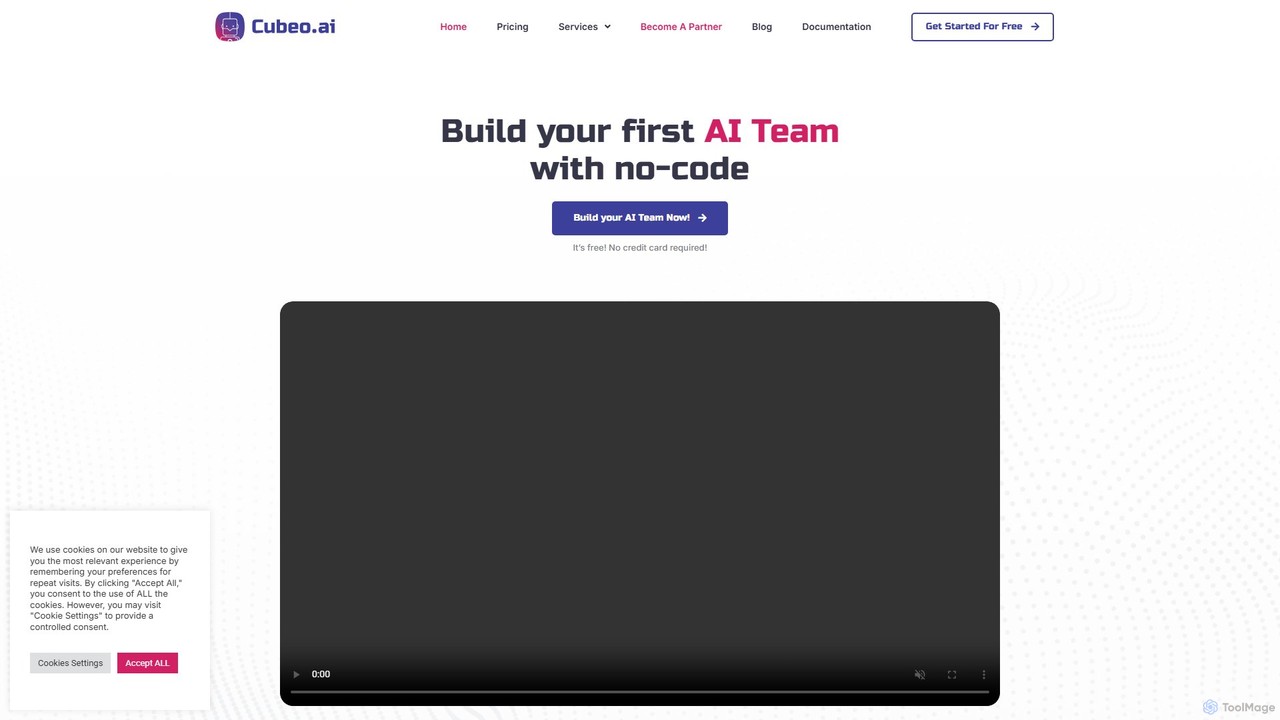
Cubeo AI

Cubeo AI

Cubeo AI is an innovative platform that enables users to build, manage, and deploy a 'Dream Team' of …

16.3K

About Agent Management

Agent Management tools are platforms for creating, deploying, and orchestrating multiple autonomous AI agents to execute complex tasks. These systems provide a framework for agents to collaborate, access tools, and process information to achieve a common goal. They are essential for automating multi-step business processes that require reasoning, planning, and interaction with various data sources and APIs. This approach moves beyond single-task automation to create sophisticated, self-managed workflows.

Core Features

  • Agent Orchestration: Define and manage workflows where multiple agents collaborate, delegate tasks, and share information to solve complex problems.
  • Tool & API Integration: Equip agents with the ability to connect to and utilize external tools, databases, and APIs to perform real-world actions.
  • Performance Monitoring: Track agent activity, task success rates, resource consumption (e.g., token usage), and error logs through centralized dashboards.
  • Agent Creation & Configuration: Provide interfaces (often low-code or code-based) to define an agent's goals, capabilities, permissions, and knowledge base.
  • Security & Governance: Implement controls to manage agent permissions, data access, and operational boundaries to ensure safe and reliable execution.

Use Cases

Agent Management platforms are primarily used by businesses looking to automate complex operational workflows. For example, in e-commerce, a team of agents can manage the entire supply chain, from monitoring inventory and predicting demand to automatically placing orders with suppliers. In finance, agents can conduct continuous market analysis, process financial documents, and generate risk assessment reports. They are ideal for roles in operations, data analysis, and software development.

How to Choose

When selecting an Agent Management tool, first evaluate its orchestration capabilities—does it support complex, multi-agent workflows or just simple sequences? Assess its integration library and the ease of adding custom tools. Consider the platform's scalability for running numerous agents concurrently and its monitoring features for debugging and optimization. Finally, compare the pricing models (e.g., per-agent, per-task, or subscription-based) and the level of technical expertise required to build and maintain the agents.


Agent ManagementUse Cases

1

Automate Market Research and Reporting

A marketing team uses an Agent Management platform to automate competitive analysis. They deploy a team of agents: Agent 1 (Researcher) is tasked with scraping competitor websites and social media for new product launches and announcements. Agent 2 (Analyst) processes this raw data, identifies key trends, and measures sentiment. Agent 3 (Writer) then synthesizes the findings from the Analyst into a structured weekly report, complete with charts and summaries. This multi-agent workflow transforms a manual, time-consuming process into a continuous, automated intelligence stream, freeing up the team to focus on strategy.

2

Streamline Software Quality Assurance Testing

A software development team integrates an Agent Management platform into their CI/CD pipeline. They create a specialized agent team for quality assurance. The 'Test Planner' agent analyzes new code commits to generate relevant test cases. The 'UI Tester' agent then uses a browser automation tool to execute these tests, simulating user interactions and identifying bugs. If a bug is found, the 'Bug Reporter' agent automatically captures screenshots, collects console logs, and creates a detailed ticket in their project management system (e.g., Jira), assigning it to the responsible developer. This automates the entire regression testing cycle, leading to faster bug detection and higher quality releases.

3

Automate E-commerce Supply Chain Operations

An e-commerce company deploys an agent workforce to manage its supply chain. An 'Inventory Monitor' agent constantly checks stock levels across all warehouses and sales channels. When a product's stock falls below a predefined threshold, it triggers a 'Demand Forecaster' agent, which analyzes historical sales data and current market trends to predict the optimal reorder quantity. This information is passed to a 'Procurement' agent, which identifies the best supplier based on price and delivery time, and automatically generates and sends a purchase order. This system ensures optimal inventory levels, prevents stockouts, and reduces manual workload for the operations team.

4

Proactive Customer Support and Issue Triage

A customer support department uses an agent team to manage incoming support tickets. An 'Ingestion' agent monitors all channels (email, chat, web forms) and centralizes new tickets. A 'Triage' agent then reads each ticket, uses natural language understanding to determine its urgency and category (e.g., billing, technical issue), and queries the CRM for customer history. It then routes the enriched ticket to the appropriate specialized agent. For common issues, a 'Resolution' agent can provide an automated answer. For complex ones, it assigns the ticket to the best-suited human support representative, providing them with a full summary. This significantly reduces response times and manual sorting effort.

5

Automate Personalized Sales Outreach

A sales team configures a multi-agent system for lead generation and outreach. The 'Prospector' agent scans professional networks like LinkedIn and company databases based on an Ideal Customer Profile (ICP). Once a potential lead is identified, it passes the information to the 'Researcher' agent, which gathers public information about the lead's company and recent activities. Finally, the 'Copywriter' agent uses this context to draft a highly personalized outreach email. The draft is sent to a sales representative for a final review and approval before sending. This workflow allows the sales team to scale personalized outreach far beyond manual capacity.

6

Conduct Complex Financial Data Analysis

A financial analysis firm uses an agent team to process and analyze quarterly earnings reports. The 'Document Fetcher' agent monitors SEC filings and downloads new 10-Q reports as they are released. The 'Data Extractor' agent then parses these unstructured PDF documents to pull out key financial metrics like revenue, net income, and cash flow. A third agent, the 'Analyst', compares these figures against historical data and analyst predictions, flagging significant deviations. Finally, a 'Summarizer' agent compiles all findings into a concise brief for human analysts, highlighting key risks and opportunities. This automates the laborious data collection and initial analysis, enabling analysts to focus on higher-level insights.

Agent ManagementFrequently Asked Questions