ToolMage
Sign in

Best 2 Agile Development AI tools for Business

Popular Agile Development AI tools in Business include ScrumDesk and MYPOP, helping you work more efficiently.

MYPOP
Freemium

MYPOP

MYPOP is an AI Agent and Agile Coach for product teams. It integrates with tools like Jira, Slack, and Zoom to analyze meetings and documents, providing real-time insights, automated summaries, and actionable recommendations. It helps teams learn from past projects to mitigate future risks, reduce delays, and improve overall project quality and efficiency.

Agile Development
Visits 5.6KFavorites 133Likes 138
ScrumDesk
Freemium

ScrumDesk

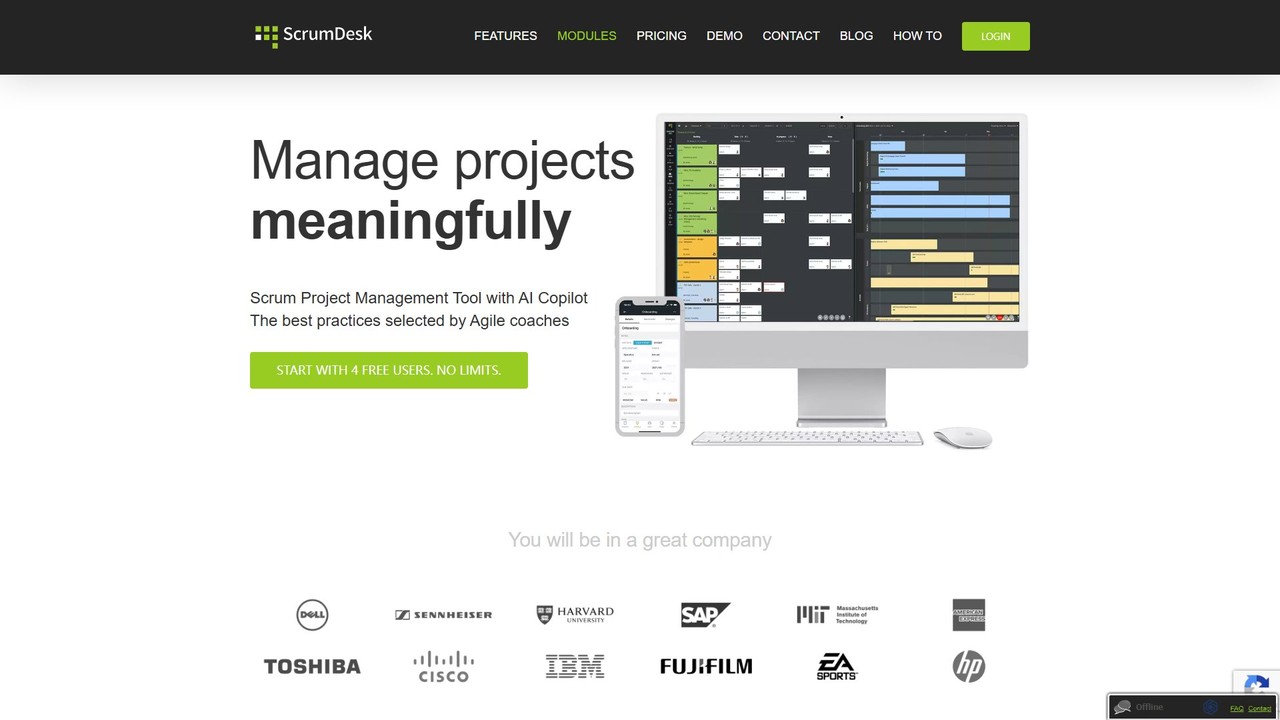
ScrumDesk is a comprehensive project management tool for Agile teams, integrating OKRs, backlogs, roadmaps, and Scrum/Kanban boards. It facilitates continuous improvement with advanced retrospective and root cause analysis features, and enhances collaboration through deep Slack integration. Ideal for Product Owners, Scrum Masters, and development teams.

Agile Development
Visits 11.5KFavorites 135Likes 126

About Agile Development

Agile Development AI tools are specialized software solutions that integrate artificial intelligence to enhance and automate various aspects of agile methodologies. These tools leverage AI algorithms to provide data-driven insights, streamline workflows, and improve decision-making throughout the iterative development lifecycle. By analyzing historical data and real-time project metrics, they aim to boost team efficiency, increase project predictability, and foster greater adaptability in response to changing requirements. This makes agile practices more robust, intelligent, and responsive to dynamic business environments.

Core Features

  • AI-driven Task Estimation: Automatically estimates task complexity and duration based on historical data and team performance.
  • Intelligent Backlog Prioritization: Uses machine learning to suggest optimal backlog item order, considering dependencies, business value, and effort.
  • Sentiment Analysis for Feedback: Analyzes team communication and feedback to identify potential issues, morale shifts, or areas for improvement.
  • Automated Sprint Reporting: Generates comprehensive sprint summaries, progress reports, and burndown charts with AI-powered insights.
  • Predictive Risk Identification: Identifies potential roadblocks, delays, or resource conflicts before they impact sprint goals.

Applicable Scenarios

These tools are invaluable for software development teams, product managers, Scrum Masters, and project managers across various industries adopting agile frameworks. They are used in daily stand-ups, sprint planning, backlog refinement, and retrospective meetings to gain deeper insights and automate routine tasks. Companies seeking to optimize their iterative development cycles and improve team collaboration benefit significantly from AI-enhanced agile practices.

How to Choose

When selecting Agile Development AI tools, consider their integration capabilities with your existing project management platforms (e.g., Jira, Asana). Evaluate the accuracy and explainability of their AI models, especially for estimation and prioritization features. Look for customization options to align with your specific agile framework and team workflows. Scalability, security features, and the quality of support are also crucial for long-term adoption and success.


Agile Development use cases

1

AI-Powered Sprint Task Estimation

A Scrum Master uses an Agile Development AI tool to accurately estimate the effort required for upcoming sprint tasks. By analyzing historical data from past sprints, team velocity, and task complexity, the AI provides data-driven estimates, helping the team commit to realistic workloads and improving sprint planning accuracy. This reduces over-commitment and ensures more predictable sprint outcomes.

2

Intelligent Backlog Prioritization

A Product Owner utilizes an AI-powered tool to prioritize product backlog items. The AI considers factors like business value, customer feedback, technical dependencies, and estimated effort to suggest an optimal order for development. This ensures that the most impactful features are developed first, maximizing value delivery and aligning with strategic goals.

3

Automated Sentiment Analysis of Team Feedback

During sprint retrospectives, a Project Manager employs an Agile AI tool to analyze anonymous team feedback and communication logs. The AI identifies recurring themes, detects shifts in team sentiment, and highlights potential issues or areas of concern that might not be explicitly stated. This provides objective insights, fostering a healthier team environment and continuous improvement.

4

Predictive Risk Identification in Sprints

A Development Team integrates an AI tool to monitor sprint progress and proactively identify potential risks. The AI analyzes task dependencies, resource availability, and historical patterns of delays to flag upcoming bottlenecks or scope creep. This allows the team to address issues early, mitigate risks, and maintain sprint velocity, preventing costly delays.

5

AI-Assisted Daily Stand-up Facilitation

A Scrum Team uses an Agile Development AI tool to streamline their daily stand-up meetings. The AI can quickly summarize individual progress, highlight blockers, and identify cross-team dependencies based on updated task statuses. This keeps meetings focused, ensures everyone is aware of critical updates, and helps resolve impediments more efficiently, saving valuable time.

6

Automated Generation of Sprint Review Summaries

After a sprint, a Product Manager uses an AI tool to automatically generate comprehensive summaries for stakeholders. The AI compiles key achievements, completed features, remaining backlog items, and relevant metrics from the sprint. This saves significant time in report preparation, ensures consistent communication, and provides clear insights into project progress and value delivered.

Agile Development FAQ

What are Agile Development AI tools?

Agile Development AI tools are software solutions that integrate artificial intelligence to enhance agile methodologies. They leverage AI to automate tasks like estimation and reporting, provide data-driven insights for prioritization, and analyze team dynamics. Their core purpose is to make agile processes more efficient, predictable, and adaptable, supporting teams in delivering value faster.

How do Agile Development AI tools differ from traditional project management software?

Traditional project management software primarily provides frameworks for task tracking, scheduling, and resource allocation. Agile Development AI tools go further by embedding intelligence: they use machine learning for predictive analytics (e.g., risk, estimation), automate complex decision-making (e.g., prioritization), and offer deeper insights into team sentiment or project health, moving beyond mere data organization to intelligent assistance.

What specific tasks can Agile Development AI tools automate?

These tools can automate various tasks, including: task estimation based on historical data, backlog prioritization by analyzing multiple factors, sprint report generation with key metrics, sentiment analysis of team feedback, and identification of potential risks or bottlenecks. This automation frees up team members to focus on more strategic and creative work.

How can AI tools enhance traditional agile practices?

AI tools enhance agile practices by providing data-driven objectivity and automation. They improve estimation accuracy, optimize backlog order, offer predictive insights into risks, and facilitate better communication through sentiment analysis. This leads to more realistic sprint planning, faster issue resolution, improved team morale, and ultimately, more successful and adaptable project delivery compared to manual processes.

How to choose the right Agile Development AI tool for your team?

When selecting an Agile Development AI tool, consider your team's specific agile framework (Scrum, Kanban, etc.) and existing tool stack for integration compatibility. Evaluate the AI's core functionalities like estimation accuracy, prioritization logic, and reporting capabilities. Look for strong data security, scalability, and user-friendly interfaces. A trial period can help assess its practical value and team adoption.