ToolMage
Sign in

Best 3 Ai Agent Builder AI tools for Business

Popular Ai Agent Builder AI tools in Business include You.com, MindStudio, and bahama, helping you work more efficiently.

MindStudio
Freemium

MindStudio

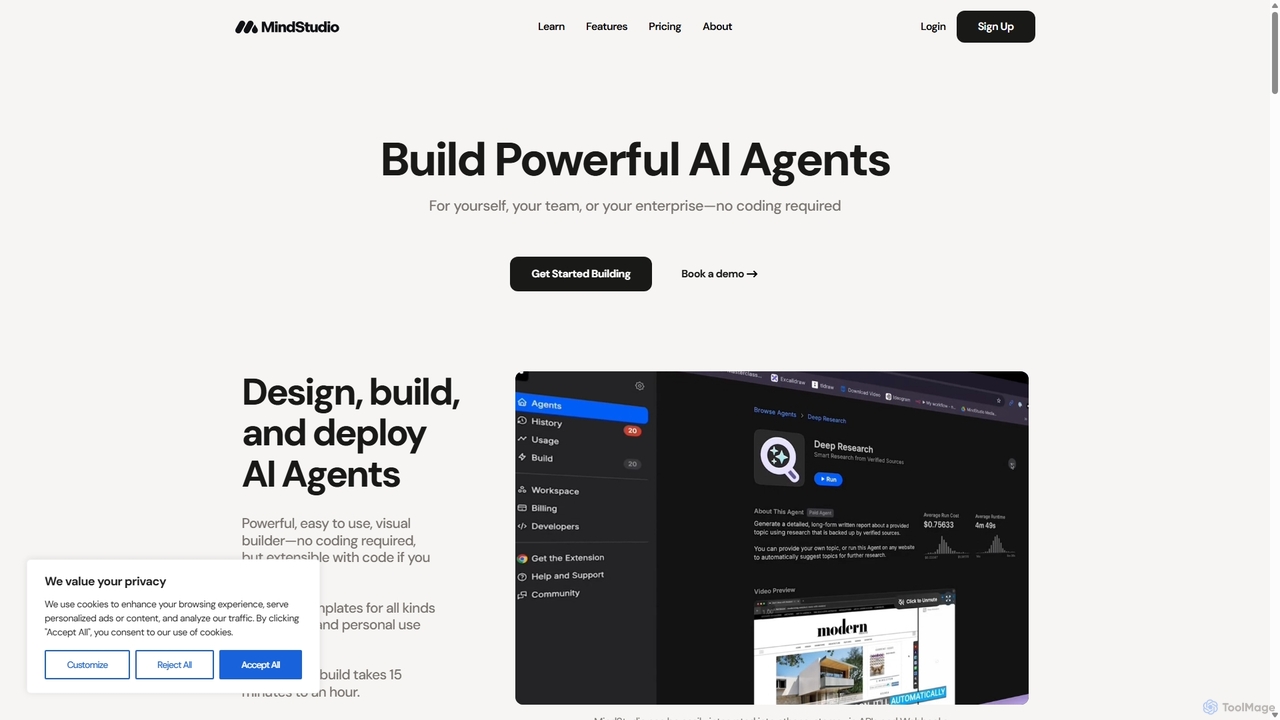
MindStudio is a no-code platform for designing, building, and deploying powerful AI agents. It offers a visual builder, over 100 templates, and seamless integration with 90+ LLMs and various data sources. Users can create AI-powered web apps, autonomous workflows, browser extensions, and more for personal, team, or enterprise use. It's designed for rapid development, robust automation, and scalable AI solutions without needing to write a single line of code, but is extensible with code if needed.

Ai Agent Builder
Visits 5.7KFavorites 144Likes 150
You.com
Freemium

You.com

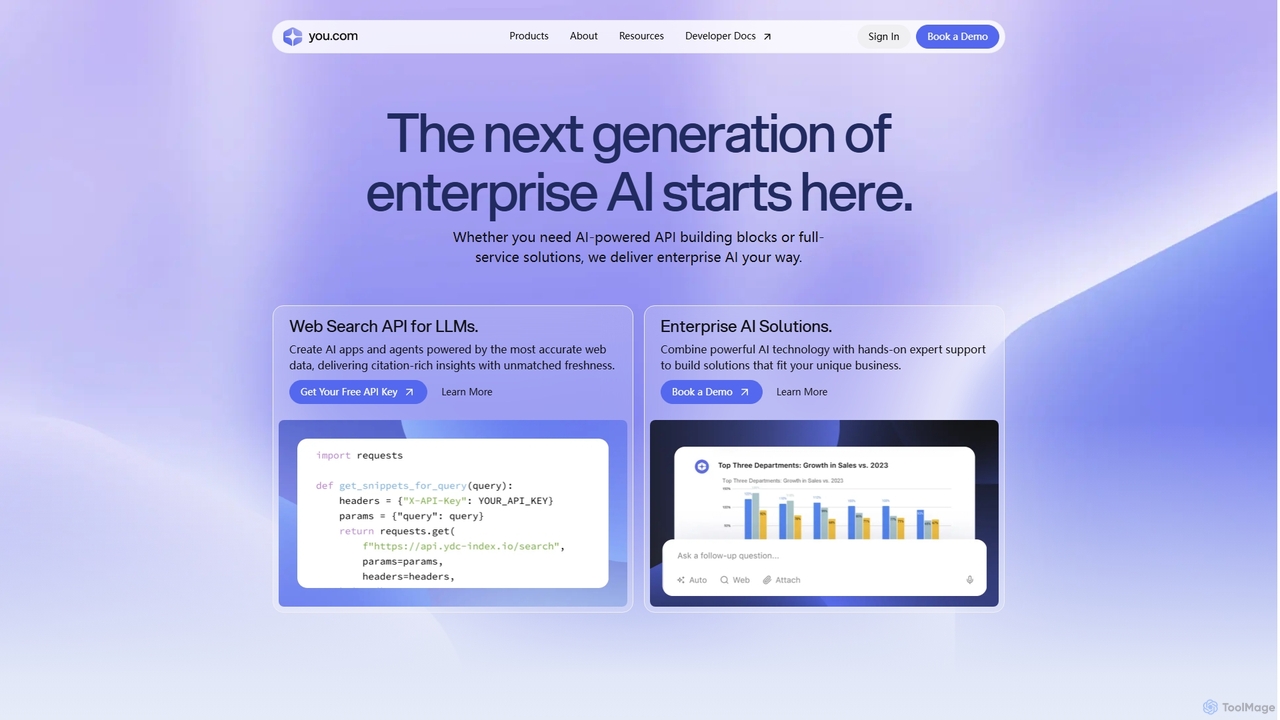
You.com is a full-stack enterprise AI platform designed to build secure, accurate, and customizable AI solutions. It offers a model-agnostic architecture, real-time web search APIs for LLMs, private data integration (RAG), and tools to create custom AI agents, empowering businesses to overcome the limitations of standard large language models and turn AI into tangible ROI.

Ai Agent Builder
Visits 1.3MFavorites 158Likes 153
bahama
Paid

bahama

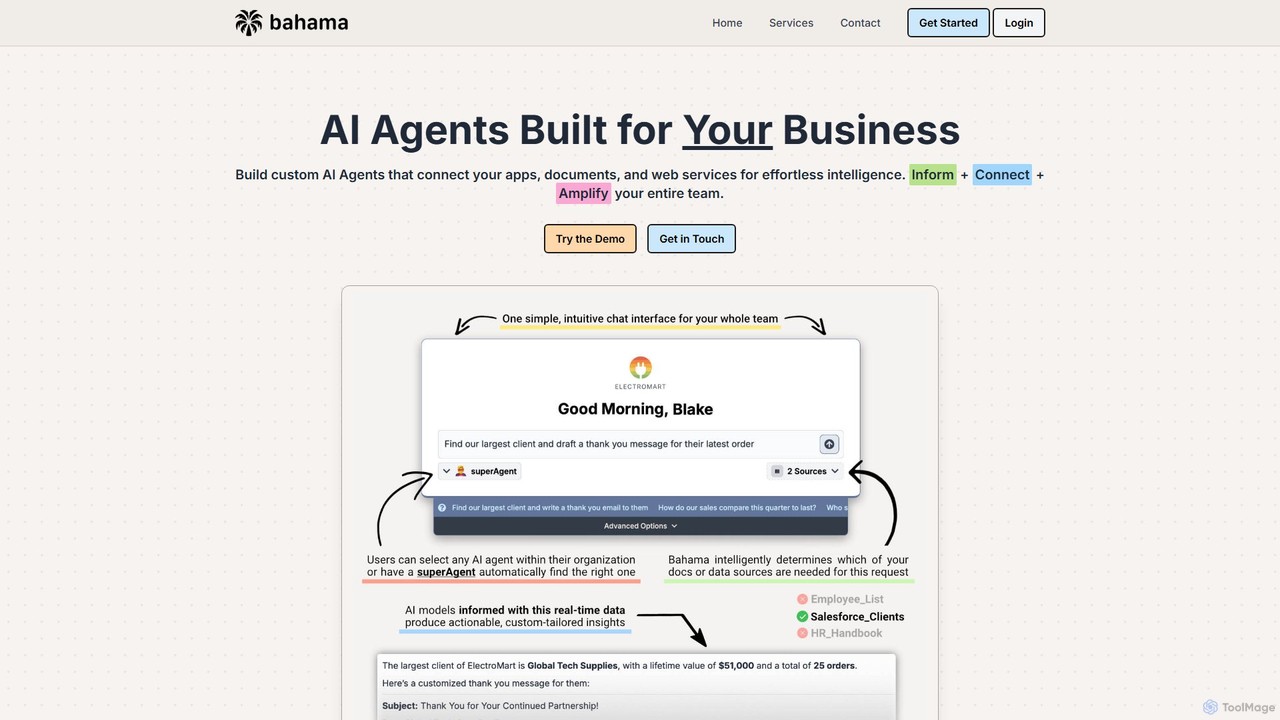
Bahama is a no-code platform for building custom AI agents for businesses. It connects to your existing apps, documents, and web services (like Salesforce and Zendesk) to create intelligent assistants. These agents help teams automate workflows, retrieve data instantly, and improve customer support through a simple chat interface, making AI adoption easy and secure.

Ai Agent Builder
Visits 5.4KFavorites 175Likes 173

About Ai Agent Builder

Ai Agent Builders are platforms that enable users to design, deploy, and manage autonomous AI agents capable of performing complex, multi-step tasks. These tools leverage advanced AI models and orchestration frameworks to empower agents to make decisions, interact with external systems, and adapt to dynamic environments. They are crucial for automating intricate business processes, enhancing operational efficiency, and creating intelligent, self-sufficient systems across various industries.

Core Features

  • Agent Design Interface: Intuitive visual or code-based interfaces for defining agent goals, behaviors, and workflows.
  • Tool Integration: Seamless connectivity with external APIs, databases, and third-party applications for agents to perform actions.
  • Task Orchestration: Capabilities to break down complex objectives into sub-tasks, manage dependencies, and execute them sequentially or in parallel.
  • Memory & Learning: Mechanisms for agents to retain information from past interactions and adapt their strategies over time.
  • Monitoring & Management: Dashboards and tools to track agent performance, debug issues, and update agent configurations.

Applicable Scenarios

Businesses utilize AI Agent Builders to automate customer service workflows, where agents can handle inquiries, process orders, and escalate complex cases. Marketing teams deploy agents to manage multi-channel campaigns, from content generation to performance analysis. Developers use them to create intelligent automation for software testing or data pipeline management, reducing manual effort and increasing reliability.

How to Choose

When selecting an AI Agent Builder, consider the complexity of tasks you need to automate and the level of autonomy required. Evaluate its integration capabilities with your existing tech stack, the flexibility of its agent design interface (visual vs. code-centric), and its scalability to handle future demands. Additionally, assess the available monitoring tools and the community support for troubleshooting and development.

Ai Agent Builder use cases

1

Automating Multi-Channel Customer Support

Customer service departments can deploy AI agents built with these platforms to handle a wide range of inquiries across email, chat, and social media. The agent can understand customer intent, retrieve relevant information from knowledge bases, process common requests like order tracking or password resets, and seamlessly escalate complex issues to human agents, significantly reducing response times and improving customer satisfaction.

2

Intelligent Marketing Campaign Management

Marketing teams leverage AI Agent Builders to create autonomous agents that manage entire marketing campaigns. An agent can analyze market trends, generate personalized ad copy and visuals, schedule posts across various platforms, monitor campaign performance in real-time, and automatically adjust bidding strategies or content based on engagement metrics, optimizing ROI and freeing up human marketers for strategic tasks.

3

Streamlining Software Development & Testing

Software development teams can utilize AI agents to automate repetitive tasks in the development lifecycle. Agents can write unit tests based on code changes, perform automated code reviews, identify potential bugs, and even generate simple code snippets. This accelerates the development process, ensures code quality, and allows developers to focus on more complex problem-solving and innovation.

4

Automated Data Analysis & Reporting

Data analysts and business intelligence professionals can build AI agents to autonomously collect, clean, and analyze data from disparate sources. These agents can generate custom reports, identify key trends or anomalies, and even present insights in natural language. This significantly reduces the manual effort in data processing, provides timely insights, and supports data-driven decision-making across the organization.

5

Personalized Learning & Tutoring Systems

Educational platforms can deploy AI agents to act as personalized tutors or learning assistants. An agent can assess a student's learning style and progress, recommend tailored learning paths, provide instant feedback on assignments, and answer questions in real-time. This creates a highly adaptive and engaging learning experience, catering to individual student needs and improving educational outcomes.

6

Supply Chain Optimization & Logistics

Logistics and supply chain managers can use AI Agent Builders to create agents that monitor inventory levels, predict demand fluctuations, optimize shipping routes, and manage supplier communications. These agents can react autonomously to disruptions, such as unexpected delays or stock shortages, by re-routing shipments or re-ordering supplies, leading to more resilient and efficient supply chain operations.

Ai Agent Builder FAQ

What are Ai Agent Builders?

Ai Agent Builders are specialized platforms that allow users to create, configure, and deploy autonomous AI agents. These agents are designed to understand goals, make decisions, perform multi-step actions, and interact with various tools and data sources to achieve complex objectives without constant human oversight. They differ from simple chatbots by their ability to orchestrate actions and adapt to dynamic situations.

How do Ai Agent Builders differ from traditional automation tools?

Unlike traditional automation tools (like RPA or workflow automation) that follow predefined, rigid rules, Ai Agent Builders empower agents with intelligence and autonomy. AI agents can interpret ambiguous instructions, learn from experience, adapt to unforeseen circumstances, and make decisions based on their understanding of a goal, rather than just executing a fixed sequence of steps. This enables them to handle more complex and dynamic tasks.

What are the key considerations when choosing an Ai Agent Builder?

When selecting an Ai Agent Builder, prioritize its ability to integrate with your existing systems and data sources, as agents often need to interact with various tools. Evaluate the flexibility and ease of its agent design interface, whether it's visual or code-based, to match your team's technical skills. Consider the scalability, security features, and the robustness of its monitoring and debugging tools, which are crucial for managing autonomous agents effectively.

What types of tasks can AI agents built with these platforms perform?

AI agents built with these platforms can perform a wide array of complex tasks. This includes automating customer support interactions, managing marketing campaigns, generating code, performing data analysis, optimizing logistics, and even assisting in scientific research. Their strength lies in orchestrating multiple actions, making informed decisions, and adapting their approach to achieve a defined goal, often involving interaction with external APIs and tools.

Who typically uses Ai Agent Builders?

Ai Agent Builders are primarily used by businesses and developers looking to automate complex, intelligent workflows. This includes enterprise architects, AI engineers, product managers, and business analysts who aim to create self-sufficient systems for customer service, marketing, operations, and software development. They are valuable for organizations seeking to enhance efficiency, innovate with AI, and reduce manual intervention in intricate processes.

What are the benefits of using an Ai Agent Builder for business operations?

Using an Ai Agent Builder for business operations offers significant benefits, including enhanced efficiency through automation of repetitive and complex tasks, leading to cost savings and faster execution. It improves decision-making by enabling agents to analyze vast amounts of data and provide timely insights. Furthermore, it fosters innovation by allowing businesses to deploy intelligent, adaptive systems that can respond to dynamic market conditions and customer needs, ultimately driving competitive advantage and growth.