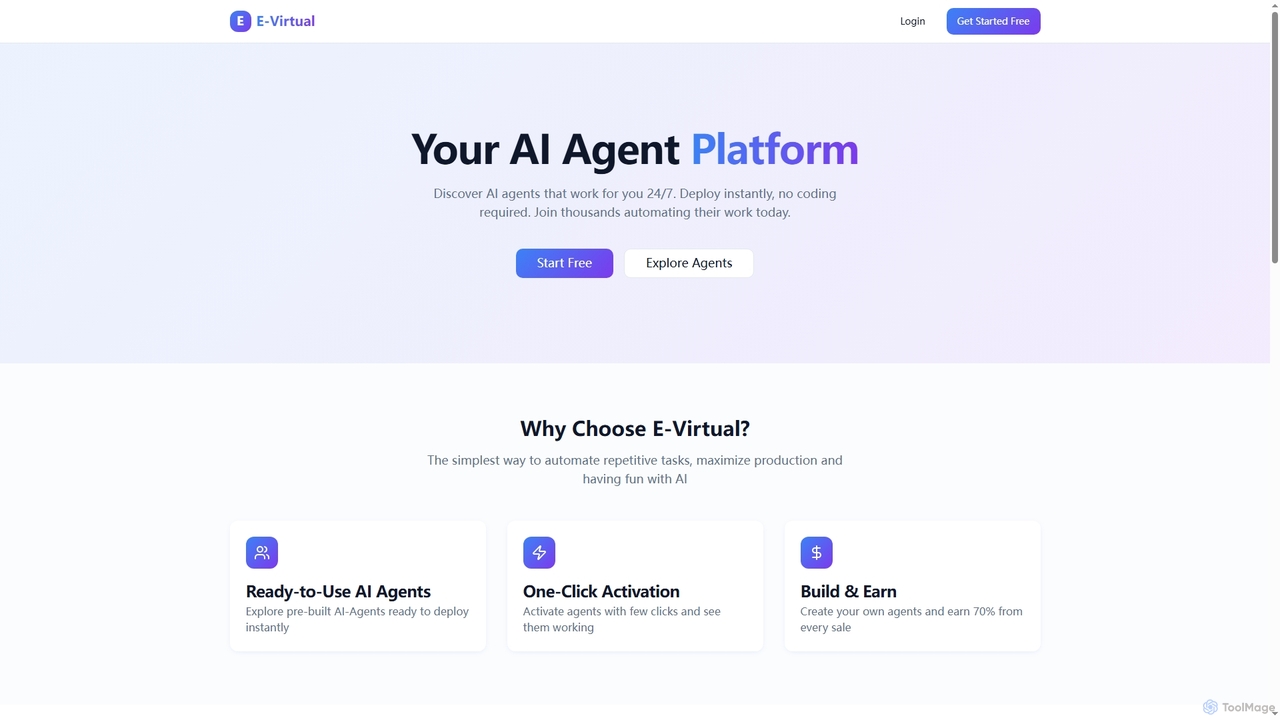
AI Agents are autonomous software programs designed to understand goals, make decisions, and execute complex, multi-step tasks across various digital environments. They operate by perceiving data, reasoning through problems, and interacting with applications, APIs, and websites to achieve objectives with minimal human intervention. This capability enables the automation of entire workflows, from conducting market research to managing customer interactions. Unlike simple automation scripts, AI Agents can adapt to new information and handle unforeseen challenges, making them powerful tools for dynamic business operations.
Core Features
- Autonomous Goal Execution: Understands high-level objectives and independently plans and executes the necessary steps to achieve them.
- Cross-Application Workflow: Navigates and operates across different software, websites, and APIs to gather information and perform actions.
- Adaptive Reasoning: Analyzes situations, makes decisions, and modifies its approach based on real-time data and changing circumstances.
- Task Planning & Decomposition: Breaks down complex requests into smaller, manageable sub-tasks and executes them in a logical sequence.
Use Cases
AI Agents are particularly valuable in roles that involve extensive data gathering, process coordination, and digital task execution. For instance, operations managers use them to monitor supply chains and automate inventory reports. Marketing teams deploy them for comprehensive competitor analysis, while sales professionals use them to automate lead enrichment and initial outreach, freeing up time for strategic activities.
How to Choose
When selecting an AI Agent, consider the following: 1. Integration Capabilities: Ensure it can connect seamlessly with your essential tools (CRM, ERP, project management software). 2. Task Complexity Handling: Evaluate its ability to manage multi-step, dynamic workflows versus simple, repetitive tasks. 3. Level of Autonomy & Control: Assess the balance between the agent's independent decision-making and your ability to set constraints and review actions. 4. Security Protocols: Verify its data handling practices and security measures to protect sensitive business information.