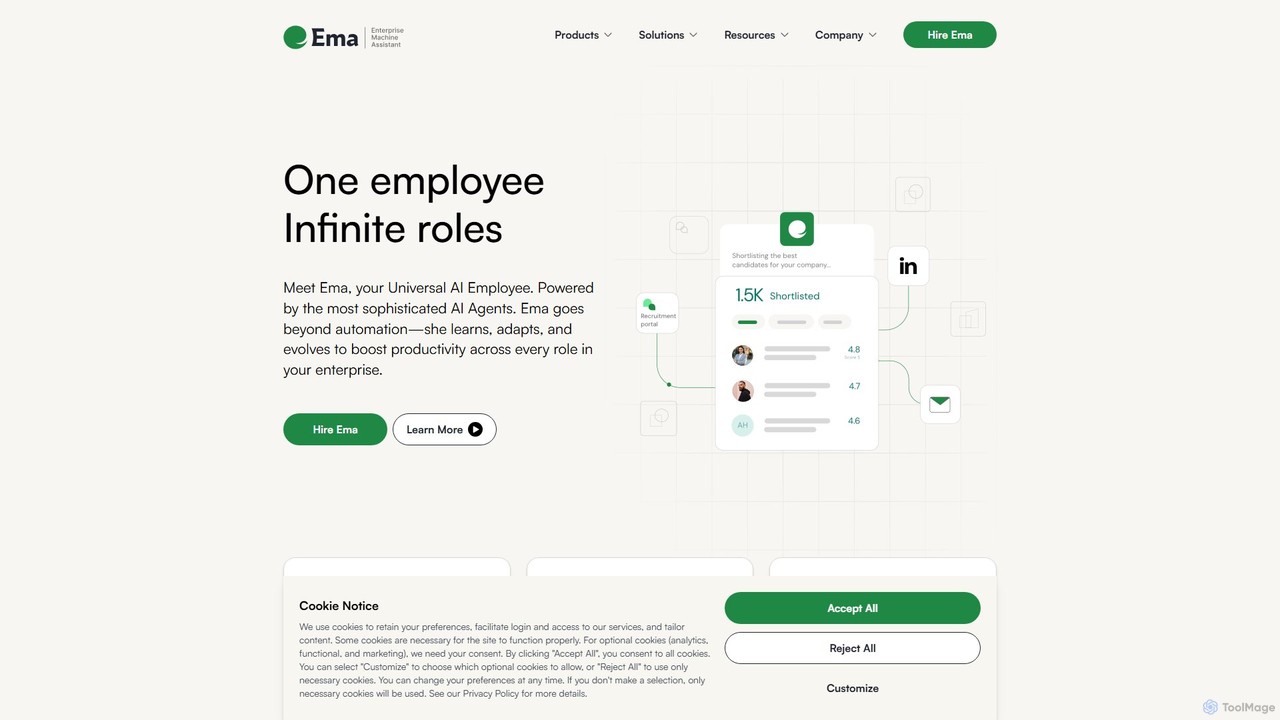
AI Assistants are intelligent software tools designed to automate tasks, provide information, and offer personalized support across various professional and personal contexts. Leveraging natural language processing (NLP) and machine learning, these assistants understand user requests, process data, and deliver relevant responses or actions. They significantly enhance productivity, streamline workflows, and act as intelligent digital companions, learning from interactions to improve their utility over time.
Core Features
- Natural Language Understanding (NLU): Interpreting complex human language and user intent to provide accurate responses.
- Task Automation: Executing routine administrative tasks such as scheduling, data entry, and report generation.
- Information Retrieval & Summarization: Quickly finding, processing, and summarizing relevant data from vast knowledge bases.
- Personalized Recommendations: Offering tailored suggestions and insights based on user preferences and past interactions.
- Proactive Assistance: Anticipating user needs and offering timely help or suggestions before being explicitly asked.
Applicable Scenarios
AI Assistants are widely adopted in business environments to support various roles and workflows. They are invaluable in customer service for automating FAQ responses and routing inquiries, in executive support for managing calendars and drafting communications, and in content creation for brainstorming ideas and refining text.
How to Choose
When selecting an AI Assistant, consider its integration capabilities with your existing business software (CRM, ERP, communication platforms) to ensure seamless operation. Evaluate its customization and training options to adapt to your specific business knowledge and workflows. Prioritize solutions with robust security and data privacy compliance, and assess its scalability to meet future demands.