ToolMage
Sign in

Best 1 Ai Chatbot AI tools for Business

Popular Ai Chatbot AI tools in Business include verbee, helping you work more efficiently.

verbee
Freemium

verbee

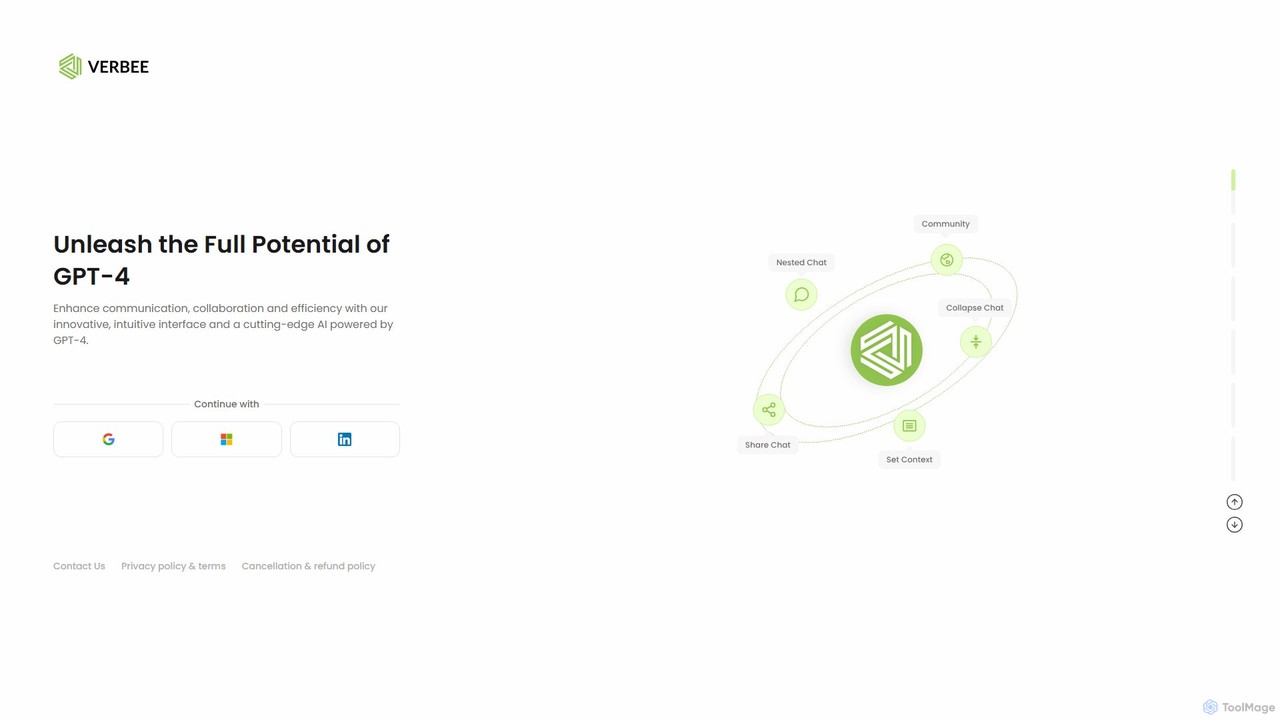
verbee is a collaborative AI platform designed for teams, powered by GPT-4. It enhances communication and efficiency by providing a shared, real-time chat interface. Key features include nested questions for deep dives, context setting, and a flexible usage-based pricing model, making advanced AI accessible and cost-effective for any organization.

Ai Chatbot
Visits 6.7KFavorites 156Likes 143

About Ai Chatbot

AI Chatbots are intelligent conversational agents powered by artificial intelligence, designed to simulate human-like interactions. Leveraging natural language processing (NLP) and machine learning, these tools understand user intent, process complex queries, and provide relevant, context-aware responses. They significantly enhance customer engagement, streamline support operations, and automate routine tasks, making them invaluable assets for modern businesses seeking efficient communication solutions.

Core Features

  • Natural Language Understanding (NLU): Interprets and comprehends user input, regardless of phrasing or complexity, to accurately identify intent.
  • Automated & Contextual Responses: Generates relevant, personalized replies based on conversation history and identified user needs, ensuring fluid dialogue.
  • Multi-channel Deployment: Can be integrated across various platforms like websites, messaging apps, social media, and internal communication tools.
  • Integration Capabilities: Connects seamlessly with CRM, ERP, knowledge bases, and other business systems to access and update information.
  • Continuous Learning & Improvement: Utilizes machine learning to learn from interactions, refine responses, and improve performance over time.

Applicable Scenarios

AI Chatbots are widely adopted across industries to automate and enhance communication. They excel in scenarios requiring rapid, consistent, and scalable interaction. Businesses use them for 24/7 customer support, guiding users through complex processes, and providing instant access to information, thereby reducing operational costs and improving user satisfaction.

How to Choose

Selecting an AI Chatbot requires evaluating several factors. Prioritize platforms with robust NLU capabilities and support for your required languages. Consider its integration ecosystem with your existing CRM, helpdesk, or e-commerce platforms. Assess scalability for future growth, customization options for branding and specific workflows, and the vendor's support and pricing model to ensure it aligns with your business needs and budget.

Ai Chatbot use cases

1

Automating Customer Support Inquiries

Customer service teams can deploy AI Chatbots on websites or messaging apps to handle frequently asked questions (FAQs), troubleshoot common issues, and provide instant information 24/7. This reduces agent workload, improves response times, and ensures consistent support availability, allowing human agents to focus on complex cases.

2

Qualifying Sales Leads on Websites

Sales and marketing professionals utilize AI Chatbots to engage website visitors, ask qualifying questions about their needs and budget, and gather contact information. The chatbot can then route high-potential leads directly to sales representatives, significantly streamlining the lead generation and qualification process and increasing conversion rates.

3

Providing Internal HR & IT Helpdesk Support

Organizations implement AI Chatbots as an internal helpdesk for employees, answering questions about HR policies, benefits, IT troubleshooting, or internal procedures. This provides immediate assistance, reduces the burden on HR and IT departments, and ensures employees can quickly find the information they need without waiting.

4

Personalized Product Recommendations in E-commerce

E-commerce businesses use AI Chatbots to interact with shoppers, understand their preferences, and offer personalized product suggestions. By asking about style, budget, or specific needs, the chatbot guides customers through the product catalog, enhancing the shopping experience and potentially increasing sales conversions.

5

Gathering User Feedback and Conducting Surveys

Product managers and market researchers can leverage AI Chatbots to conduct interactive surveys and collect valuable user feedback. The chatbot can engage users in a conversational manner, adapt questions based on previous answers, and efficiently gather insights into product satisfaction, feature requests, or market trends.

6

Onboarding and Training New Employees

HR departments can use AI Chatbots to facilitate the onboarding process for new hires. The chatbot can answer common questions about company culture, policies, system access, and training schedules, providing a personalized and interactive guide that helps new employees quickly acclimate to their roles and the organization.

Ai Chatbot FAQ

What are AI Chatbots?

AI Chatbots are software applications that use artificial intelligence, specifically natural language processing (NLP) and machine learning, to conduct human-like conversations. They are designed to understand user intent, process complex queries, and provide intelligent, context-aware responses, automating communication across various platforms.

How do AI Chatbots differ from traditional rule-based chatbots?

AI Chatbots leverage advanced NLP to understand nuanced language, context, and user intent, allowing for more flexible and human-like conversations. In contrast, traditional rule-based chatbots operate on predefined scripts and keywords, only responding to specific commands. AI Chatbots can learn and adapt, handling a wider range of queries and providing more dynamic interactions, whereas rule-based bots are limited to their programmed rules.

What are the key benefits of using an AI Chatbot for business?

For businesses, AI Chatbots offer numerous benefits, including 24/7 customer support availability, instant response times, and reduced operational costs by automating routine inquiries. They improve customer satisfaction through consistent and personalized interactions, enhance lead generation by qualifying prospects, and free up human agents to focus on more complex issues, ultimately boosting overall efficiency and scalability.

What should I consider when choosing an AI Chatbot platform?

When selecting an AI Chatbot platform, consider its natural language understanding (NLU) accuracy, language support, and ease of integration with your existing CRM, helpdesk, or e-commerce systems. Evaluate its scalability for future growth, customization options for branding and specific workflows, and the vendor's analytics and reporting capabilities. Also, assess the pricing model, security features, and the level of technical support provided.

Can AI Chatbots integrate with existing business systems?

Yes, most modern AI Chatbot platforms are designed with robust integration capabilities. They can connect with a wide array of existing business systems such as Customer Relationship Management (CRM) software, Enterprise Resource Planning (ERP) systems, helpdesk platforms, e-commerce platforms, and knowledge bases. This allows chatbots to access and update customer data, retrieve product information, process orders, and provide more personalized and informed interactions.