Fusion AI
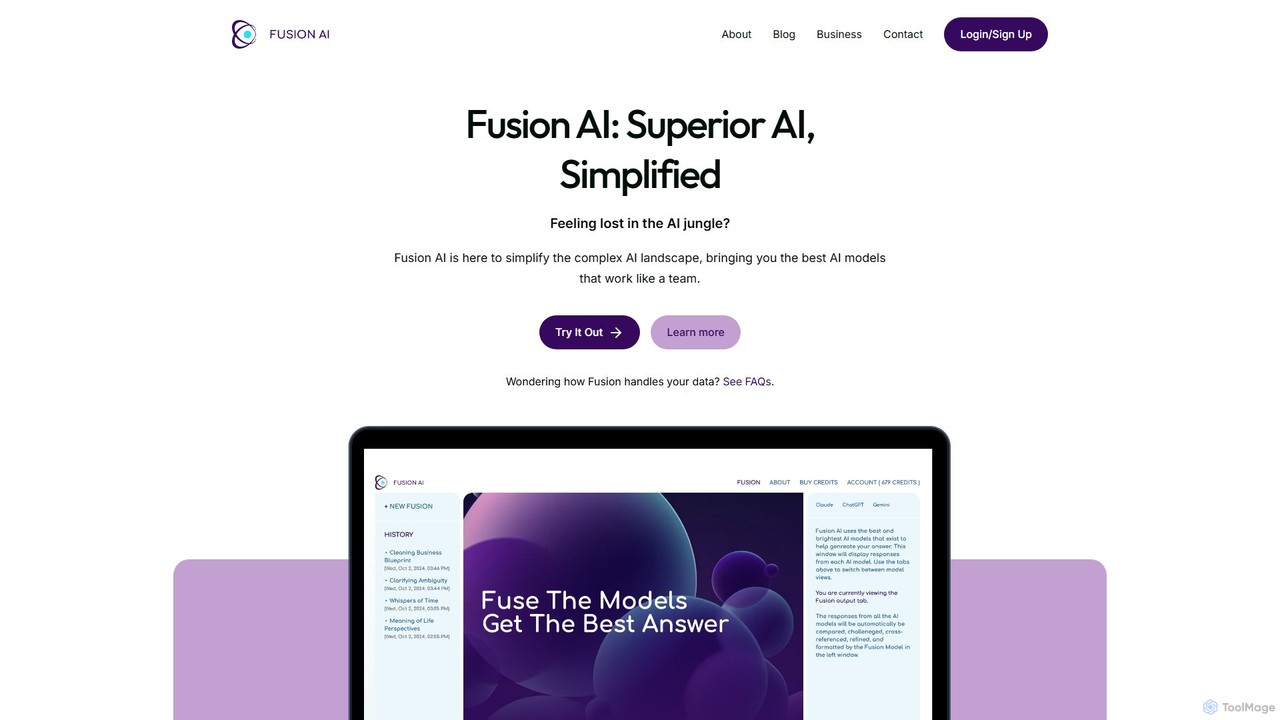
Fusion AI is an intelligent platform that consolidates top-tier AI models from OpenAI, Anthropic, and Google into a …
Fusion AI is an intelligent platform that consolidates top-tier AI models from OpenAI, Anthropic, and Google into a single, unified interface. It orchestrates these models to collaborate on your requests, delivering superior, cross-verified results. With a flexible pay-as-you-go pricing model and a dedicated enterprise solution, Fusion AI simplifies complex AI tasks for individuals and businesses, enhancing productivity and ensuring high-quality outcomes without the need to manage multiple tools.
Vext
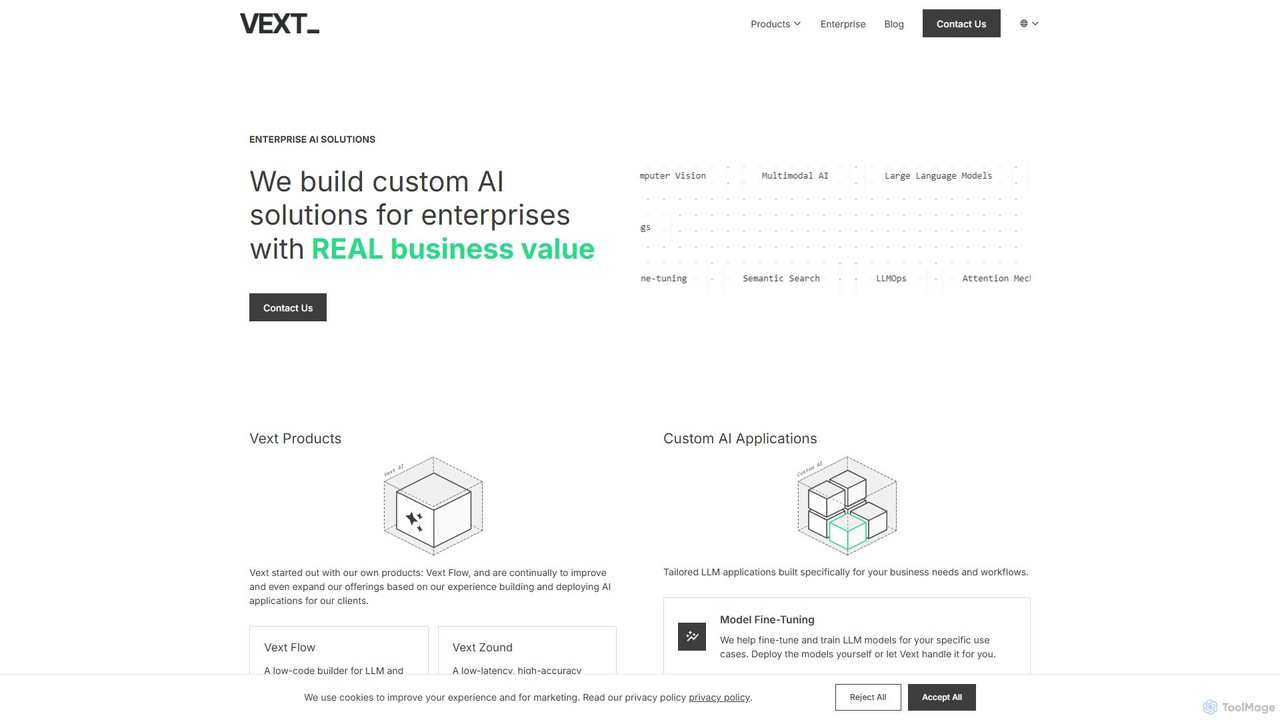
Vext is an enterprise AI solutions partner, offering custom AI application development, model fine-tuning, and managed hosting. It …
Vext is an enterprise AI solutions partner, offering custom AI application development, model fine-tuning, and managed hosting. It features Vext Flow, a low-code builder for creating and deploying LLM and agent workflows, and Vext Zound, a real-time AI subtitle and translation technology.
ZBrain
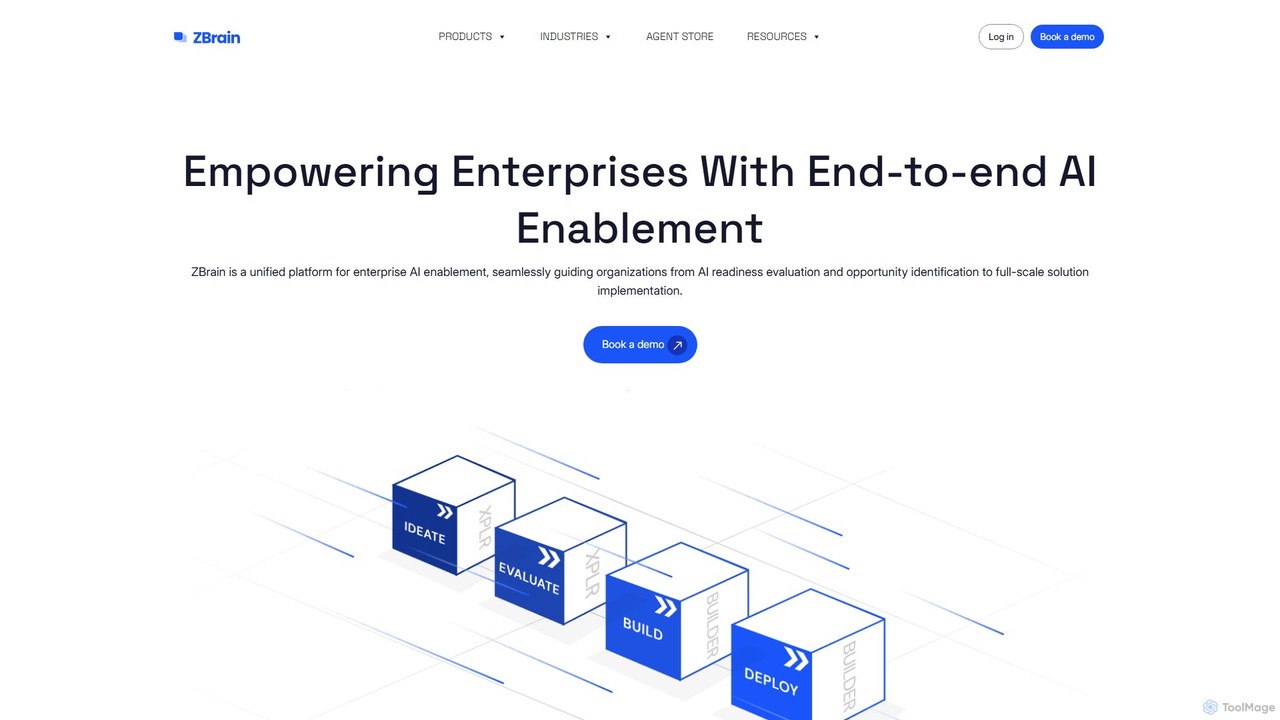
ZBrain is an end-to-end enterprise AI platform designed to guide organizations from AI readiness assessment to full-scale implementation. …
ZBrain is an end-to-end enterprise AI platform designed to guide organizations from AI readiness assessment to full-scale implementation. It offers a unified suite of tools, including a low-code builder and specialized AI agents, to create custom, secure, and scalable AI solutions tailored to specific business needs across various departments.
CollabAI
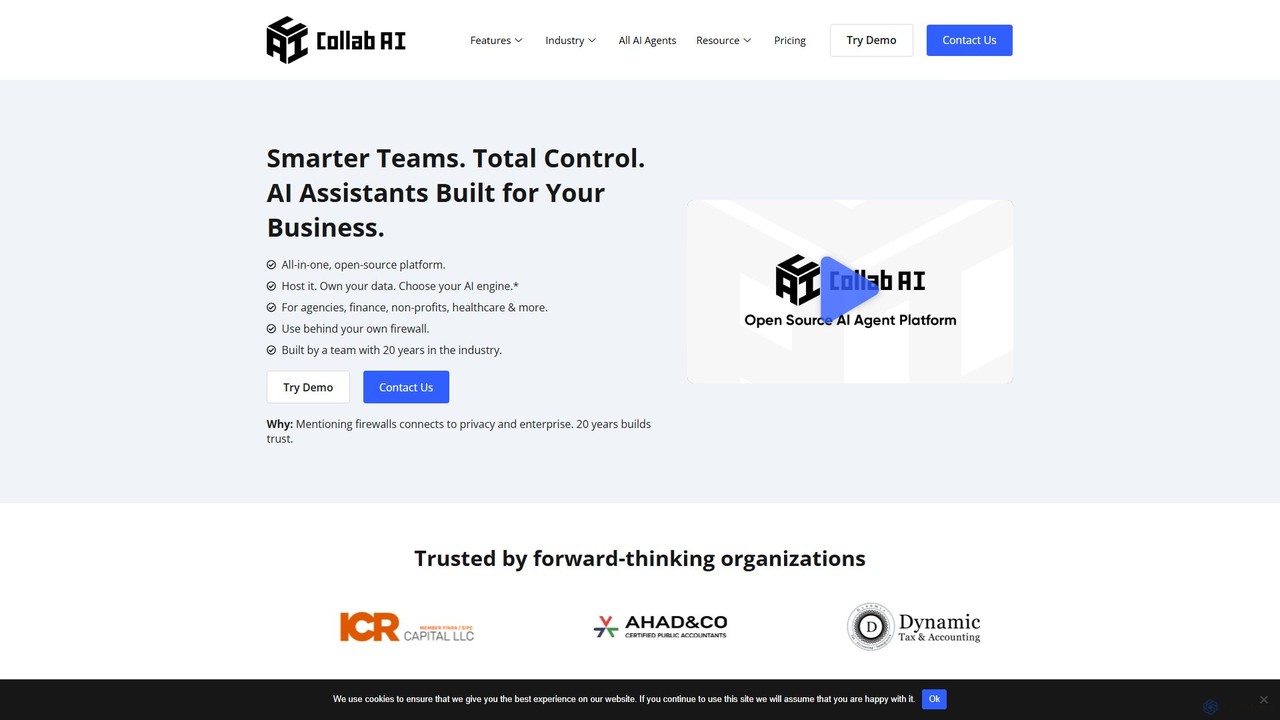
CollabAI is a secure, open-source AI platform for businesses, enabling teams to build custom AI assistants. It offers …
CollabAI is a secure, open-source AI platform for businesses, enabling teams to build custom AI assistants. It offers both self-hosted and cloud options, providing total data control and privacy. Integrate with top AI models like GPT-4, Gemini, and Claude, connect to your existing tools (CRM, Gmail, Slack), and automate workflows to boost productivity and collaboration securely.
About Ai Platform
An AI Platform is a comprehensive, integrated environment designed for the end-to-end development, deployment, and management of artificial intelligence and machine learning models. These platforms provide the necessary infrastructure, tools, and services to streamline the entire AI lifecycle, from data preparation and model training to deployment, monitoring, and governance. They empower businesses and developers to build custom AI solutions, integrate advanced AI capabilities into existing applications, and accelerate innovation across various industries.
Core Features
- Data Management & Preparation: Tools for ingesting, cleaning, transforming, and labeling data to prepare it for model training.
- Model Training & Optimization: Scalable compute resources and frameworks for training machine learning models, including hyperparameter tuning and experiment tracking.
- Model Deployment & Monitoring (MLOps): Capabilities for deploying models into production environments, managing versions, and continuously monitoring their performance and drift.
- Pre-built AI Services: Often includes access to pre-trained models or APIs for common AI tasks like natural language processing, computer vision, or speech recognition.
- Scalability & Infrastructure: Provides elastic compute and storage resources to handle varying workloads and data volumes efficiently.
Applicable Scenarios
AI Platforms are crucial for organizations aiming to operationalize AI at scale, enabling data scientists to collaborate on complex projects, developers to embed AI into applications, and IT teams to manage AI assets centrally. They are used in scenarios ranging from developing custom recommendation engines and fraud detection systems to automating MLOps pipelines and building intelligent virtual assistants.
How to Choose
When selecting an AI Platform, consider its breadth of features (data, training, deployment, MLOps), scalability to meet future demands, and integration capabilities with your existing tech stack. Evaluate the platform's support for various programming languages and frameworks, its pricing model, and the level of technical expertise required for implementation and maintenance. Prioritize platforms that offer robust governance, security, and compliance features.

Ai PlatformUse Cases
Developing Custom Predictive Analytics Models
Data scientists leverage AI Platforms to build, train, and deploy bespoke predictive analytics models. For instance, a retail company's data science team can use the platform to develop a customer churn prediction model, feeding it historical customer data, training it with various algorithms, and then deploying it to identify at-risk customers for targeted retention campaigns. This streamlines the entire model lifecycle, from experimentation to production.
Automating MLOps Pipelines for Continuous Delivery
DevOps and ML engineers utilize AI Platforms to establish automated MLOps (Machine Learning Operations) pipelines. This involves setting up automated workflows for data ingestion, model retraining, validation, and deployment. A financial institution, for example, can automate the continuous update of its fraud detection model, ensuring it adapts to new patterns without manual intervention, thereby maintaining high accuracy and reducing operational overhead.
Building and Deploying AI-powered Conversational Agents
Developers use AI Platforms to create and manage intelligent chatbots and virtual assistants. By integrating natural language processing (NLP) services and leveraging the platform's deployment capabilities, they can build conversational AI for customer support, internal helpdesks, or sales inquiries. A telecommunications company might deploy a virtual agent on the platform to handle routine customer queries, freeing up human agents for more complex issues and improving response times.
Scaling AI Research and Experimentation
Researchers and R&D teams benefit from AI Platforms by gaining access to scalable compute resources and experiment tracking tools. This enables them to rapidly iterate on new AI models, test different hypotheses, and manage numerous experiments efficiently. An automotive manufacturer's R&D division could use the platform to experiment with various computer vision models for autonomous driving, accelerating the development cycle by running parallel tests and comparing results systematically.
Integrating Advanced AI Capabilities into Existing Applications
Software engineers utilize AI Platforms to embed sophisticated AI functionalities into their existing business applications. This often involves consuming pre-trained models or custom-built APIs provided by the platform. For example, an e-commerce platform can integrate an AI Platform's image recognition service to automatically tag product images, or a CRM system can use its sentiment analysis API to gauge customer feedback from support tickets, enriching application features without building AI from scratch.
Centralized Governance and Management of Enterprise AI Assets
IT and governance teams employ AI Platforms to establish a centralized system for managing all AI models, datasets, and related resources across an organization. This ensures compliance, security, and proper version control. A large enterprise can use the platform to track model lineage, enforce access controls, and monitor the ethical implications of deployed AI systems, providing a single source of truth for all AI initiatives and reducing risks associated with decentralized AI development.