Auditic
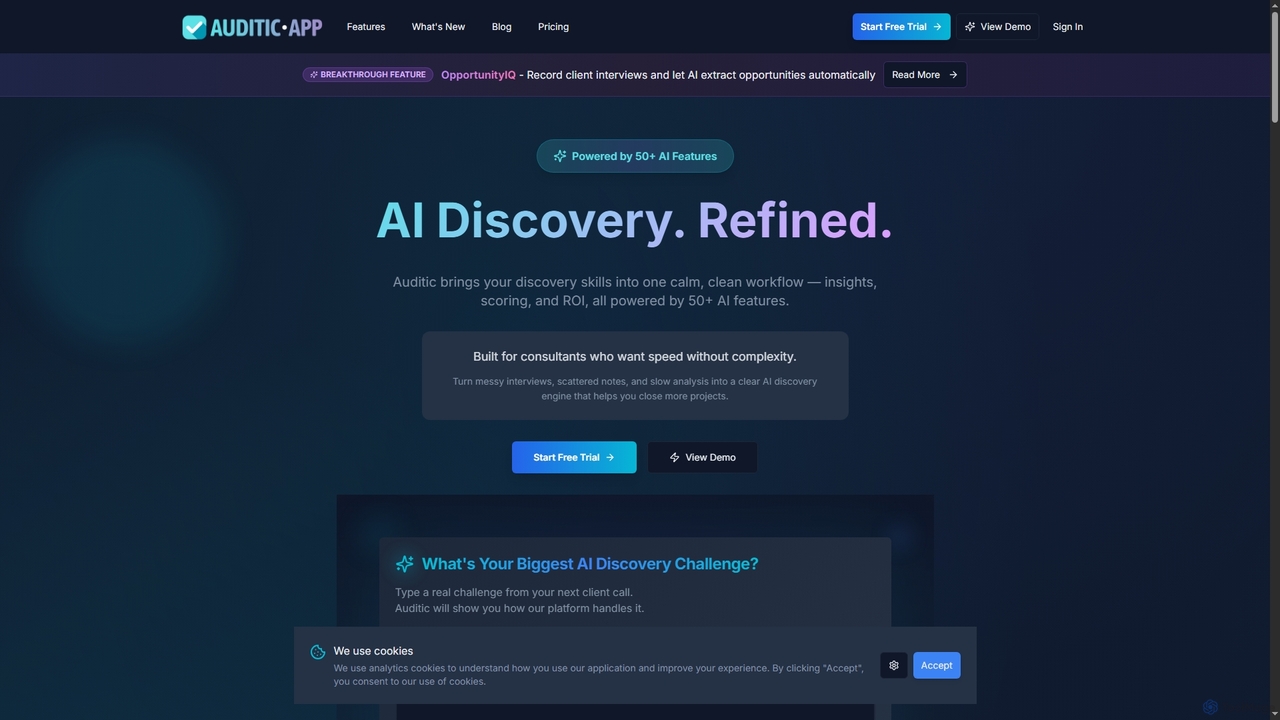
Auditic is an AI-powered discovery tool designed for consultants and agencies to streamline client interviews, extract insights, score …
Auditic is an AI-powered discovery tool designed for consultants and agencies to streamline client interviews, extract insights, score opportunities, and model ROI. It transforms scattered notes and slow analysis into a clear, efficient workflow, helping professionals close more projects faster.
Upword
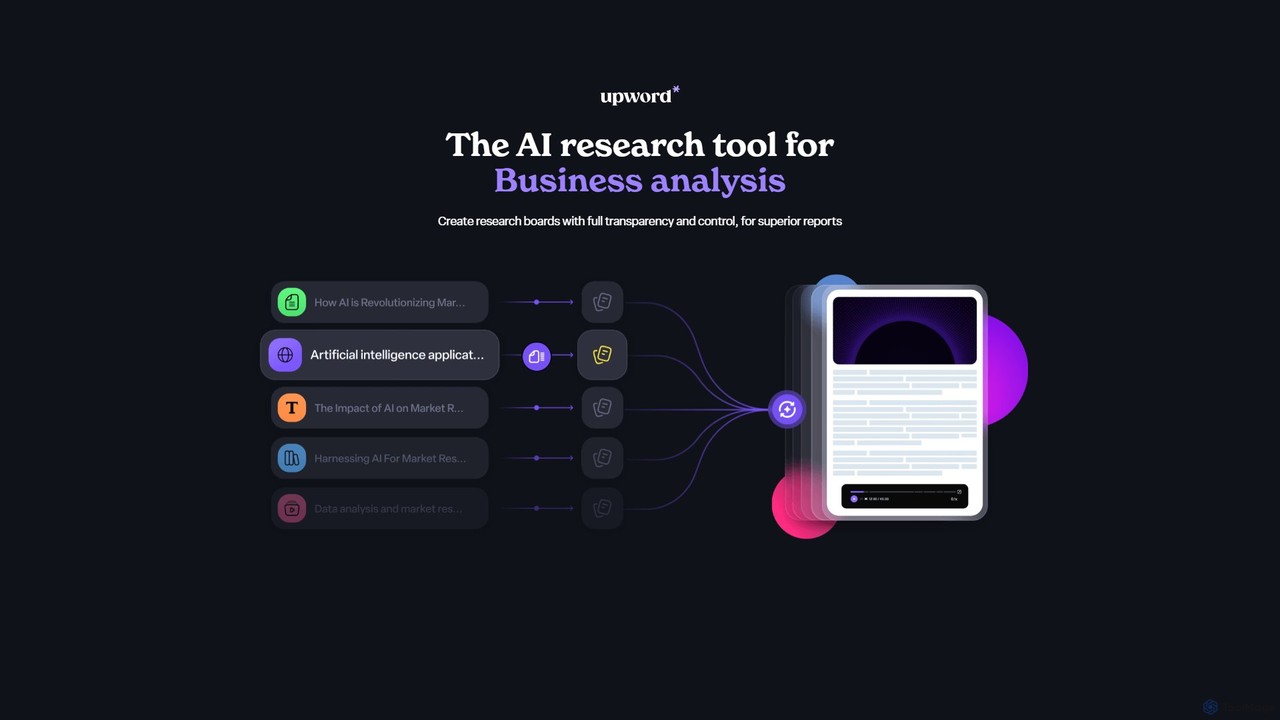
Upword is an AI-powered research platform designed for business analysis and knowledge management. It helps users summarize content …
Upword is an AI-powered research platform designed for business analysis and knowledge management. It helps users summarize content from various sources like PDFs, URLs, and YouTube videos, create detailed reports with AI assistance, and organize all research in a centralized, collaborative library. It offers full control over the AI process, ensuring transparent and trustworthy results.
About Analysis
AI Analysis tools are a class of software designed to automatically process and interpret large datasets to uncover insights, patterns, and predictions. These tools leverage machine learning, natural language processing (NLP), and statistical modeling to go beyond simple data reporting. They enable businesses to understand complex phenomena like market trends, customer sentiment, and operational inefficiencies with high accuracy and speed. By transforming raw data into actionable intelligence, these platforms support strategic, data-driven decision-making across various departments.
Core Features
- Predictive Modeling: Utilizes historical data to forecast future outcomes, such as sales figures, customer churn, or market demand.
- Sentiment Analysis: Automatically assesses text data from reviews, social media, or surveys to gauge public opinion and customer emotion.
- Anomaly Detection: Identifies unusual patterns or outliers in data that could signify fraud, system errors, or emerging opportunities.
- Natural Language Querying: Allows users to ask questions in plain language to retrieve data and generate reports, lowering the technical barrier to data exploration.
- Automated Reporting: Generates comprehensive and customizable reports with key findings, visualizations, and summaries, saving significant manual effort.
Use Cases
AI Analysis tools are widely used by business analysts, marketing managers, financial planners, and operations leaders. In e-commerce, they analyze purchasing patterns to personalize recommendations. Financial institutions use them to detect fraudulent transactions and assess credit risk. Marketing teams leverage these tools to measure campaign effectiveness and understand customer feedback at scale.
How to Choose
When selecting an AI Analysis tool, consider the following: First, evaluate its data integration capabilities—can it connect seamlessly with your existing data sources (e.g., CRM, databases, APIs)? Second, assess the sophistication of its analytical models and whether they align with your business needs. Third, consider the user interface and its ease of use for non-technical team members. Finally, review the scalability and pricing model to ensure it fits your budget and future growth.

AnalysisUse Cases
Analyze Customer Feedback for Product Improvement
A product manager for a SaaS company uses an AI Analysis tool to process thousands of customer reviews from app stores, support tickets, and social media. The tool applies sentiment analysis to categorize feedback as positive, negative, or neutral, and uses topic modeling to identify recurring themes like 'UI confusion' or 'feature request for integration'. This allows the product team to quickly pinpoint major pain points and popular feature requests without manually reading every comment, enabling them to prioritize the development roadmap based on quantitative user data and improve customer satisfaction.
Forecast Sales Trends with Predictive Modeling
A retail sales director uses an AI Analysis platform to forecast quarterly sales. The tool integrates historical sales data, marketing campaign schedules, and external factors like economic indicators and seasonal trends. By running predictive models, the platform generates a detailed sales forecast broken down by product category and region. This forecast helps the director make informed decisions about inventory management, staffing levels, and marketing budget allocation, ultimately leading to reduced overstock costs and maximized sales opportunities.
Monitor Social Media Sentiment for Brand Reputation
A marketing team at a consumer goods company employs an AI Analysis tool to track brand sentiment across social media platforms. The tool continuously scans mentions, comments, and posts related to the brand, using NLP to determine the sentiment of each interaction. It generates real-time dashboards showing sentiment trends and alerts the team to sudden negative spikes. This proactive monitoring allows the marketing team to quickly address customer complaints, manage potential PR crises, and identify brand advocates, thereby protecting and enhancing the brand's reputation online.
Identify Market Opportunities from Competitor Data
A business strategist uses an AI Analysis tool to analyze competitors' pricing strategies, product launches, and customer reviews. The tool aggregates public data from websites, news articles, and social media, then identifies patterns and gaps in the market. For instance, it might highlight a competitor's product consistently receiving negative feedback on a specific feature, presenting an opportunity. By providing a comprehensive view of the competitive landscape, the tool helps the strategist identify underserved market segments and formulate data-backed strategies for gaining a competitive edge.
Optimize Marketing Campaign Performance
A digital marketer uses an AI Analysis tool to optimize an ongoing advertising campaign. The platform analyzes real-time performance data from various channels like Google Ads and Facebook, identifying which ad creatives, target audiences, and keywords are delivering the highest return on investment (ROI). It can also predict which audience segments are most likely to convert and recommend budget reallocations. This continuous analysis allows the marketer to make data-driven adjustments on the fly, improving campaign efficiency and maximizing lead generation without weeks of manual A/B testing.
Detect Fraudulent Transactions in Real-Time
A financial services company integrates an AI Analysis tool into its payment processing system. The tool's anomaly detection model analyzes transaction data in real-time, flagging activities that deviate from a customer's normal spending patterns, such as an unusually large purchase from a new location. When a suspicious transaction is detected, it is automatically blocked or flagged for manual review, preventing financial loss for both the customer and the company. This automated, real-time analysis provides a higher level of security than traditional rule-based fraud detection systems.