ToolMage
Sign in

Best 2 Assistant for Business

Popular Assistant in Business include Merci and Meetecho, helping you work more efficiently.

Merci

Merci

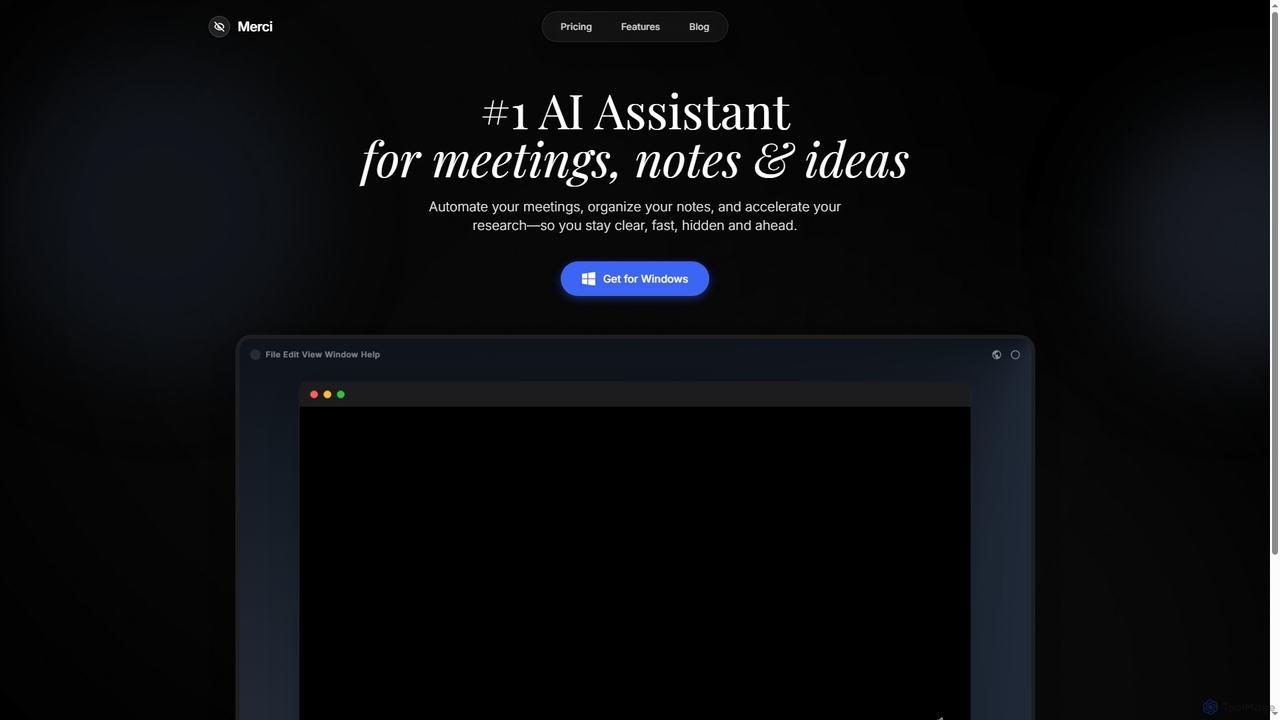
Merci is an advanced AI assistant designed to streamline your professional life by automating meetings, organizing notes, and accelerating research. It helps users stay clear, fast, hidden, and ahead in their respective fields, offering a powerful solution for efficient information management and productivity on Windows.

Assistant
Visits 5.4KFavorites 76Likes 87
Meetecho
Freemium

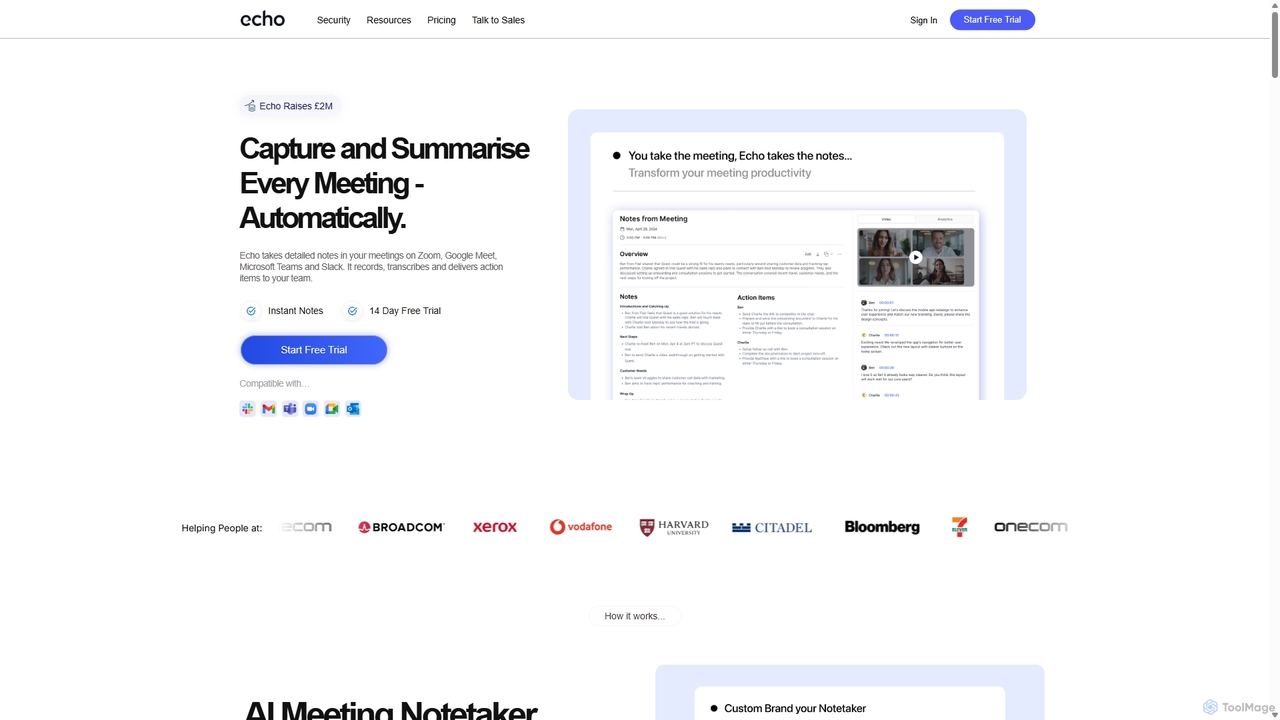
Meetecho

meetecho is an AI executive assistant that automatically joins your meetings on Zoom, Google Meet, and Microsoft Teams to record, transcribe, and generate detailed summaries with action items. It enhances productivity by eliminating manual note-taking and creating a searchable archive of all your conversations. Upcoming features include AI-powered email sorting and drafting.

Assistant
Visits 4.6KFavorites 146Likes 146

About Assistant

AI Assistants are AI-powered tools designed to automate tasks, provide information, and support users through natural language interactions. Leveraging advanced natural language processing (NLP) and machine learning, these intelligent agents streamline workflows and enhance productivity across various business functions. They serve as a crucial component in modern business operations, enabling organizations to scale support and personalize user experiences.

Core Features

  • Natural Language Understanding (NLU): Interprets and processes human language to understand user intent and context.
  • Task Automation: Executes routine tasks, schedules appointments, and manages workflows without human intervention.
  • Information Retrieval: Accesses and synthesizes data from various sources to provide accurate and timely answers.
  • Personalization: Adapts interactions and recommendations based on user history, preferences, and real-time context.
  • Multi-channel Support: Operates seamlessly across websites, messaging apps, voice interfaces, and internal platforms.

Use Cases

AI Assistants are widely adopted in customer service for automating inquiries, in sales for lead qualification and engagement, and in internal operations for employee support. They help businesses reduce response times, improve service consistency, and free up human staff for more complex, high-value tasks.

How to Choose

When selecting an AI Assistant, consider its integration capabilities with existing systems (CRM, ERP), the extent of its customization and training options, and its scalability to handle varying user loads. Evaluate its natural language understanding accuracy, security protocols for data privacy, and the availability of multi-language support to meet your business needs.

Assistant use cases

1

Automate Customer Service Inquiries

Customer service departments can deploy AI Assistants to handle a high volume of routine customer inquiries, such as checking order status, providing FAQs, or guiding users through basic troubleshooting steps. This frees up human agents to focus on complex issues requiring empathy and critical thinking, significantly reducing response times and improving overall customer satisfaction.

2

Enhance Sales Lead Qualification and Engagement

Sales teams utilize AI Assistants to engage with website visitors, qualify leads based on predefined criteria, answer initial product questions, and even schedule discovery calls. By automating these early-stage interactions, businesses can ensure that sales representatives focus their efforts on high-potential prospects, leading to more efficient pipelines and higher conversion rates.

3

Provide Internal Employee Support and HR Assistance

Companies implement AI Assistants to serve as internal helpdesks for employees, answering common HR questions about policies, benefits, or payroll. They can also guide new hires through onboarding processes or provide instant IT support for common technical issues, significantly reducing the workload on HR and IT departments and improving employee experience.

4

Summarize Meetings and Track Action Items

For busy professionals, AI Assistants can attend virtual meetings, transcribe discussions, and generate concise summaries of key points and decisions. Crucially, they can also identify and track action items, assigning them to relevant team members and setting deadlines. This ensures that important outcomes are not missed, improving accountability and follow-through on projects.

5

Assist with Data Analysis and Report Generation

Business analysts and managers can leverage AI Assistants to query complex datasets using natural language, eliminating the need for specialized coding skills. These tools can generate custom reports, visualize trends, and highlight key insights from vast amounts of data, enabling faster, data-driven decision-making across the organization without extensive manual effort.

6

Streamline Content Creation and Brainstorming

Content creators and marketers can use AI Assistants to generate ideas for blog posts, social media captions, or email campaigns. These tools can help draft outlines, suggest relevant keywords, and even refine existing text for tone and clarity. This accelerates the content production cycle, allowing teams to publish more engaging and optimized material consistently.

Assistant FAQ

What are AI Assistants?

AI Assistants are software programs powered by artificial intelligence that interact with users through natural language to perform tasks, provide information, and offer support. They leverage technologies like natural language processing (NLP) and machine learning to understand user intent, learn from interactions, and deliver personalized responses across various digital channels, enhancing efficiency and user experience in business contexts.

How do AI Assistants differ from traditional chatbots?

The main difference lies in intelligence and adaptability. Traditional chatbots operate based on predefined rules, scripts, and keyword matching, offering limited conversational flexibility. AI Assistants, however, use advanced AI, including natural language understanding (NLU) and machine learning, to comprehend context, learn from interactions, and engage in more dynamic, human-like conversations. This allows them to handle complex queries, personalize responses, and even anticipate user needs, far beyond the capabilities of rule-based systems.

What are the key benefits of implementing AI Assistants in business?

Implementing AI Assistants offers several key benefits for businesses. Firstly, they significantly enhance operational efficiency by automating routine tasks and inquiries, freeing up human staff. Secondly, they improve customer satisfaction through instant, 24/7 support and personalized interactions. Thirdly, AI Assistants provide valuable insights by analyzing user data, helping businesses understand customer behavior and optimize services. Lastly, they offer scalability, allowing companies to handle increased demand without proportional increases in human resources, leading to cost savings.

What should I consider when choosing an AI Assistant platform?

When selecting an AI Assistant platform, prioritize its natural language understanding (NLU) capabilities to ensure accurate interpretation of user queries. Consider its integration potential with your existing CRM, ERP, or communication tools for seamless workflow. Evaluate customization options, including the ability to train the AI with your specific business data and branding. Scalability, security features for data privacy, and the availability of multi-language support are also crucial factors to align with your business growth and compliance needs.

Can AI Assistants handle complex tasks or only simple queries?

Modern AI Assistants are increasingly capable of handling both simple and complex tasks. While they excel at automating routine queries and providing instant answers to FAQs, advanced AI Assistants can also manage multi-step processes, integrate with backend systems to perform actions (like booking appointments or processing orders), and even escalate complex issues to human agents with full context. Their ability to learn and adapt allows them to tackle more nuanced and intricate challenges over time, making them versatile tools for various business needs.