ToolMage
Sign in

Best 2 Candidate Assessment AI tools for Business

Popular Candidate Assessment AI tools in Business include Recruitment.AI and CocolevioHR, helping you work more efficiently.

CocolevioHR
Freemium

CocolevioHR

CocolevioHR is an AI-powered recruitment automation platform designed to streamline the entire hiring process. It leverages artificial intelligence to conduct unbiased assessments, match candidates to jobs, and provide data-driven insights. The platform helps HR teams make faster, smarter, and fairer hiring decisions by automating tasks from sourcing to final selection.

Candidate Assessment
Visits 5.7KFavorites 146Likes 155
Recruitment.AI
Paid

Recruitment.AI

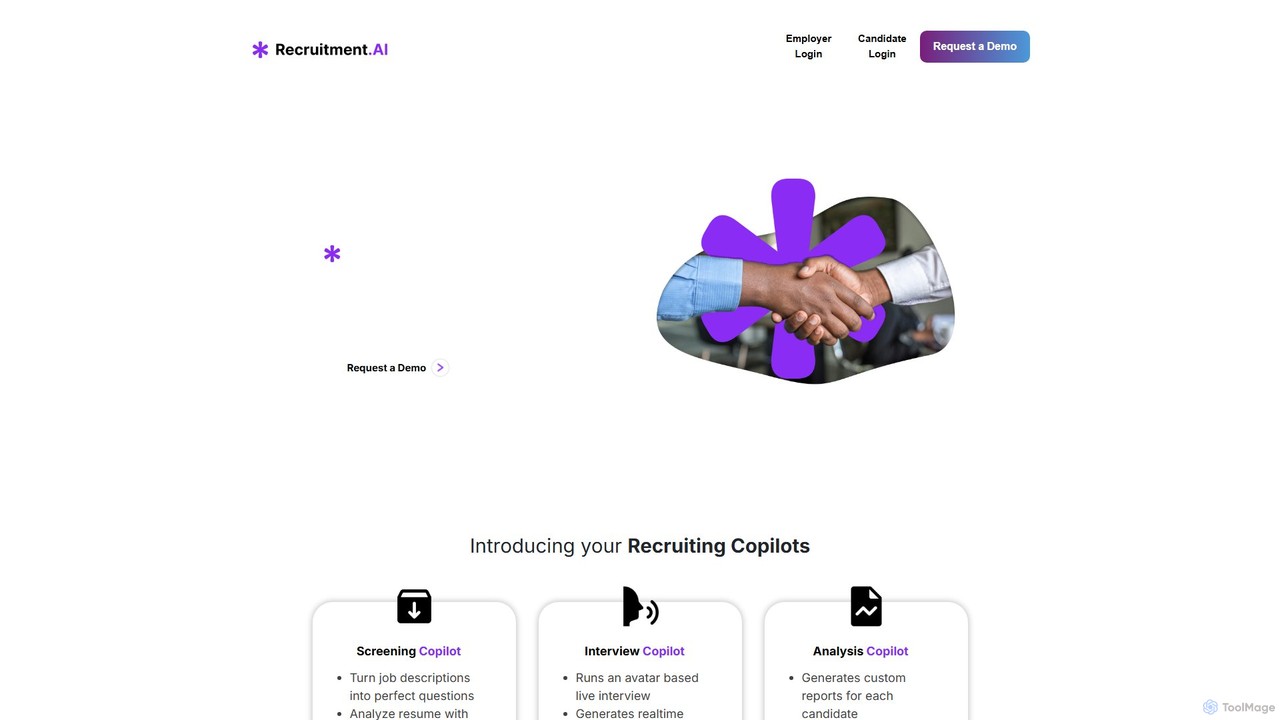
Recruitment.AI is an AI-powered hiring copilot designed to streamline the entire recruitment process. From automated resume screening and AI-generated interview questions to conducting live interviews with an AI avatar, the platform provides a comprehensive solution. It delivers in-depth candidate analysis, unbiased assessments, and actionable reports, helping recruiters find the perfect fit efficiently and make data-driven hiring decisions.

Candidate Assessment
Visits 7.7KFavorites 138Likes 132

About Candidate Assessment

Candidate Assessment tools are AI-powered platforms designed to automate and standardize the evaluation of job applicants. They utilize machine learning and natural language processing to analyze candidate data, from resumes to skills tests, far beyond simple keyword matching. These tools provide recruiters with data-driven insights to identify the most qualified individuals, reduce bias, and predict future job performance. This approach streamlines the talent acquisition process within the broader business function of human resources.

Core Features

  • Automated Screening & Ranking: Ranks candidates based on skills, experience, and qualifications extracted from application materials.
  • AI-Powered Skills Testing: Administers and auto-grades assessments for technical, cognitive, and soft skills.
  • Video Interview Analysis: Evaluates candidate responses for content, communication style, and relevant keywords.
  • Predictive Performance Analytics: Uses data models to forecast a candidate's potential for success and cultural fit.
  • Bias Mitigation Features: Anonymizes demographic data to focus evaluations purely on objective qualifications.

Use Cases

Primarily used by HR departments, recruitment agencies, and hiring managers in medium to large enterprises. They are especially valuable for high-volume recruiting in sectors like technology, customer service, and sales, as well as for roles requiring specific, measurable skills.

How to Choose

When selecting a tool, consider the types of assessments offered (e.g., coding, psychometric, situational), its integration capabilities with your existing Applicant Tracking System (ATS), the transparency of its AI models to ensure fairness, and its compliance with data privacy regulations like GDPR.

Candidate Assessment use cases

1

Automating Technical Skill Evaluation

For a tech company hiring dozens of software engineers, recruiters use an AI assessment tool to send automated coding challenges to all applicants. The platform auto-grades the code for correctness, efficiency, and style, providing a ranked leaderboard. This saves engineering managers hundreds of hours of manual review and ensures every candidate is evaluated on the same objective criteria.

2

Scaling Customer Support Team Screening

A fast-growing e-commerce business needs to hire 50 new customer service agents. They use an AI tool that presents candidates with simulated customer support scenarios via chat or voice. The AI analyzes the transcripts for empathy, problem-solving ability, and communication clarity, quickly identifying the top 10% of candidates for a final human interview.

3

Identifying High-Potential Sales Candidates

A B2B software company uses an AI assessment platform to evaluate sales applicants. Candidates participate in a simulated sales pitch to an AI avatar. The tool analyzes their persuasive language, objection handling, and product knowledge articulation, providing a detailed report on their sales competencies and predicting their likelihood of meeting quotas.

4

Standardizing Graduate Program Recruitment

A multinational corporation receives over 10,000 applications for its graduate leadership program. An AI assessment tool administers a series of gamified cognitive and situational judgment tests. This allows the recruitment team to efficiently and fairly filter the vast applicant pool down to a manageable number of top-performers for assessment centers.

5

Reducing Bias in Leadership Hiring

To promote diversity in management, a firm uses an AI tool that anonymizes resumes and focuses on leadership competency assessments. The platform presents candidates with strategic business challenges and evaluates their written responses for critical thinking and decision-making skills, removing demographic factors from the initial screening process.

6

Pre-screening for Remote Work Suitability

A fully remote company needs to assess candidates for self-discipline and communication skills. They use an AI platform that includes a psychometric assessment and a one-way video interview where candidates describe how they manage their time and collaborate asynchronously. The AI provides insights into traits that correlate with success in a remote environment.

Candidate Assessment FAQ

What are AI Candidate Assessment tools?

AI Candidate Assessment tools are software platforms that use artificial intelligence to evaluate a job candidate's skills, qualifications, and potential fit for a role. Unlike simple keyword scanners, they employ advanced technologies like machine learning and NLP to analyze resumes, conduct automated skills tests, and assess video interviews. Their primary goal is to make the hiring process more efficient, data-driven, and objective.

How do I choose the right AI Candidate Assessment tool?

To choose the right tool, consider these factors:

  • Assessment Relevance: Does it offer tests specific to your industry and roles (e.g., coding, language, sales)?
  • Integration: Can it seamlessly connect with your current Applicant Tracking System (ATS)?
  • Candidate Experience: Is the platform user-friendly and engaging for applicants?
  • Bias & Fairness: Does the vendor provide transparency on how they mitigate algorithmic bias?
  • Analytics: Does it provide clear, actionable insights for your hiring team?

What's the difference between AI Candidate Assessment and an Applicant Tracking System (ATS)?

An Applicant Tracking System (ATS) is primarily a workflow and database tool for managing applications; it stores candidate information and tracks their progress. AI Candidate Assessment tools are specialized evaluation engines. While an ATS might perform basic resume parsing, an AI assessment tool actively tests and scores candidates on specific skills, predicts performance, and provides deep analytical insights, often integrating with an ATS to enrich the data.

Can AI tools completely replace human recruiters in candidate evaluation?

No, AI tools are designed to augment, not replace, human recruiters. They excel at handling high-volume, top-of-funnel tasks like screening and skills testing, freeing up recruiters' time. Humans remain essential for nuanced tasks like conducting final interviews, assessing cultural fit, building relationships, and making the final hiring decision. The best approach is a combination of AI efficiency and human judgment.

How do AI Candidate Assessment tools help reduce hiring bias?

These tools can reduce bias by focusing on objective, job-related criteria. They can be configured to ignore demographic information like name, age, or gender during initial screening. By using standardized, skills-based tests for all candidates, they ensure everyone is evaluated on the same merit-based scale. This data-driven approach helps mitigate the unconscious biases that can influence human decision-making.