ToolMage
Sign in

Best 1 Candidate Management AI tools for Business

Popular Candidate Management AI tools in Business include Phonescreen AI, helping you work more efficiently.

Phonescreen AI
Paid

Phonescreen AI

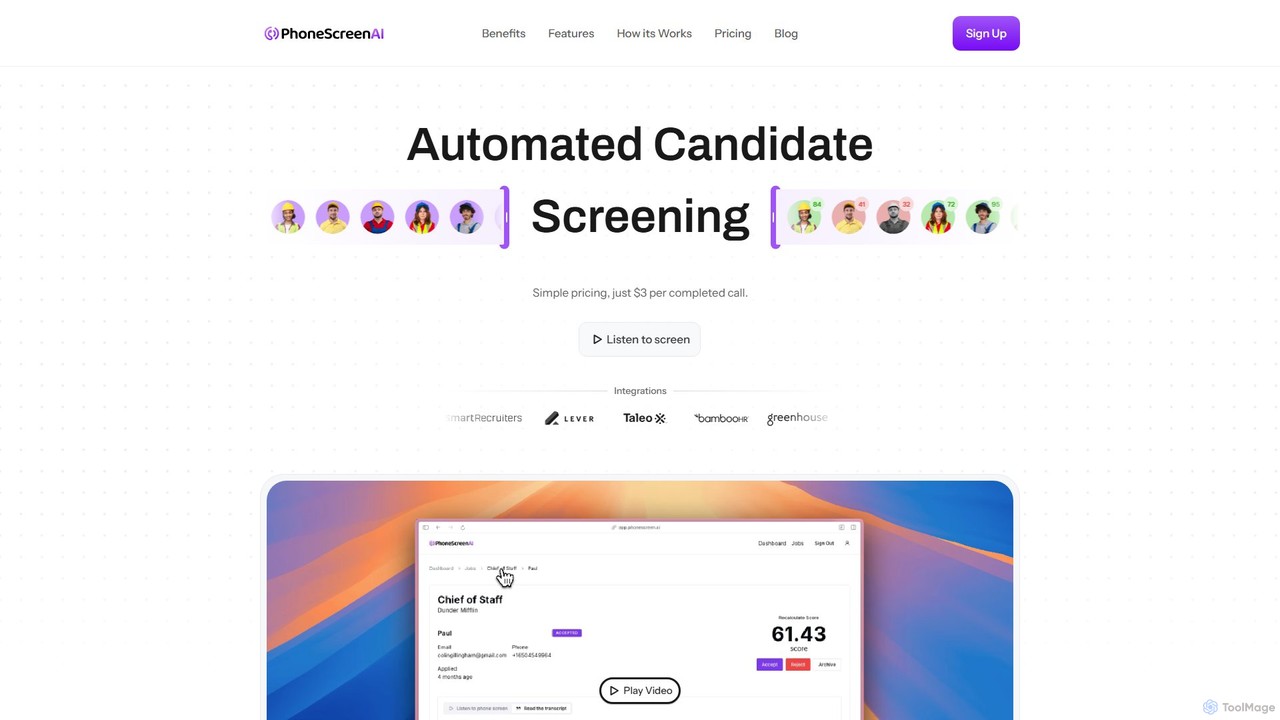
Phonescreen AI is an intelligent platform that automates the initial candidate screening process using conversational AI. It conducts phone interviews 24/7, allowing candidates to self-screen at their convenience. The tool analyzes job descriptions, generates relevant questions, scores responses, and integrates with existing ATS/CRM systems to deliver pre-qualified candidates, saving recruiters significant time and reducing hiring bias.

Candidate Management
Visits 8.6KFavorites 167Likes 156

About Candidate Management

Candidate Management AI tools are specialized platforms that leverage artificial intelligence to streamline and enhance the entire recruitment lifecycle, from sourcing to onboarding. These tools utilize machine learning, natural language processing, and data analytics to automate repetitive tasks, improve decision-making, and personalize candidate experiences. They empower talent acquisition teams to efficiently identify, engage, and evaluate top talent, reducing time-to-hire and fostering more objective hiring processes.

Core Features

  • AI-Powered Screening: Automatically analyze resumes and applications to identify qualified candidates based on predefined criteria, skills, and experience, significantly reducing manual review time.
  • Automated Interview Scheduling: Intelligent systems coordinate interview times between candidates and hiring managers, sending reminders and managing calendar conflicts without human intervention.
  • Candidate Engagement & Communication: Utilize AI chatbots and personalized messaging to answer candidate queries, provide updates, and maintain engagement throughout the hiring funnel.
  • Predictive Analytics for Fit: Analyze candidate data and historical hiring patterns to predict job success, cultural fit, and retention risks, aiding in more informed hiring decisions.
  • Bias Reduction: Employ algorithms designed to minimize unconscious bias in resume screening and candidate evaluation, promoting more diverse and equitable hiring outcomes.

Use Cases

Recruitment agencies, corporate HR departments, and high-growth startups frequently deploy Candidate Management AI tools to handle large volumes of applications, accelerate hiring for critical roles, and improve candidate satisfaction. They are particularly valuable in industries with high turnover or specialized skill requirements, enabling teams to focus on strategic talent acquisition rather than administrative burdens.

How to Choose

When selecting a Candidate Management AI tool, consider its integration capabilities with existing ATS/HRIS, the accuracy and transparency of its AI algorithms, data privacy and compliance features, and the level of customization offered for screening criteria and communication workflows. Evaluate its scalability to match your organization's growth and the quality of candidate experience it provides.

Candidate Management use cases

1

AI-Powered Resume Screening for High-Volume Roles

For large enterprises or recruitment agencies dealing with hundreds or thousands of applications for entry-level or high-volume positions, AI Candidate Management tools automatically parse resumes, extract key skills and experiences, and rank candidates based on job requirements. This allows recruiters to quickly identify the most qualified applicants, saving countless hours of manual review and ensuring no suitable candidate is overlooked due to volume.

2

Automating Interview Scheduling for Recruiters

Internal recruiters often spend significant time coordinating interviews across multiple candidates and hiring managers, leading to scheduling conflicts and delays. AI tools automate this process by integrating with calendars, suggesting optimal times, and sending automated invitations and reminders. This frees up recruiters to focus on candidate engagement and strategic talent sourcing, drastically reducing the time-to-schedule and improving candidate experience.

3

Enhancing Candidate Engagement with AI Chatbots

Candidates frequently have questions about job roles, company culture, or application status. AI-powered chatbots integrated into career pages or application portals provide instant, 24/7 answers to common queries. This improves candidate satisfaction by offering immediate support, reduces the workload on HR staff, and ensures candidates feel informed and valued throughout their journey, even outside business hours.

4

Predictive Analytics for Better Hiring Decisions

Hiring managers and HR leaders can leverage AI Candidate Management tools to analyze historical data, candidate profiles, and performance metrics to predict a candidate's potential for success, cultural fit, and long-term retention within the company. This data-driven approach moves beyond subjective assessments, enabling more strategic and effective hiring decisions that contribute to overall business growth and reduced turnover.

5

Reducing Bias in the Recruitment Process

To foster a more diverse and inclusive workforce, organizations use AI tools to minimize unconscious bias in candidate evaluation. These systems can anonymize candidate data during initial screening, focus solely on skills and qualifications, and flag potentially biased language in job descriptions. This helps ensure that candidates are judged purely on merit, leading to a more equitable and diverse talent pool.

6

Streamlining Onboarding and Pre-boarding Communications

Once an offer is accepted, AI Candidate Management tools can automate pre-boarding communications, sending welcome messages, necessary forms, and introductory information to new hires. This ensures a smooth transition, keeps new employees engaged before their start date, and reduces the administrative burden on HR. It sets a positive tone for their employment and helps them feel prepared and integrated from day one.

Candidate Management FAQ

What are AI Candidate Management tools?

AI Candidate Management tools are software solutions that use artificial intelligence, such as machine learning and natural language processing, to automate and optimize various stages of the recruitment process. They aim to improve efficiency, accuracy, and fairness in hiring by handling tasks like resume screening, interview scheduling, candidate communication, and predictive analytics for talent acquisition.

How do AI Candidate Management tools differ from traditional ATS (Applicant Tracking Systems)?

While traditional ATS primarily manage and organize candidate data, AI Candidate Management tools go further by actively analyzing that data and performing intelligent actions. ATS are record-keeping systems; AI tools are decision-support and automation engines. AI tools can screen resumes, predict candidate fit, automate communications, and reduce bias, functionalities that traditional ATS typically lack without AI integration.

What are the main benefits of using AI in candidate management?

The main benefits include significantly reducing time-to-hire by automating repetitive tasks, improving the quality of hires through data-driven insights and predictive analytics, enhancing candidate experience with personalized and timely communication, and fostering diversity by minimizing unconscious bias in screening. These tools allow recruiters to focus on strategic engagement rather than administrative overhead.

What specific tasks can AI Candidate Management tools automate?

AI Candidate Management tools can automate a wide range of tasks, including initial resume screening and parsing, matching candidates to job requirements, scheduling interviews, sending automated follow-up emails and reminders, answering common candidate questions via chatbots, and even conducting initial video interviews with AI analysis. This automation frees up recruiters for more complex, human-centric tasks.

How can AI Candidate Management tools help reduce hiring bias?

AI tools can reduce hiring bias by focusing on objective criteria. They can anonymize candidate profiles during initial screening, removing identifiers like names, gender, or age. Algorithms can be trained to evaluate skills and experience without being influenced by subjective factors. Some tools also analyze job descriptions for biased language and suggest more inclusive wording, promoting a fairer evaluation process.